Chef Lupita
Birria Tacos with Consome
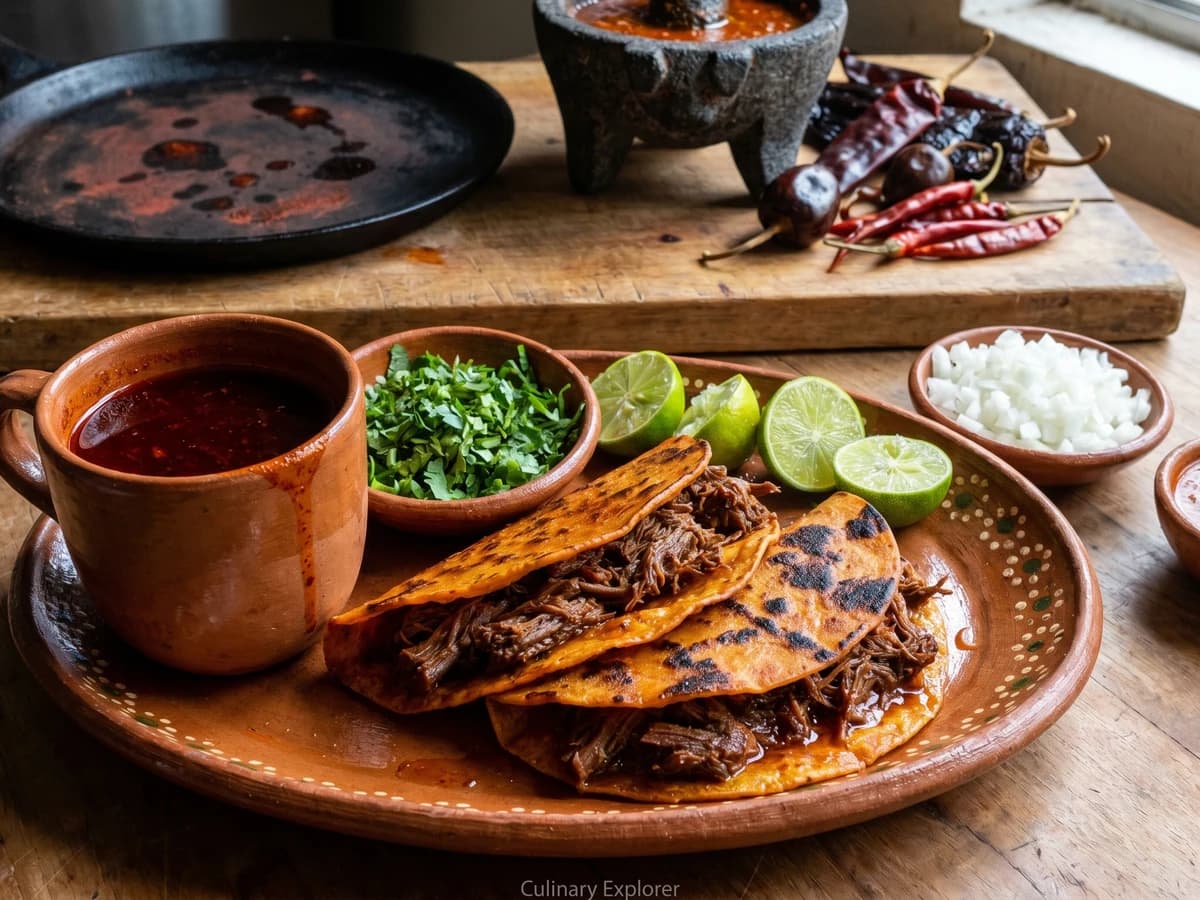
Jalisco's goat birria, born around Cocula and carried into Guadalajara's markets, slow-braised in ancho, guajillo, cascabel, and chile de arbol, then tucked into corn tortillas crisped in its own red fat.
A cooking platform built around craft, culture, and the stories behind what we eat.
Created by
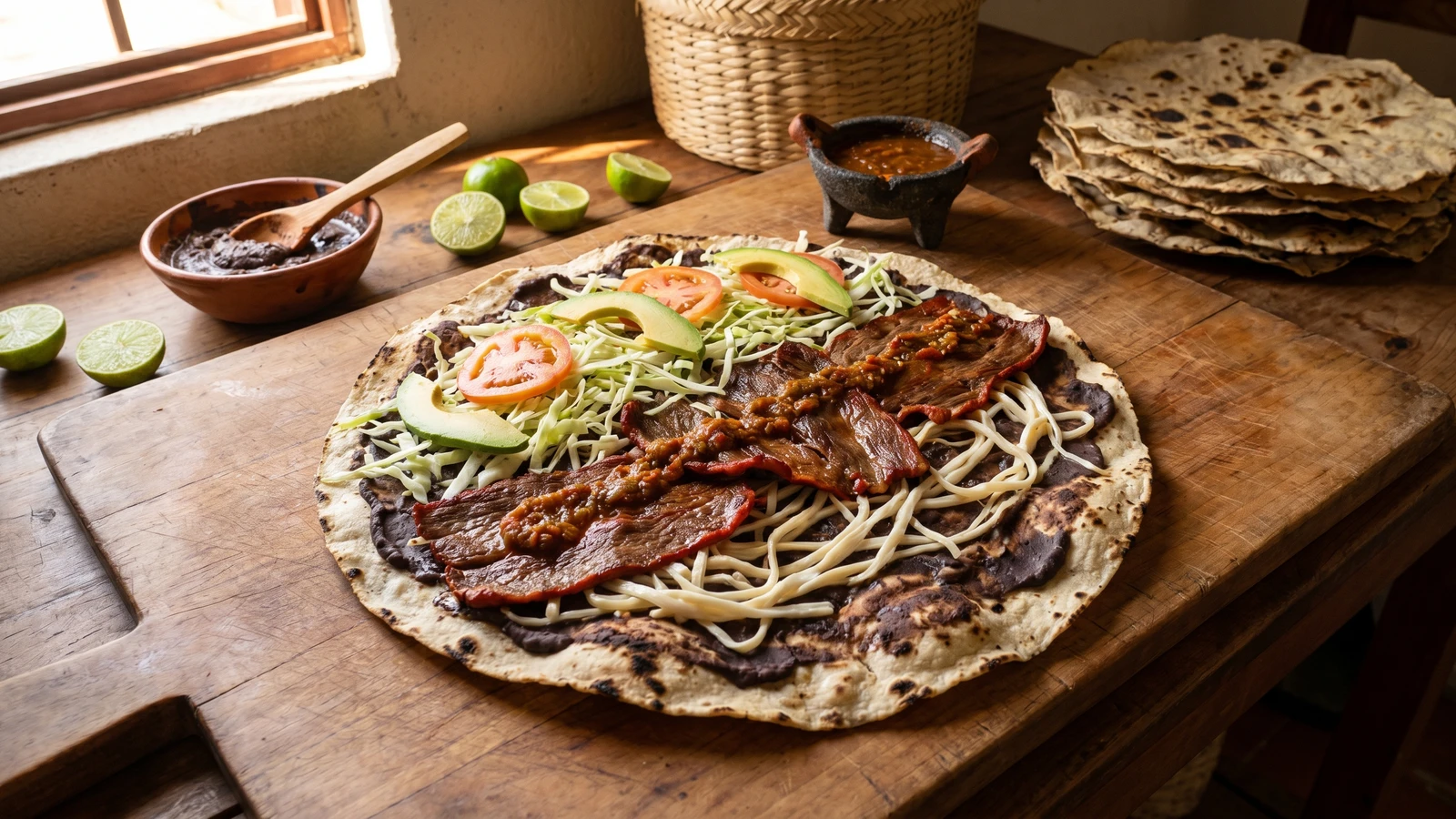
The Mixteca Alta's oversized, shatteringly crisp tlayuda built on native criollo corn, spread with asiento and frijol negro, loaded with cecina enchilada, quesillo, and a salsa de chile de árbol that wakes up the whole plate.
This is a Mixtec tlayuda. Not the Valles Centrales version you find folded in half at the stands along Oaxaca city's Calle de 20 de Noviembre. This one comes from the highlands, from the Mixteca Alta near Nochixtlán, where the tortillas are wider, thinner, and dried longer on the comal until they crack when you bend them. The women who make these work with maíz criollo, corn that has been grown in those same mountain plots for generations, ground on a metate or taken to the community molino, and the masa has a flavor that commercial tortilla flour cannot touch. You taste the soil. You taste the altitude. That is not poetry. That is what happens when corn and land have known each other for a thousand years.
The base gets a smear of asiento, the dark, thick sediment left at the bottom of the pot after frying chicharrón. Not butter. Not oil. Not even clean rendered lard. Asiento. It is pork fat with memory: toasted, funky, unapologetically rich. Over that goes a layer of frijol negro de olla mashed into a rough paste, then cecina enchilada, thin sheets of pork rubbed with a paste of chile ancho and chile guajillo, salted, and dried in the Mixtec sun until the meat turns leathery and concentrated. When you grill or pan-fry it, the chile paste caramelizes and the edges crisp. That is the protein. Not ground beef. Not shredded chicken. Cecina enchilada, the way the carniceros in the Nochixtlán market have been preparing it for longer than anyone remembers.
I collected this version from a senora named Doña Irma at the tianguis in Nochixtlán on a Tuesday market day. She was selling tlayudas stacked in a petate basket, each one the size of a steering wheel, hard as a clay plate. She told me the secret was patience: the comal has to be low, the tortilla has to dry slowly, and you do not rush the corn. My mother never made tlayudas. She was jalisciense. But she had the same conviction about corn: if the masa is wrong, nothing you put on top will save it. Saber cocinar es saber vivir.
The tlayuda takes its name from the Zapotec 'tlayuda' or 'clayuda,' though the dish is shared across Oaxaca's Zapotec and Mixtec regions with significant variation. In the Mixteca Alta, where maíz criollo varieties like bolita and mixteño have been cultivated since at least 3000 BCE, the tlayuda evolved as a preservation strategy: the oversized tortilla, dried to near-ceramic hardness on a clay comal, could last for days without refrigeration, serving as both plate and bread for field workers and market travelers. Cecina enchilada, the chile-rubbed dried meat that tops the Mixtec version, descends from pre-Columbian meat-drying techniques adapted after the Spanish introduction of pork, and the Nochixtlán market remains one of the few places where cecina is still air-dried outdoors in the mountain sun rather than in commercial dehydrators.
Quantity
2 cups (or 1 pound fresh masa)
if using masa harina, mix with warm water and salt until smooth
Quantity
1 1/4 cups
only if using masa harina
Quantity
1/2 teaspoon
Quantity
1 pound
from a Mexican carniceria, sliced thin
Quantity
1 cup
with 2 tablespoons of their broth
Quantity
1/4 cup
Quantity
8 ounces
pulled into strips
Quantity
1 cup
shredded
Quantity
1 large
sliced thin
Quantity
1
sliced
Quantity
6
stemmed
Quantity
2
stemmed and seeded
Quantity
1
Quantity
1/4 cup
Quantity
1 tablespoon
Quantity
1/2 teaspoon
Quantity
2 tablespoons
| Ingredient | Quantity |
|---|---|
| masa harina de maíz (or fresh nixtamalized masa)if using masa harina, mix with warm water and salt until smooth | 2 cups (or 1 pound fresh masa) |
| warm wateronly if using masa harina | 1 1/4 cups |
| kosher salt (for masa) | 1/2 teaspoon |
| cecina enchilada (chile-marinated dried pork)from a Mexican carniceria, sliced thin | 1 pound |
| cooked black beans (frijoles negros de olla)with 2 tablespoons of their broth | 1 cup |
| asiento (unrefined pork lard sediment) | 1/4 cup |
| quesillo (Oaxacan string cheese)pulled into strips | 8 ounces |
| green cabbage or lettuce (optional)shredded | 1 cup |
| ripe tomato (optional)sliced thin | 1 large |
| ripe avocado (optional)sliced | 1 |
| dried chile de árbolstemmed | 6 |
| dried chile guajillostemmed and seeded | 2 |
| garlic clove | 1 |
| water (for salsa) | 1/4 cup |
| white vinegar or lime juice | 1 tablespoon |
| kosher salt (for salsa) | 1/2 teaspoon |
| lard or neutral oil (for the cecina) | 2 tablespoons |
Heat a dry comal or cast iron skillet over medium. Toast the six chile de árbol and the two chile guajillo, pressing them flat with a spatula, about 20 to 30 seconds per side. The árbol will darken and blister fast. The guajillo takes a few seconds longer because it is thicker. The moment you smell them, pull them off. Drop the toasted chiles and the garlic clove into a small pot with the quarter cup of water. Bring to a simmer and cook for five minutes until everything softens. Transfer to a blender or molcajete with the vinegar and salt. Blend or grind to a rough, pourable salsa. It should have texture, not be perfectly smooth. Taste it. The árbol brings the heat and the guajillo brings depth and color. Adjust salt. Set it aside.
Put the cup of cooked black beans and two tablespoons of their broth into a skillet over medium heat. Mash them with the back of a wooden spoon or a bean masher until you have a thick, rough paste. Not a puree, not whole beans. A paste that holds its shape when you spread it. If the beans are too dry, add another spoonful of broth. If they are too wet, keep cooking until the paste pulls away from the pan. Season with a pinch of salt. This layer is what holds the tlayuda together. Treat it with respect.
If using masa harina, combine it with the warm water and salt in a bowl and knead for two minutes until the dough is smooth and does not crack at the edges when pressed. If using fresh masa, add the salt and knead briefly. Divide the masa into four equal balls, each about the size of a large lime. Press each ball in a tortilla press lined with plastic, or between two sheets of plastic on a flat surface, into a round about 10 to 12 inches across. Thinner than a regular tortilla. You want them almost translucent at the edges.
Heat a large comal or cast iron griddle over medium-low. This is critical: medium-low, not medium, not high. The tlayuda needs to dry out slowly, not cook through fast like a regular tortilla. Lay a pressed round on the dry comal and cook for three to four minutes on the first side without touching it. Flip and cook another three to four minutes. The edges will begin to curl and stiffen. Flip once more and let it go another two to three minutes. The finished tlayuda should be leathery and stiff across most of its surface, lightly charred in spots, but still pliable enough at the center to fold without snapping completely. It is a partially dried tortilla, not a tostada. The women in Nochixtlán dry theirs even longer for transport, but for eating fresh, this stage is right.
Heat the lard in a large skillet or on the comal over medium-high. Lay the cecina enchilada pieces flat, working in batches so they are not crowded. Cook for two to three minutes per side. The chile paste on the outside will caramelize and darken. The edges will curl and crisp. The meat should be cooked through but not dried out. Pull it off the heat and chop or tear it into rough, bite-sized strips. The smell of the toasted chile crust on the pork is the smell of every carniceria in the Mixteca. If you have never cooked cecina enchilada before, you will understand immediately why it exists.
Work one tlayuda at a time. Spread a generous tablespoon of asiento across the surface, leaving a small border at the edge. The asiento will soften slightly from the residual warmth of the tlayuda. Over that, spread a quarter of the bean paste in an even layer. Scatter a quarter of the quesillo strips across the beans. Now lay the cecina enchilada strips over the cheese. Return the assembled tlayuda to the comal over medium heat for one to two minutes, just long enough for the cheese to begin to soften and the bottom to crisp a little more. Do not wait for the cheese to fully melt. Quesillo stretches, it does not pool.
Pull the tlayuda off the comal and set it on a large plate or a clean wooden board. Top with shredded cabbage, sliced tomato, and avocado. Spoon the salsa de árbol across the top or serve it on the side for each person to add their own. You can serve the tlayuda open-faced and eat it by breaking off pieces, or fold it in half like a giant quesadilla. The Mixteca style is open-faced. The city style folds. Both are correct. Cada estado, su propia cocina. Eat it immediately. A tlayuda that sits loses its crunch, and the crunch is the whole point. Recetas probadas y garantizadas.
1 serving (about 460g)
Culinary guides, cultural storytelling, and the editorial depth that makes cooking meaningful.
Discover Culinary ExplorerChef Lupita
Jalisco's goat birria, born around Cocula and carried into Guadalajara's markets, slow-braised in ancho, guajillo, cascabel, and chile de arbol, then tucked into corn tortillas crisped in its own red fat.
Chef Lupita
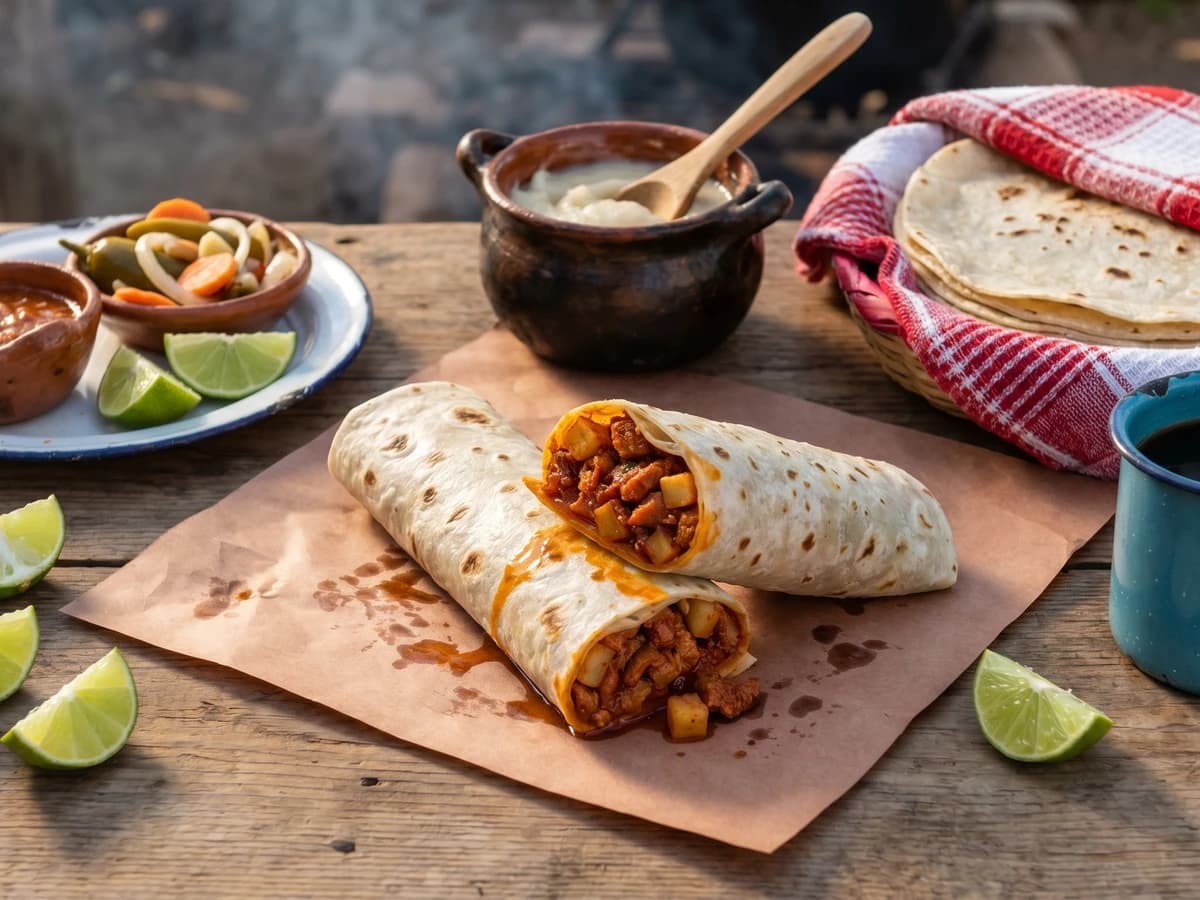
Sonora's working morning burrito: chicharrón de cáscara stewed in chile colorado with diced potato, rolled tight in a paper-thin tortilla sobaquera and eaten standing up at the carreta.
Chef Lupita
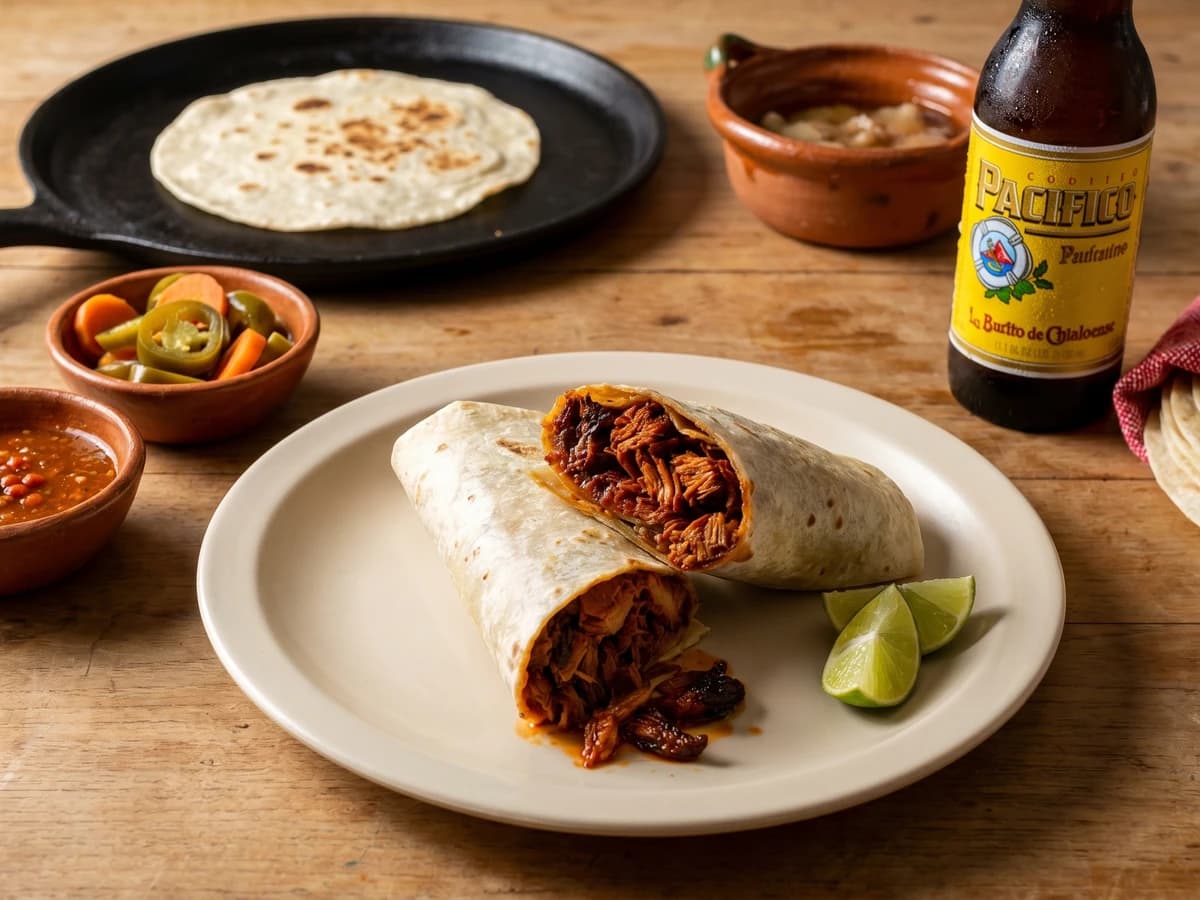
Mocorito's pork chilorio, shredded and confited in lard with chile ancho and pasilla, rolled into a thin handmade flour tortilla. The burrito Sinaloa sends out into the world.
Chef Lupita
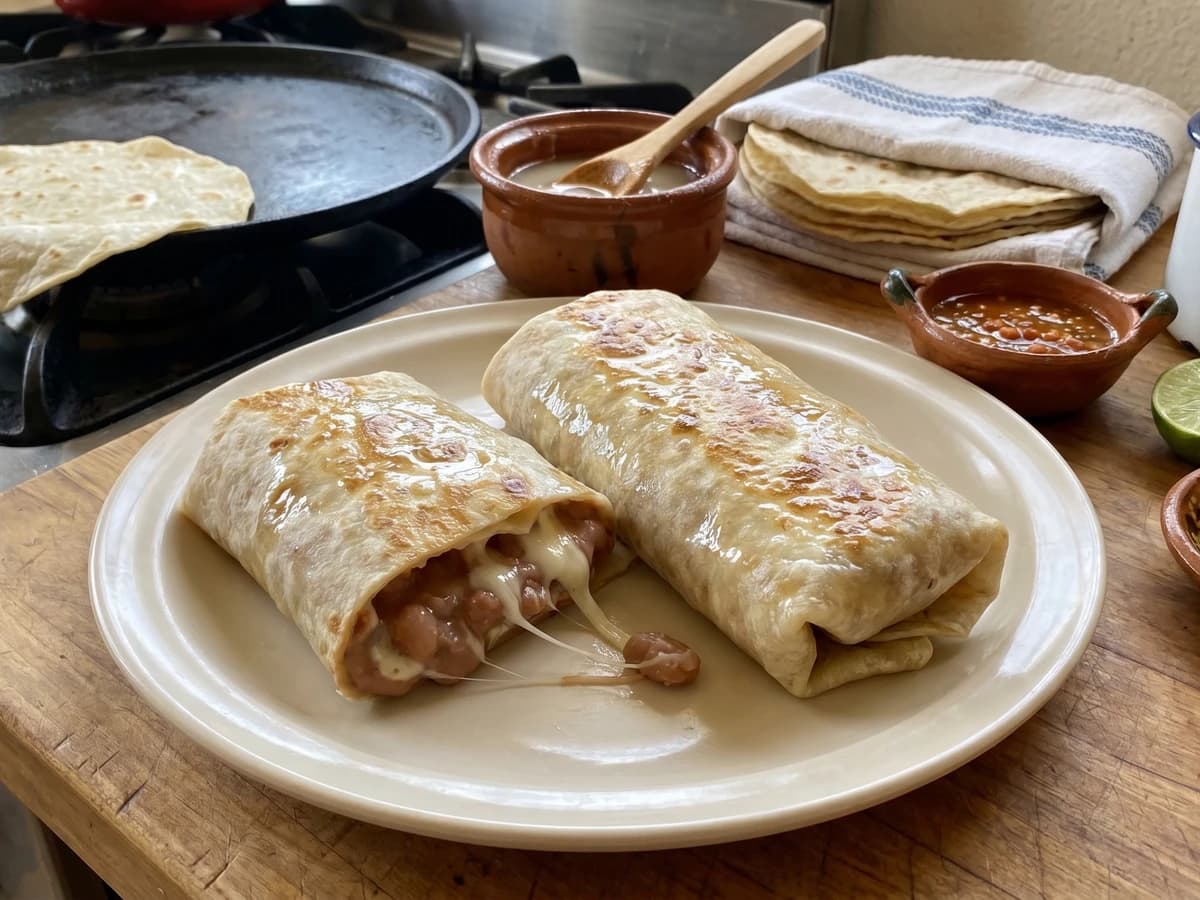
Sonora's morning burrito of mashed pinto frijoles puercos and melted queso asadero, wrapped in a paper-thin sobaquera and seared on the comal until the cheese pulls in long strings.