Chef Lupita
Birria Tacos with Consome
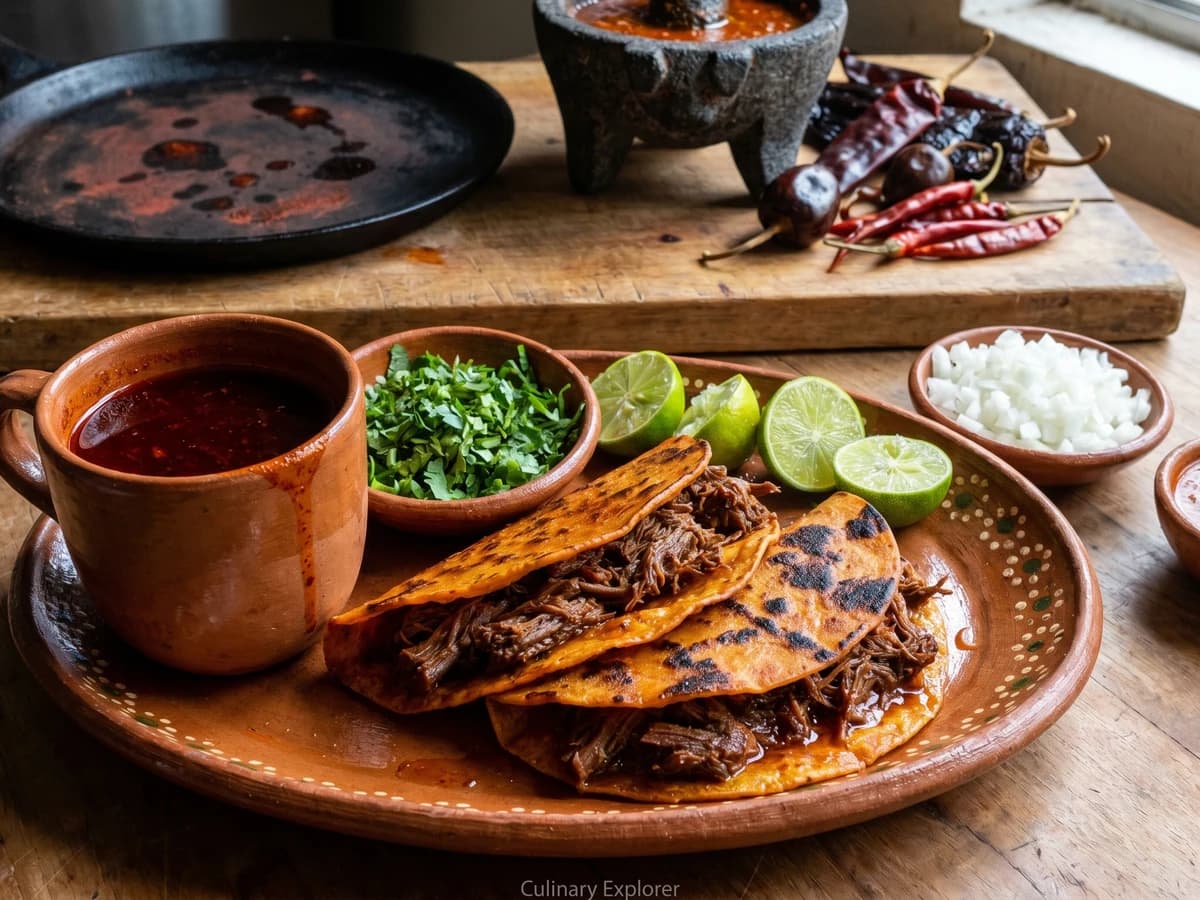
Jalisco's goat birria, born around Cocula and carried into Guadalajara's markets, slow-braised in ancho, guajillo, cascabel, and chile de arbol, then tucked into corn tortillas crisped in its own red fat.
A cooking platform built around craft, culture, and the stories behind what we eat.
Created by
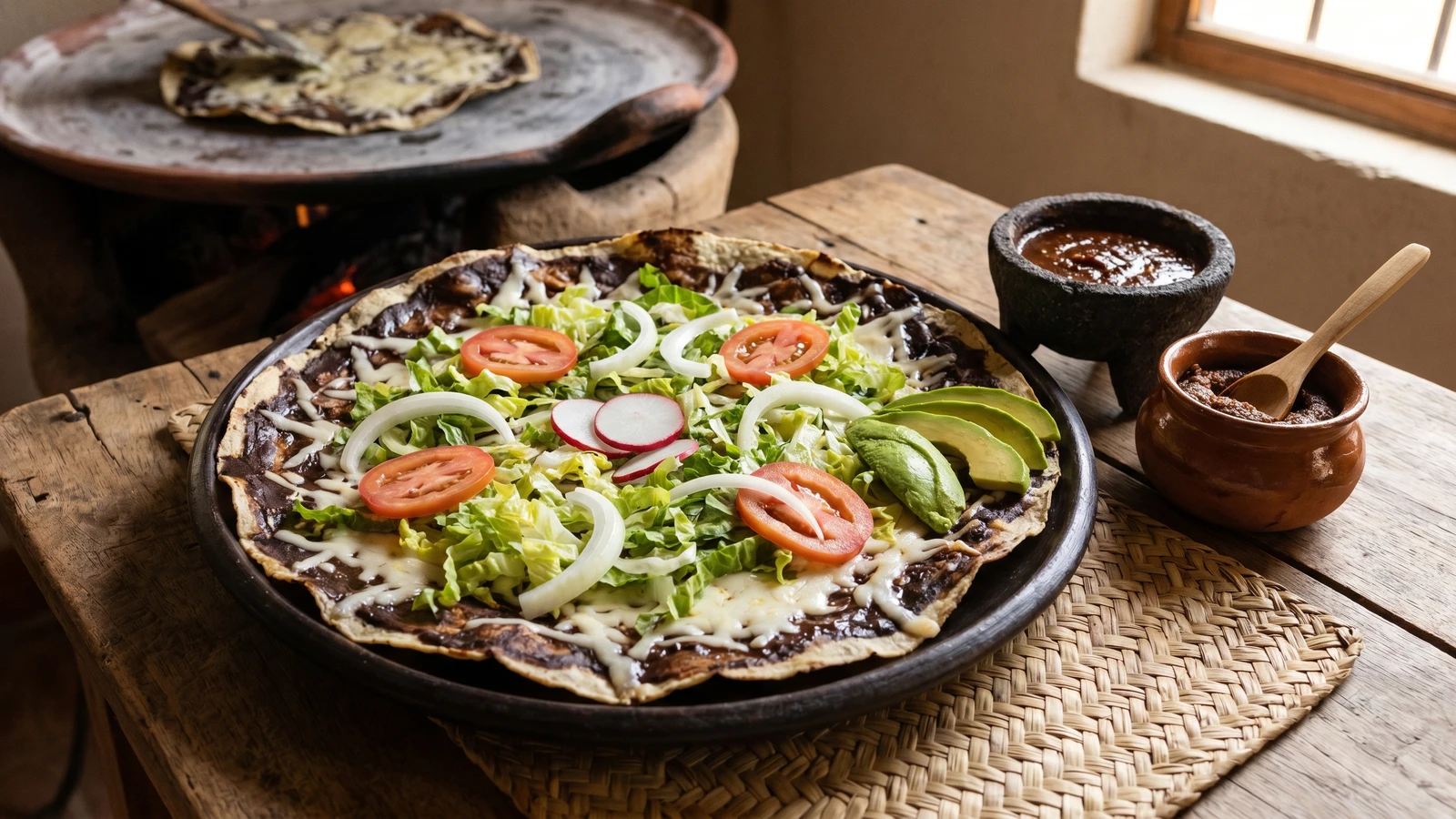
Oaxaca's open-faced tlayuda, spread with asiento and frijol negro cooked with avocado leaf, draped with quesillo that melts into strings over the comal. No meat. The mercado version, extended flat, the way the senoras at 20 de Noviembre have always made it.
This is Oaxaca's dish. Not Mexico City's version of it, not the folded quesadilla-style thing some restaurants serve to tourists. The tlayuda extendida is cooked open and flat on a clay comal, the tortilla so large it hangs over the edges, and it stays that way on the plate. Extended. Naked. Nothing hidden.
The tortilla itself is the foundation, and it is not a regular tortilla. A tlayuda is 12 to 14 inches across, made from corn masa, cooked on the comal, then partially dried over low heat or embers until it develops a leathery chew with crisp edges. You cannot make this dish with a supermarket tortilla. You need a tlayuda, or you need to accept that what you are making is something else.
The asiento is what separates the real thing from every imitation. Asiento is the dark, smoky sediment that collects at the bottom of the pot when pork lard is rendered. It has a concentrated, slightly bitter, deeply porky flavor that regular lard does not have. The senoras at the Mercado 20 de Noviembre in Oaxaca city spread it across the hot tortilla with the back of a spoon, and the smell fills the entire pasillo. If you cannot find asiento, you can approximate it by cooking lard low and slow until the solids brown and settle, but I will tell you plainly: it is a compromise.
My mother did not make tlayudas. She was jalisciense and her tortillas were small and thick. But in my notebook, from a trip to the Central de Abastos in 2004, I have a sketch of a senora's comal setup and the note: 'asiento first, always, then the bean.' She said it like a rule. It is one. Cada estado, su propia cocina.
The tlayuda takes its name from the Zapotec word 'tlayelli,' referring to the large corn tortilla that has been a staple of the Valles Centrales de Oaxaca since pre-Columbian times. The partially dried preparation method, which gives the tortilla its characteristic leathery-crisp texture, evolved as a preservation technique in a region where corn was ground daily but tortillas needed to last through market days and travel. The Mercado 20 de Noviembre in Oaxaca de Juarez became the dish's most famous stage in the mid-20th century, where rows of comal-equipped stalls still serve tlayudas to order, and the version extendida, laid flat and open, predates the folded 'clayuda' variant that emerged later as a street-food adaptation for eating while walking.
Quantity
4 (12 to 14 inches each)
Quantity
1/2 cup
Quantity
2 cups
with their broth
Quantity
3
Quantity
2 tablespoons
Quantity
1/2 teaspoon, plus more to taste
Quantity
12 ounces
pulled into long strings
Quantity
2 cups
shredded into thin ribbons
Quantity
2 medium
sliced thin
Quantity
1/2 medium
sliced into thin half-moons
Quantity
4
sliced thin
Quantity
1
sliced
Quantity
for serving
Quantity
for serving
| Ingredient | Quantity |
|---|---|
| tlayuda tortillas | 4 (12 to 14 inches each) |
| asiento (pork lard sediment) | 1/2 cup |
| cooked black beans (frijol negro)with their broth | 2 cups |
| dried hoja de aguacate (avocado leaves) | 3 |
| pork lard (manteca de cerdo) | 2 tablespoons |
| kosher salt | 1/2 teaspoon, plus more to taste |
| quesillo (Oaxacan string cheese)pulled into long strings | 12 ounces |
| romaine lettuceshredded into thin ribbons | 2 cups |
| ripe jitomates (Roma tomatoes)sliced thin | 2 medium |
| white onionsliced into thin half-moons | 1/2 medium |
| radishes (optional)sliced thin | 4 |
| ripe avocado (optional)sliced | 1 |
| salsa de pasilla oaxaqueno | for serving |
| lime wedges (optional) | for serving |
Melt the lard in a heavy skillet or clay cazuela over medium heat. Toast the dried avocado leaves in the hot lard for about 15 seconds per side. They will release a deep anise-like aroma that fills the kitchen. This is the smell of Oaxacan frijoles. Crumble the toasted leaves and leave them in the fat. Add the cooked black beans with about half a cup of their broth and the salt. Mash with a bean masher or the back of a wooden spoon until you have a thick, spreadable paste, not a puree, not whole beans. You want it thick enough to stay on the tortilla without running. Taste for salt. Keep warm over low heat.
Peel the quesillo into long strings by hand, the way the queseras in the Mercado de Tlacolula do it. You want pieces thin enough to drape and melt, not thick chunks. If your quesillo is dry or cold, let it sit at room temperature for 20 minutes before pulling. It should stretch. If it snaps, it is too cold or too old. Set the strings aside in a bowl.
Place a large clay comal or cast iron griddle over medium heat. Let it get properly hot, about three minutes. Lay one tlayuda flat on the comal. Heat it for about one minute until the underside is warm and the tortilla starts to feel flexible at the center but stays firm at the edges. Do not flip it. You are working on the top side only.
With the tlayuda still on the comal, spread two tablespoons of asiento across the entire surface with the back of a spoon. Work quickly. The asiento will melt on contact and soak into the warm masa. The smell will be dark, smoky, deeply porky. This is the base flavor of the entire dish. Do not skip this step. Do not substitute butter or olive oil. The asiento is the tlayuda. Asi se hace y punto.
Spread a generous layer of the warm black bean paste over the asiento, leaving about an inch of bare tortilla around the edges. Use the back of the spoon and work in a circular motion. The bean layer should be thick enough to taste in every bite but not so heavy that it weighs down the tortilla. Think of it as mortar: it holds the rest of the toppings in place.
Lay the pulled quesillo strings across the bean layer, covering as much surface as you can. Reduce the heat to medium-low. Let the tlayuda sit on the comal for two to three minutes more, until the quesillo begins to soften and melt into the beans. It will not melt the way mozzarella does. Quesillo holds its shape, turns glossy, and pulls into strings when you tear the tlayuda. That is the texture you want.
Slide the tlayuda off the comal onto a large plate or a wooden board. Working quickly while the base is still hot, scatter the shredded romaine lettuce across the top. Lay the sliced jitomate and onion half-moons over the lettuce. Add the radish slices and avocado if using. Do not toss or mix. The layers are deliberate: warm base, cool greens, raw vegetables. The contrast is the point.
Serve the tlayuda open and flat. Extended. Do not fold it. Do not cut it into wedges like a pizza. Tear pieces off with your hands and eat them with salsa de pasilla oaxaqueno on the side and a squeeze of lime if you want it. Repeat with the remaining tlayudas, building each one to order on the hot comal. A tlayuda does not wait. Recetas probadas y garantizadas.
1 serving (about 490g)
Culinary guides, cultural storytelling, and the editorial depth that makes cooking meaningful.
Discover Culinary ExplorerChef Lupita
Jalisco's goat birria, born around Cocula and carried into Guadalajara's markets, slow-braised in ancho, guajillo, cascabel, and chile de arbol, then tucked into corn tortillas crisped in its own red fat.
Chef Lupita
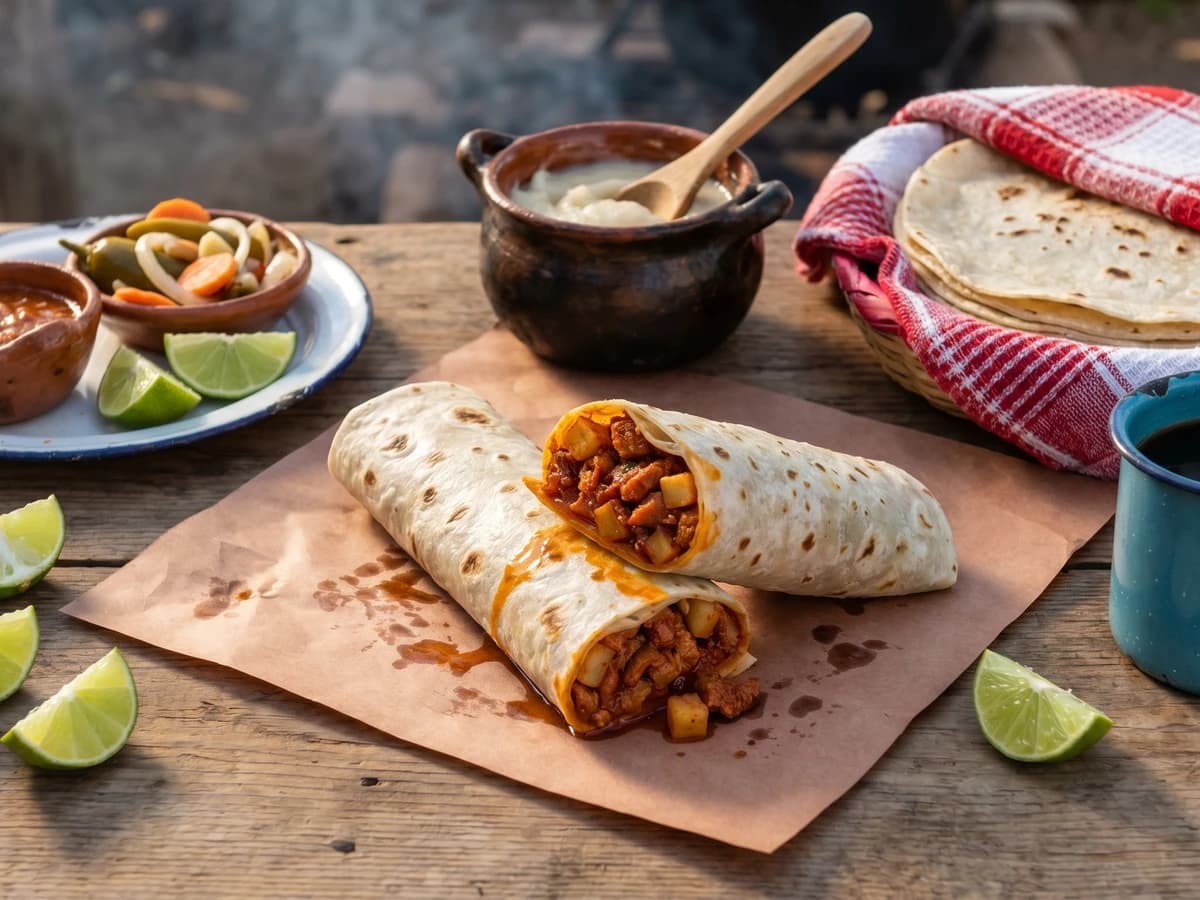
Sonora's working morning burrito: chicharrón de cáscara stewed in chile colorado with diced potato, rolled tight in a paper-thin tortilla sobaquera and eaten standing up at the carreta.
Chef Lupita
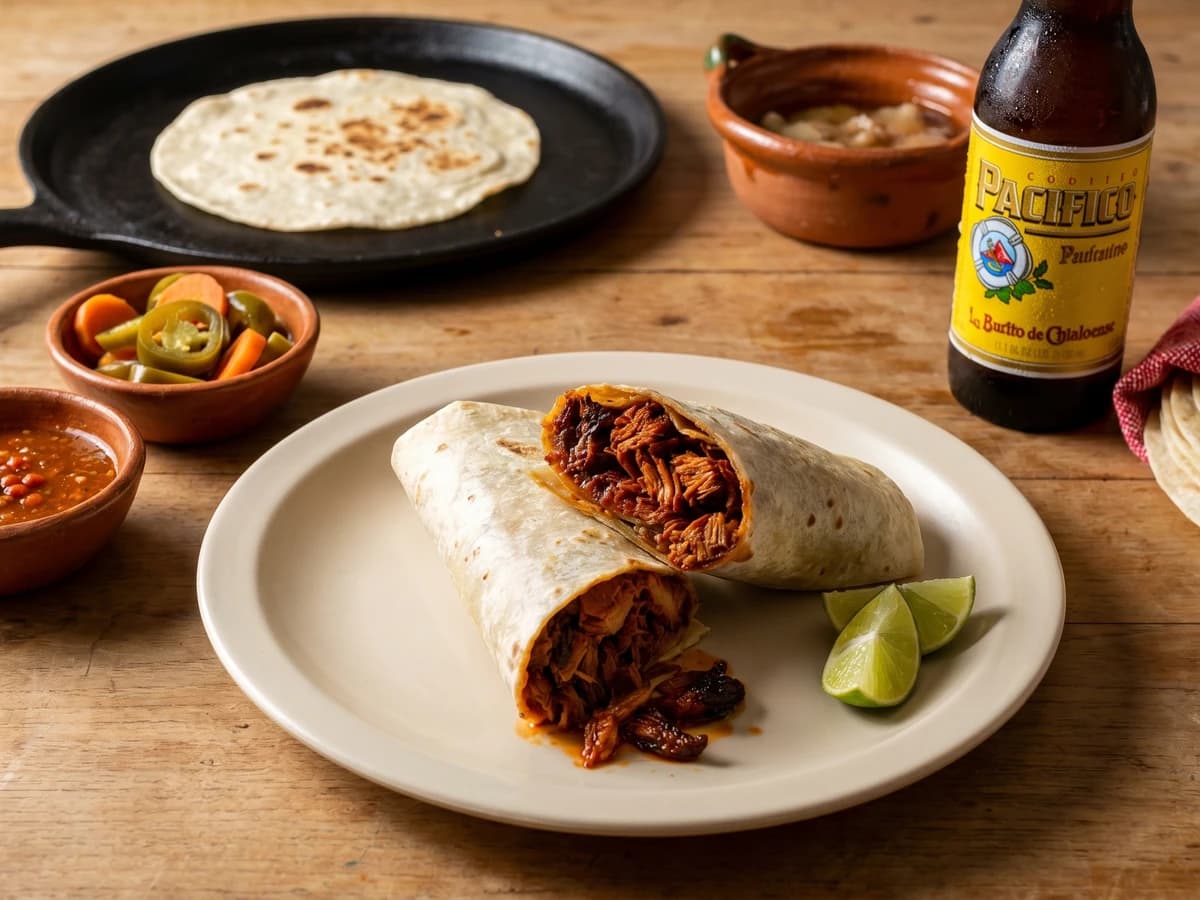
Mocorito's pork chilorio, shredded and confited in lard with chile ancho and pasilla, rolled into a thin handmade flour tortilla. The burrito Sinaloa sends out into the world.
Chef Lupita
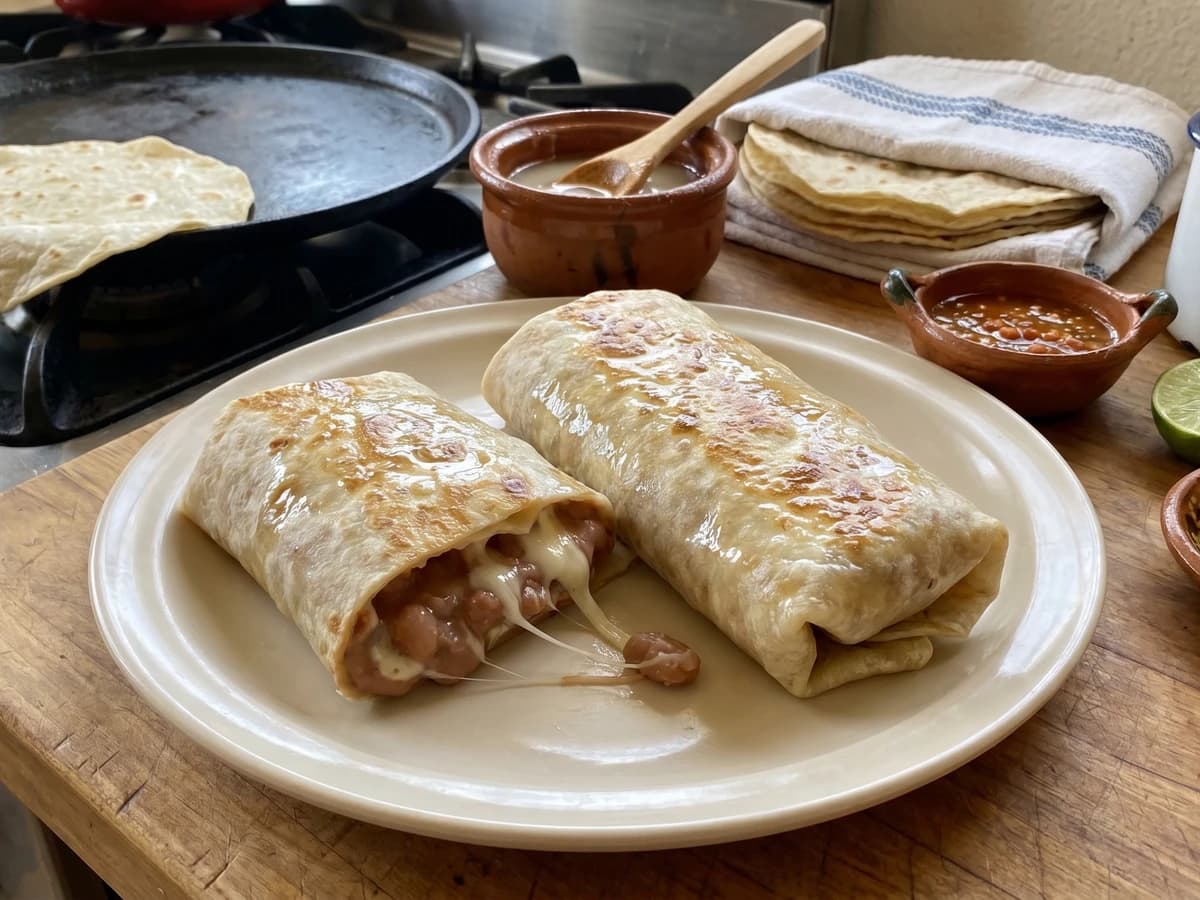
Sonora's morning burrito of mashed pinto frijoles puercos and melted queso asadero, wrapped in a paper-thin sobaquera and seared on the comal until the cheese pulls in long strings.