Chef Lupita
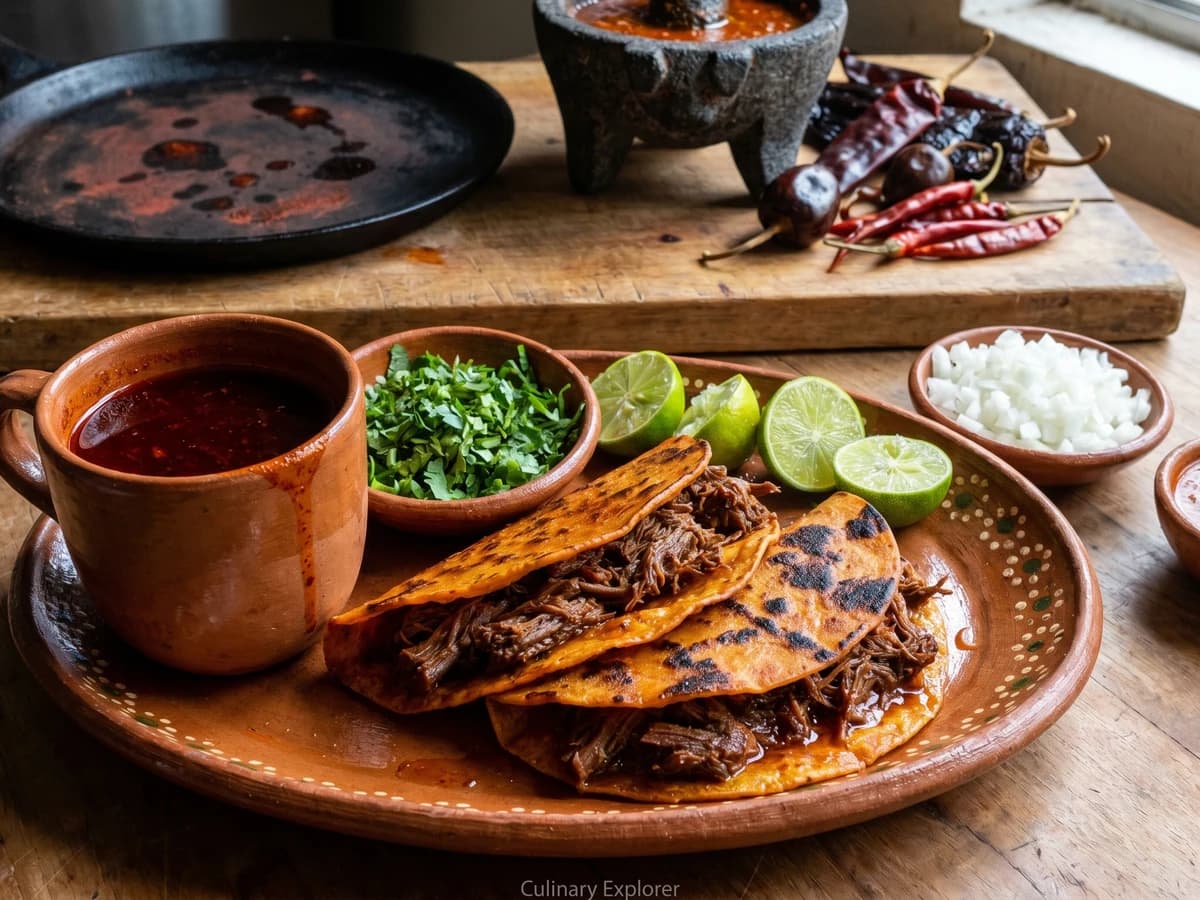
Birria Tacos with Consome
Jalisco's goat birria, born around Cocula and carried into Guadalajara's markets, slow-braised in ancho, guajillo, cascabel, and chile de arbol, then tucked into corn tortillas crisped in its own red fat.
A cooking platform built around craft, culture, and the stories behind what we eat.
Created by
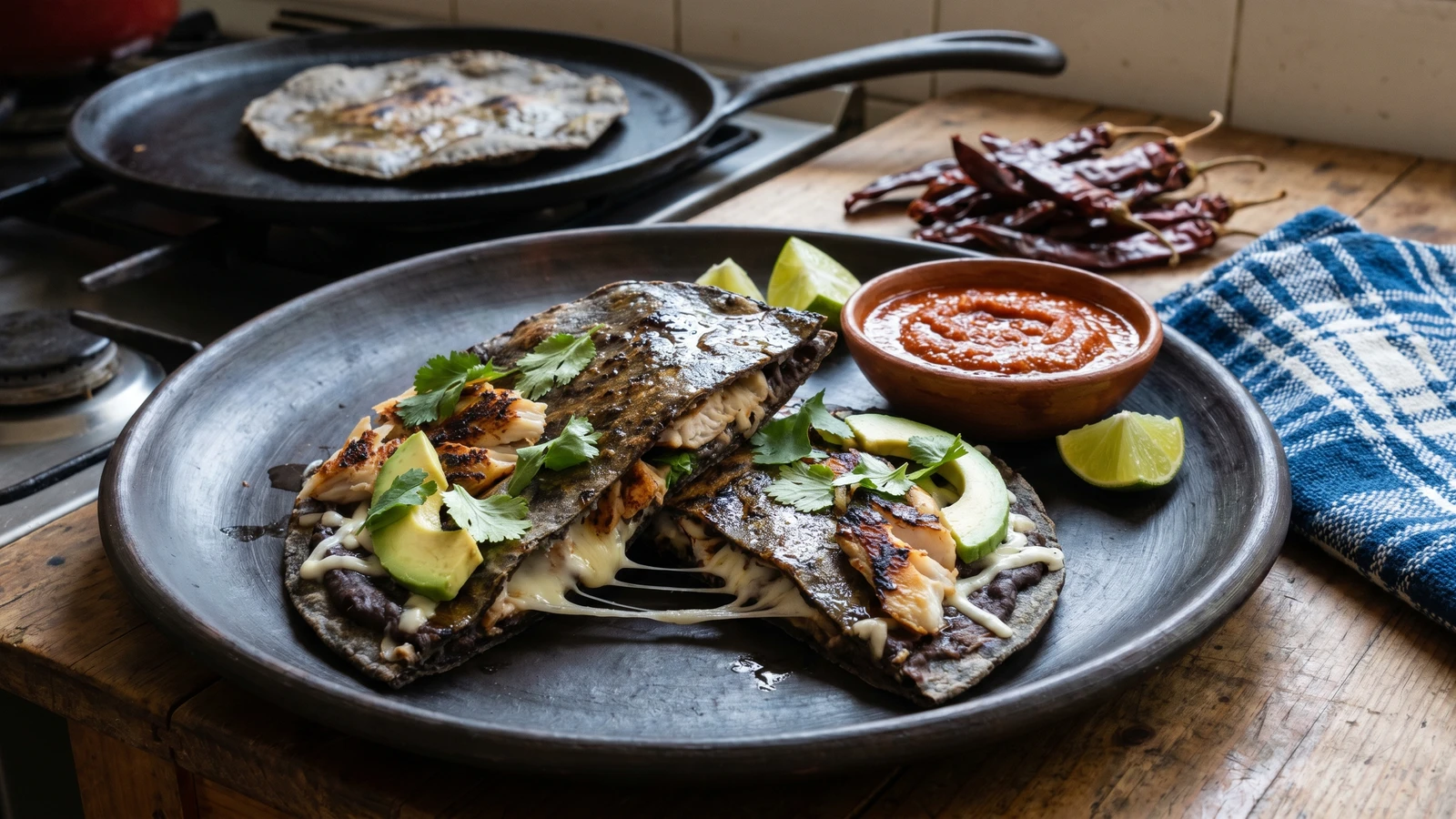
The Oaxacan coast's folded tlayuda, spread with asiento and frijol negro, filled with grilled huachinango, pitiona herb, sliced avocado, and quesillo, served with a salsa de chile costeño rojo that carries the heat of the Pacific lowlands.
This is a coastal Oaxacan dish. Not the Central Valleys, not the city of Oaxaca. The coast. Pinotepa Nacional, Puerto Escondido, the stretch of Pacific shoreline where the Sierra Madre del Sur drops into the ocean and the cooking changes with the altitude.
The tlayuda is Oaxaca's tortilla, but calling it a tortilla is like calling a cathedral a building. It is wide, thin, leathery from slow drying on the comal, and it holds everything a cook puts on it without buckling. In the Central Valleys, the tlayuda goes open-faced with tasajo and chapulines. On the coast, the cooks fold it: doblada, with whatever came off the boats that morning. Huachinango, pargo, robalo, sierra. The fish changes. The structure does not. Asiento on the tortilla first, always. Then the black bean paste. Then the quesillo. Then the fish, grilled whole or in fillets over mesquite or huanacaxtle wood on a grate the fishermen's wives keep at the back of the kitchen.
Pitiona is the herb that places this dish on the coast and nowhere else. It grows wild in the lowlands from the Isthmus to the Costa Chica, and it has a flavor somewhere between oregano and mint with something floral underneath that neither of those herbs can replicate. The senoras in the market at Pinotepa sell it in fat bunches, still sandy from the hillside. They will tell you it is for fish, for tamales de tichinda, for beans. They are right about all of it. If you cannot find pitiona, I will tell you what to use instead, but I will also tell you what you are losing.
The chile costeno rojo is the other marker. Small, thin-skinned, bright with a sharp heat that does not linger the way a habanero does. It grows along the Oaxacan coast and is not widely available outside the state. My mother never used it because she was from Jalisco. I first encountered it in Puerto Escondido, in a salsa a woman was selling from a plastic bucket at the edge of the highway, and I wrote down what she told me in the same notebook my mother left me. Cada estado, su propia cocina. Every coast, too.
The tlayuda is a Zapotec tradition from Oaxaca's Central Valleys, where the large, partially dehydrated corn tortilla served as both plate and utensil in the markets of Tlacolula, Ocotlan, and Etla for centuries before it became a street food icon. The coastal doblada variation reflects the broader Oaxacan pattern of adapting valley staples to regional ingredients: when the tlayuda traveled south to the Costa Chica and Costa de Oaxaca with internal migration and market trade routes, local cooks replaced tasajo with Pacific fish and introduced pitiona (Lippia alba), a perennial herb of pre-Columbian medicinal and culinary use documented among the Mixtec and Chatino peoples of the southern lowlands. Asiento, the dark sediment from rendering pork lard, is the base fat of Oaxacan tlayuda preparation and predates the modern use of vegetable oil that cheaper market stalls have adopted; its smoky, concentrated pork flavor is structurally essential to the dish and is not interchangeable with plain lard.
Quantity
4 (12 to 14 inches each)
large Oaxacan dried tortillas
Quantity
1 1/2 pounds
skin on, pin bones removed
Quantity
3 tablespoons, plus more for the tlayudas
Quantity
1 1/2 cups
drained, with 1/4 cup bean broth reserved
Quantity
1 tablespoon
Quantity
8 ounces
pulled into strips
Quantity
2
Quantity
1/4 cup
stems removed
Quantity
2
juiced, divided
Quantity
to taste
Quantity
8
stemmed and seeded
Quantity
2 medium
Quantity
2
unpeeled
Quantity
1/2 teaspoon, plus more to taste
Quantity
for serving
| Ingredient | Quantity |
|---|---|
| tlayuda tortillaslarge Oaxacan dried tortillas | 4 (12 to 14 inches each) |
| fresh huachinango (red snapper) or pargo filletsskin on, pin bones removed | 1 1/2 pounds |
| asiento (dark pork lard sediment) | 3 tablespoons, plus more for the tlayudas |
| cooked black beansdrained, with 1/4 cup bean broth reserved | 1 1/2 cups |
| pork lard (manteca de cerdo) | 1 tablespoon |
| quesillo oaxaqueno (Oaxacan string cheese)pulled into strips | 8 ounces |
| ripe Hass avocados | 2 |
| fresh pitiona leavesstems removed | 1/4 cup |
| limesjuiced, divided | 2 |
| kosher salt | to taste |
| dried chile costeno rojostemmed and seeded | 8 |
| Roma tomatoes | 2 medium |
| garlic clovesunpeeled | 2 |
| kosher salt (for salsa) | 1/2 teaspoon, plus more to taste |
| lime wedges (optional) | for serving |
Heat a dry comal or heavy skillet over medium heat. Toast the chile costeno rojo for about 20 seconds per side, pressing them flat with a spatula. They are thin-skinned and turn fast. The moment they puff and release a sharp, bright smell, they are done. Pull them off. A burned chile costeno turns acrid and there is no covering it up in a salsa this simple.
On the same comal, place the Roma tomatoes and the unpeeled garlic cloves. Let them char slowly, turning every few minutes. The tomatoes need about 10 to 12 minutes until they are blistered and collapsed on all sides with dark spots but not burned through. The garlic takes about 8 minutes. Set them aside. Peel the garlic when cool enough to handle.
Place the toasted chiles in a small bowl and cover with hot tap water for 10 minutes. They do not need long. Drain the chiles and transfer to a blender with the roasted tomatoes, peeled garlic, and the half teaspoon of salt. Blend until smooth but not perfectly pureed. This salsa should have texture, a slight coarseness that tells you it was made on a comal and not in a factory. Taste it. The heat from the chile costeno is sharp and forward. Adjust the salt. Set aside.
Melt the tablespoon of lard in a small skillet over medium heat. Add the drained black beans and a splash of the reserved bean broth. Mash them with the back of a wooden spoon or a bean masher until you have a thick, spreadable paste. Not a puree. You want some whole beans still visible. Cook for three to four minutes, stirring, until the paste holds together and pulls away from the sides of the skillet. Season with salt. This is the base layer of the tlayuda and it needs to be assertive.
Pat the fish fillets dry. Season both sides generously with salt and the juice of one lime. Let them sit for five minutes. Heat a grill, grill pan, or the comal over medium-high heat and brush lightly with a thin layer of asiento. Place the fillets skin side down. Cook without moving for four minutes until the skin is crisp and releases easily. Flip and cook for two to three more minutes, depending on thickness, until the flesh is just opaque and flakes when pressed with a finger. Do not overcook. The fish will carry over as it rests. Transfer to a plate and break into large, generous flakes with a fork. Squeeze the remaining lime juice over the fish and scatter half the pitiona leaves over it while it is still hot. The warmth opens the herb.
Heat the comal or a large cast iron skillet over medium heat. Place one tlayuda flat on the surface and warm it for about a minute per side until it becomes pliable enough to fold without cracking. It should still be leathery, not soft like a fresh tortilla. Spread a generous tablespoon of asiento across the entire surface. The dark, smoky fat soaks into the tortilla and gives it that flavor you cannot get any other way. Spread a quarter of the black bean paste over one half. Layer strips of quesillo over the beans. Add a quarter of the flaked fish on top of the cheese. Scatter a few slices of avocado and a pinch of the remaining pitiona leaves. Fold the empty half over the filled half and press down gently.
Press the folded tlayuda gently on the comal with the flat of your hand or a spatula. Cook for two to three minutes per side until the exterior is charred in spots and rigid, and the quesillo inside has begun to melt and bind everything together. The asiento on the surface will darken and the tortilla will smell of toasted corn and rendered pork. Repeat with the remaining three tlayudas. You can work two at a time if your comal is large enough.
Cut each doblada in half on the diagonal. The cross-section should show the layers: dark bean paste, white threads of melted quesillo, flaked fish streaked with the green of pitiona, pale avocado. Serve immediately on a clay plate or a wooden cutting board with the salsa de chile costeno in a small bowl alongside and lime wedges scattered around. Let each person spoon the salsa into the open cut. Recetas probadas y garantizadas.
1 serving (about 500g)
Culinary guides, cultural storytelling, and the editorial depth that makes cooking meaningful.
Discover Culinary ExplorerChef Lupita
Jalisco's goat birria, born around Cocula and carried into Guadalajara's markets, slow-braised in ancho, guajillo, cascabel, and chile de arbol, then tucked into corn tortillas crisped in its own red fat.
Chef Lupita
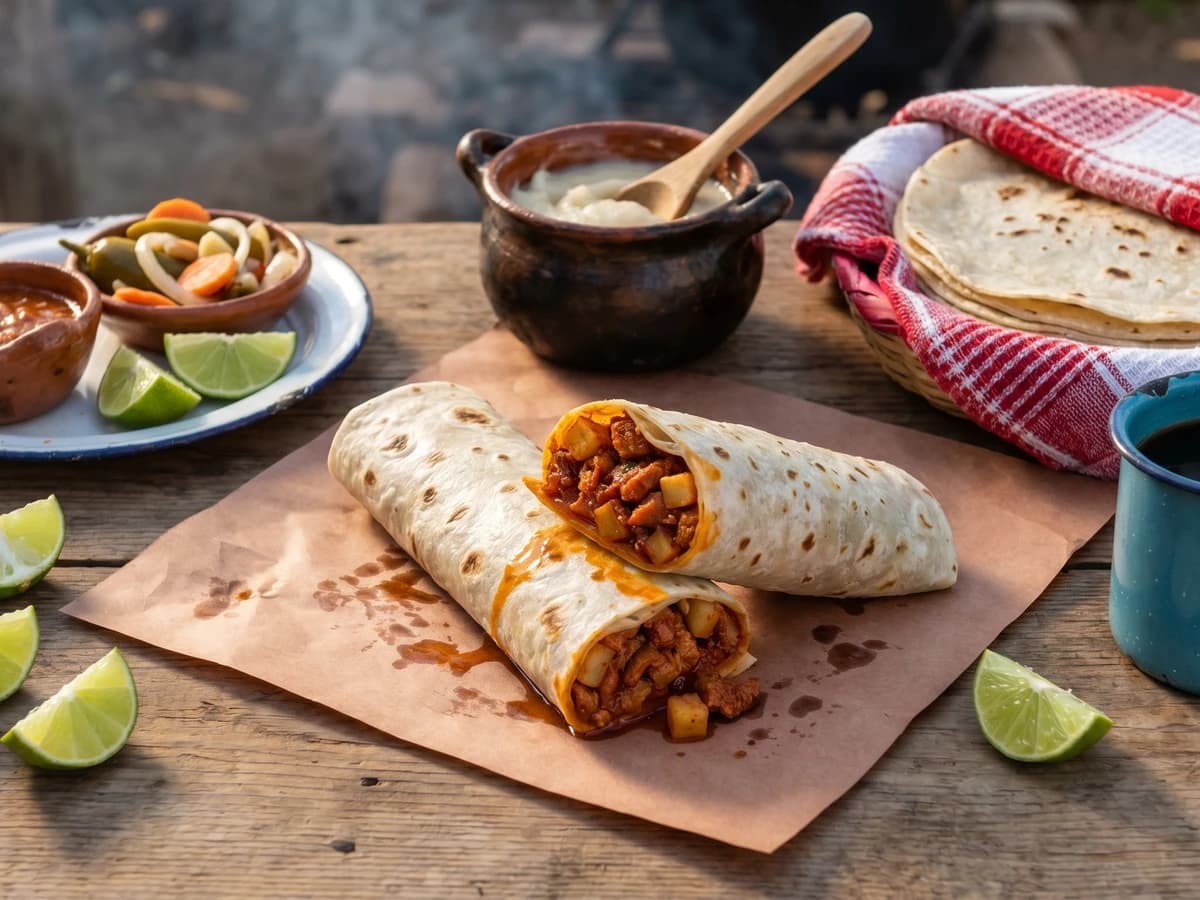
Sonora's working morning burrito: chicharrón de cáscara stewed in chile colorado with diced potato, rolled tight in a paper-thin tortilla sobaquera and eaten standing up at the carreta.
Chef Lupita
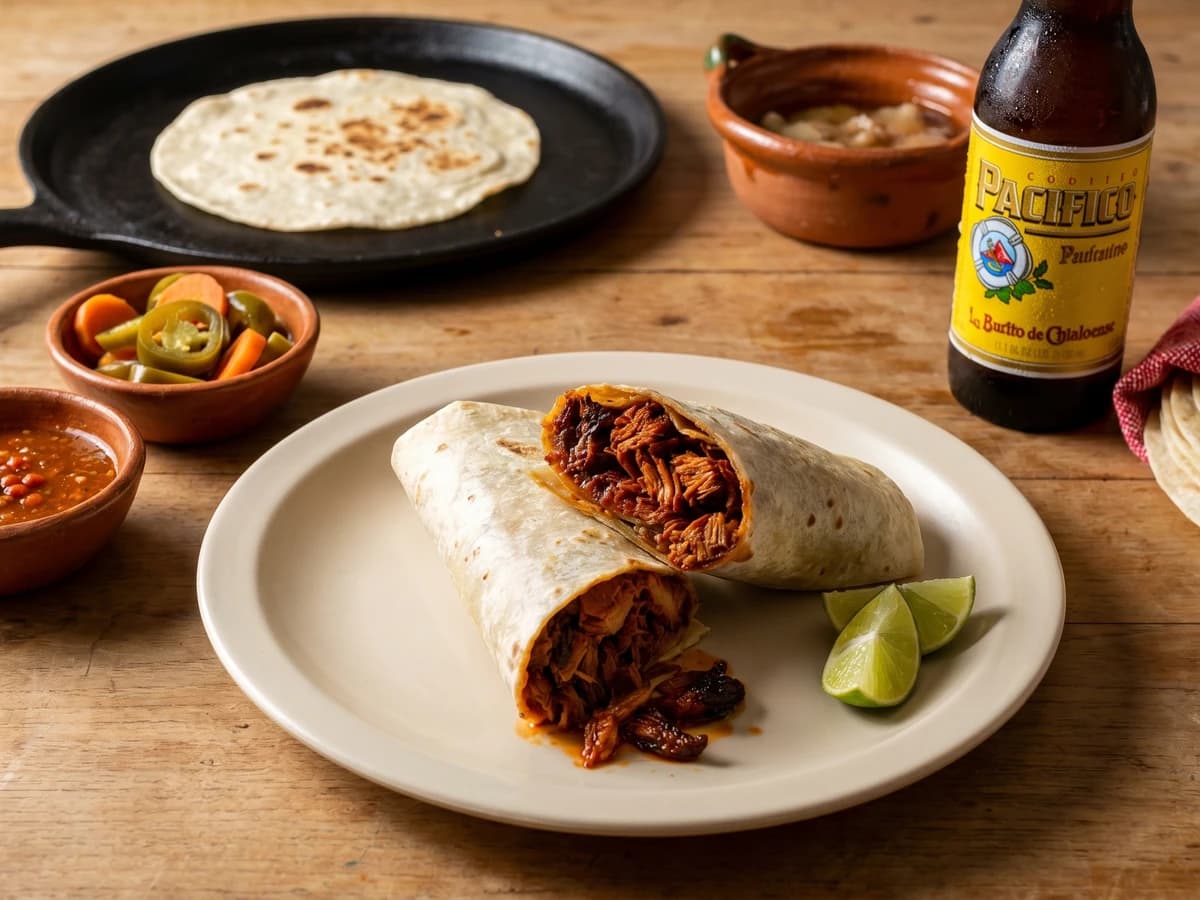
Mocorito's pork chilorio, shredded and confited in lard with chile ancho and pasilla, rolled into a thin handmade flour tortilla. The burrito Sinaloa sends out into the world.
Chef Lupita
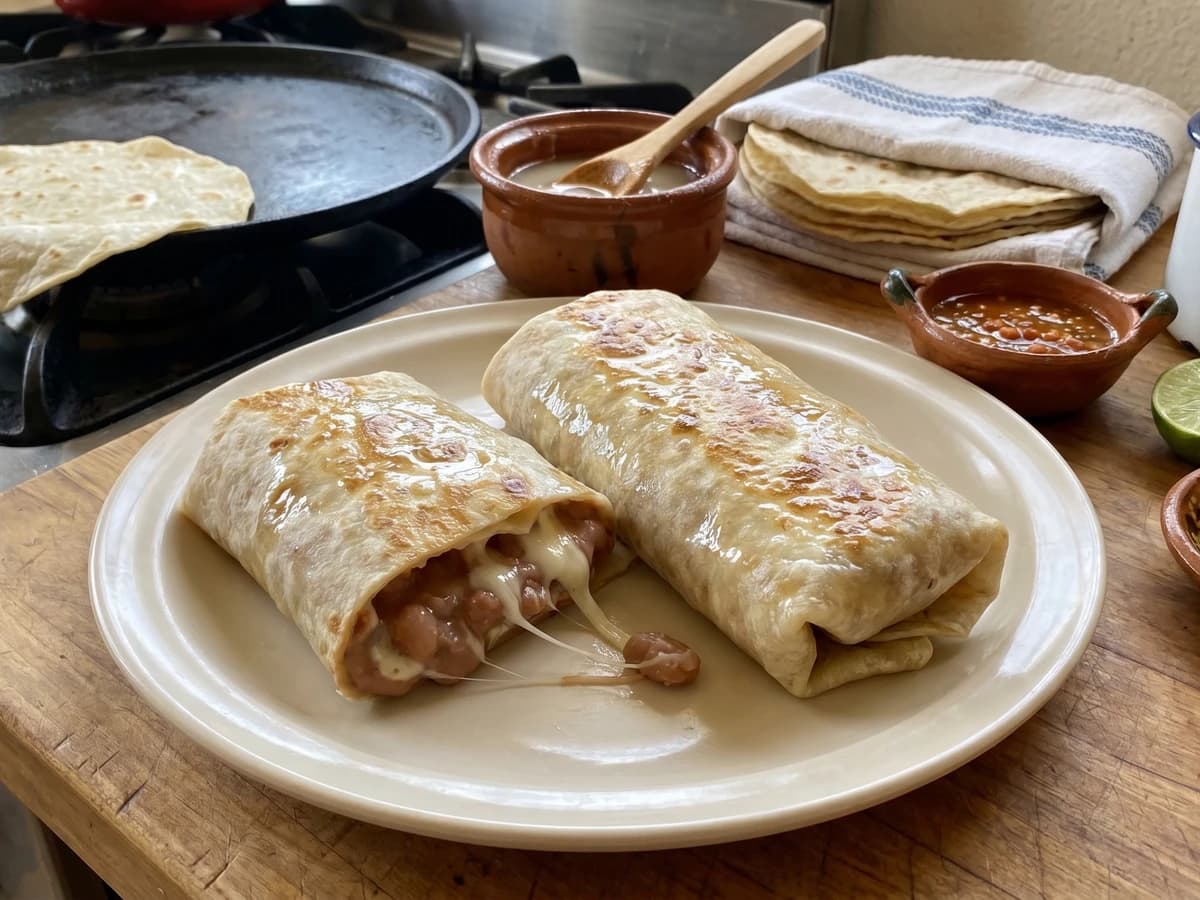
Sonora's morning burrito of mashed pinto frijoles puercos and melted queso asadero, wrapped in a paper-thin sobaquera and seared on the comal until the cheese pulls in long strings.