Chef Lupita
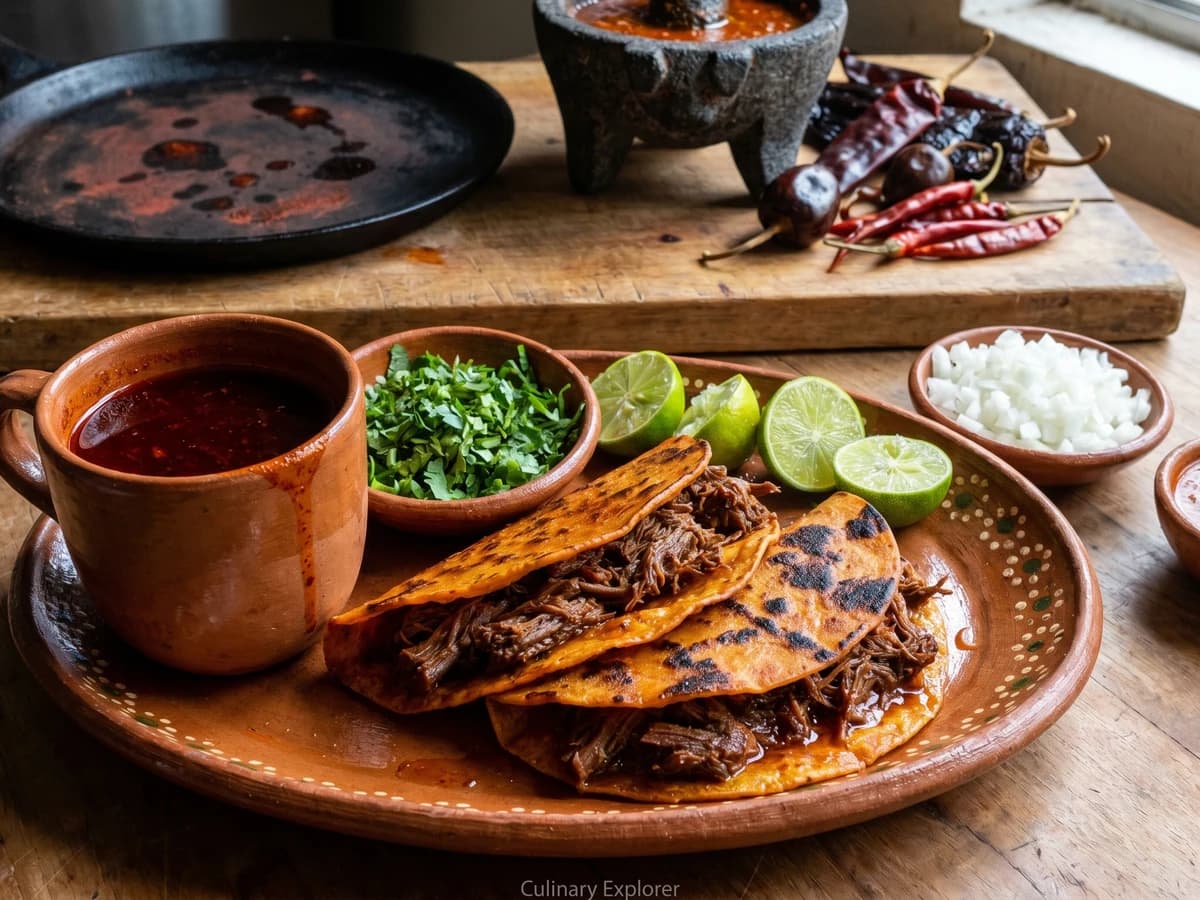
Birria Tacos with Consome
Jalisco's goat birria, born around Cocula and carried into Guadalajara's markets, slow-braised in ancho, guajillo, cascabel, and chile de arbol, then tucked into corn tortillas crisped in its own red fat.
A cooking platform built around craft, culture, and the stories behind what we eat.
Created by
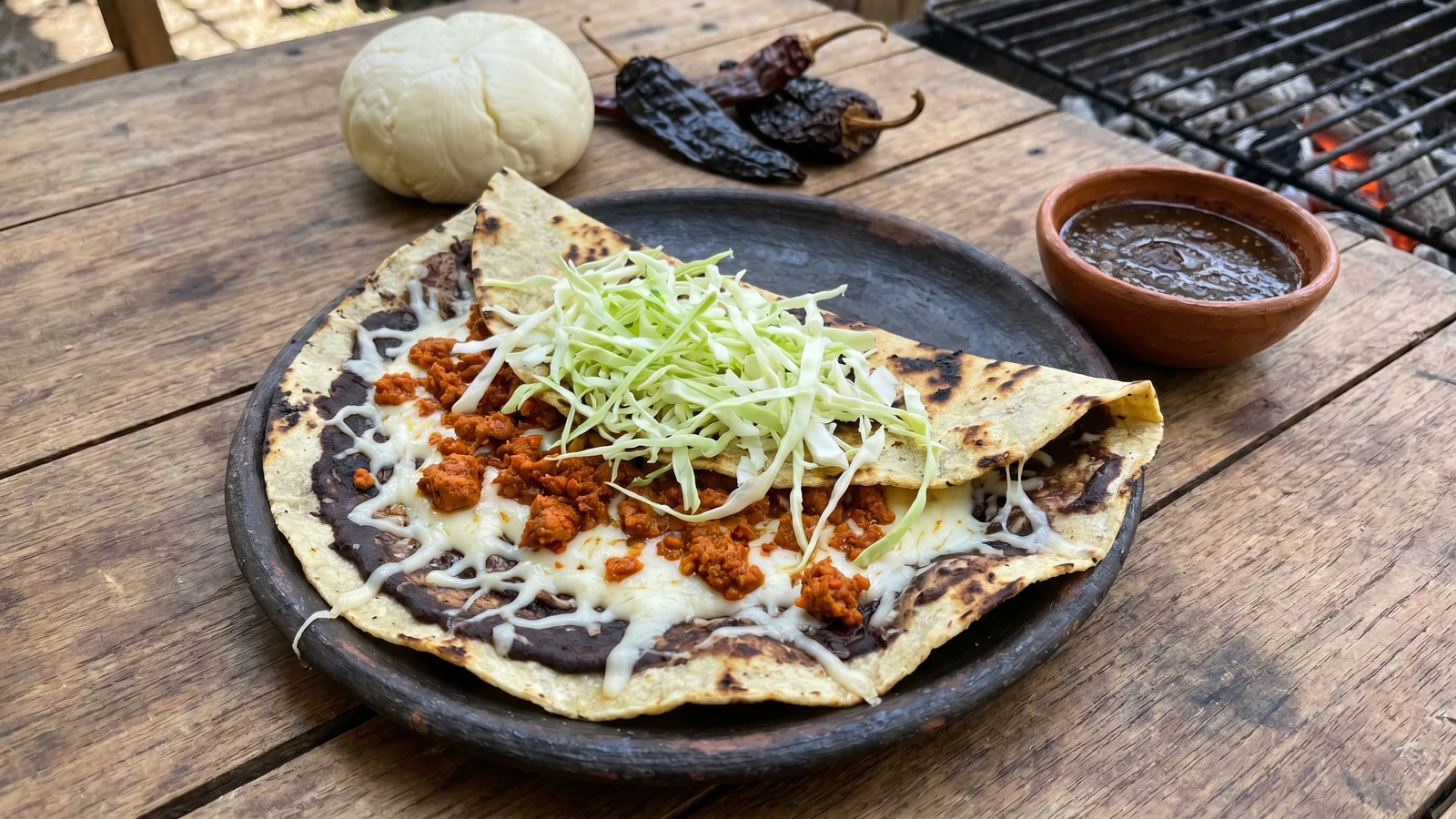
Oaxaca's oversized corn tortilla, spread with asiento and refried black beans, loaded with the vinegar-sharp chorizo of the Valles Centrales and long strings of melted quesillo, finished with finely shredded raw cabbage.
This is Oaxaca's tlayuda. It comes from the Valles Centrales, the broad highland valleys around the city of Oaxaca de Juárez, and specifically from the market stalls and street corners where women have been building them over charcoal for longer than anyone can remember. If someone calls it a "Mexican pizza," leave the conversation. A pizza is bread with toppings. A tlayuda is a dried corn tortilla the size of a steering wheel, spread with asiento and black beans, loaded with whatever the cook decides you need, and grilled until the edges char and the quesillo pulls into long strings. The two have nothing in common.
The ingredient that separates a tlayuda from a big tostada is asiento. Asiento is the dark, thick sediment left at the bottom of the cazo after frying chicharrón: concentrated pork flavor, slightly bitter, deeply smoky, with a texture somewhere between soft lard and a coarse paste. The senoras at the Mercado 20 de Noviembre spread it across the tortilla with the back of a spoon before anything else goes on. Without asiento, you don't have a tlayuda. You have a big crispy tortilla with things on top. La manteca es el sabor, and asiento is manteca in its most concentrated, most Oaxacan form.
The chorizo on this version is oaxaqueño, and that matters. Chorizo oaxaqueño is not the sweet, paprika-red sausage you find in Toluca or the smoky links from Monterrey. It's vinegar-tart, made with chile ancho and sometimes pasilla oaxaqueño, with a sharp acidity that cuts through the richness of the asiento and the fat of the quesillo. You crumble it into a dry skillet and it renders its own orange-red fat, tinting the pan. When it hits the beans and the melted cheese on the tortilla, the whole thing comes together: smoky, tart, rich, crisp at the edges.
I ate my first proper tlayuda in the 20 de Noviembre market at eleven o'clock at night, standing at a metal counter while a woman worked four of them at once over a charcoal grill. She didn't ask what I wanted on mine. She built it, folded it in half, and handed it to me wrapped in brown paper. I wrote "asiento" in my notebook and underlined it three times. Cada estado, su propia cocina, and this one belongs to Oaxaca.
The tlayuda takes its name from a Zapotec-influenced term for a large toasted corn tortilla, though the exact etymology is debated among linguists and food historians in Oaxaca. The oversized, partially dehydrated tortilla format is pre-Hispanic in origin, developed as a practical solution for market-day meals that needed to travel without spoiling: the slow toasting and partial drying on a clay comal extends the tortilla's shelf life to several days, a necessity in the Valles Centrales before refrigeration. The dish's modern assembled form, spread with asiento and refried black beans, topped with quesillo, and grilled over charcoal, solidified as a Oaxacan street food icon in the mid-20th century alongside the growth of Oaxaca de Juárez's central markets, particularly the Mercado 20 de Noviembre, where tlayuda stalls became destinations for late-night eaters and travelers from across the republic.
Quantity
4 (12 to 14 inches)
Quantity
3 tablespoons
Quantity
12 ounces
casing removed
Quantity
2 cups
with 1/2 cup of their broth
Quantity
2 tablespoons
Quantity
1/4
finely chopped
Quantity
1 sprig
or 1 teaspoon dried
Quantity
8 ounces
pulled into long strips
Quantity
2 cups
finely shredded
Quantity
to taste
Quantity
for serving
| Ingredient | Quantity |
|---|---|
| large tlayuda tortillas | 4 (12 to 14 inches) |
| asiento (dark pork lard sediment from chicharrón) | 3 tablespoons |
| chorizo oaxaqueñocasing removed | 12 ounces |
| cooked black beanswith 1/2 cup of their broth | 2 cups |
| manteca de cerdo (pork lard) | 2 tablespoons |
| white onionfinely chopped | 1/4 |
| fresh epazoteor 1 teaspoon dried | 1 sprig |
| quesillo (Oaxacan string cheese)pulled into long strips | 8 ounces |
| green cabbage (repollo)finely shredded | 2 cups |
| kosher salt | to taste |
| salsa de pasilla oaxaqueño or salsa roja (optional) | for serving |
Heat the manteca de cerdo in a small heavy saucepan over medium. When the lard shimmers, add the chopped onion and cook until it turns translucent, about three minutes. Add the cooked black beans with their broth and the epazote. Mash them with a bean masher or the back of a wooden spoon until you have a thick, spreadable paste. Some chunks are fine. The beans should hold their shape on a spoon, not run off it. If they are too thick, add a splash more broth. Season with salt. Keep them warm over low heat while you prepare everything else.
Crumble the chorizo oaxaqueño into a dry skillet over medium heat. No oil, no lard. The chorizo carries its own fat and will render it within the first two minutes. Break it into small, uneven pieces with a wooden spoon as it cooks. You want some bits crisp at the edges and others just cooked through. The skillet will turn orange-red from the chile and the vinegar will sharpen the air. Cook for seven to eight minutes, until the meat is browned and the fat has separated. Leave the chorizo in the skillet with its rendered fat. That fat is flavor.
Pull the quesillo apart into long, thin strips with your fingers. It should come apart in threads like string cheese, not crumble. If it resists, it is too cold. Let it sit at room temperature for fifteen minutes and try again. Shred the cabbage as fine as you can manage, almost like slaw. The cabbage goes on raw, at the very end, and the fine cut is what lets it drape across the hot filling without turning the whole thing into a salad.
Heat a large comal, cast iron skillet, or grill grate over medium heat. Take one tlayuda tortilla and spread a thin layer of asiento across the entire surface with the back of a spoon. The asiento should go edge to edge. It is not a garnish, it is the base coat. Over the asiento, spread a generous layer of the refried black beans, leaving about an inch of bare tortilla at the rim. Lay the pulled quesillo strips across the beans. Scatter a quarter of the cooked chorizo over the cheese. Repeat with remaining tlayudas.
Place the assembled tlayuda on the hot comal or grill. Cook for four to five minutes without moving it. You are listening for the sound of the tortilla drying and crisping underneath, a quiet crackling. Lift an edge to check: the bottom should be spotted dark brown with charred patches and the tortilla should feel stiff and dry, not flexible. The quesillo on top should be soft and just starting to melt into the beans. Do not flip it. A tlayuda is not a quesadilla. The top stays open to the heat and the bottom does all the work.
Pull the tlayuda off the heat and onto a cutting board or directly onto a plate. Pile a generous handful of the shredded raw cabbage across the top. The cabbage does not wilt. It stays crisp and cool against the hot filling, and that contrast is the point. You can fold the tlayuda in half if you want to eat it standing, the way they serve them at the market, or leave it open and eat it with a knife and fork. Serve with salsa de pasilla oaxaqueño on the side. Recetas probadas y garantizadas.
1 serving (about 380g)
Culinary guides, cultural storytelling, and the editorial depth that makes cooking meaningful.
Discover Culinary ExplorerChef Lupita
Jalisco's goat birria, born around Cocula and carried into Guadalajara's markets, slow-braised in ancho, guajillo, cascabel, and chile de arbol, then tucked into corn tortillas crisped in its own red fat.
Chef Lupita
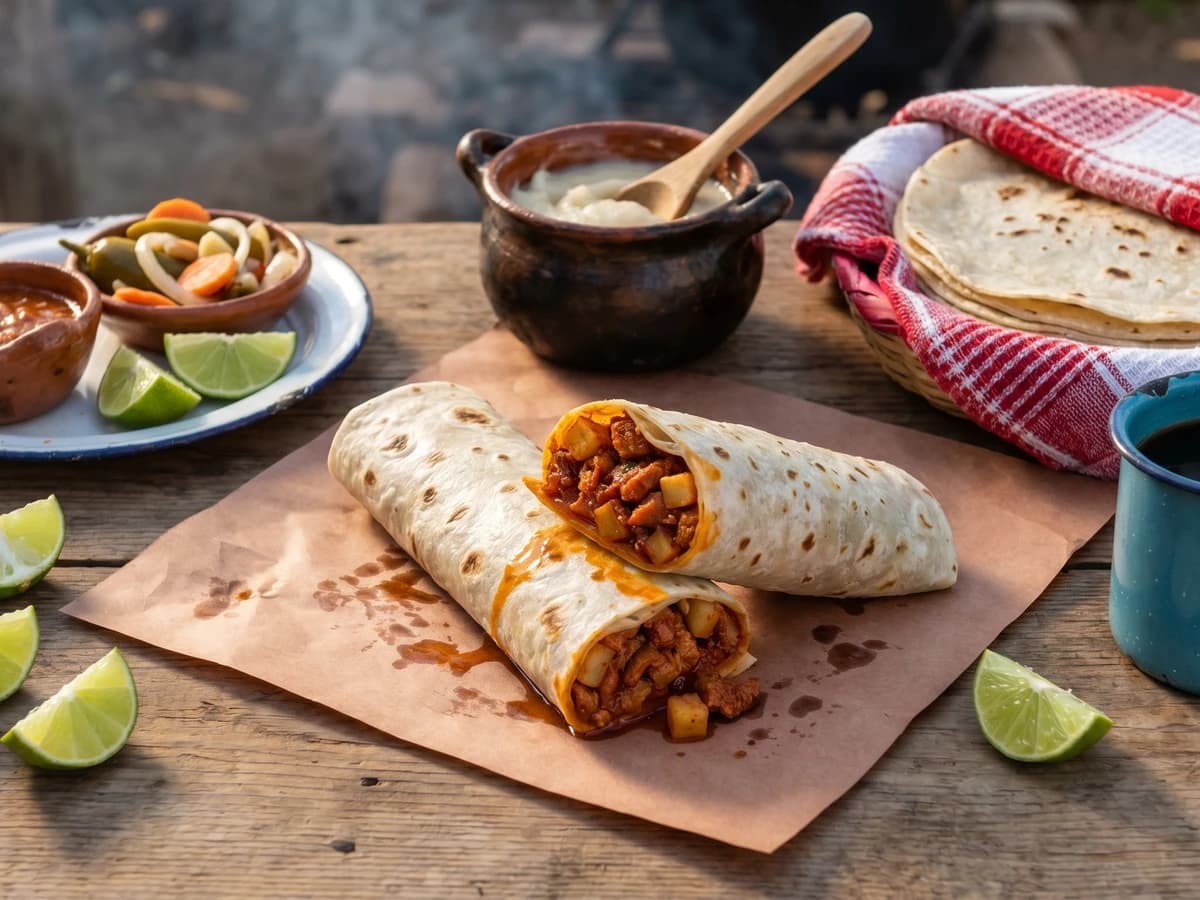
Sonora's working morning burrito: chicharrón de cáscara stewed in chile colorado with diced potato, rolled tight in a paper-thin tortilla sobaquera and eaten standing up at the carreta.
Chef Lupita
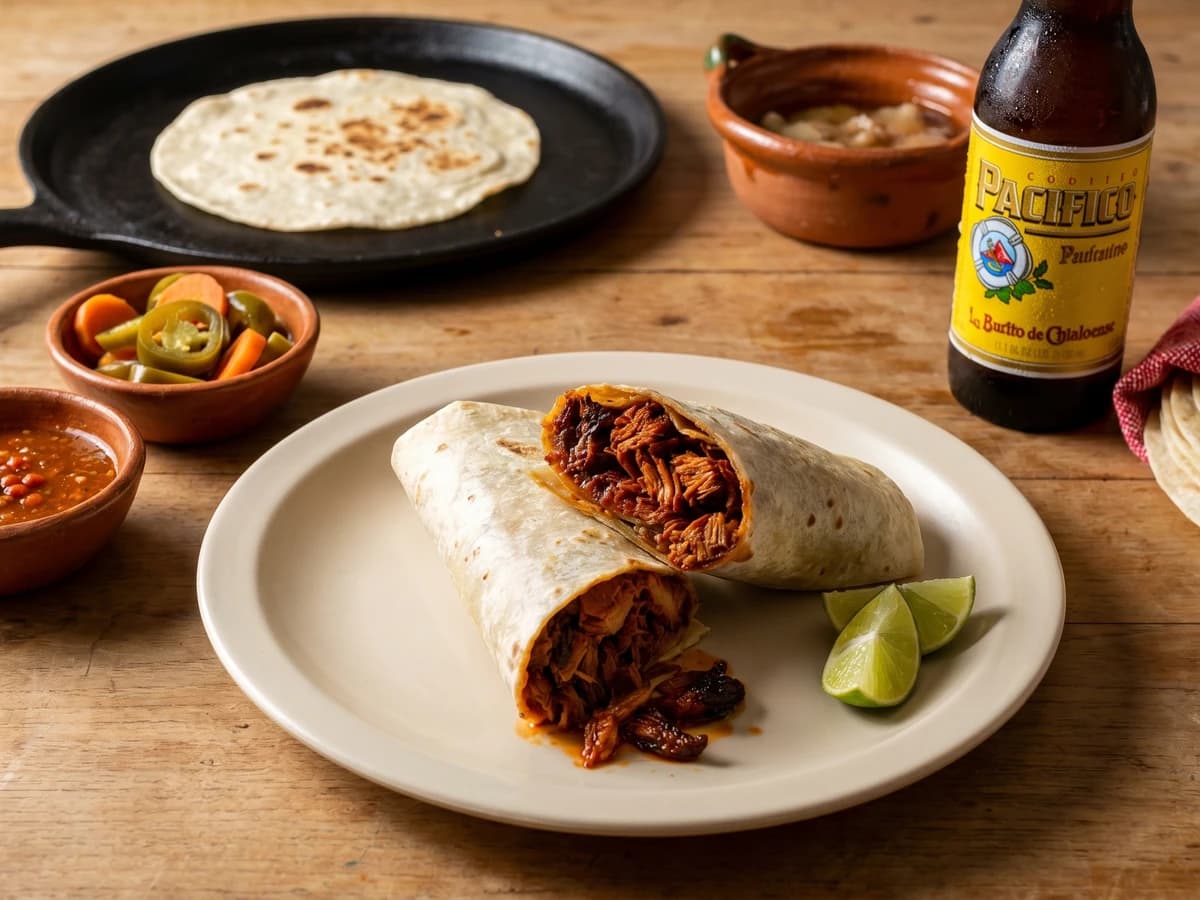
Mocorito's pork chilorio, shredded and confited in lard with chile ancho and pasilla, rolled into a thin handmade flour tortilla. The burrito Sinaloa sends out into the world.
Chef Lupita
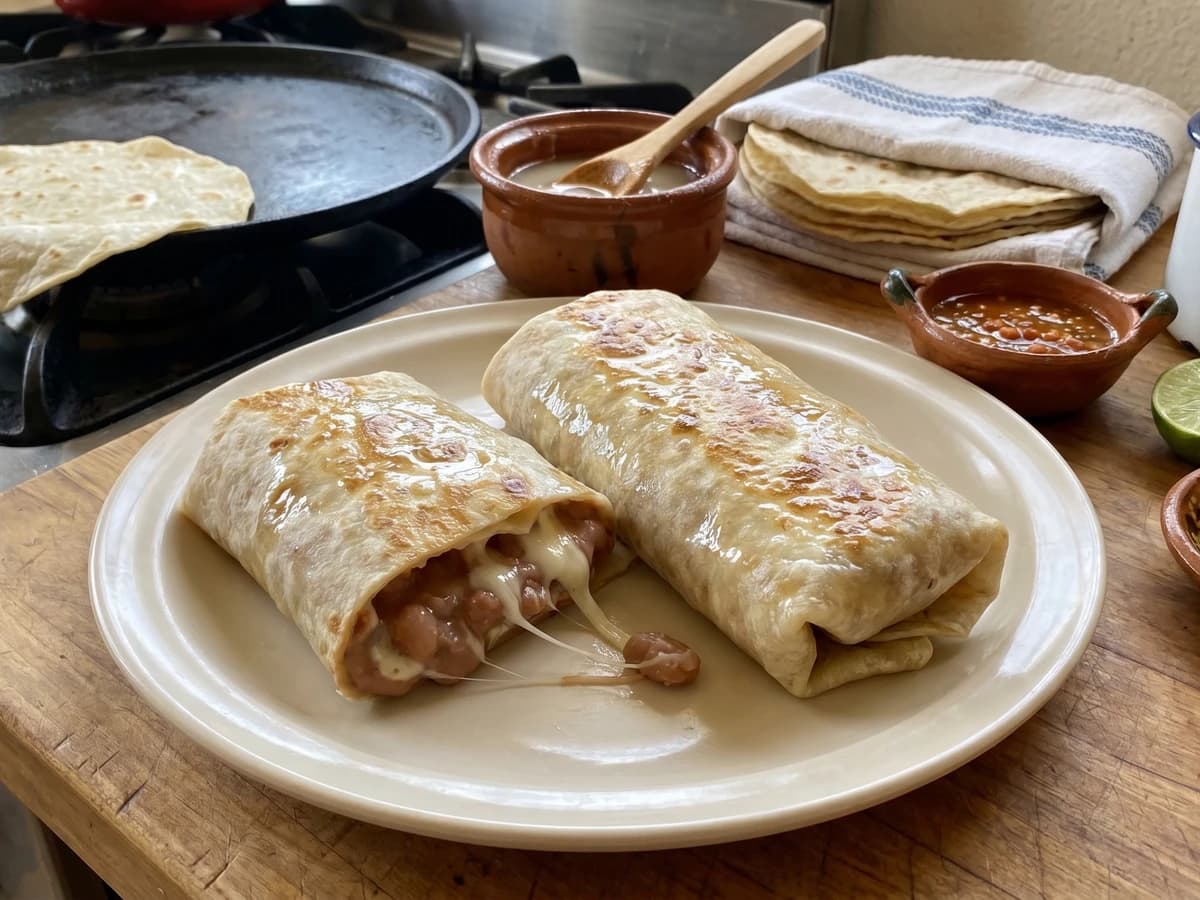
Sonora's morning burrito of mashed pinto frijoles puercos and melted queso asadero, wrapped in a paper-thin sobaquera and seared on the comal until the cheese pulls in long strings.