Chef Lupita
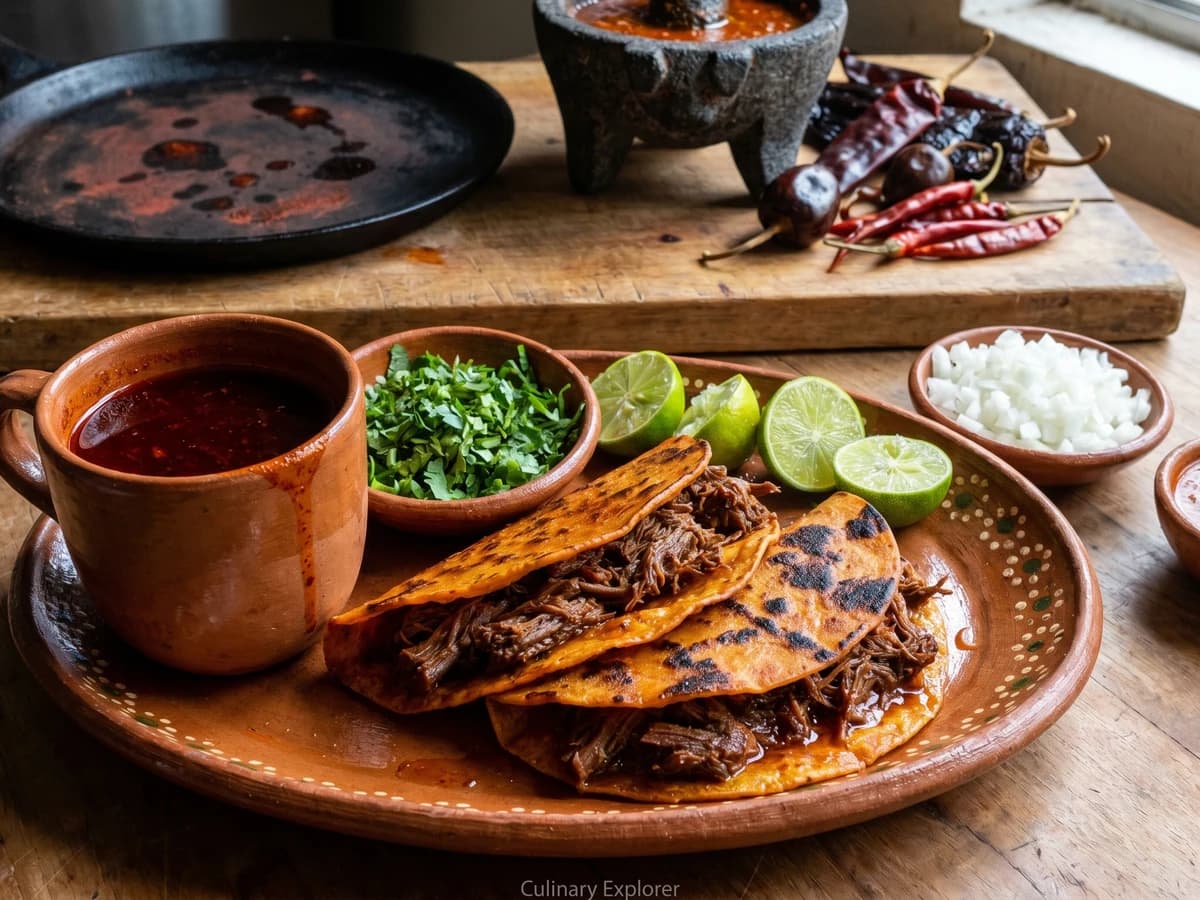
Birria Tacos with Consome
Jalisco's goat birria, born around Cocula and carried into Guadalajara's markets, slow-braised in ancho, guajillo, cascabel, and chile de arbol, then tucked into corn tortillas crisped in its own red fat.
A cooking platform built around craft, culture, and the stories behind what we eat.
Created by
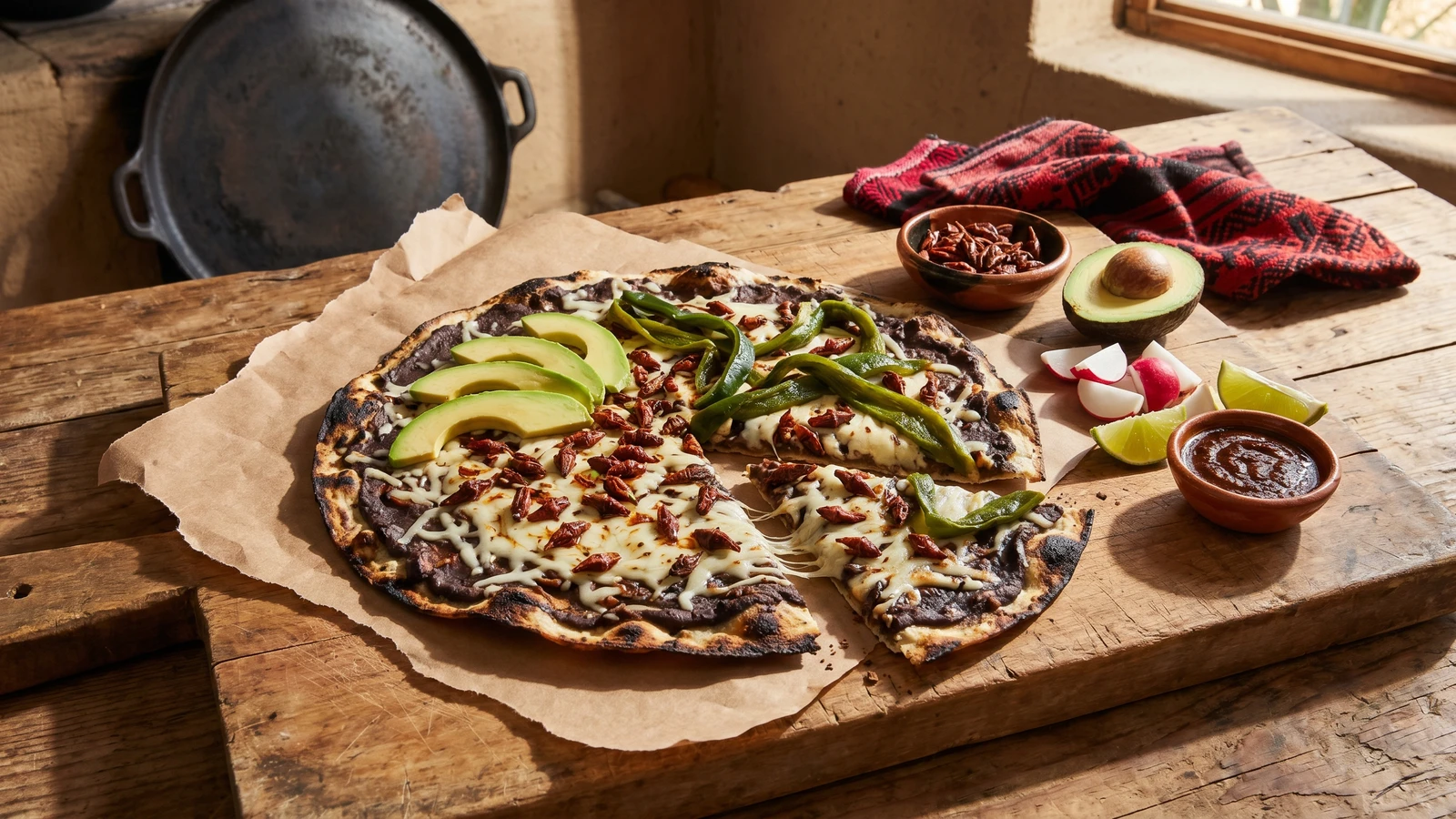
Oaxaca's street-level monument: a charred, oversized tortilla spread with asiento and black bean paste, buried under quesillo, garlic-lime chapulines, ripe avocado, and strips of roasted chile de agua.
This is Oaxaca's dish. Not Mexico City's reinterpretation of it, not a "Mexican pizza," not a novelty for tourists to photograph at the Mercado 20 de Noviembre. The tlayuda is a working food from the Valles Centrales, and it has been feeding Oaxacans for longer than anyone has been writing about it.
The foundation is the tortilla itself, a 12-to-14-inch round of nixtamalized masa, partially dried on a comal so it develops that leathery stiffness that holds everything on top without collapsing. Then asiento, the dark, grainy sediment from the bottom of the pork-rendering cazo, spread across the surface the way you would butter bread if butter tasted like smoke and pork fat. Then the black beans, fried with avocado leaf until they hold their shape on a spoon. Then quesillo, pulled into strings, because that's how quesillo works. Everything that follows is the cook's signature.
Chapulines are not a garnish. In Oaxaca they are an ingredient, sold by the kilo at the mercado, sorted by size, seasoned with garlic, lime, and chile, and eaten the way the rest of the country eats peanuts. On a tlayuda, they bring a dry crunch and a toasty, earthy protein that no meat replicates. The chile de agua, Oaxaca's own fresh green chile, roasted and stripped into ribbons, gives a vegetal heat that belongs here because it grows here. And the avocado is just ripe avocado, sliced and laid on top where it can cool the whole thing down.
I have eaten tlayudas at midnight on the street in Oaxaca City, standing next to a comal balanced on a metal drum, watching a senora build them with the speed of someone who has done this ten thousand times. Her hands moved through asiento, beans, cheese, chapulines without looking, the way a pianist reads music. I asked her for proportions. She looked at me like I had asked her how many breaths she takes per minute. Recetas probadas y garantizadas, but some recipes live in the hands, not on the page.
The tlayuda predates the Spanish conquest as a preservation strategy: the oversized tortilla, partially dehydrated on the comal, lasted days without spoiling, making it a practical staple for Zapotec communities in the Valles Centrales of Oaxaca where centralized markets required foods that traveled well. The name likely derives from the Zapotec 'tlayuda' or the Nahuatl-influenced 'clayuda,' though the etymology is debated among linguists and food historians. Chapulines as a protein source have been documented in Oaxacan diets since pre-Columbian times, gathered seasonally from alfalfa fields in the milpa system, and their inclusion on the tlayuda reflects a continuity of indigenous foodways that survived colonialism largely because the Spanish had no interest in eating grasshoppers and therefore no reason to ban them.
Quantity
4
12 to 14 inches
Quantity
1/2 cup
Quantity
2 cups
with 1/2 cup of their cooking liquid reserved
Quantity
2
Quantity
1 tablespoon
Quantity
1/2 teaspoon, plus more to taste
Quantity
1 cup
medium size
Quantity
2 cloves
finely minced
Quantity
1 tablespoon
Quantity
8 ounces
pulled into long strips
Quantity
2
sliced
Quantity
4
roasted, peeled, and cut into strips
Quantity
1/2 cup
Quantity
8
quartered
Quantity
for serving
| Ingredient | Quantity |
|---|---|
| tlayuda tortillas12 to 14 inches | 4 |
| asiento (unrefined pork lard sediment) | 1/2 cup |
| cooked black beanswith 1/2 cup of their cooking liquid reserved | 2 cups |
| dried avocado leaves (hojas de aguacate) | 2 |
| pork lard (manteca de cerdo) | 1 tablespoon |
| kosher salt | 1/2 teaspoon, plus more to taste |
| chapulines (dried grasshoppers)medium size | 1 cup |
| garlicfinely minced | 2 cloves |
| fresh lime juice | 1 tablespoon |
| quesillo (Oaxacan string cheese)pulled into long strips | 8 ounces |
| ripe Hass avocadossliced | 2 |
| fresh chiles de aguaroasted, peeled, and cut into strips | 4 |
| salsa de pasilla oaxaqueno or salsa de chile de agua | 1/2 cup |
| radishes (optional)quartered | 8 |
| lime wedges (optional) | for serving |
Place the chiles de agua directly on the grate of a gas burner or on a hot comal over high heat. Turn them with tongs as the skin blisters and blackens, about two minutes per side. You want the skin charred all over but the flesh still firm underneath, not collapsed. Transfer to a plastic bag, close it, and let them sweat for ten minutes. Peel the skin off with your fingers, slit each one open, remove the seeds and veins, and tear them into long strips. Chile de agua has a green, vegetal heat that is nothing like a jalapeno or a poblano. It belongs to this dish because it belongs to Oaxaca.
Toast the dried avocado leaves on a dry comal for about ten seconds per side until fragrant. They will release a scent like anise and green wood. Crumble them. In a small skillet, melt the tablespoon of lard over medium heat. Add the cooked black beans, the reserved cooking liquid, the crumbled avocado leaves, and the salt. Mash the beans with the back of a wooden spoon or a bean masher as they fry, working them into a thick paste that holds its shape on the spoon. This should take five to seven minutes. The paste should be spreadable but not wet. Too loose and it soaks the tlayuda. Too thick and it cracks. You want it to coat a spoon and slowly slide off.
Heat a dry comal or cast iron skillet over medium heat. Add the chapulines and toast them, shaking the pan often, for two to three minutes until they darken slightly and smell nutty. Push them to one side. Add a thin slick of lard to the empty side and fry the minced garlic for thirty seconds until just golden. Toss the garlic into the chapulines, squeeze the lime juice over the whole pan, and stir. The lime should sizzle and evaporate almost instantly. Season with a pinch of salt. They should be dry, crunchy, and toasty with garlic and acid. Set them aside.
The asiento should be at room temperature so it spreads easily. If it is straight from the refrigerator, let it sit out for twenty minutes or warm it gently in a small pan for a minute. Stir it. Asiento has a smoky, porky, slightly grainy quality that regular lard does not have. It is the sediment left at the bottom of the cazo after carnitas or chicharrones are fried. That residue is what gives the tlayuda its base flavor. There is no substitute.
Place a tlayuda directly on the grate of a gas burner or on a very hot comal. Toastit for about one minute per side, turning once, until parts of the surface are charred and the whole thing stiffens but does not crack in half. A tlayuda is a partially dried tortilla, larger and thinner than a standard tortilla, and the texture after toasting should be leathery and rigid at the edges with some flexibility in the center. If it snaps like a tostada, your comal was too hot or you went too long. If it is still floppy, give it another thirty seconds.
Work quickly now. Spread a generous layer of asiento across the hot tlayuda, covering it almost to the edge. Then spread a layer of the black bean paste over the asiento. It does not need to be even. Scatter the pulled quesillo strips across the beans. Return the assembled tlayuda to the comal over medium heat, cover it with a lid or an inverted pot for two to three minutes, just long enough for the quesillo to soften and begin to melt into the beans. The cheese should stretch, not pool. Oaxacan quesillo melts differently from mozzarella. It pulls into strings. That is correct.
Remove the tlayuda from the comal and set it on a cutting board or a large clay plate. Lay the avocado slices across one half. Pile the toasted chapulines generously across the other half. Arrange the roasted chile de agua strips across the center. Spoon a line of salsa de pasilla oaxaqueno down the middle if using. Fold the tlayuda in half if you are eating it by hand on the street, or leave it open and cut it into wedges for the table. Serve with quartered radishes and lime. Cada estado, su propia cocina, and this one is Oaxaca's.
1 serving (about 430g)
Culinary guides, cultural storytelling, and the editorial depth that makes cooking meaningful.
Discover Culinary ExplorerChef Lupita
Jalisco's goat birria, born around Cocula and carried into Guadalajara's markets, slow-braised in ancho, guajillo, cascabel, and chile de arbol, then tucked into corn tortillas crisped in its own red fat.
Chef Lupita
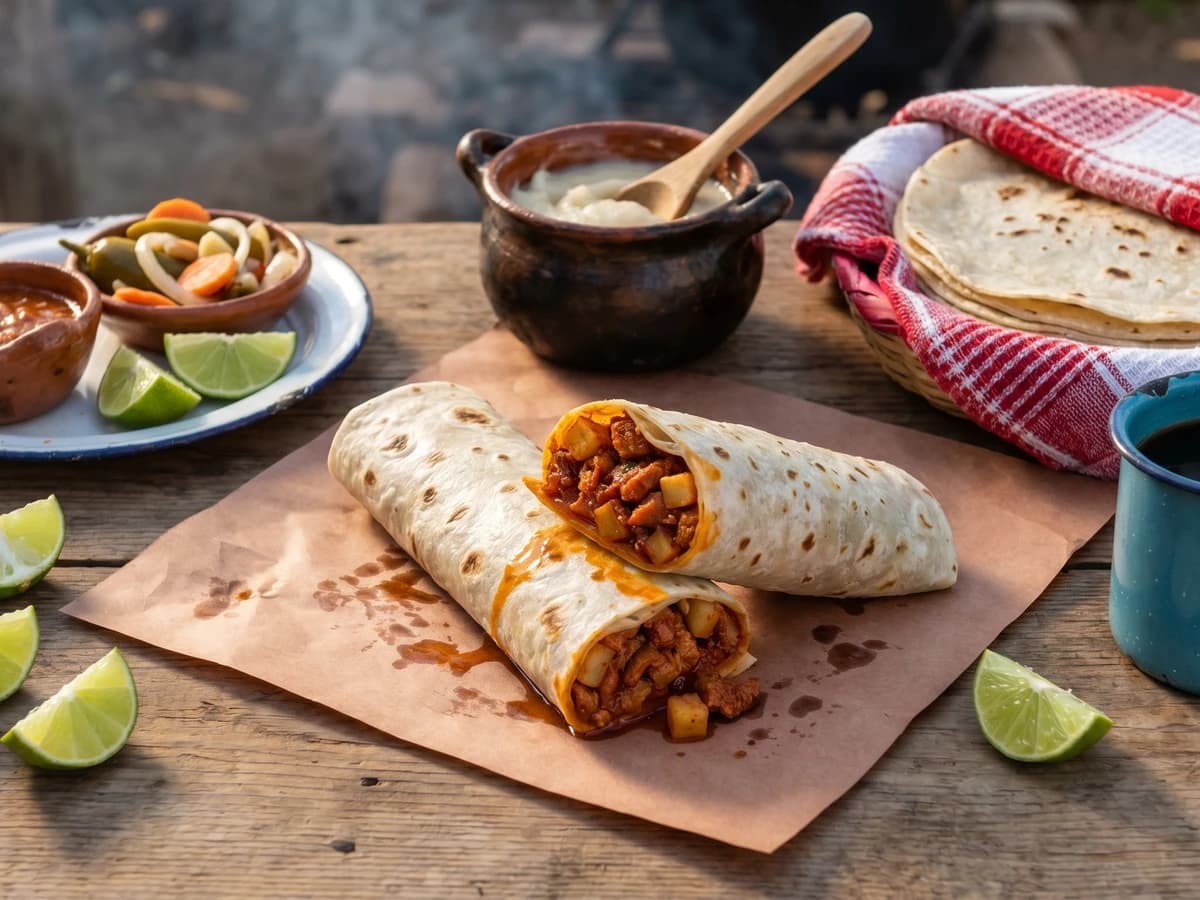
Sonora's working morning burrito: chicharrón de cáscara stewed in chile colorado with diced potato, rolled tight in a paper-thin tortilla sobaquera and eaten standing up at the carreta.
Chef Lupita
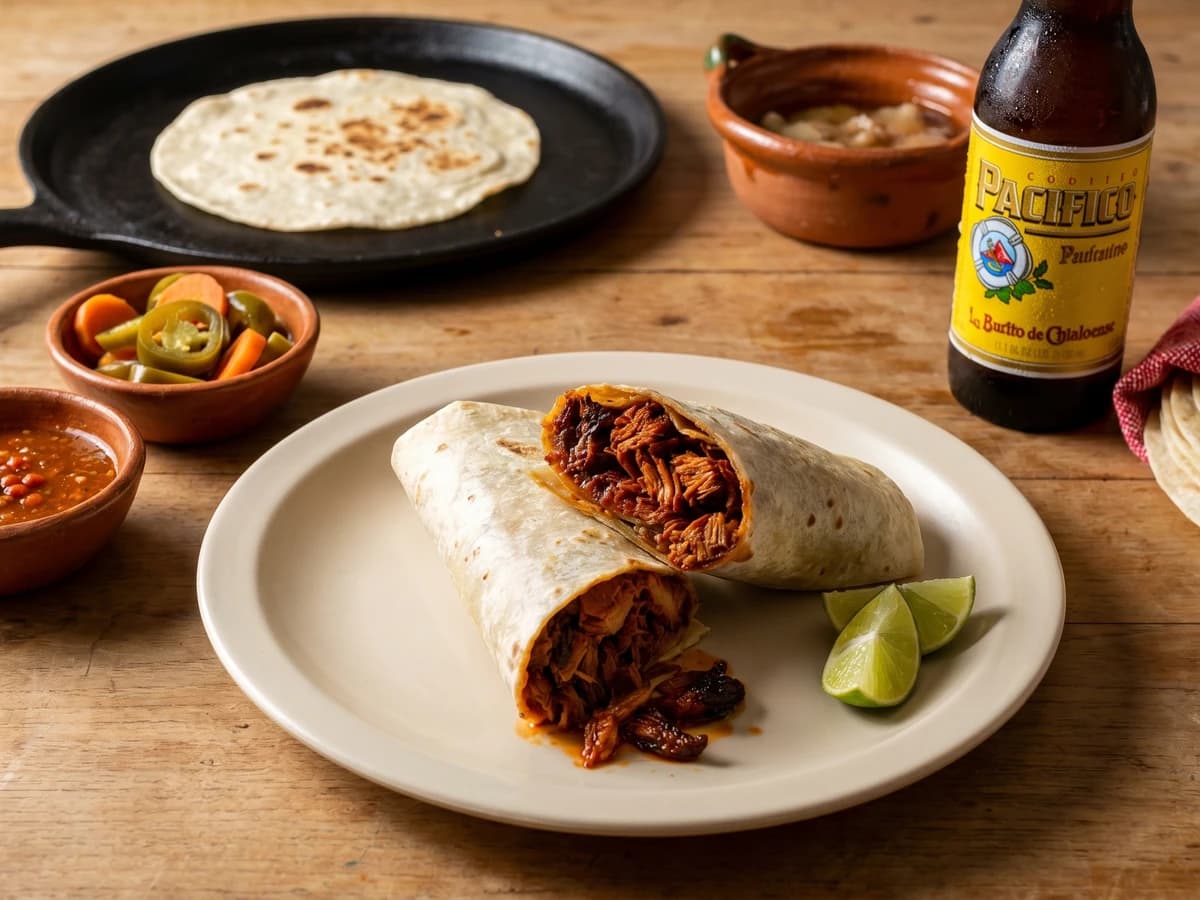
Mocorito's pork chilorio, shredded and confited in lard with chile ancho and pasilla, rolled into a thin handmade flour tortilla. The burrito Sinaloa sends out into the world.
Chef Lupita
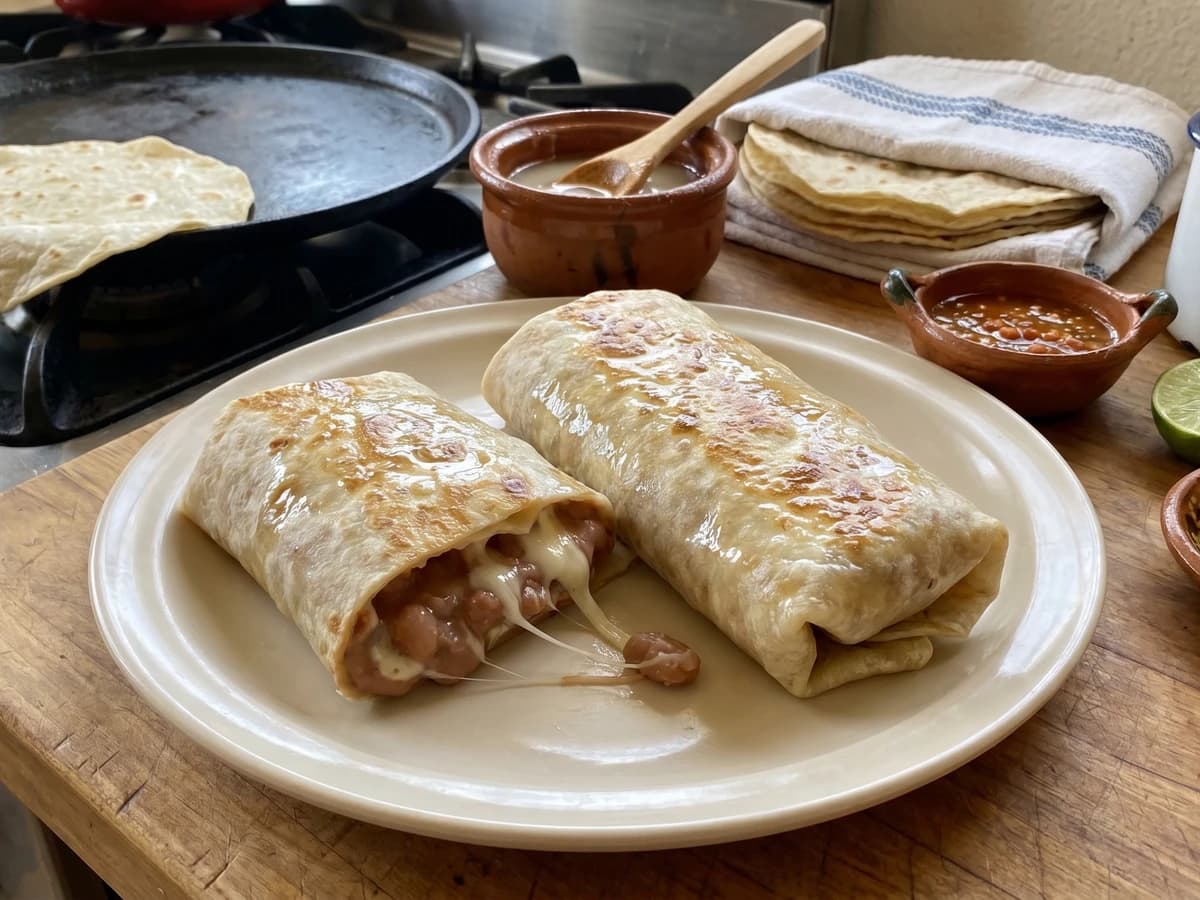
Sonora's morning burrito of mashed pinto frijoles puercos and melted queso asadero, wrapped in a paper-thin sobaquera and seared on the comal until the cheese pulls in long strings.