
Chef Juliette
Various Almond Preparations
Five almond preparations, one discipline: remove the skins cleanly, dry every kernel through, then cut, toast, or cloak it in pale caramel without letting its fragrant oils escape.
A cooking platform built around craft, culture, and the stories behind what we eat.
Created by
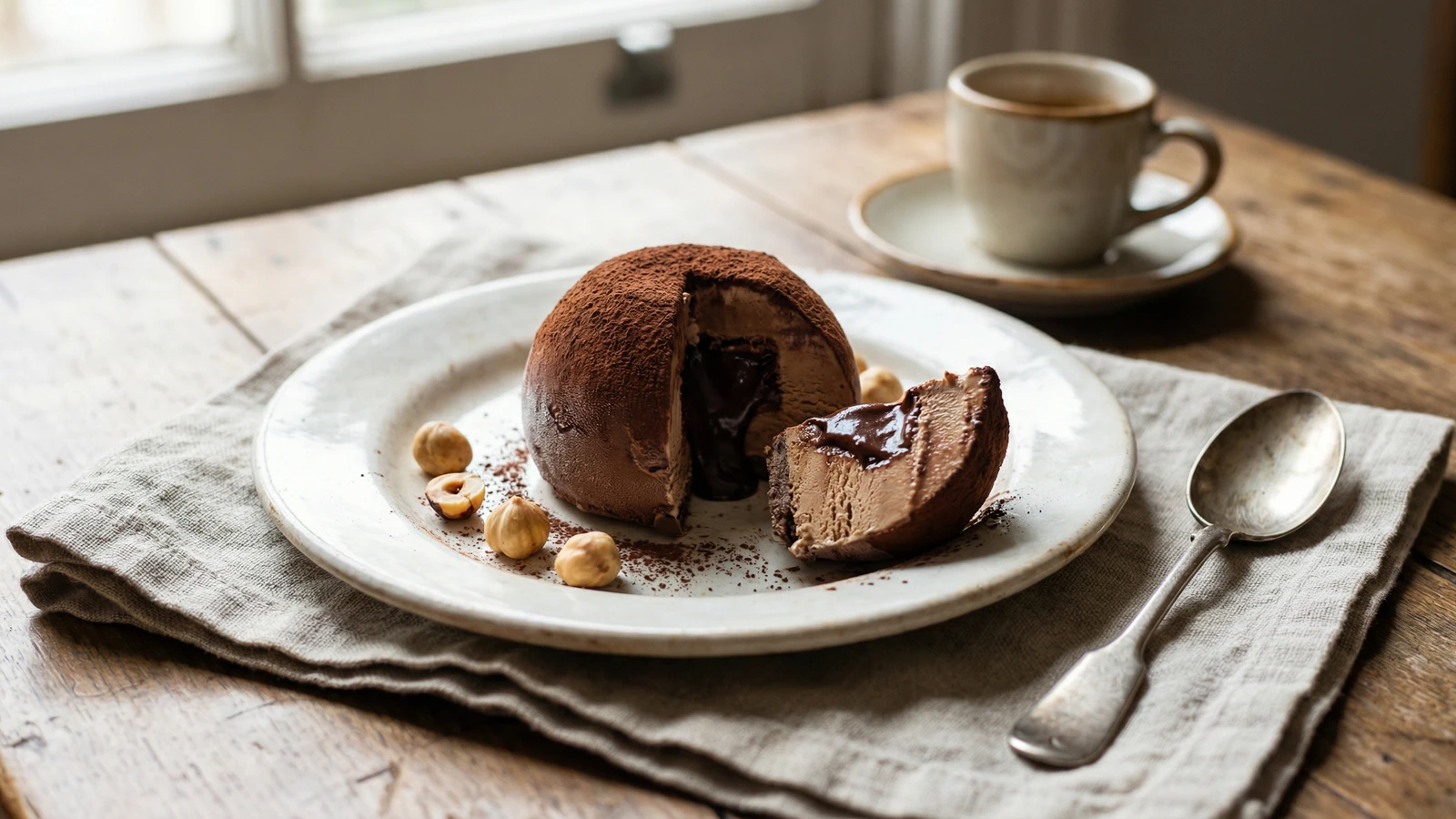
The legendary frozen truffle of Calabria, hand-shaped without molds, revealing a heart of molten dark chocolate when you break through the cocoa-dusted shell. This is what happens when a gelatiere has no molds and uses his hands instead.
In 1952, a gelatiere in the small fishing town of Pizzo Calabro faced a problem: he had no molds. What he did have was gelato, good chocolate, and two hands. He shaped the ice cream into rough spheres, pressed a piece of chocolate into the center, rolled them in cocoa powder, and created what would become his town's most famous export.
This is not a smooth, factory-perfect dessert. The tartufo di Pizzo is meant to be slightly irregular, shaped by human hands rather than silicone forms. The exterior is dark with cocoa, almost truffle-like in appearance, which explains the name. When you cut through with a spoon, you find two layers of gelato surrounding a heart of dark chocolate that, if you have done your work correctly, remains slightly soft even when frozen.
The technique matters more than any ingredient list. You must work quickly before the gelato softens. You must shape with confidence. And you must understand that this is peasant ingenuity applied to dessert: making something extraordinary from the limitation of having no proper equipment.
Giuseppe De Maria created the tartufo at Bar Dante in Pizzo Calabro in 1952, when a shortage of traditional ice cream molds forced him to shape the gelato by hand. The fishing town on Calabria's Tyrrhenian coast now protects the tartufo di Pizzo as a local specialty, with dozens of gelaterias each claiming the authentic recipe passed down from that first improvisation.
Quantity
2 cups
Quantity
1 cup
Quantity
3/4 cup
divided
Quantity
5
Quantity
1/2 cup, plus more for coating
Quantity
4 ounces
finely chopped
Quantity
1 cup
toasted and skinned
Quantity
1/4 teaspoon
Quantity
8 ounces
for the centers
Quantity
1/2 cup
for ganache
Quantity
for finishing
| Ingredient | Quantity |
|---|---|
| whole milk | 2 cups |
| heavy cream | 1 cup |
| granulated sugardivided | 3/4 cup |
| large egg yolks | 5 |
| Dutch-process cocoa powder | 1/2 cup, plus more for coating |
| bittersweet chocolate (70%)finely chopped | 4 ounces |
| hazelnutstoasted and skinned | 1 cup |
| fine sea salt | 1/4 teaspoon |
| bittersweet chocolate (70%)for the centers | 8 ounces |
| heavy creamfor ganache | 1/2 cup |
| unsweetened cocoa powder | for finishing |
In a heavy saucepan, combine the milk, 1 cup cream, and half the sugar. Warm over medium heat until steam rises and bubbles form at the edges. Do not boil. In a bowl, whisk the egg yolks with the remaining sugar until pale and thick, about 2 minutes. Slowly pour the hot milk mixture into the yolks, whisking constantly to prevent curdling. Return everything to the saucepan.
Cook over medium-low heat, stirring constantly with a wooden spoon, until the custard thickens enough to coat the back of the spoon and reaches 170°F. Draw your finger across the spoon. If the line holds, the custard is ready. Do not let it boil. Remove from heat immediately.
Divide the hot custard in half. To one portion, add the cocoa powder and the 4 ounces chopped chocolate. Whisk until completely smooth. Strain through a fine-mesh sieve into a bowl set over ice. Stir occasionally until cold. This is your chocolate gelato base.
In a food processor, grind the toasted hazelnuts with 2 tablespoons of sugar from your remaining sugar until they form a paste, about 3 minutes. Add the other half of the custard and the salt. Process until very smooth. Strain through a fine-mesh sieve, pressing hard to extract all the hazelnut flavor. Chill over ice until cold.
Churn each base separately in your ice cream maker according to its instructions. The gelato should be thick and creamy, holding soft peaks. Transfer each flavor to separate containers and freeze until firm enough to scoop but still pliable, about 2 hours. Do not freeze solid.
Chop the 8 ounces of chocolate finely. Heat the 1/2 cup cream until it just begins to simmer. Pour over the chocolate and let stand 2 minutes, then stir until completely smooth. Pour into a shallow dish and refrigerate until firm enough to scoop, about 1 hour. Using a small spoon or melon baller, form 8 small balls of ganache. Freeze on a parchment-lined tray until solid, at least 30 minutes.
Work quickly. Line a baking sheet with parchment. Fill a bowl with cocoa powder for coating. Take a scoop of hazelnut gelato about the size of a golf ball and flatten it slightly in your palm. Place a frozen ganache ball in the center. Working fast, wrap the hazelnut gelato around the ganache, then take a slightly larger scoop of chocolate gelato and wrap it around the hazelnut layer. Shape into a rough sphere with your hands. The tartufo should be slightly irregular, not perfectly round. This is hand-shaped, not factory-made.
Immediately roll the shaped tartufo in cocoa powder, coating it completely. Place on the prepared baking sheet. Repeat with remaining gelato and ganache centers. Freeze the tartufi for at least 2 hours, until completely solid. They keep, wrapped individually in plastic, for up to one week.
Remove tartufi from freezer 5 minutes before serving. The exterior should remain firm, but the ganache center will have softened slightly. Dust with additional cocoa powder if the coating has faded. Serve on small plates. When the spoon breaks through the chocolate gelato and hazelnut layers to reach the dark heart, you will understand why a small town in Calabria built its reputation on this dessert.
1 serving (about 200g)
Culinary guides, cultural storytelling, and the editorial depth that makes cooking meaningful.
Discover Culinary ExplorerChef Juliette
Five almond preparations, one discipline: remove the skins cleanly, dry every kernel through, then cut, toast, or cloak it in pale caramel without letting its fragrant oils escape.

Chef Juliette
A pastry pantry lesson in one tray: filberts warmed only until their red skins release, rubbed clean, cooled, and chopped into a fragrant mise-en-place for cakes, creams, pralines, and petits fours.

Chef Juliette
The smallest pâtisserie discipline decides whether a cake leaves its mould intact: clarified butter in every corner, followed by the lightest veil of dry flour or fécule.
Chef Juliette
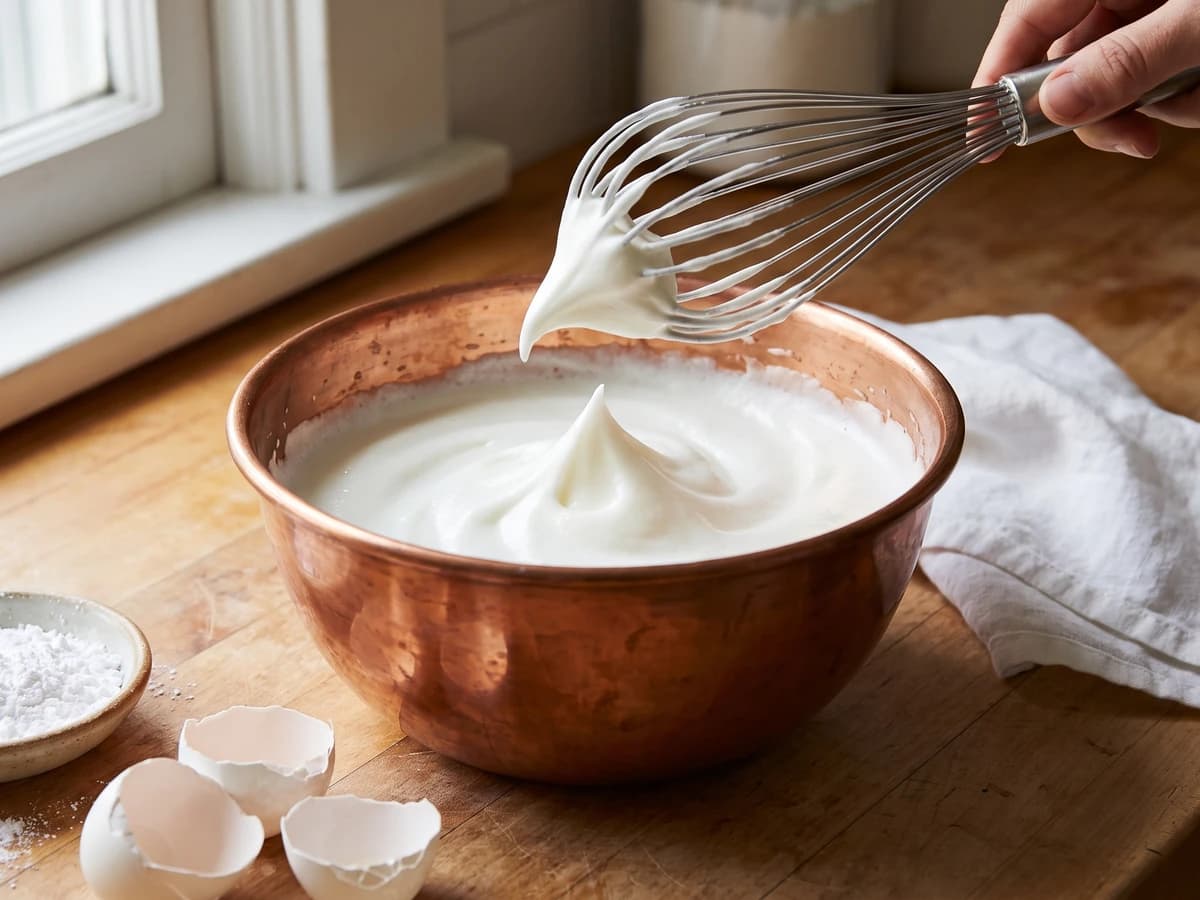
Four whites, one spotless bowl, and a patient change of speed: whisk gently until loosened, then briskly to glossy stiffness, with powdered sugar waiting if the foam begins to granulate.