Chef Lupita
Birria Tacos with Consome
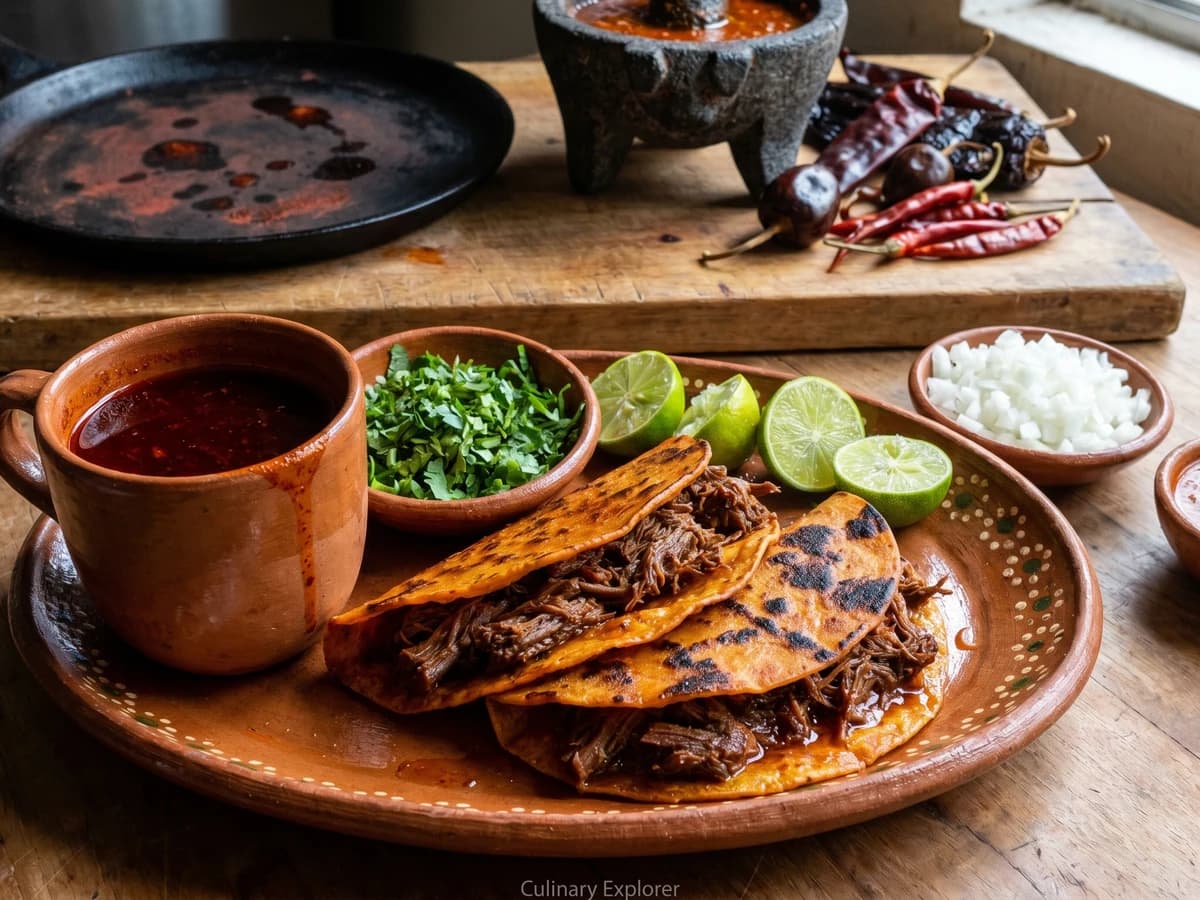
Jalisco's goat birria, born around Cocula and carried into Guadalajara's markets, slow-braised in ancho, guajillo, cascabel, and chile de arbol, then tucked into corn tortillas crisped in its own red fat.
A cooking platform built around craft, culture, and the stories behind what we eat.
Created by
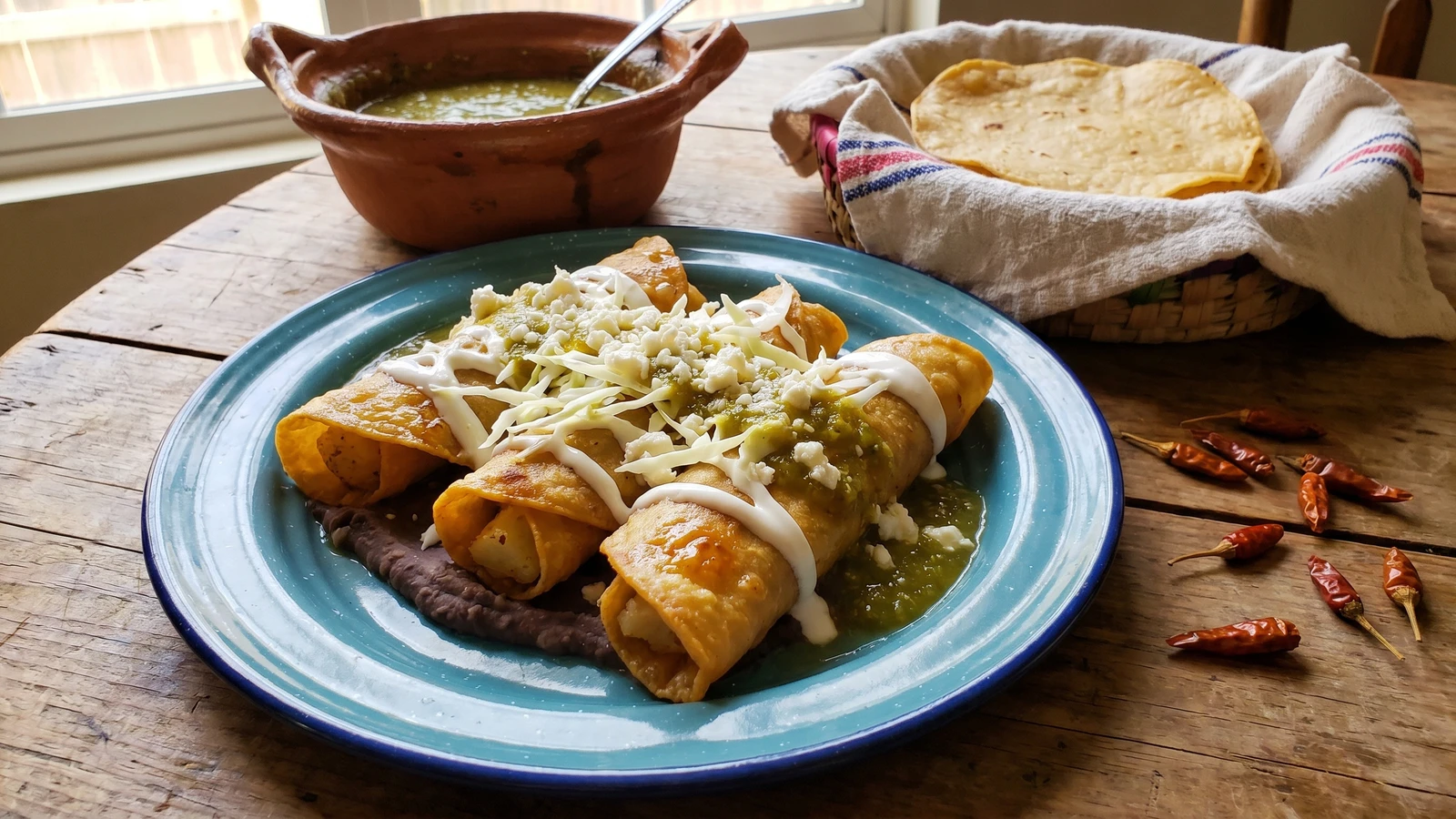
Veracruz's tacos dorados de papa: seasoned mashed potato rolled into corn tortillas and fried in lard until the shells go hard and golden, then buried under cabbage, crema, crumbled queso fresco, and a green salsa sharp with chiltepín.
This is a jarocho taco. Jarocho means Veracruz: the port, the Sotavento, the hot green coast on the Gulf where the cooking carries three roots at once, Indigenous corn, Spanish pork, African heat. Tacos dorados de papa turn up all over Mexico. This is how they fold them on the Gulf coast, and esto no es comida de un solo México.
The potato is boiled, seasoned, and rolled tight into a corn tortilla, then fried in manteca until the shell goes hard and deep gold. Dorado means golden, and that is the whole job: the tortilla has to blister and crisp, not soften. La manteca es el sabor. You can fry these in oil if that is what you have, but the jarocho cooks fry them in lard, and lard is the reason theirs taste like the mercado and yours might not.
My mother made tacos dorados de papa on the thin days, the end of the month when a kilo of potatoes had to stretch across five plates. She was from Jalisco, not Veracruz, but poor-kitchen arithmetic runs the same everywhere: cheap, filling, and good if you season it with a hand that knows what it is doing. I learned the jarocho version later, in the Mercado Hidalgo in Xalapa, watching a señora fry them in lard and bury them under cabbage, crema, and a green salsa sharp with chiltepín. She told me the secret is to dry the potato well so it does not steam the tortilla soft from the inside. She was right. Saber cocinar es saber vivir.
The port of Veracruz, founded by Hernán Cortés in 1519 as La Villa Rica de la Vera Cruz, was the gateway through which the Columbian exchange reached mainland Mexico: the Spanish pigs that gave the country its lard, and the enslaved Africans whose descendants became La Tercera Raíz, the third root of Veracruz culture alongside the Indigenous and the Spanish. The potato itself is not Mexican; it is Andean, domesticated in South America thousands of years before it traveled to Mexico along Spanish trade routes. That makes a taco dorado de papa a small map of the Columbian exchange on one plate: an Andean tuber, fried in Spanish pork fat, folded inside a tortilla of nixtamalized corn that is purely Mesoamerican.
Quantity
2 pounds
peeled and cut into even chunks
Quantity
3 tablespoons
Quantity
1/2
finely chopped
Quantity
2
minced
Quantity
1 teaspoon, plus more to taste
Quantity
12
Quantity
about 2 cups
Quantity
1 pound
husked and rinsed
Quantity
2 to 3
stemmed
Quantity
2
Quantity
1/4
Quantity
1/2 cup
Quantity
1/2 teaspoon, plus more to taste
Quantity
1 cup
Quantity
1 cup (about 4 ounces)
crumbled
Quantity
2 cups
Quantity
for the salsa and the table
crushed
Quantity
for serving
| Ingredient | Quantity |
|---|---|
| yellow potatoes (Yukon gold)peeled and cut into even chunks | 2 pounds |
| lard (manteca de cerdo) | 3 tablespoons |
| white onionfinely chopped | 1/2 |
| garlic clovesminced | 2 |
| kosher salt | 1 teaspoon, plus more to taste |
| corn tortillas | 12 |
| lard (manteca de cerdo), for frying | about 2 cups |
| tomatillos (tomate verde)husked and rinsed | 1 pound |
| chile serranostemmed | 2 to 3 |
| garlic cloves | 2 |
| white onion | 1/4 |
| fresh cilantro leaves and tender stems | 1/2 cup |
| kosher salt | 1/2 teaspoon, plus more to taste |
| Mexican crema | 1 cup |
| queso frescocrumbled | 1 cup (about 4 ounces) |
| finely shredded green cabbage | 2 cups |
| wild chiltepín chiles (optional)crushed | for the salsa and the table |
| frijoles negros refritos (optional) | for serving |
Peel the potatoes and cut them into even chunks so they cook at the same rate. Put them in a large pot, cover with cold water by an inch, and add a generous tablespoon of salt. Bring to a boil and cook for 15 to 18 minutes, until a knife slides through with no resistance. Drain well and let them sit in the colander a few minutes to steam off. Dry potato is the whole secret of a taco dorado. Wet potato makes a sad, soggy taco that falls apart in the oil.
Melt the 3 tablespoons of lard in a small pan over medium heat. Add the chopped onion and cook until soft and translucent, about five minutes, then add the minced garlic and cook one minute more, just until you smell it. Scrape all of it, fat and all, into the drained potatoes. Add the salt and mash until smooth but not gluey. Taste it. The filling has to carry the whole taco, so it should be assertively seasoned, never flat. La manteca es el sabor. Let it cool to room temperature before you fill the tortillas.
Husk and rinse the tomatillos until they lose their sticky coating. Put them in a saucepan with the serrano chiles, cover with water, and simmer for eight to ten minutes, until the tomatillos turn from bright to dull olive green and go soft. Drain, saving a little of the cooking water. Blend the tomatillos and chiles with the raw garlic, onion, cilantro, and salt, loosening with a splash of cooking water if it needs it. Taste for salt and heat. It should be sharp and a little loose, the kind of green salsa that runs down into the cabbage.
Warm the tortillas on a dry comal until soft and foldable, about 20 seconds a side, and keep them stacked in a cloth so they hold their heat. Working one at a time, spread two heaping tablespoons of potato across the lower third of the tortilla. Roll it tight or fold it over and pin the seam shut with a wooden toothpick. Work quickly. A tortilla that cools down cracks when you fold it, and the filling escapes into the oil.
Heat about half an inch of lard in a heavy skillet over medium-high until it shimmers and bubbles the instant a tortilla edge touches it. Lay the tacos in seam side down, only a few at a time so you do not crowd the pan and drop the temperature. Fry until deep golden and hard, about two minutes a side, turning once. Dorado means golden, and that is exactly what you are after. Listen for a steady, lively sizzle. If the pan goes quiet, the fat is too cool and the tacos will drink it up and turn greasy instead of crisp.
Lift the tacos onto a wire rack set over a sheet pan and pull the toothpicks out while they are still hot. Use a rack, not a plate lined with paper alone, so air moves under the tacos and the bottoms stay hard instead of sitting and sweating soft. If you are frying in batches, hold the finished ones in a low oven.
Lay three or four tacos on a plate, over a smear of frijoles negros refritos if you have them. Drizzle with crema, pile on a thick handful of shredded cabbage, crumble queso fresco over the top, and spoon the salsa verde across everything. Eat them right away, while the shell still cracks under your teeth and the cold cabbage and crema play against the hot potato. This is jarocho food: cheap, honest, and far better than it has any right to be. Recetas probadas y garantizadas.
1 serving (about 450g)
Culinary guides, cultural storytelling, and the editorial depth that makes cooking meaningful.
Discover Culinary ExplorerChef Lupita
Jalisco's goat birria, born around Cocula and carried into Guadalajara's markets, slow-braised in ancho, guajillo, cascabel, and chile de arbol, then tucked into corn tortillas crisped in its own red fat.
Chef Lupita
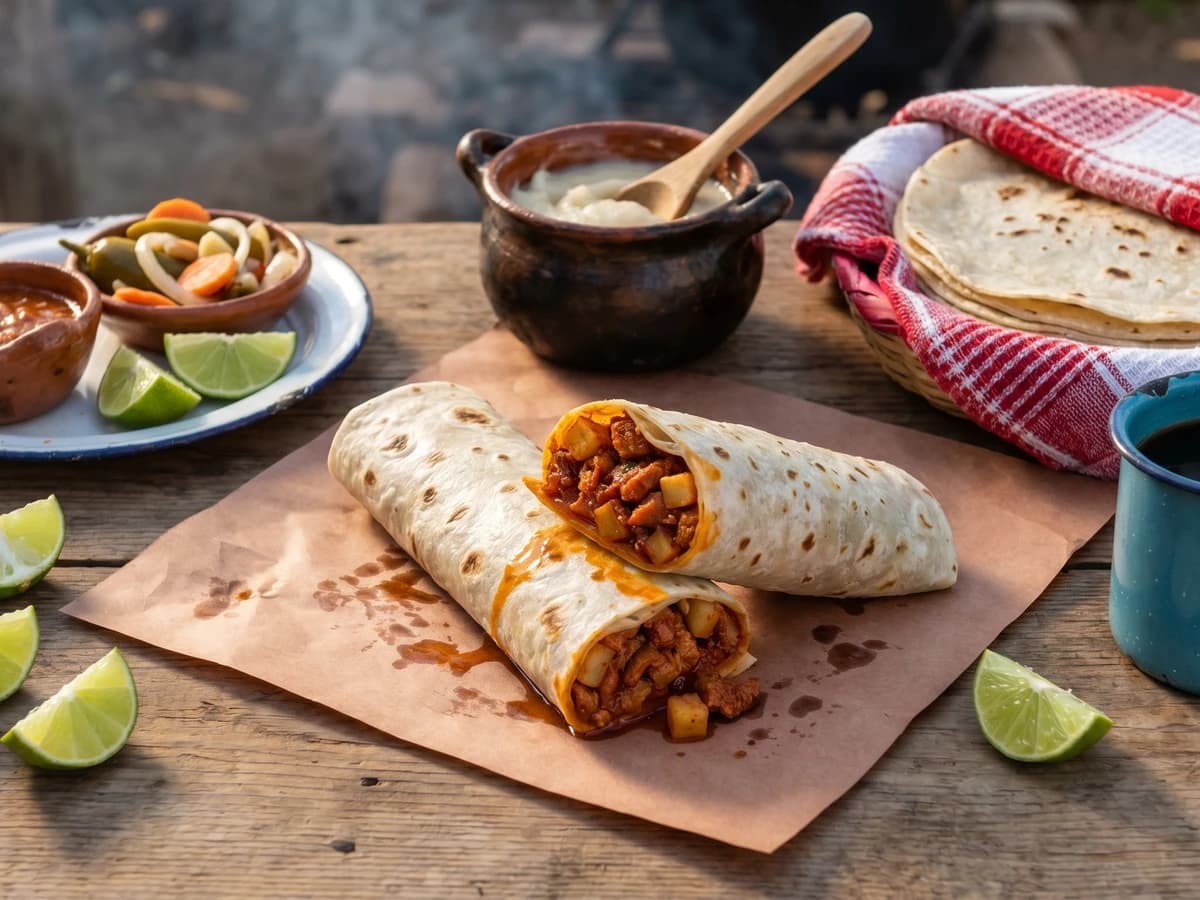
Sonora's working morning burrito: chicharrón de cáscara stewed in chile colorado with diced potato, rolled tight in a paper-thin tortilla sobaquera and eaten standing up at the carreta.
Chef Lupita
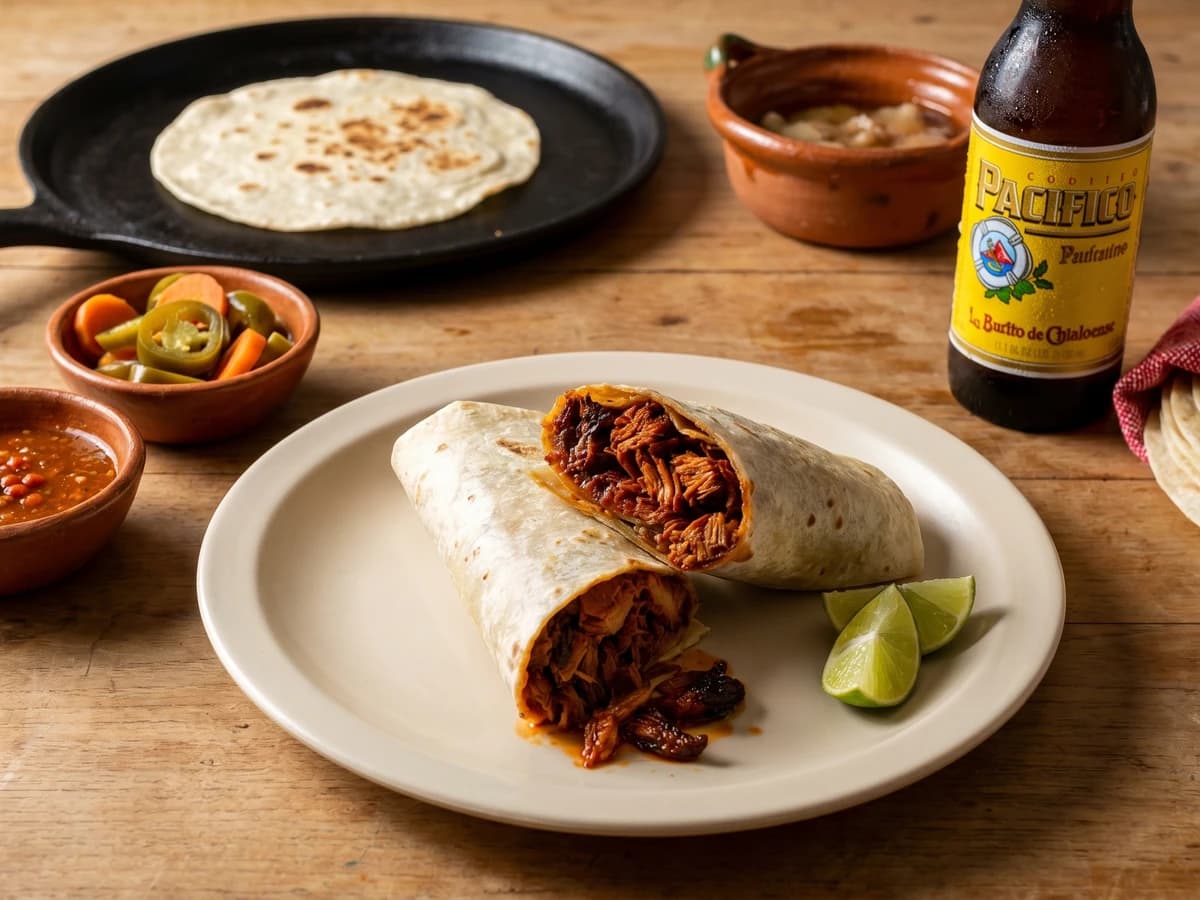
Mocorito's pork chilorio, shredded and confited in lard with chile ancho and pasilla, rolled into a thin handmade flour tortilla. The burrito Sinaloa sends out into the world.
Chef Lupita
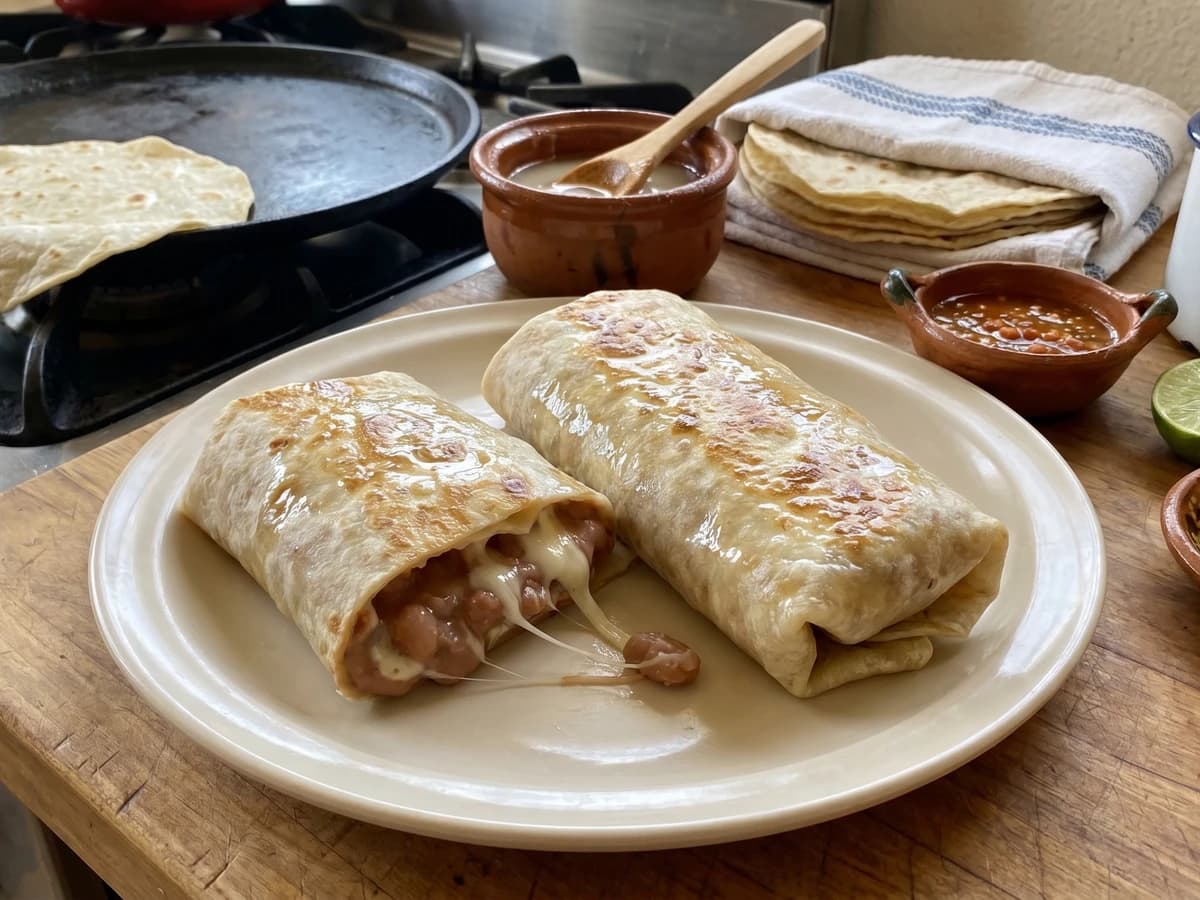
Sonora's morning burrito of mashed pinto frijoles puercos and melted queso asadero, wrapped in a paper-thin sobaquera and seared on the comal until the cheese pulls in long strings.