Chef Lupita
Birria Tacos with Consome
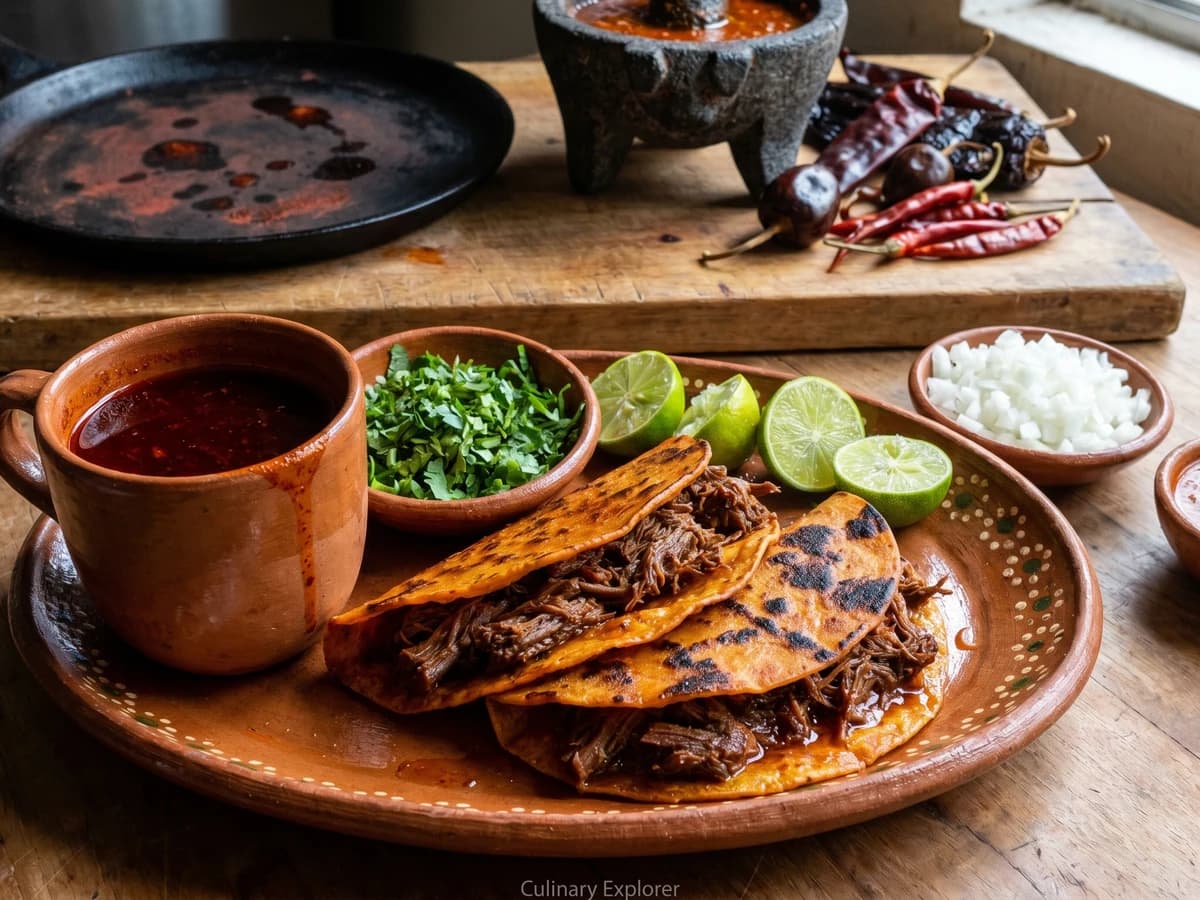
Jalisco's goat birria, born around Cocula and carried into Guadalajara's markets, slow-braised in ancho, guajillo, cascabel, and chile de arbol, then tucked into corn tortillas crisped in its own red fat.
A cooking platform built around craft, culture, and the stories behind what we eat.
Created by
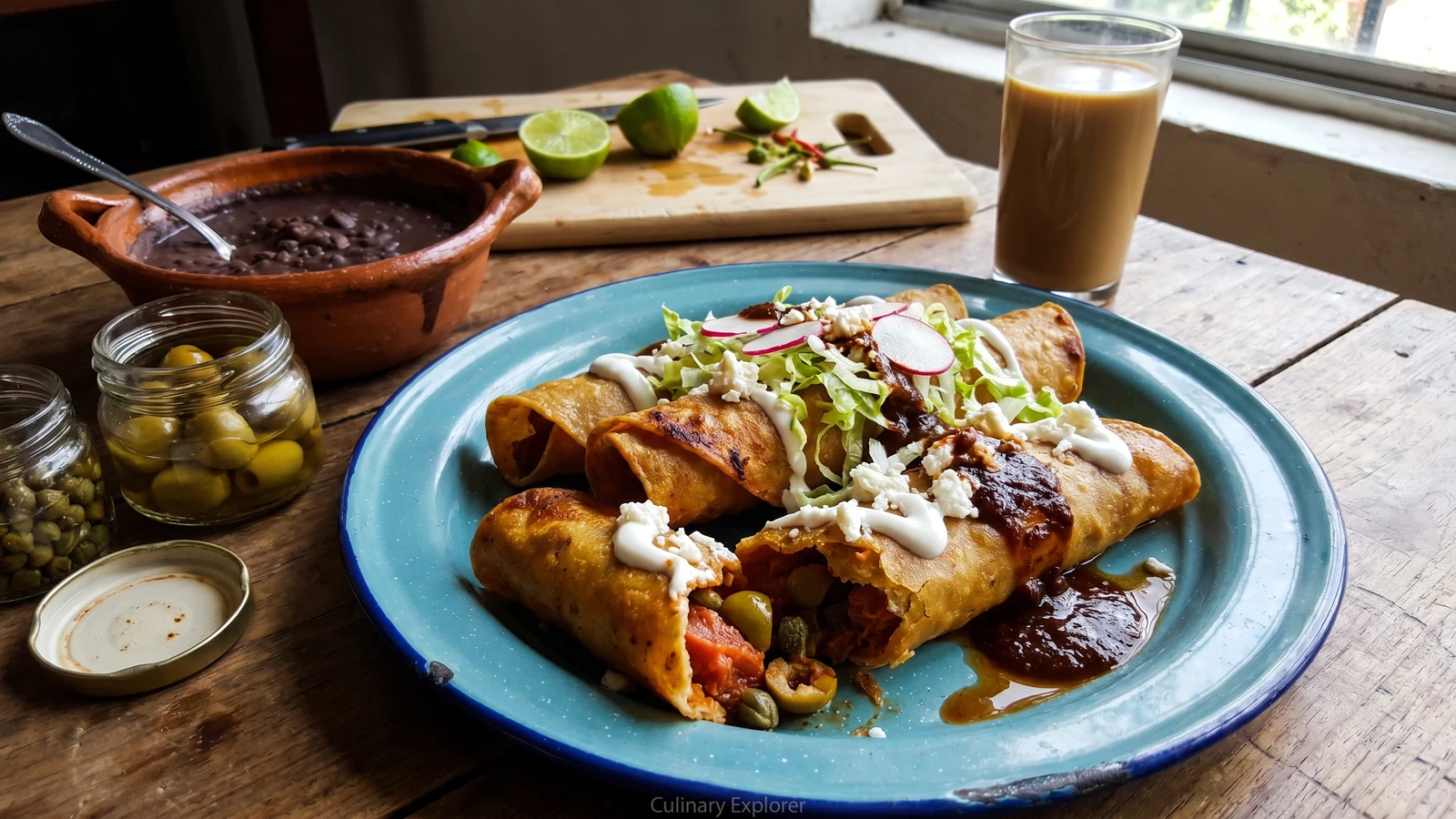
From the port of Veracruz, a Lent and Carnaval staple: fresh tuna simmered with jitomate, green olive, and caper in the a la veracruzana style, rolled into corn tortillas and fried until they crackle gold.
This is from Veracruz. The port, where the Gulf comes right up to the malecón and the boats bring in tuna before the sun is high. Tacos dorados de atún belong to Cuaresma, the weeks of Lent when the coast sets meat aside and turns to fish, and to Carnaval, when Veracruz throws the loudest party in Mexico in the days before the fasting begins.
Read the filling and you read the history of the state. Jitomate and chile from the Indigenous kitchen. Green olive, caper, and olive oil from the Spanish ships that landed here first, before they reached anywhere else in this country. This is La Tercera Raíz on a plate: Indigenous, Spanish, and African, the three roots that made Veracruz what it is. The guiso is the same a la veracruzana base the señoras spoon over a whole fish. Here we flake the tuna into it and cook it down until the tomato goes jammy and the olives and capers do their salty work.
The tortilla is corn. Always corn. You warm it so it bends instead of cracking, lay the tuna across it, roll it tight, and fry it in hot fat until the outside crackles and turns gold. That is what dorado means. Golden. A flour tortilla here would be a costume, and yellow cheese would be an insult. No me vengas con atajos.
My mother was from Jalisco, not the Gulf. But she kept a page in her notebook copied from a woman she sat beside on a bus to Xalapa in the 1970s. 'Atún con aceituna,' it reads, and in the margin, in pencil: 'no escatimes las alcaparras,' don't skimp on the capers. I have eaten these tacos at a portales stand on the malecón with a salsa roja de chipotle and a cold beer while the danzón played in the square, and the woman in that margin was right. Saber cocinar es saber vivir.
The 'a la veracruzana' style, built on jitomate, green olives, capers, and olive oil, is among the clearest culinary records of the conquest in Mexico, because the port of Veracruz, founded by Hernán Cortés in 1519, was the first and primary gateway for European goods, including the olives, capers, and olive oil that the central highlands never embraced to the same degree. The chile jalapeño carries the name of Xalapa, the state capital, and its smoke-dried form, the chipotle, anchors the red salsas of the region. Veracruz's identity as La Tercera Raíz, the Third Root, recognizes the African presence brought through that same port during the colonial era, a heritage still heard in the son jarocho and tasted in the cooking of the Sotavento.
Quantity
3
stemmed and seeded
Quantity
2
or 2 dried chile morita
Quantity
4
Quantity
2
Quantity
1/4
Quantity
1/2 teaspoon, plus more to taste
Quantity
1 1/2 pounds
cut into 1-inch chunks
Quantity
3 tablespoons
Quantity
1 medium
finely chopped
Quantity
3
minced
Quantity
5
finely chopped
Quantity
1/2 cup
pitted and sliced
Quantity
3 tablespoons
drained, plus 1 tablespoon of their brine
Quantity
2 to 3
chopped
Quantity
1
Quantity
1/2 teaspoon
Quantity
1/2 teaspoon
Quantity
to taste
Quantity
12
Quantity
for shallow frying
Quantity
as needed
Quantity
for serving
Quantity
for serving
Quantity
for serving
crumbled
Quantity
for serving
sliced
Quantity
for serving
Quantity
for serving
| Ingredient | Quantity |
|---|---|
| dried chile cascabelstemmed and seeded | 3 |
| chiles chipotle in adoboor 2 dried chile morita | 2 |
| ripe jitomate, roma (for the salsa) | 4 |
| garlic cloves (for the salsa) | 2 |
| white onion (for the salsa) | 1/4 |
| kosher salt | 1/2 teaspoon, plus more to taste |
| fresh tuna (atún)cut into 1-inch chunks | 1 1/2 pounds |
| olive oil (aceite de oliva) | 3 tablespoons |
| white onionfinely chopped | 1 medium |
| garlic clovesminced | 3 |
| ripe jitomate, romafinely chopped | 5 |
| green olives (aceitunas)pitted and sliced | 1/2 cup |
| capers (alcaparras)drained, plus 1 tablespoon of their brine | 3 tablespoons |
| chiles jalapeños en escabechechopped | 2 to 3 |
| bay leaf (hoja de laurel) | 1 |
| dried thyme (tomillo) | 1/2 teaspoon |
| dried marjoram (mejorana) | 1/2 teaspoon |
| kosher salt and black pepper | to taste |
| corn tortillas | 12 |
| neutral oil or manteca de cerdo | for shallow frying |
| wooden toothpicks (palillos) | as needed |
| finely shredded lettuce (optional) | for serving |
| Mexican crema (optional) | for serving |
| queso fresco (optional)crumbled | for serving |
| radishes (optional)sliced | for serving |
| lime wedges (optional) | for serving |
| refried black beans (frijoles negros refritos) (optional) | for serving |
Heat a dry comal over medium and toast the cascabel chiles about 30 seconds a side, pressing them flat. They puff and smell nutty when they are ready. Do not let them blacken. Cascabel turns bitter the second it burns, and there is no fixing it later. Drop the chiles into a bowl of hot tap water, not boiling, and soften them for 15 minutes. On the same comal, char the 4 jitomate until the skins blister and split. Blend the drained cascabel, charred jitomate, chipotle, the 2 garlic cloves, the 1/4 onion, and the salt with a splash of water until smooth. Pour into a small pot and simmer 10 minutes, until it darkens and tightens. Taste for salt. This is your salsa roja de chipotle.
Warm the olive oil in a wide skillet or clay cazuela over medium heat. This is where the Spanish hand shows. The a la veracruzana guiso is built on aceite de oliva, not lard, because the port got olive oil first and never gave it back. Add the chopped onion and cook until soft and translucent, about 5 minutes. Stir in the minced garlic and cook one minute more, until you can smell it but before it takes on any color.
Add the 5 chopped jitomate and a good pinch of salt. Cook, stirring now and then, for 12 to 15 minutes, until the tomato breaks down and the mixture goes thick and jammy and the oil pools red at the edges. Do not rush this. Wet, raw-tasting tomato makes a loose filling that steams the tortilla from the inside and never lets it crisp. The whole dish lives or dies here.
Stir in the sliced olives, the capers with their tablespoon of brine, the chopped jalapeños en escabeche, the bay leaf, thyme, and marjoram. This is the moment the guiso becomes veracruzano. Salt and brine from the olives and capers, the herbs the Spanish brought, the chile named for Xalapa. Cook another 5 minutes to let everything marry.
Add the tuna chunks. Cook, breaking the fish apart with a wooden spoon as it turns from pink to opaque, about 6 to 8 minutes. Let any liquid cook off until the filling looks glossy and holds together on the spoon, never soupy. Taste and adjust salt and pepper. Fish the bay leaf out. Spread the filling on a plate to cool. A cool, dry filling rolls tighter and fries cleaner than a hot, wet one.
Warm the tortillas on the comal until soft and pliable, a few seconds a side. A cold tortilla cracks the moment you roll it. Lay a line of filling across the lower third of each tortilla, roll it tight, and pin it shut with a toothpick. Keep the warm tortillas wrapped in a cloth as you work so they stay flexible.
Heat half an inch of oil or melted manteca in a skillet over medium-high until it shimmers and a corner of tortilla bubbles fast on contact, around 350F. Fry the tacos a few at a time, turning, until they are deep gold and crackling all over, 2 to 3 minutes. That is what dorado means. Golden. Lift them onto a rack or paper, never stacked, or they steam each other soft.
Pull the toothpicks. Pile the tacos on a blue-rimmed peltre plate or a barro platter. Top with shredded lettuce, a drizzle of crema, crumbled queso fresco, and sliced radish. Spoon the salsa roja de chipotle over the top or set it alongside. Frijoles negros refritos on the side, not pintos, this is the Gulf coast, and lime to finish. Así se hace y punto.
1 serving (about 470g)
Culinary guides, cultural storytelling, and the editorial depth that makes cooking meaningful.
Discover Culinary ExplorerChef Lupita
Jalisco's goat birria, born around Cocula and carried into Guadalajara's markets, slow-braised in ancho, guajillo, cascabel, and chile de arbol, then tucked into corn tortillas crisped in its own red fat.
Chef Lupita
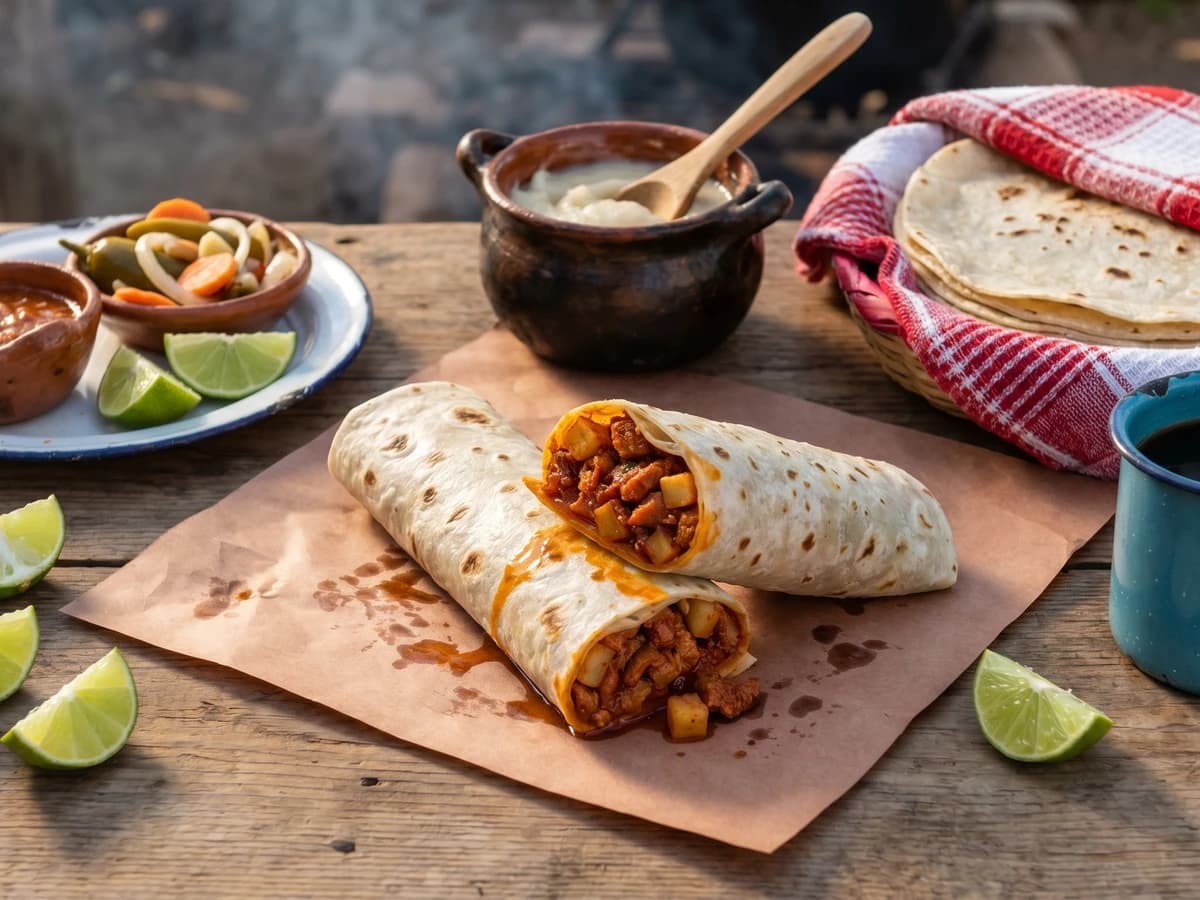
Sonora's working morning burrito: chicharrón de cáscara stewed in chile colorado with diced potato, rolled tight in a paper-thin tortilla sobaquera and eaten standing up at the carreta.
Chef Lupita
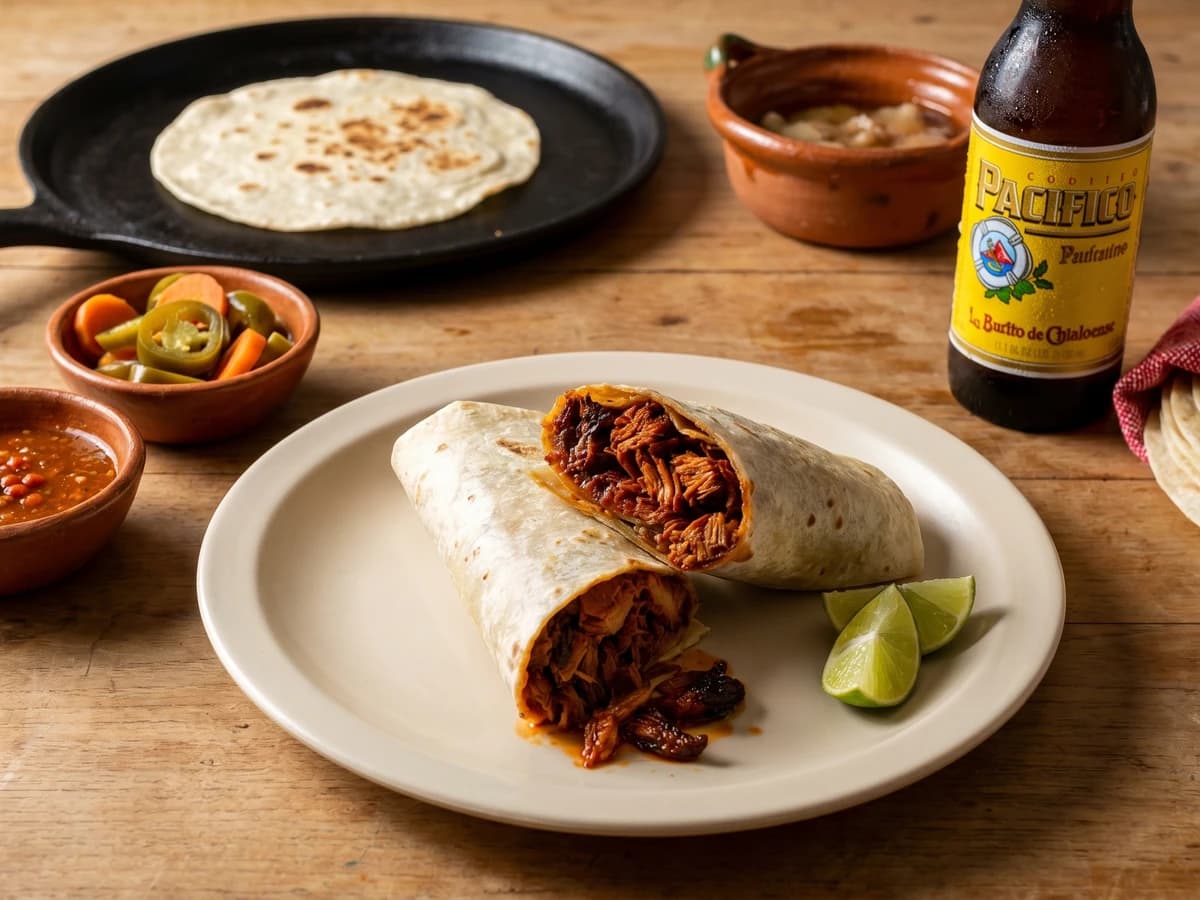
Mocorito's pork chilorio, shredded and confited in lard with chile ancho and pasilla, rolled into a thin handmade flour tortilla. The burrito Sinaloa sends out into the world.
Chef Lupita
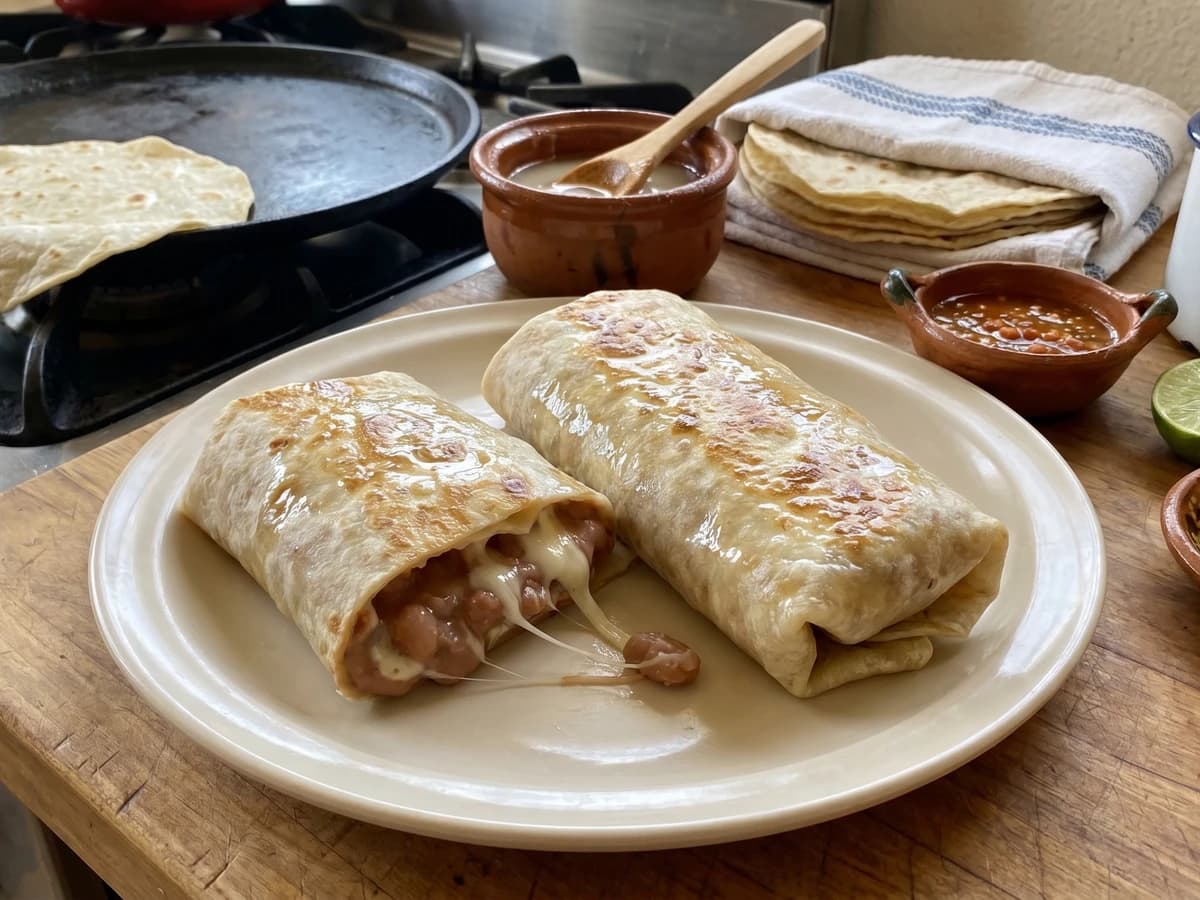
Sonora's morning burrito of mashed pinto frijoles puercos and melted queso asadero, wrapped in a paper-thin sobaquera and seared on the comal until the cheese pulls in long strings.