Chef Lupita
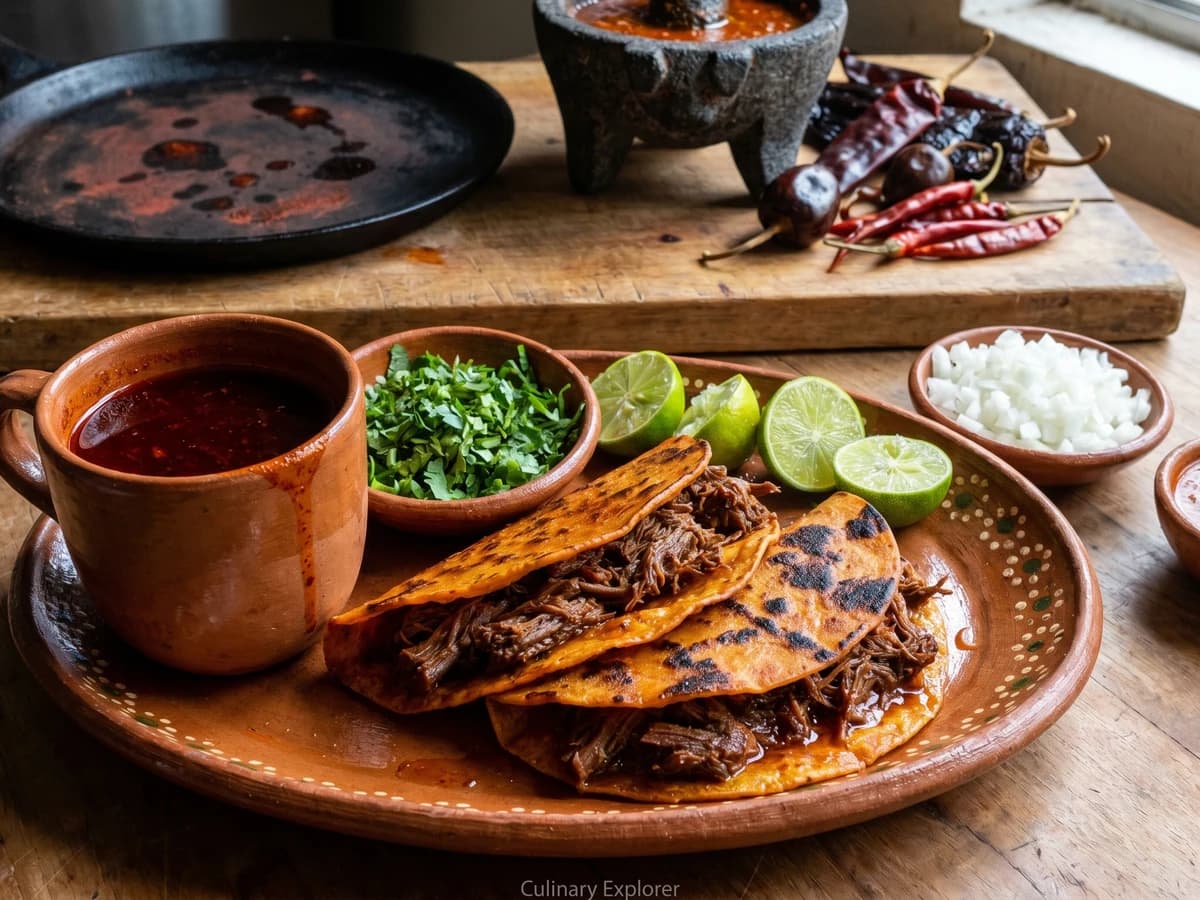
Birria Tacos with Consome
Jalisco's goat birria, born around Cocula and carried into Guadalajara's markets, slow-braised in ancho, guajillo, cascabel, and chile de arbol, then tucked into corn tortillas crisped in its own red fat.
A cooking platform built around craft, culture, and the stories behind what we eat.
Created by
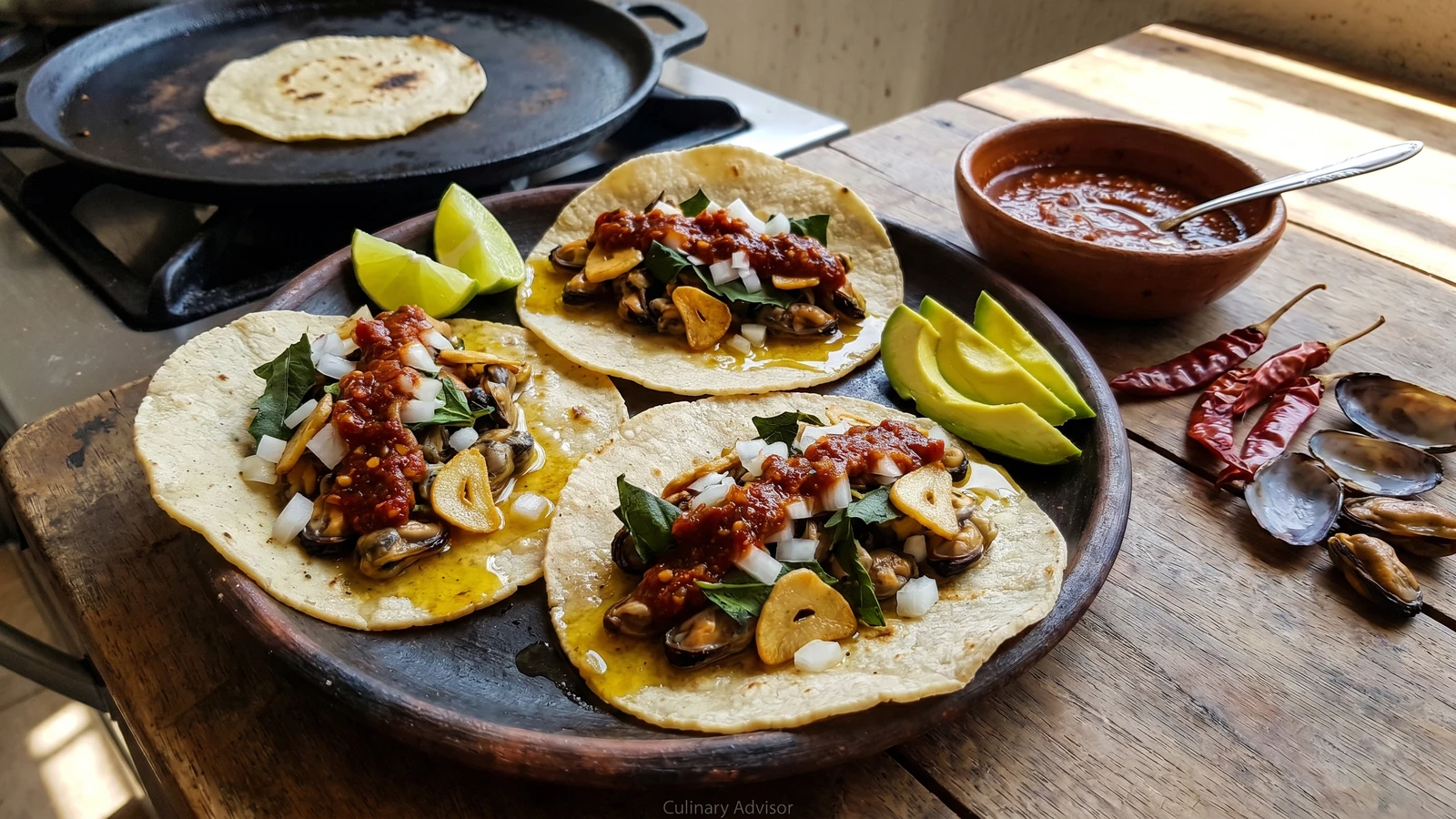
Mangrove-root mussels from the lagoons of Oaxaca's Costa Chica, opened over heat, sautéed al ajillo with whole garlic and fresh epazote, spooned onto corn tortillas with a roasted chile costeño salsa that carries the heat of the Pacific coast.
This is Oaxacan food, but not the Oaxaca most people picture. Forget the Valles Centrales, forget the moles, forget the mezcal bars of the capital. This is Costa Chica. The Pacific coast. The lagoons of Chacahua and Manialtepec, where the mangrove roots drop into brackish water and the tichindas cling to them in dark clusters like barnacles made of obsidian.
Tichindas are small mussels, Mytella strigata if you need the Latin, and they are harvested by hand from mangrove roots by the communities that live along those lagoons. Afro-Mexican families, indigenous Mixtec and Chatino communities, people whose relationship with these waters goes back centuries. The women wade in at low tide, pry the clusters off the roots, and bring them back in buckets. By afternoon, they are on the comal. By evening, they are on tortillas. Si no conoces el mercado, no conoces la cocina, and here the mercado is the lagoon itself.
The preparation is direct. You open the tichindas with heat, pull the meat from the shells, and sauté them al ajillo: whole garlic cloves, a branch of epazote, a squeeze of lime. The salsa is chile costeño, the small, fierce dried chile that belongs to this coast and nowhere else. It is not guajillo. It is not arbol. It is costeño, and if your chile vendor does not carry it, you need to find a vendor who knows the Oaxacan coast. Cada estado, su propia cocina, and within Oaxaca, each coast has its own pantry.
I collected this recipe in a palapa kitchen outside Chacahua from a woman who had been making it since before the lagoon became a national park. She opened the tichindas on a wood-fired comal, tossed them in a clay cazuela with garlic and epazote from her yard, and served them on tortillas she pressed by hand while the garlic browned. No recipe card. No measurements. Just the knowledge of how long the garlic takes, how much epazote is enough, and when the tichindas are done. I wrote it all down. Recetas probadas y garantizadas.
Tichindas (Mytella strigata) are a bivalve mollusk endemic to the mangrove estuaries of the tropical Eastern Pacific, harvested along Oaxaca's Costa Chica since pre-Columbian times by indigenous Mixtec and Chatino peoples who managed the coastal lagoon ecosystems as a food source. The Afro-Mexican communities established along this coast beginning in the 16th century, descendants of enslaved Africans who escaped or were freed from colonial labor systems, adopted and expanded tichinda harvesting as a subsistence and market practice. The Lagunas de Chacahua, declared a national park in 1937, and the Manialtepec lagoon remain the primary harvest sites, though overharvesting and mangrove degradation have reduced yields significantly since the 1990s, making tichindas increasingly a seasonal and local delicacy rather than the everyday protein they once were.
Quantity
3 pounds
in their shells, scrubbed clean
Quantity
8
peeled and thinly sliced
Quantity
3 tablespoons
Quantity
2 large branches (about 12 leaves)
Quantity
1/2 teaspoon, plus more to taste
Quantity
2
juiced
Quantity
10
stemmed
Quantity
2
unpeeled
Quantity
3 medium
husked and rinsed
Quantity
1/4 medium
Quantity
1/2 teaspoon
Quantity
16
warmed
Quantity
for serving
Quantity
for serving
Quantity
for serving
| Ingredient | Quantity |
|---|---|
| fresh tichindas (mangrove mussels)in their shells, scrubbed clean | 3 pounds |
| garlic cloves (for the ajillo)peeled and thinly sliced | 8 |
| vegetable oil or lard | 3 tablespoons |
| fresh epazote | 2 large branches (about 12 leaves) |
| kosher salt (for the tichindas) | 1/2 teaspoon, plus more to taste |
| Mexican limes (for the tichindas)juiced | 2 |
| dried chile costeño rojostemmed | 10 |
| garlic cloves (for the salsa)unpeeled | 2 |
| tomatilloshusked and rinsed | 3 medium |
| white onion (for the salsa) | 1/4 medium |
| kosher salt (for the salsa) | 1/2 teaspoon |
| hand-pressed corn tortillaswarmed | 16 |
| lime wedges (optional) | for serving |
| sliced avocado (optional) | for serving |
| finely diced white onion (optional) | for serving |
Soak the tichindas in a large bowl of cold salted water for 30 minutes. They grow on mangrove roots in brackish lagoons and carry sand and silt in their shells. After soaking, scrub each one under running water with a stiff brush or the rough side of a sponge. Discard any that are open and do not close when you tap them. Those are dead and you do not eat dead shellfish. Pull off any byssal threads, the stringy fibers clinging to the hinge. This is the tedious part. It is also non-negotiable.
Heat a large dry comal or cast iron skillet over high heat. Working in batches so you do not crowd the pan, spread the cleaned tichindas in a single layer. Cover with a lid or a sheet of aluminum foil. The heat will force them open in two to three minutes. They pop open the way any mussel does, with a sharp little click and a burst of briny liquid. Remove each one as it opens. Discard any that refuse to open after five minutes. Pull the meat from the shells into a bowl and save whatever liquor drains out. That liquor is concentrated lagoon flavor and you will use it.
While you open the tichindas, toast the stemmed chile costeño on a dry comal over medium heat. Press them flat with a spatula, 10 to 15 seconds per side. They should puff slightly and release a sharp, smoky fragrance. Chile costeño is thin-skinned and burns in seconds, so do not walk away. Set the toasted chiles in a bowl of hot water and soak for 15 minutes until they soften.
On the same comal, roast the tomatillos, the quarter onion, and the two unpeeled garlic cloves. Turn them occasionally until they are charred in spots and soft through, about 8 to 10 minutes. The tomatillos will burst and release juice on the comal. That is fine. Peel the garlic. Transfer everything to a blender or molcajete with the drained chile costeño and the salt. Blend or grind until you have a rough, slightly chunky salsa. Taste it. It should be tart from the tomatillo, hot from the costeño, and a little smoky from the char. Adjust salt. Set aside.
Heat the oil or lard in a wide skillet or clay cazuela over medium heat. Add the sliced garlic. Stir it constantly until the edges turn pale gold, about one minute. Do not let it brown past gold. Burned garlic is bitter and there is no coming back. Add the tichinda meat and any reserved liquor. Stir well and cook for two minutes. The meat will tighten slightly and absorb the garlic. Add the epazote branches, tearing the leaves roughly as you drop them in. The epazote will bloom in the heat and you will smell it immediately, that sharp, mineral, almost medicinal scent that belongs to Mexican cooking and nothing else. Squeeze the lime juice over everything, season with salt, and stir once more. Pull the pan off the heat. The tichindas are done. La cocina no es decoracion, es trabajo, and this is a dish that proves fast work can be serious work.
Warm the corn tortillas on the comal until they puff and develop light char spots. Spoon the tichindas al ajillo onto each tortilla, making sure every taco gets garlic and a few leaves of epazote. Top with the salsa de chile costeño, a scatter of diced white onion, and a squeeze of lime. Serve with sliced avocado if the season is right. Eat them standing at the counter or sitting at the table, but eat them now, while the garlic is still fragrant and the tortillas are still warm. Asi se hace y punto.
1 serving (about 270g)
Culinary guides, cultural storytelling, and the editorial depth that makes cooking meaningful.
Discover Culinary ExplorerChef Lupita
Jalisco's goat birria, born around Cocula and carried into Guadalajara's markets, slow-braised in ancho, guajillo, cascabel, and chile de arbol, then tucked into corn tortillas crisped in its own red fat.
Chef Lupita
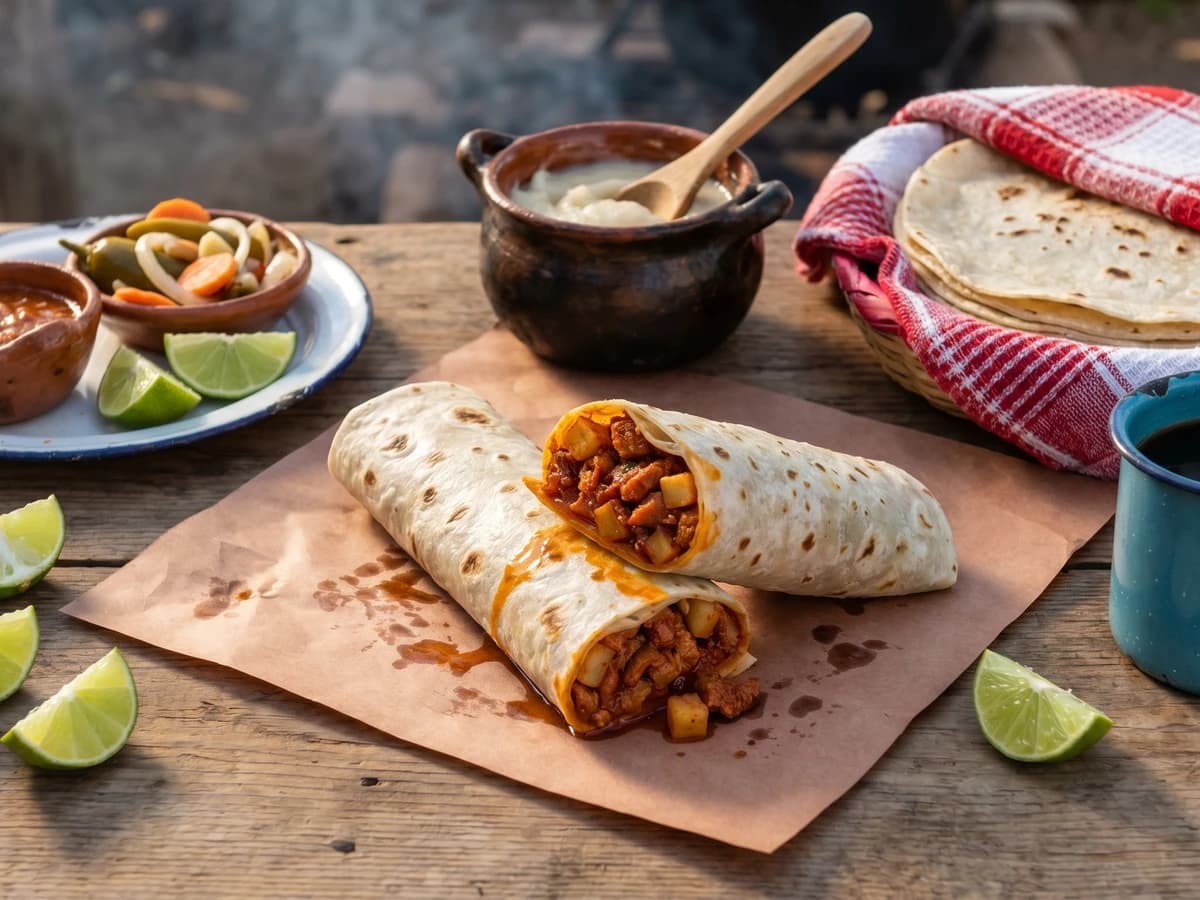
Sonora's working morning burrito: chicharrón de cáscara stewed in chile colorado with diced potato, rolled tight in a paper-thin tortilla sobaquera and eaten standing up at the carreta.
Chef Lupita
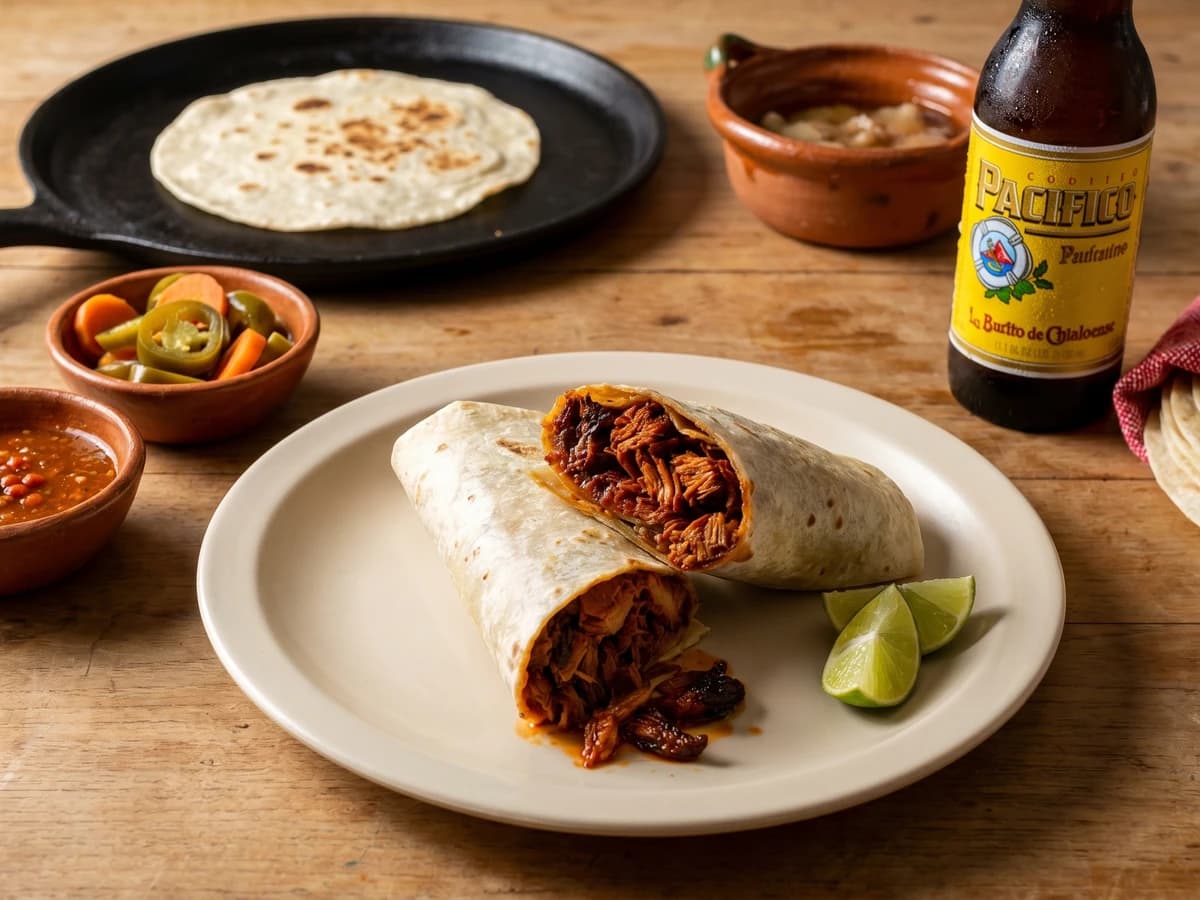
Mocorito's pork chilorio, shredded and confited in lard with chile ancho and pasilla, rolled into a thin handmade flour tortilla. The burrito Sinaloa sends out into the world.
Chef Lupita
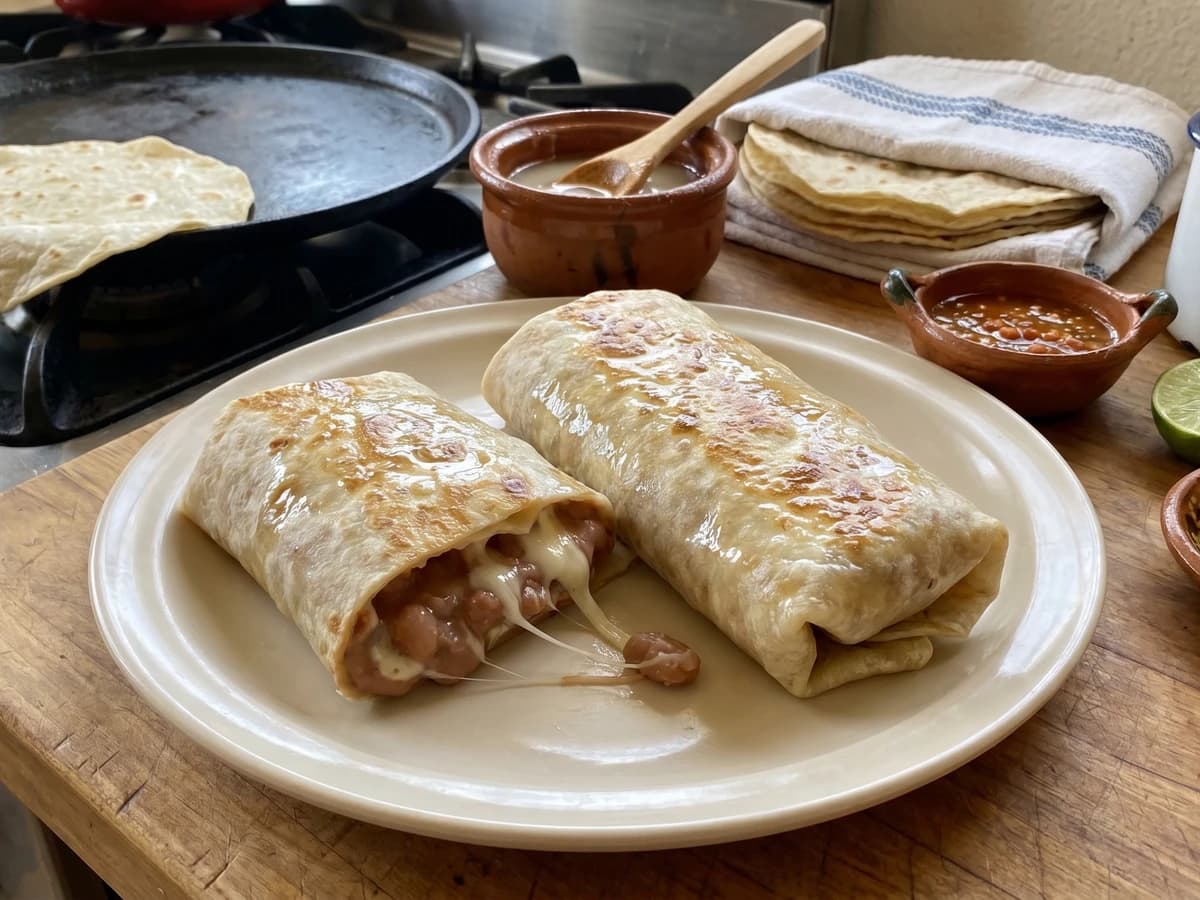
Sonora's morning burrito of mashed pinto frijoles puercos and melted queso asadero, wrapped in a paper-thin sobaquera and seared on the comal until the cheese pulls in long strings.