Chef Lupita
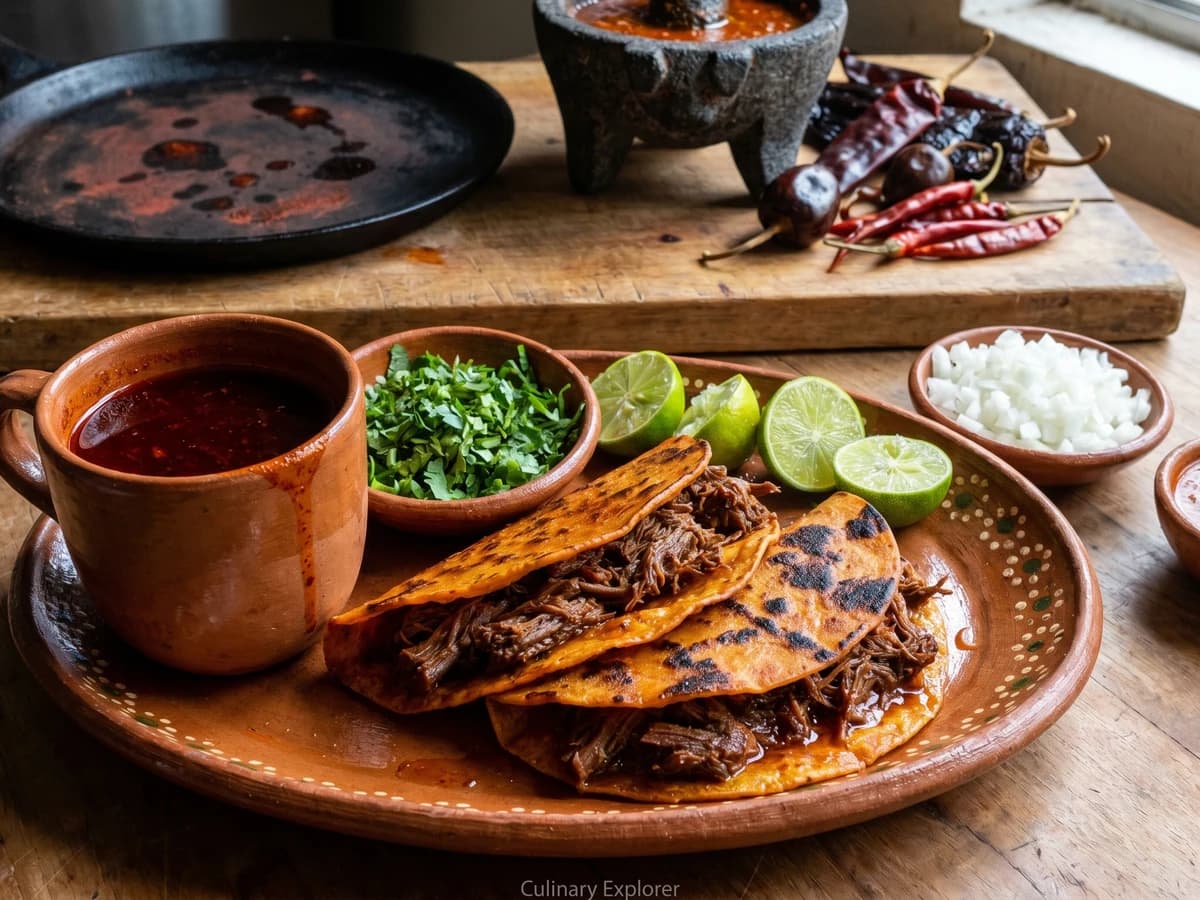
Birria Tacos with Consome
Jalisco's goat birria, born around Cocula and carried into Guadalajara's markets, slow-braised in ancho, guajillo, cascabel, and chile de arbol, then tucked into corn tortillas crisped in its own red fat.
A cooking platform built around craft, culture, and the stories behind what we eat.
Created by
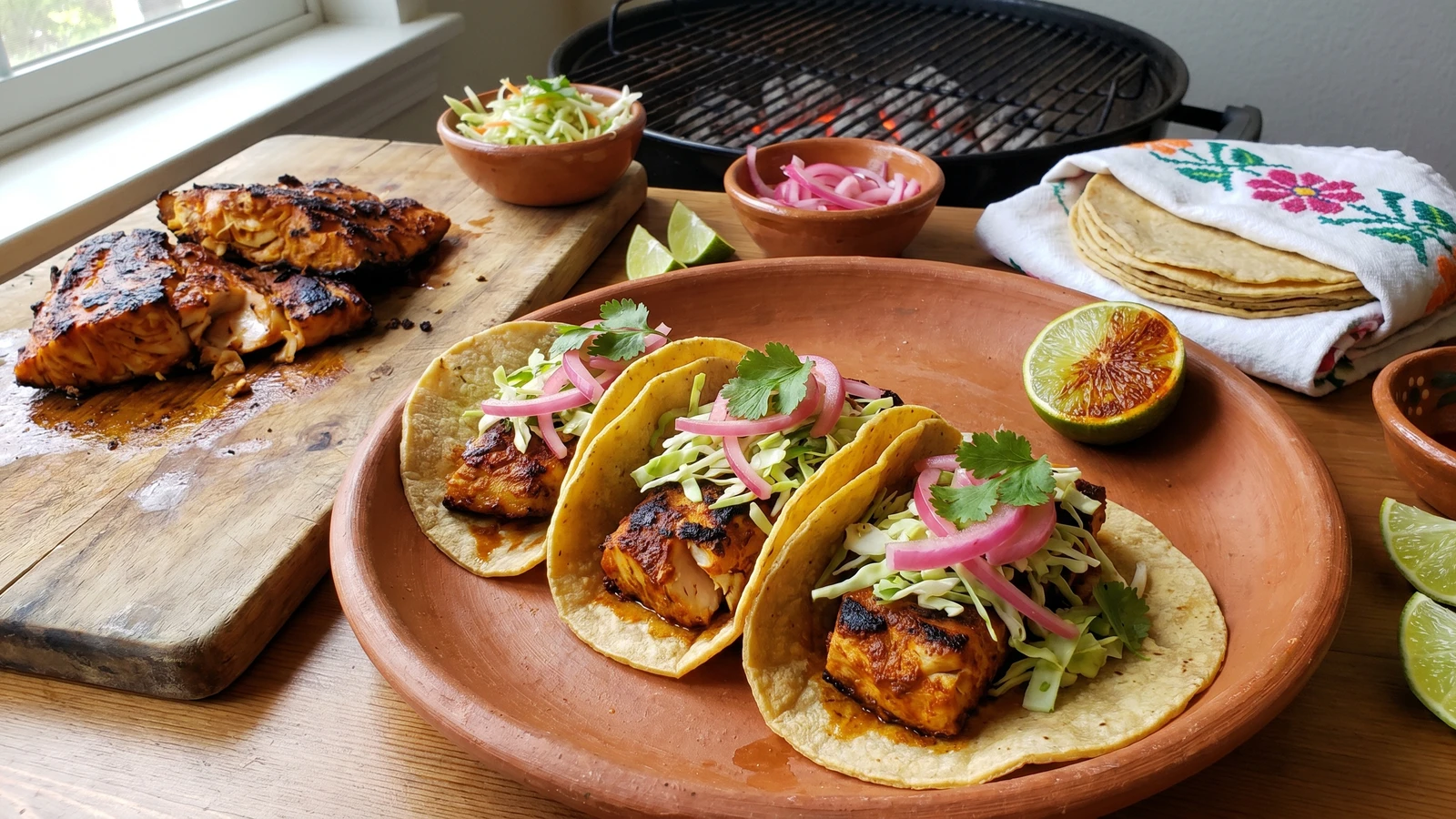
Whole snapper butterflied and rubbed with a paste of toasted guajillo, ancho, pasilla oaxaqueño, and achiote, charcoal-grilled on the Oaxacan coast, pulled into warm corn tortillas with lime-dressed cabbage and pickled red onion.
The coast of Oaxaca is not the Oaxaca most people think of. Say Oaxacan food and people picture the Valles Centrales: seven moles, tlayudas, chapulines, mezcal. But Oaxaca has 570 kilometers of Pacific coastline, from Huatulco down through Puerto Escondido to Pinotepa Nacional, and the cooks along that shore work a different tradition entirely. Fish, charcoal, chile paste, and the salt air that seasons everything before you light the fire.
Pescado a la talla is a Pacific coast technique. Guerrero claims it, and Barra Vieja deserves its reputation. But the practice did not stop at the state line. Walk through the fish market in Puerto Escondido or sit at a ramada on the beach road past Pinotepa, and you will find the same method: a whole huachinango split open like a book, rubbed on both sides with a paste built from dried chiles and achiote, and laid flat on a grill over charcoal until the adobo crusts and the flesh flakes. What makes the Oaxacan version Oaxacan is what ends up in the paste. Chile pasilla oaxaqueño. That smoked chile is Oaxaca's signature on everything it touches, from mole negro to this adobo. It gives a depth of smoke that the Guerrero version, built mostly on guajillo, does not have.
I collected this version from a señora who ran a comedor on the beach road outside Puerto Escondido. She grilled huachinango over mesquite every afternoon, no menu, no options, just the fish she bought at the morning market and the adobo she made that day. She served it pulled apart into tortillas with cabbage dressed in lime and salt, pickled red onion she kept in a jar on the counter, and nothing else. No cream. No cheese. No batter. The fish, the paste, the fire, the tortilla. I wrote it all down in my notebook and made it six times before I got the adobo right. Cada estado, su propia cocina, and within each state, each coast, each town, each cook.
The 'a la talla' technique takes its name from the verb tallar, to rub or spread, describing the act of pressing chile paste across the opened flesh of a butterflied fish. The method is documented along Mexico's Pacific coast from Guerrero through Oaxaca, where fishing communities have grilled the day's catch over wood and charcoal since well before the colonial period. Barra Vieja in Guerrero's Costa Grande became the technique's most famous home after Acapulco's tourism boom in the 1950s and 1960s, but the practice extends through the Costa Chica into Oaxaca's coastal communities around Puerto Escondido, Puerto Angel, and Pinotepa Nacional, where cooks incorporate regional ingredients like chile pasilla oaxaqueño, a smoked chile cultivated only in Oaxaca, and achiote influenced by trade routes connecting the Pacific coast to the Istmo de Tehuantepec and the broader Caribbean spice tradition.
Quantity
1 (3 to 4 pounds)
cleaned, scaled, and butterflied with head and tail intact
Quantity
6
stemmed and seeded
Quantity
2
stemmed and seeded
Quantity
1
stemmed and seeded
Quantity
3 tablespoons
Quantity
6
unpeeled
Quantity
1/2 cup
or substitute 1/4 cup fresh lime juice plus 1/4 cup fresh orange juice
Quantity
1 teaspoon
Quantity
1 teaspoon
Quantity
1/2 teaspoon
Quantity
1 1/2 teaspoons
Quantity
2 tablespoons
Quantity
1/4 medium head
shredded very thin
Quantity
3 tablespoons
Quantity
1 tablespoon
Quantity
1/2 teaspoon
Quantity
2 tablespoons
chopped
Quantity
1 large
sliced into thin half-moons
Quantity
1/2 cup
Quantity
1/2 teaspoon
Quantity
1/2 teaspoon
Quantity
16 to 20
Quantity
for serving
Quantity
for serving
| Ingredient | Quantity |
|---|---|
| whole red snapper or pargocleaned, scaled, and butterflied with head and tail intact | 1 (3 to 4 pounds) |
| dried chile guajillostemmed and seeded | 6 |
| dried chile anchostemmed and seeded | 2 |
| dried chile pasilla oaxaqueñostemmed and seeded | 1 |
| achiote paste | 3 tablespoons |
| garlic clovesunpeeled | 6 |
| sour orange juiceor substitute 1/4 cup fresh lime juice plus 1/4 cup fresh orange juice | 1/2 cup |
| cumin seeds | 1 teaspoon |
| dried Mexican oregano | 1 teaspoon |
| black peppercorns | 1/2 teaspoon |
| kosher salt (for the adobo) | 1 1/2 teaspoons |
| vegetable oil (for the grill grates) | 2 tablespoons |
| green cabbageshredded very thin | 1/4 medium head |
| fresh lime juice (for the slaw) | 3 tablespoons |
| vegetable oil (for the slaw) | 1 tablespoon |
| kosher salt (for the slaw) | 1/2 teaspoon |
| fresh cilantro (for the slaw)chopped | 2 tablespoons |
| red onionsliced into thin half-moons | 1 large |
| fresh lime juice (for pickling) | 1/2 cup |
| kosher salt (for pickling) | 1/2 teaspoon |
| dried Mexican oregano (for pickling) | 1/2 teaspoon |
| fresh corn tortillas | 16 to 20 |
| lime wedges (optional) | for serving |
| fresh cilantro sprigs (optional) | for serving |
Toss the sliced red onion with the lime juice, salt, and oregano in a glass or ceramic bowl. Press the onions down so the juice covers them. Cover and set aside at room temperature for at least 45 minutes. The longer they sit, the softer and more deeply pink they become. Start these first. They need time and they do not need you watching them.
Heat a dry comal or heavy skillet over medium. Toast the guajillo, ancho, and pasilla oaxaqueño chiles one at a time, pressing each one flat against the surface with a spatula, about 20 to 30 seconds per side. They should puff, blister in spots, and release a deep, warm smell that fills the room. The pasilla oaxaqueño is already smoked, so it toasts fast and turns bitter if you push it. Pull it the moment it puffs. Place all the toasted chiles in a heatproof bowl, cover with hot tap water, and soak for 20 minutes until completely soft.
While the chiles soak, place the unpeeled garlic cloves on the same comal. Toast them, turning occasionally, until the skins are blackened in spots and the flesh inside is soft and sweet, about 8 minutes. Peel them. In a small dry skillet, toast the cumin seeds over medium heat, shaking the pan, until they darken slightly and smell warm and earthy, about 90 seconds. Set aside.
Drain the soaked chiles. Place them in a blender with the peeled garlic, achiote paste, sour orange juice, toasted cumin, oregano, peppercorns, and salt. Blend on high until you have a thick, smooth paste the color of burnt clay. If the blender struggles, add a tablespoon of the chile soaking liquid. Just enough to move things, no more. This is a paste, not a sauce. It needs to cling to the fish without running off. Taste it. It should be assertive: smoky from the pasilla oaxaqueño, earthy from the achiote, bright from the citrus, with heat that builds but does not overwhelm.
If your fishmonger did not butterfly the fish, lay it on its side and cut along the backbone from tail to head with a sharp knife, opening the fish flat like a book without separating the halves. Remove the spine and any pin bones. Score the flesh side with shallow diagonal cuts about an inch apart. These cuts let the adobo penetrate. Spread the paste generously over both sides of the fish, working it into every score and every crevice. Set the fish on a sheet pan lined with plastic wrap, cover tightly, and refrigerate for at least 45 minutes, up to 2 hours. The achiote will stain your cutting board, your hands, and your counter. That is how you know you used enough.
Toss the shredded cabbage with the lime juice, oil, salt, and chopped cilantro. Mix with your hands, squeezing gently so the lime starts to soften the cabbage. Set aside at room temperature. It will wilt slightly as it sits, which is what you want. This is not a crunchy American coleslaw. It is a soft, bright, acidic counterpoint to the rich, smoky fish. It should taste of lime and salt and nothing else.
Light a charcoal grill and let the coals burn down until they are covered in white ash. You want medium-high heat, the kind where you can hold your hand six inches above the grate for three seconds before pulling it away. Clean the grill grates thoroughly and oil them well with a wadded paper towel dipped in vegetable oil, held with tongs. Lay the butterflied fish skin-side down on the grate. Close the lid if you have one. Grill for 8 to 10 minutes without touching it. The skin will crisp and contract and eventually release from the grate on its own. Do not force it. When the flesh is opaque two-thirds of the way through, carefully flip the fish using two wide spatulas. Grill the flesh side for 4 to 5 minutes more. The adobo should be charred in dark spots, crusty at the edges, with the flesh flaking when you press it gently with a spatula. Pull it off. Let it rest on a cutting board for two minutes.
Warm the corn tortillas directly on the grill or on a dry comal over high heat, about 20 seconds per side, until they are pliable and have light char spots. Stack them in a towel-lined basket or wrapped in a cloth servilleta. Pull the grilled fish apart into large flakes, discarding the skin and any remaining bones. Pile the fish onto each warm tortilla, spoon on a mound of the lime cabbage slaw, and finish with a tangle of pickled red onion. Squeeze a lime wedge over each one. Scatter a few cilantro leaves if you want. That is the entire taco. No cream, no cheese, no batter. The adobo and the charcoal did the work. Recetas probadas y garantizadas.
1 serving (about 385g)
Culinary guides, cultural storytelling, and the editorial depth that makes cooking meaningful.
Discover Culinary ExplorerChef Lupita
Jalisco's goat birria, born around Cocula and carried into Guadalajara's markets, slow-braised in ancho, guajillo, cascabel, and chile de arbol, then tucked into corn tortillas crisped in its own red fat.
Chef Lupita
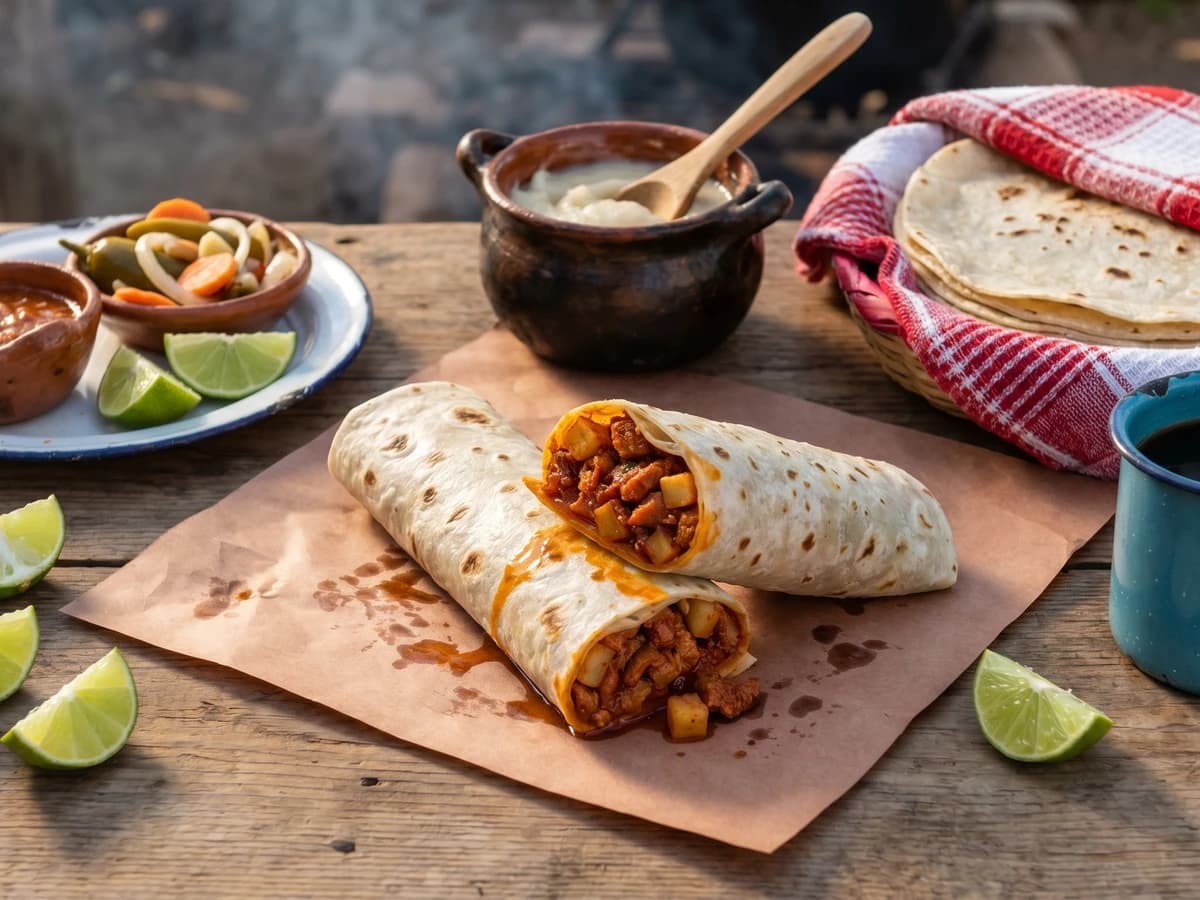
Sonora's working morning burrito: chicharrón de cáscara stewed in chile colorado with diced potato, rolled tight in a paper-thin tortilla sobaquera and eaten standing up at the carreta.
Chef Lupita
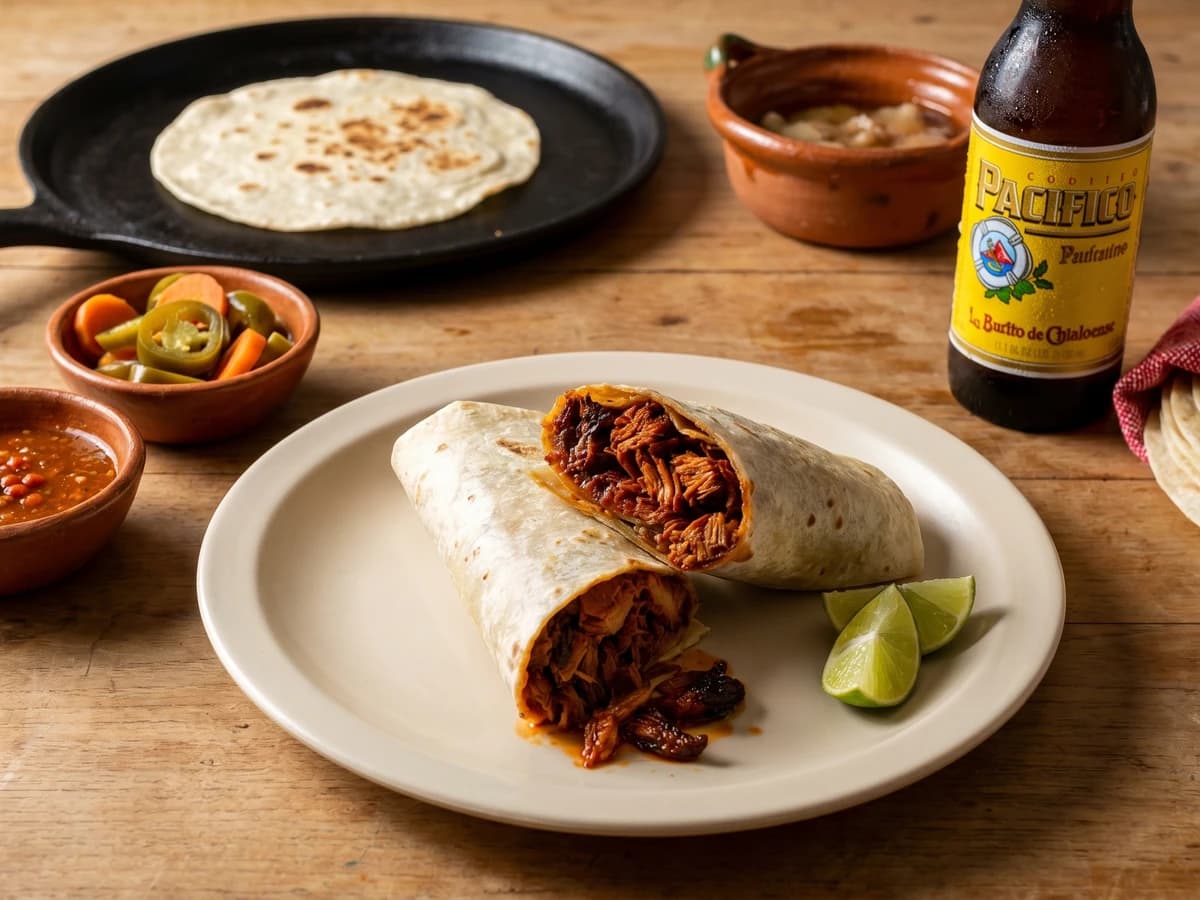
Mocorito's pork chilorio, shredded and confited in lard with chile ancho and pasilla, rolled into a thin handmade flour tortilla. The burrito Sinaloa sends out into the world.
Chef Lupita
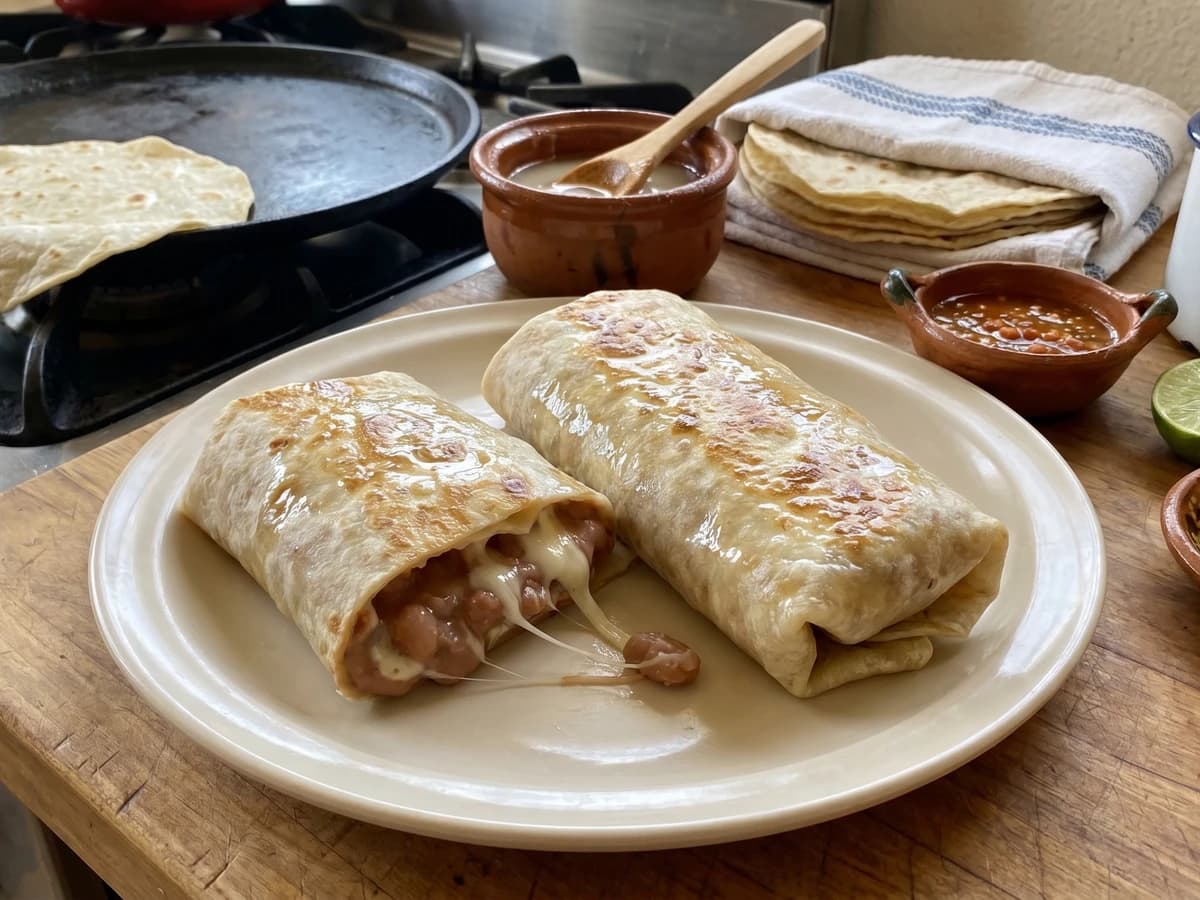
Sonora's morning burrito of mashed pinto frijoles puercos and melted queso asadero, wrapped in a paper-thin sobaquera and seared on the comal until the cheese pulls in long strings.