Chef Lupita
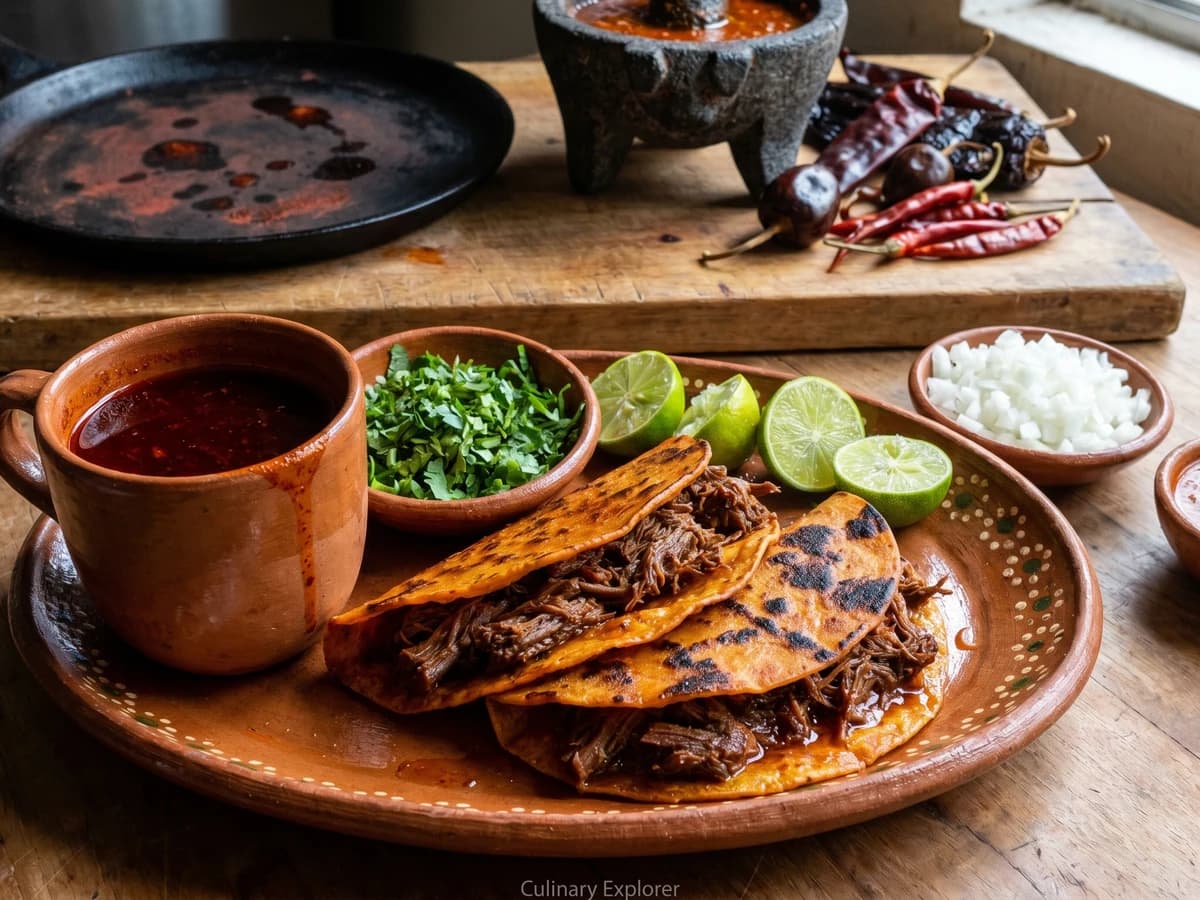
Birria Tacos with Consome
Jalisco's goat birria, born around Cocula and carried into Guadalajara's markets, slow-braised in ancho, guajillo, cascabel, and chile de arbol, then tucked into corn tortillas crisped in its own red fat.
A cooking platform built around craft, culture, and the stories behind what we eat.
Created by
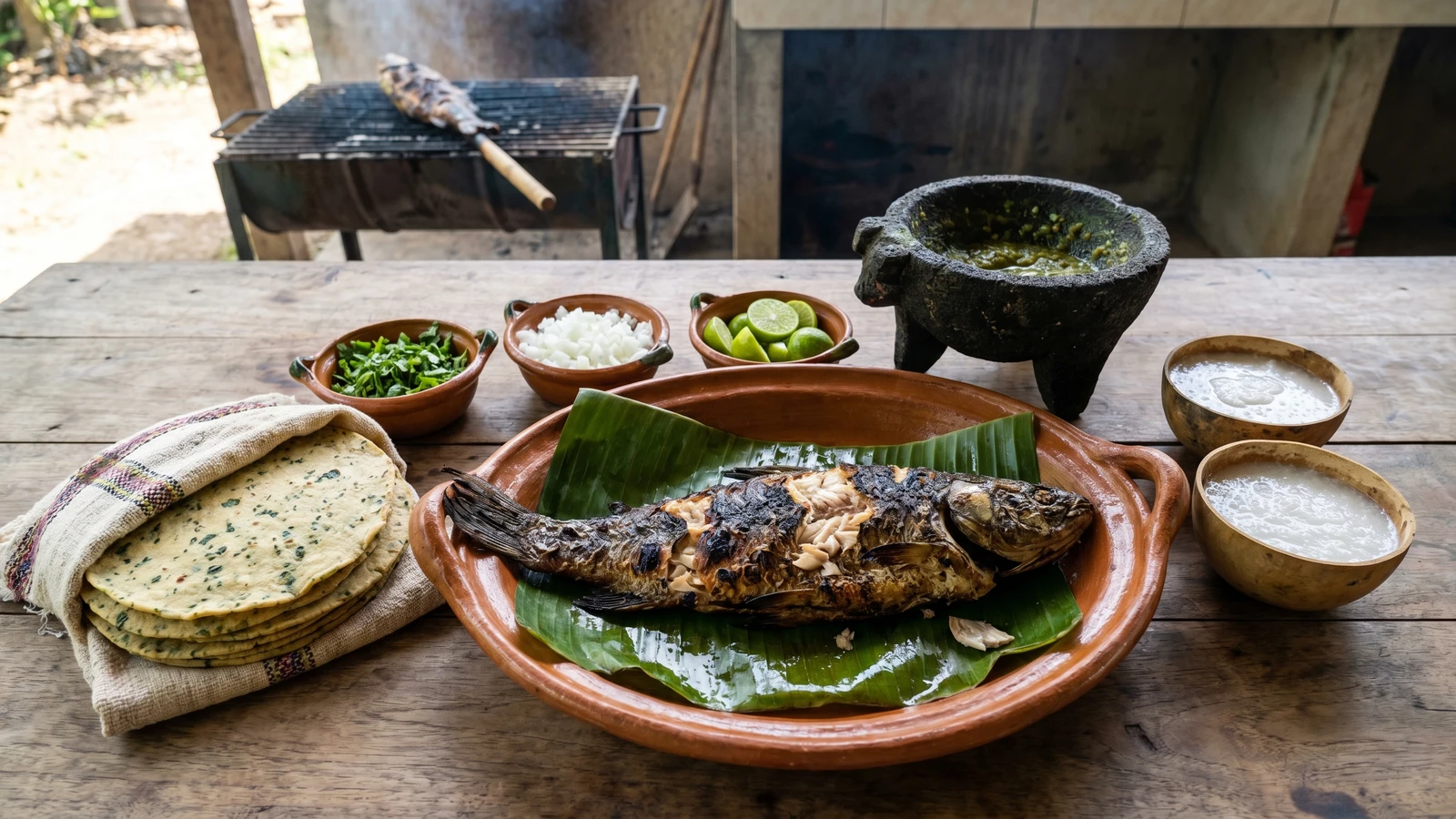
Tabasco's river fish, roasted whole over charcoal the Chontal way, pulled from its armored skin, and tucked into hand-pressed corn tortillas with chile amashito and lima.
Tabasco, especially the Chontalpa and the wetlands around Villahermosa and Centla, owns this dish. Pejelagarto is not a fashionable fish fillet. It is a river animal with hard scales, firm white flesh, and a shape that tells you it came from water older than your recipe book.
The Chontal cooks who perfected this method did not need butter sauce or breading. They roasted the whole pejelagarto on a stick over charcoal, letting the armored skin protect the meat while the flesh firmed and took the taste of smoke. Then they pulled it apart by hand and set it on the table with corn tortillas, chile amashito, lima, and salt. That is enough when the fish is good.
Use hand-pressed corn tortillas. In Tabasco, you may find masa worked with cooked chaya, and that green edge belongs here if you can make it properly. The chile is amashito, small, fierce, and local. If your chile vendor looks confused when you ask for it, ask the señoras del mercado. Si no conoces el mercado, no conoces la cocina.
No me vengas con atajos. The stick, the charcoal, the slow turning, the pulling by hand, those are not decoration. La cocina no es decoración, es trabajo. Cada estado, su propia cocina.
Pejelagarto, Atractosteus tropicus, is a freshwater gar native to southeastern Mexico and Central America, especially the river and lagoon systems of Tabasco, Campeche, and Chiapas. In Tabasco it is strongly associated with Chontal, or Yokot'an, foodways, where roasting whole fish over fire preserved a practical wetland technique long before restaurant versions appeared in Villahermosa. Chile amashito, a small wild chile of the region, remains one of Tabasco's identifying ingredients and is commonly eaten fresh, crushed with salt and citrus, or preserved in vinegar.
Quantity
1, 3 to 4 pounds
cleaned but left whole with skin and scales intact
Quantity
2 tablespoons, plus more to taste
Quantity
6
divided
Quantity
6
rinsed and patted dry
Quantity
2 tablespoons
softened
Quantity
1 small
sliced into thick rounds
Quantity
2
crushed
Quantity
24
Quantity
1 cup
finely chopped, optional for the masa
Quantity
3 tablespoons
stems removed
Quantity
1/2 teaspoon
Quantity
1 small
peeled
Quantity
1/4 cup
Quantity
2 tablespoons
finely chopped
Quantity
1/2 small
finely diced
Quantity
as needed
wiped clean, for resting and serving
Quantity
for serving
| Ingredient | Quantity |
|---|---|
| whole pejelagartocleaned but left whole with skin and scales intact | 1, 3 to 4 pounds |
| coarse sea salt | 2 tablespoons, plus more to taste |
| limas or Mexican limesdivided | 6 |
| hoja santa leavesrinsed and patted dry | 6 |
| manteca de cerdosoftened | 2 tablespoons |
| white onionsliced into thick rounds | 1 small |
| garlic clovescrushed | 2 |
| hand-pressed corn tortillas | 24 |
| cooked chaya leaves (optional)finely chopped, optional for the masa | 1 cup |
| fresh chile amashitostems removed | 3 tablespoons |
| coarse sea salt, for the chile amashito salsa | 1/2 teaspoon |
| garlic clove, for the salsapeeled | 1 small |
| fresh lima or Mexican lime juice, for the salsa | 1/4 cup |
| cilantro criollofinely chopped | 2 tablespoons |
| white onion, for servingfinely diced | 1/2 small |
| banana leaveswiped clean, for resting and serving | as needed |
| jicaras of pozol (optional) | for serving |
Rinse the cleaned pejelagarto inside and out, then pat it very dry. Keep the skin and hard scales on. That armor protects the flesh from the charcoal and keeps the fish from drying out. Rub the cavity with coarse salt and the juice of 2 limas.
Spread the softened manteca de cerdo inside the cavity. Add the hoja santa, onion rounds, and crushed garlic. The manteca carries the aroma of the hoja santa into the flesh. Do not smear the outside with oil. The skin has its job and you should let it do it.
Run a clean hardwood stick or long metal skewer through the fish from mouth to tail, keeping it steady. Tie the body in two or three places with butcher's twine if it feels loose. A whole pejelagarto is awkward. Good. Food from the river does not arrive portioned like supermarket chicken.
Prepare a charcoal fire and let it burn down until the coals are covered with gray ash and glow evenly. You want steady heat, not flames licking the fish. Set the fish 8 to 10 inches from the coals and turn it every 5 to 7 minutes. The skin will darken, blister, and tighten around the meat.
Roast for 35 to 45 minutes, depending on the size of the fish, turning steadily. The pejelagarto is ready when the flesh near the backbone is opaque, firm, and pulls away in moist flakes. If you use a thermometer, the thickest part should reach 145F. Rest it on banana leaves for 10 minutes so the juices settle.
While the fish rests, crush the chile amashito, salt, and garlic in a molcajete until the chiles split and release their sharp green smell. Stir in the lima juice and cilantro criollo. This salsa should be bright and direct. Do not turn it into a sweet tomato salsa. The chile amashito is the point.
Warm your comal over medium-high heat. If using chaya, make sure the leaves were boiled first, squeezed dry, and finely chopped before mixing into the masa. Raw chaya does not belong in anyone's tortilla. Press the tortillas and cook them until they puff, with brown freckles on both sides and soft centers.
Open the roasted pejelagarto carefully. Lift the flesh away from the skin and bones with your fingers, keeping the flakes large. Watch for small bones near the backbone and belly. Discard the hoja santa, onion, garlic, skin, and bones. Taste the meat and adjust with salt and a squeeze of lima.
Set the pulled pejelagarto on banana leaves in the center of the table. Serve with the hot corn tortillas, chile amashito salsa, diced white onion, and lime halves. Each person builds the taco by hand. Fish, salsa, onion, lime. Nothing more is needed. Así se hace y punto.
1 serving (about 300g)
Culinary guides, cultural storytelling, and the editorial depth that makes cooking meaningful.
Discover Culinary ExplorerChef Lupita
Jalisco's goat birria, born around Cocula and carried into Guadalajara's markets, slow-braised in ancho, guajillo, cascabel, and chile de arbol, then tucked into corn tortillas crisped in its own red fat.
Chef Lupita
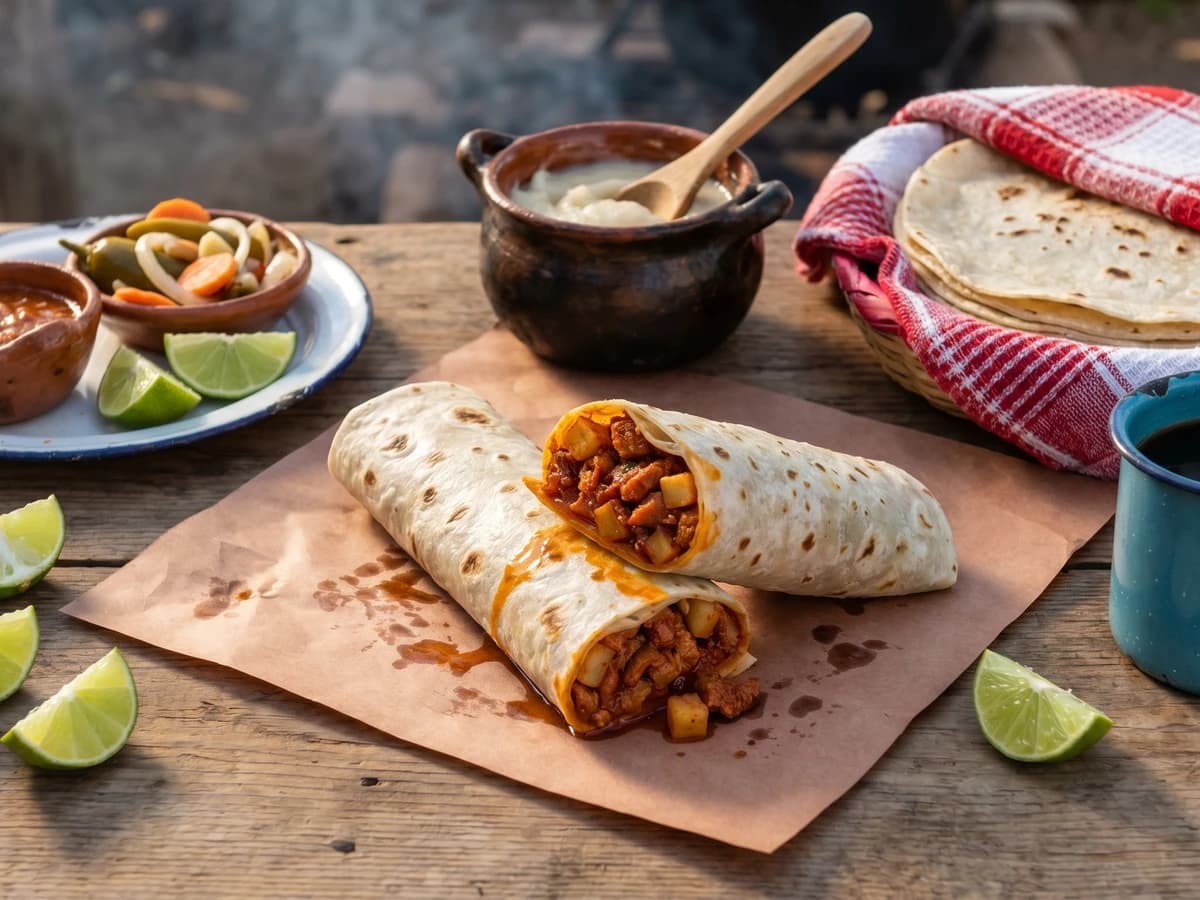
Sonora's working morning burrito: chicharrón de cáscara stewed in chile colorado with diced potato, rolled tight in a paper-thin tortilla sobaquera and eaten standing up at the carreta.
Chef Lupita
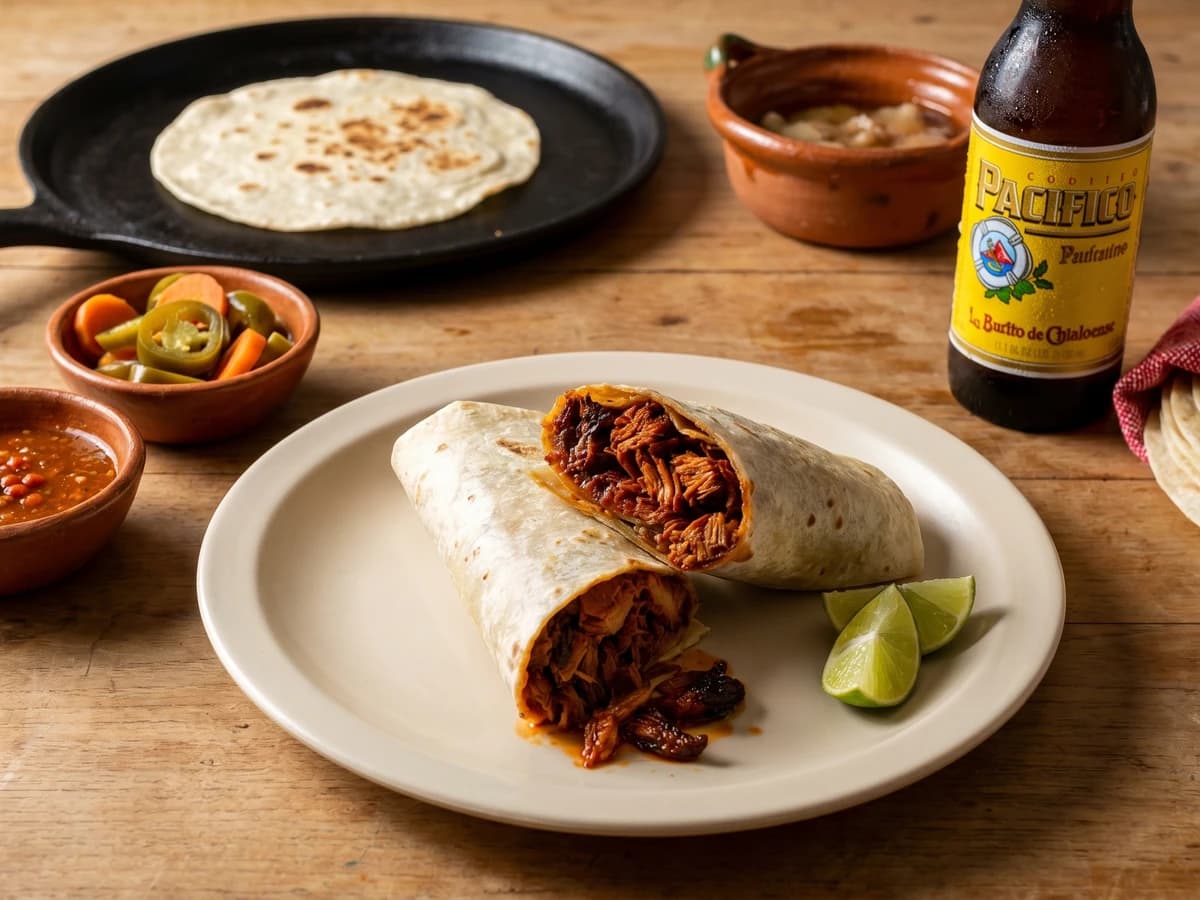
Mocorito's pork chilorio, shredded and confited in lard with chile ancho and pasilla, rolled into a thin handmade flour tortilla. The burrito Sinaloa sends out into the world.
Chef Lupita
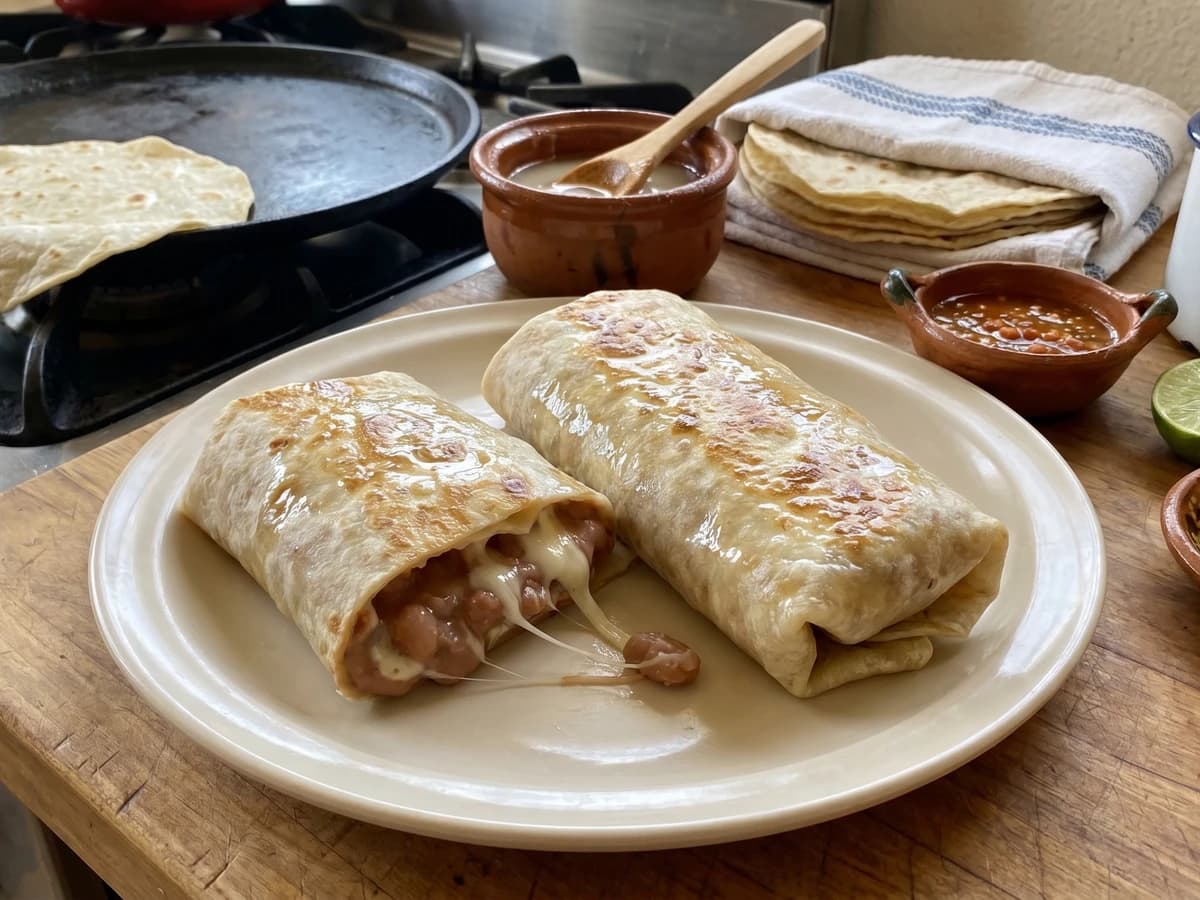
Sonora's morning burrito of mashed pinto frijoles puercos and melted queso asadero, wrapped in a paper-thin sobaquera and seared on the comal until the cheese pulls in long strings.