Chef Lupita
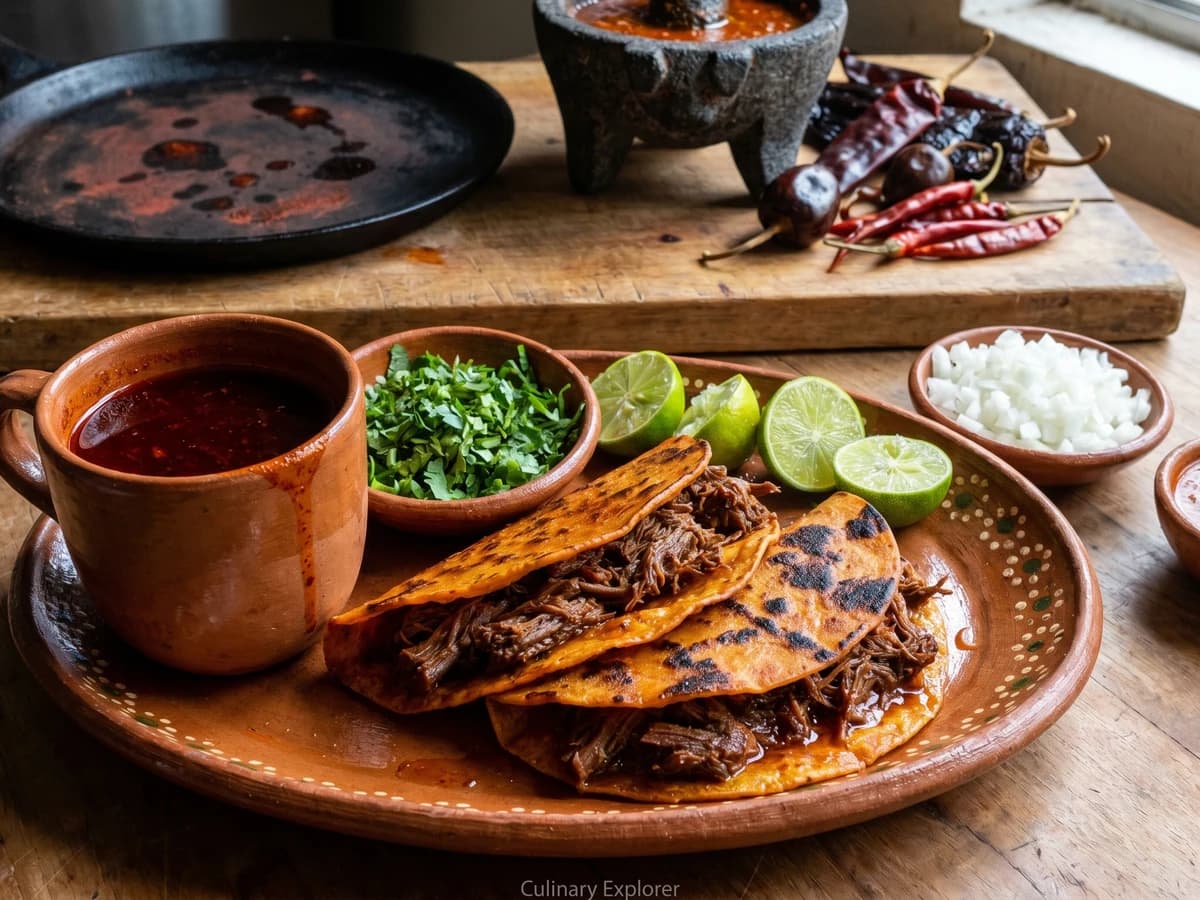
Birria Tacos with Consome
Jalisco's goat birria, born around Cocula and carried into Guadalajara's markets, slow-braised in ancho, guajillo, cascabel, and chile de arbol, then tucked into corn tortillas crisped in its own red fat.
A cooking platform built around craft, culture, and the stories behind what we eat.
Created by
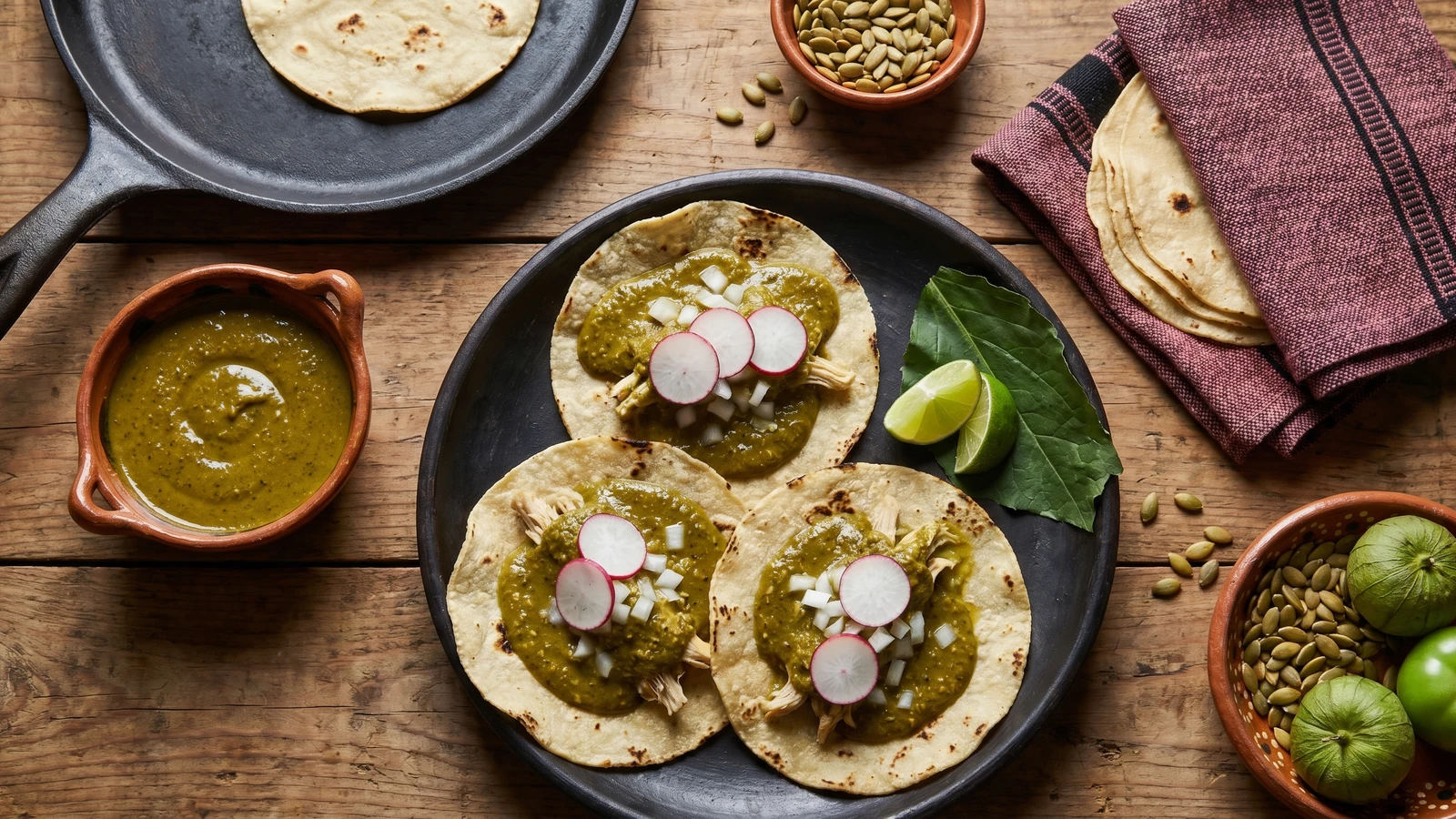
Oaxaca's green mole built on toasted pepitas, hoja santa, and tomatillos, thickened with fresh masa and ladled over slow-poached shredded chicken on warm corn tortillas with radish for crunch.
This is Oaxacan mole verde. One of the seven moles. Not the most famous, that would be negro, but the one that shows up on weekday tables across the Valles Centrales when a cook wants something green, bright, and substantial without committing to a two-day project.
The color comes from tomatillos, hoja santa, epazote, and flat-leaf parsley, all blended with toasted pepitas that give the sauce its body. The pepitas are the backbone. Without them you have salsa verde. With them, thickened by a handful of fresh masa dissolved into the pot, you have mole verde. That distinction matters. The masa clouds the sauce just enough to coat a spoon and cling to the chicken. Skip it and the mole runs off the meat like water.
Hoja santa is the herb that makes this version Oaxacan. It grows wild in the lowlands and has an anise-like flavor that no other herb replicates. I've watched senoras in the Mercado de Abastos in Oaxaca City tear the big velvet leaves right off the stem and drop them into the blender without measuring. They know the proportion by feel. If you can't find hoja santa, you can approximate with a mix of fresh tarragon and basil, but I'll tell you now: it's a compromise. Not the same dish.
My mother didn't make Oaxacan moles. She was jalisciense. But she had a page in her notebook from a trip she took to Oaxaca in 1982, a mole verde recipe dictated by a woman at a market stall who sold tamales de verde out of a basket. The handwriting is almost illegible. The recipe works. Recetas probadas y garantizadas.
The word 'mole' derives from the Nahuatl 'molli,' meaning sauce or mixture, and Oaxaca's classification of seven canonical moles (negro, rojo, coloradito, amarillo, verde, chichilo, and manchamanteles) was formalized in the 20th century as a statement of regional identity. Mole verde's reliance on pepitas as a thickener is a pre-Columbian technique predating the arrival of European dairy and wheat; ground squash seeds were used to build sauces in Mesoamerican kitchens centuries before the conquest. Hoja santa (Piper auritum), the defining herb of Oaxacan mole verde, appears in Aztec tribute lists recorded in the Codex Mendoza, indicating its long-established value as both a culinary and medicinal plant across southern Mexico.
Quantity
2 pounds
Quantity
1 medium
quartered (half for broth, half for mole)
Quantity
4
peeled (2 for broth, 2 for mole)
Quantity
2
Quantity
1 tablespoon, plus more to taste
Quantity
1 pound
husked and rinsed
Quantity
3
stemmed
Quantity
1
stemmed
Quantity
3/4 cup
Quantity
4 large
center rib removed, roughly torn
Quantity
1/2 cup, packed
leaves and tender stems
Quantity
4 sprigs
leaves stripped from stems
Quantity
1/4 cup
leaves and tender stems
Quantity
3 tablespoons
Quantity
2 tablespoons
Quantity
1 1/2 cups
reserved from the chicken
Quantity
18
warmed
Quantity
6
sliced into thin rounds
Quantity
1/4 cup
Quantity
for serving
| Ingredient | Quantity |
|---|---|
| bone-in, skin-on chicken thighs | 2 pounds |
| white onionquartered (half for broth, half for mole) | 1 medium |
| garlic clovespeeled (2 for broth, 2 for mole) | 4 |
| bay leaves | 2 |
| kosher salt | 1 tablespoon, plus more to taste |
| tomatilloshusked and rinsed | 1 pound |
| fresh chile serranostemmed | 3 |
| fresh chile jalapeñostemmed | 1 |
| raw hulled pepitas (pumpkin seeds) | 3/4 cup |
| hoja santa leavescenter rib removed, roughly torn | 4 large |
| fresh flat-leaf parsleyleaves and tender stems | 1/2 cup, packed |
| fresh epazoteleaves stripped from stems | 4 sprigs |
| fresh cilantroleaves and tender stems | 1/4 cup |
| fresh masa | 3 tablespoons |
| lard (manteca de cerdo) | 2 tablespoons |
| chicken poaching brothreserved from the chicken | 1 1/2 cups |
| hand-pressed corn tortillaswarmed | 18 |
| radishes (optional)sliced into thin rounds | 6 |
| diced raw white onion (optional) | 1/4 cup |
| lime wedges (optional) | for serving |
Place the chicken thighs in a medium pot and cover with cold water by two inches. Add half of the quartered onion, two garlic cloves, the bay leaves, and the salt. Bring to a gentle simmer over medium heat, skimming the gray foam that rises in the first ten minutes. Reduce to a low simmer and cook for 35 to 40 minutes, until the meat pulls away from the bone without effort. Cold water and a slow build draws the flavor into the broth. A hard boil toughens the meat and clouds the liquid.
While the chicken poaches, heat a dry comal or cast iron skillet over medium-low. Add the pepitas in a single layer and toast them, stirring constantly with a wooden spoon. They will start to pop and jump like popcorn after two or three minutes. When most of them have puffed and turned golden with a few brown spots, pull them off the heat immediately and transfer to a plate. The whole kitchen should smell toasty and nutty. That smell is the oil in the seeds waking up. It is half the flavor of this mole.
On the same dry comal, arrange the husked tomatillos and the serrano and jalapeño chiles. Cook over medium-high heat, turning occasionally, until the tomatillos are soft, blistered, and collapsing, and the chiles are charred in patches. This takes about eight to ten minutes. The tomatillos will release juice onto the comal. Let it caramelize there. That dark fond on the comal is flavor you earned. Transfer everything, including any collected juices, to a bowl and let it cool for five minutes.
In a blender, combine the charred tomatillos and chiles with all their juices, the toasted pepitas, the remaining raw onion quarter, the remaining two garlic cloves, the hoja santa, parsley, epazote, and cilantro. Add one cup of the reserved chicken broth. Blend on high for a full two minutes until the sauce is completely smooth and bright green, with no visible chunks of seed or herb. It should be thick enough to coat the back of a spoon. If the blender struggles, add a splash more broth, but no more than needed. You want body, not soup.
Melt the lard in a heavy-bottomed cazuela or Dutch oven over medium heat. When it shimmers, pour in the blended mole verde all at once. It will sputter and spit. Stand back but keep stirring. Cook for eight to ten minutes, stirring frequently, until the sauce darkens half a shade and the fat begins to separate around the edges. La manteca es el sabor. This frying step changes the mole from a raw green sauce into something deeper, rounder, and worth the work.
Dissolve the fresh masa in the remaining half cup of warm chicken broth, working it with your fingers until no lumps remain. If using masa harina, whisk it into the broth until smooth. Pour the masa slurry into the frying mole in a thin stream, stirring constantly. The sauce will thicken within two to three minutes into a consistency that coats chicken and clings to a tortilla without running. Taste now. Adjust salt. The mole should taste of pepitas first, then tomatillo, then the anise note of hoja santa at the back of the tongue. If the hoja santa is shy, tear in another half leaf and simmer for two more minutes.
Remove the chicken thighs from the broth. Discard the skin and bones. Shred the meat into rough, uneven pieces using two forks or your hands. Do not shred it too fine. You want pieces large enough to have texture when you bite into a taco, not a paste. Fold the shredded chicken into the mole verde, stirring gently to coat every piece. Let it simmer together for five minutes so the chicken absorbs the sauce. A mole and its meat need time together. Five minutes is the minimum.
Heat a comal or cast iron skillet over medium-high and warm each tortilla for about 30 seconds per side, until pliable and lightly charred in spots. Stack them in a cloth-lined basket or wrapped in a clean kitchen towel to hold the heat. Spoon the mole verde con pollo onto each warm tortilla. Top with a few thin rounds of radish for crunch and a pinch of raw diced onion. Set lime wedges on the table. Cada estado, su propia cocina, and this one is Oaxacan from the first bite to the last.
1 serving (about 350g)
Culinary guides, cultural storytelling, and the editorial depth that makes cooking meaningful.
Discover Culinary ExplorerChef Lupita
Jalisco's goat birria, born around Cocula and carried into Guadalajara's markets, slow-braised in ancho, guajillo, cascabel, and chile de arbol, then tucked into corn tortillas crisped in its own red fat.
Chef Lupita
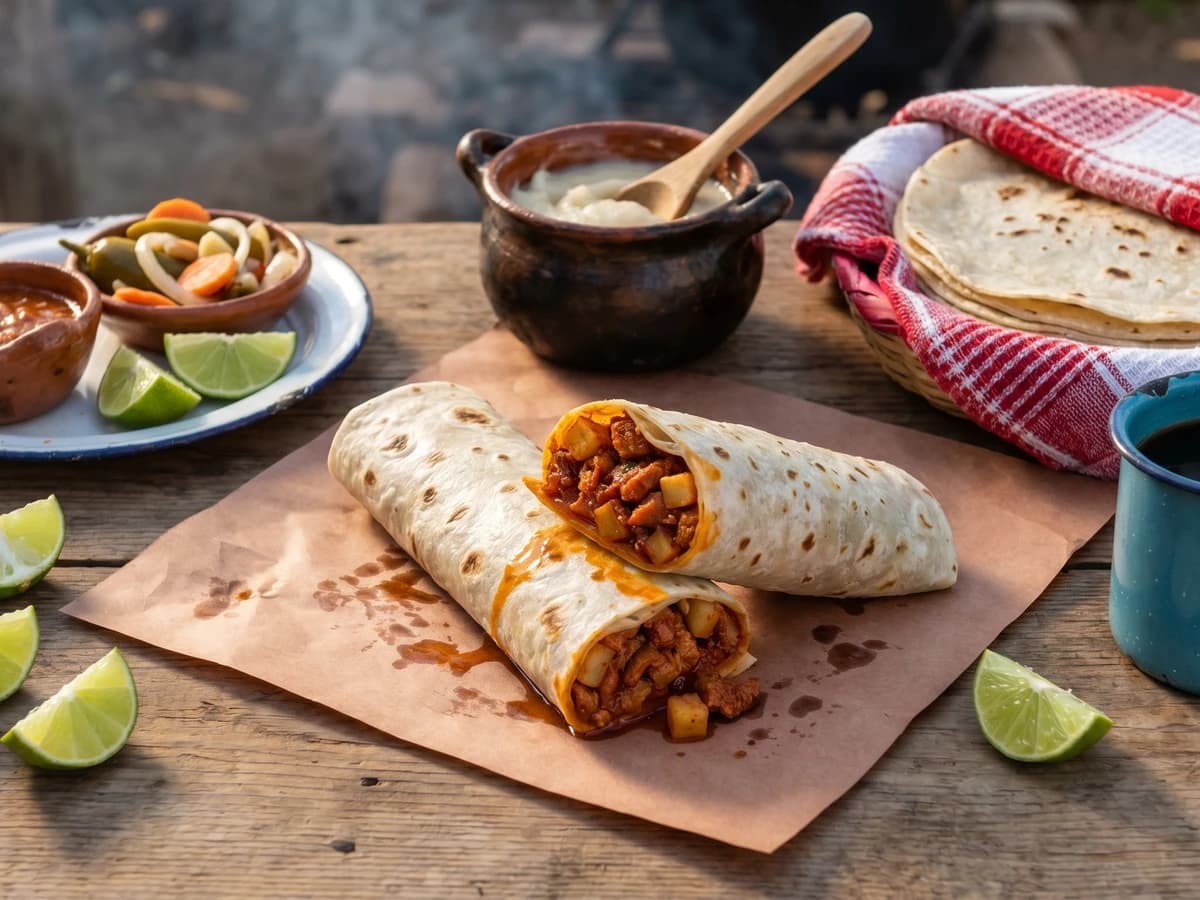
Sonora's working morning burrito: chicharrón de cáscara stewed in chile colorado with diced potato, rolled tight in a paper-thin tortilla sobaquera and eaten standing up at the carreta.
Chef Lupita
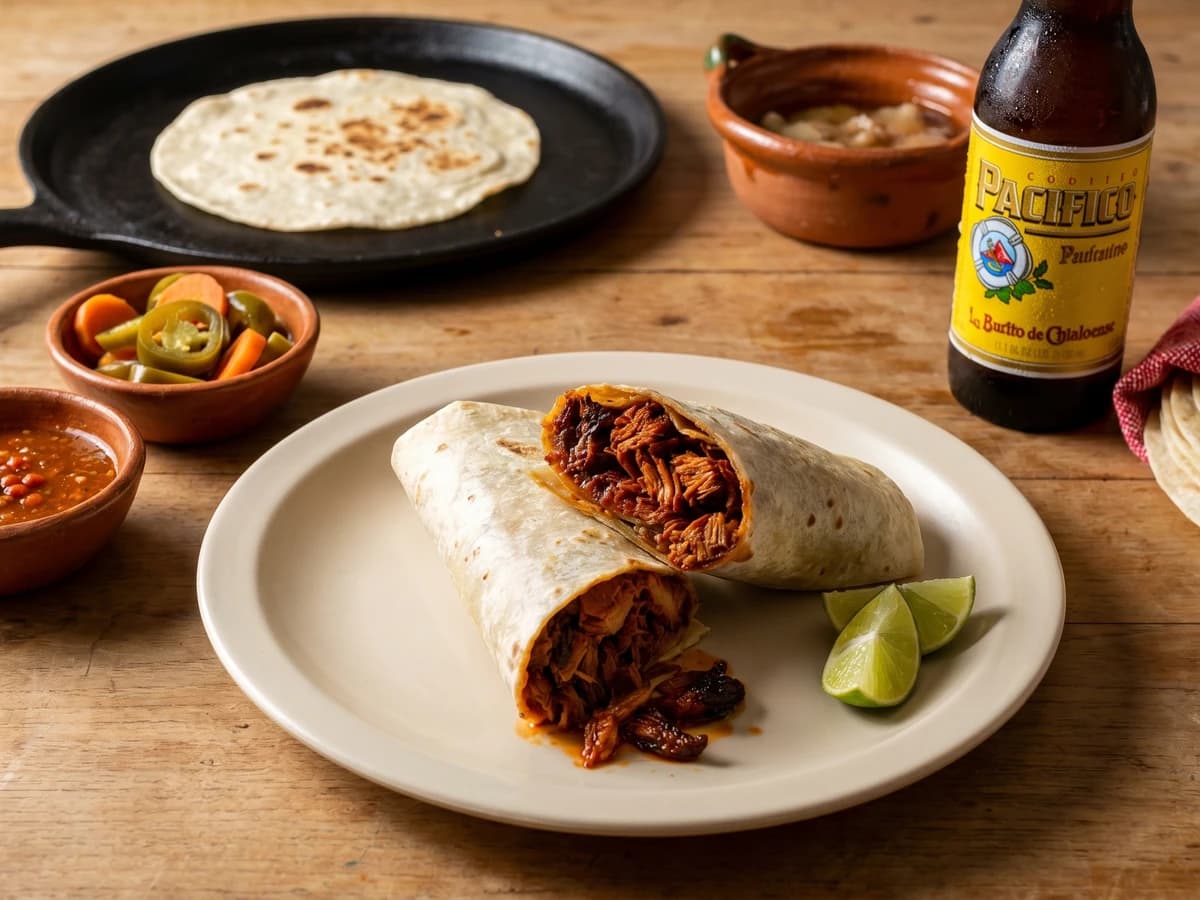
Mocorito's pork chilorio, shredded and confited in lard with chile ancho and pasilla, rolled into a thin handmade flour tortilla. The burrito Sinaloa sends out into the world.
Chef Lupita
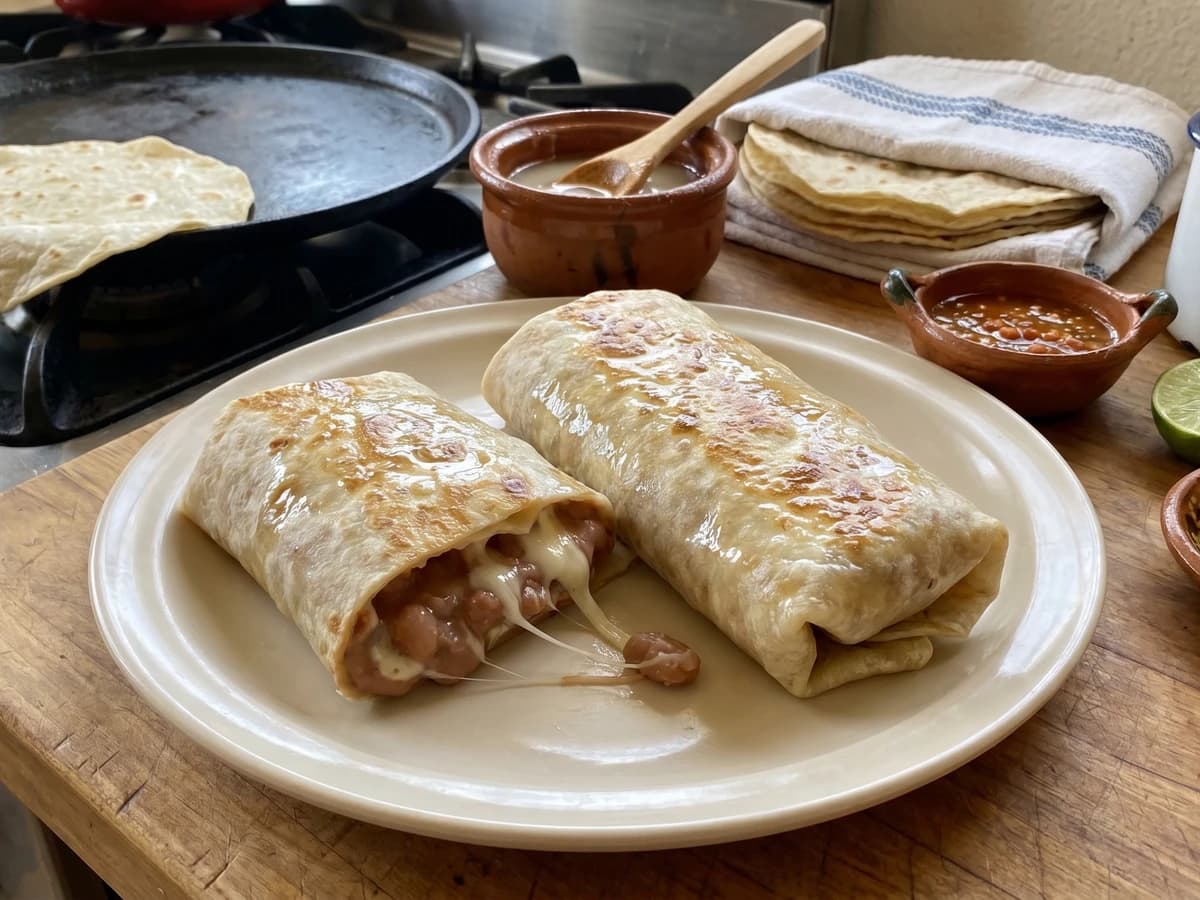
Sonora's morning burrito of mashed pinto frijoles puercos and melted queso asadero, wrapped in a paper-thin sobaquera and seared on the comal until the cheese pulls in long strings.