Chef Lupita
Birria Tacos with Consome
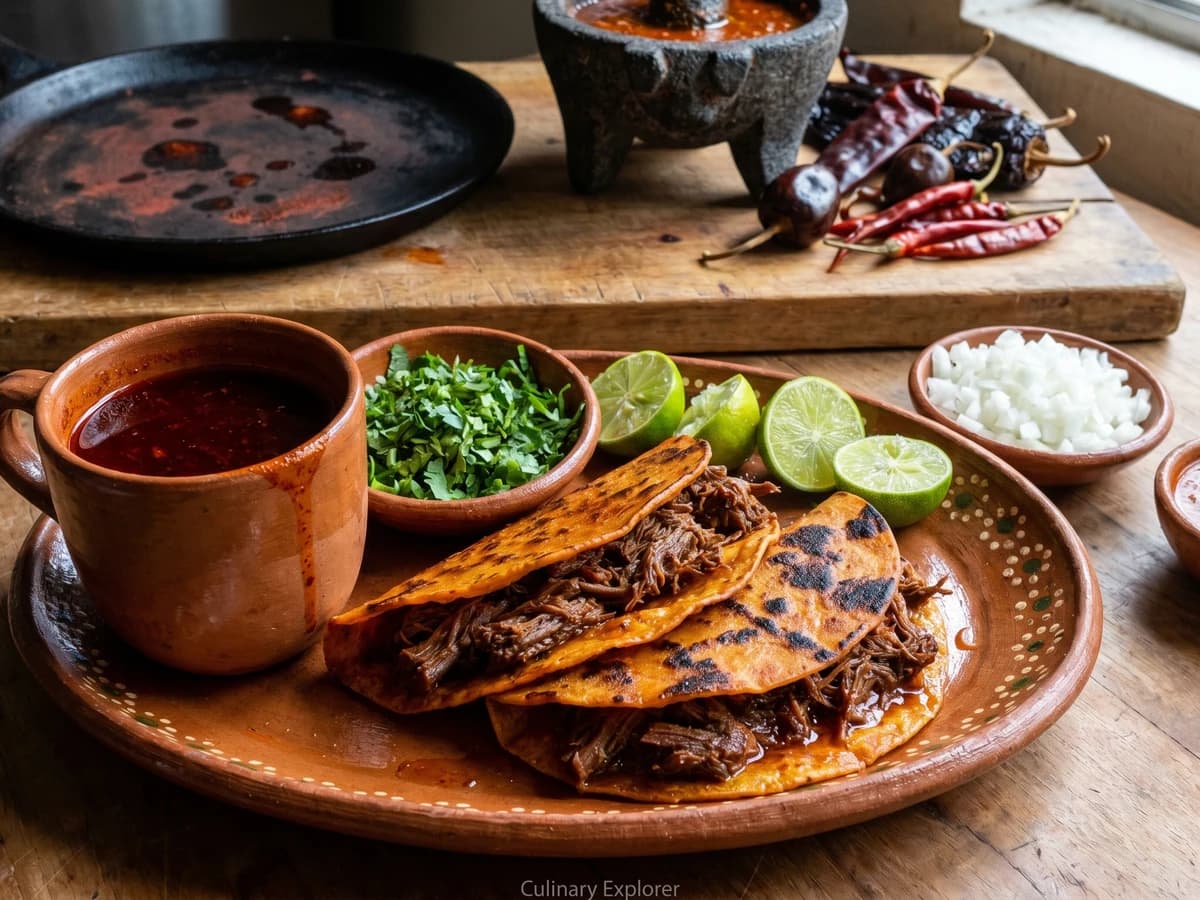
Jalisco's goat birria, born around Cocula and carried into Guadalajara's markets, slow-braised in ancho, guajillo, cascabel, and chile de arbol, then tucked into corn tortillas crisped in its own red fat.
A cooking platform built around craft, culture, and the stories behind what we eat.
Created by
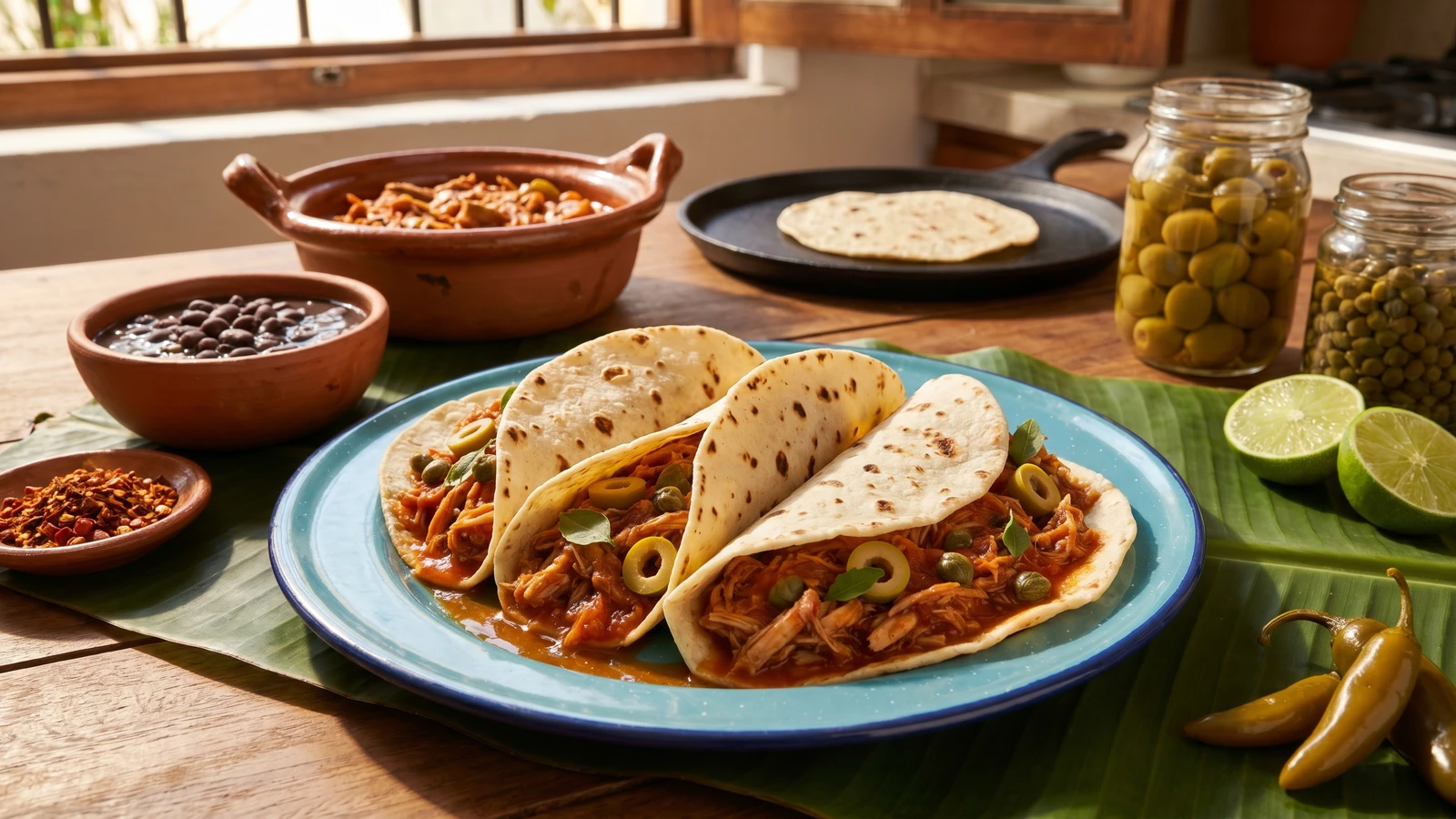
From the Sotavento lowlands of southern Veracruz: dogfish shark poached and shredded, then stewed down with ripe jitomate, green olives, capers, and a fistful of epazote, and folded soft into hand-pressed corn tortillas.
Tacos de cazón are from Veracruz. From the Sotavento, the low green country where the Papaloapan river spills into the Gulf, where Tlacotalpan keeps its painted arches and Alvarado keeps its salty tongue and the cazón comes off the boats in the morning. Campeche cooks cazón too, layered into pan de cazón, and people confuse the two. Don't. This is the everyday Veracruz version: shredded shark stewed down and folded soft into a warm corn tortilla. Cada estado, su propia cocina.
Look in the pot and you can read the history of the coast. Jitomate, epazote, chile: the Indigenous hand. Green olives, capers, olive oil: the Spanish hand, because Veracruz was the port where those things first walked into Mexico. And the Sotavento itself, cradle of son jarocho, carries La Tercera Raíz, the African root this country took too long to name. Three roots, one pan. This was Lenten food, the fish that fed the coast on Fridays through Cuaresma when meat was off the table, and it stayed because it is good, not because the calendar said so.
The technique is plain but it is not careless. You poach the cazón gently, just until it turns from glassy to white, and you stop, because shark left too long on the heat goes to rubber. You shred it fine. Then you build the guiso and you cook it dry, dry enough that it won't soak through the tortilla. The epazote is not decoration. It is the backbone of the flavor, that resin-and-mint pungency no other herb gives you. And the fat is olive oil, not lard. This is the one corner of Mexico where the Spanish hand reaches all the way into the pan.
I recorded this guiso from a señora frying fish on the malecón in Alvarado, a woman who had been making it since before I was born and who told me, without my asking, that the olives go in nearly whole, the capers go in last, and you taste before you salt because the sea already did some of the work. She was right about all of it. Saber cocinar es saber vivir.
The word 'cazón' names not one fish but several species of small or juvenile shark netted along Mexico's Gulf coast, where shark has been eaten since long before the Spanish arrived. The dish's olive, caper, and olive oil profile is the fingerprint of the port of Veracruz, founded in 1519 and for centuries the Atlantic gateway through which those Mediterranean ingredients first entered Mexican kitchens, giving rise to the style cooks call 'a la veracruzana.' That same port was the principal point of entry for enslaved Africans in New Spain, and the cooking of the Sotavento carries the meeting of Indigenous, Spanish, and African heritage, the African contribution being what Mexico calls 'la Tercera Raíz,' the third root.
Quantity
1 1/2 pounds
Quantity
1
halved
Quantity
1/2
Quantity
1 medium
finely chopped
Quantity
2
peeled and smashed
Quantity
3
minced
Quantity
1
Quantity
2 sprigs
Quantity
1 large sprig
leaves chopped
Quantity
1 tablespoon
Quantity
1/4 cup
Quantity
1 1/2 pounds
finely chopped (about 6)
Quantity
2
chopped
Quantity
1/3 cup
pitted and roughly chopped
Quantity
2 tablespoons
drained
Quantity
to taste
Quantity
16 to 20
warmed
Quantity
for serving
Quantity
for serving
Quantity
for serving
crushed
Quantity
for serving
| Ingredient | Quantity |
|---|---|
| cazón (dogfish shark) fillet | 1 1/2 pounds |
| limehalved | 1 |
| white onion (for poaching) | 1/2 |
| white onion (for the guiso)finely chopped | 1 medium |
| garlic cloves (for poaching)peeled and smashed | 2 |
| garlic cloves (for the guiso)minced | 3 |
| bay leaf (hoja de laurel) | 1 |
| fresh epazote (for poaching) | 2 sprigs |
| fresh epazote (for the guiso)leaves chopped | 1 large sprig |
| kosher salt (for the poaching water) | 1 tablespoon |
| olive oil | 1/4 cup |
| ripe jitomate (Roma tomatoes)finely chopped (about 6) | 1 1/2 pounds |
| chiles chipotle (dried meco or chipotle en adobo)chopped | 2 |
| green olives (aceitunas verdes)pitted and roughly chopped | 1/3 cup |
| capers (alcaparras)drained | 2 tablespoons |
| kosher salt | to taste |
| hand-pressed corn tortillaswarmed | 16 to 20 |
| frijoles negros refritos (refried black beans) (optional) | for serving |
| chiles jalapeños en escabeche (optional) | for serving |
| dried chiltepín (optional)crushed | for serving |
| lime halves (optional) | for serving |
Rinse the cazón under cold water and rub it all over with the cut lime. Shark holds urea in its flesh, so a fresh fish rinsed with lime stays clean and sweet while a tired one smells faintly of ammonia, and no seasoning fixes that. Smell before you buy. Bring a wide pot of water to a gentle simmer with the 1/2 onion, the smashed garlic, the bay leaf, the 2 sprigs of epazote, and the tablespoon of salt. Slip in the cazón and poach 8 to 10 minutes, just until the flesh turns from glassy to opaque white. Pull it the second it is cooked through. Shark left too long on the heat goes to rubber and there is no walking it back. Lift the fish out and reserve half a cup of the poaching broth.
Let the fish cool until you can handle it. Pull away any skin and feel for the soft central cartilage. Cazón is a shark, so it has cartilage, not bone. Lift it out. Shred the flesh fine with your fingers or two forks, the way you would deshebrar chicken. You want soft threads, not chunks. Threads carry the guiso and fold cleaner into the tortilla.
Heat the olive oil in a wide skillet or clay cazuela over medium. Olive oil, not lard. This is the one corner of Mexico where the Spanish hand reaches into the pan, and the dish would not taste like Veracruz without it. Add the chopped onion with a pinch of salt and cook until soft and translucent, about 5 minutes. Add the minced garlic and cook one minute more, until you smell it.
Add the chopped jitomate and cook over medium until it breaks down and loses its raw, bright edge, 10 to 12 minutes. Stir now and then and let it reduce into a loose, glossy sauce. Stir in the chipotle, the olives, and the capers, and cook 3 minutes more to let the smoke and the brine settle in. Taste here, before you reach for the salt.
Add the shredded cazón and the chopped epazote and fold everything together. If the pan looks dry, loosen it with a splash of the reserved poaching broth, but only a splash. The guiso for a taco has to be dry. A wet guiso soaks through the tortilla and leaves you holding a rag. Cook 5 to 7 minutes, until the flavors marry and the mixture is moist but holds together on a spoon. Taste one last time for salt.
Heat a dry comal or heavy skillet over medium-high. Warm the corn tortillas one or two at a time, about 30 seconds a side, until they are pliable and freckled with light brown spots. Corn, hand-pressed if you can. El maíz manda aquí, corn rules here. Flour tortillas belong to the north, not to the Gulf. Keep the warm ones wrapped in a cloth servilleta so they stay soft.
These are tacos suaves, soft tacos, not fried crisp. Spoon a line of the cazón guiso down the center of each warm tortilla and fold it over. Serve right away, with a bowl of frijoles negros on the side, the black bean that rules this coast, and set out the chiles en escabeche, the crushed chiltepín, and the lime halves so each person brings their own heat. Recetas probadas y garantizadas.
1 serving (about 360g)
Culinary guides, cultural storytelling, and the editorial depth that makes cooking meaningful.
Discover Culinary ExplorerChef Lupita
Jalisco's goat birria, born around Cocula and carried into Guadalajara's markets, slow-braised in ancho, guajillo, cascabel, and chile de arbol, then tucked into corn tortillas crisped in its own red fat.
Chef Lupita
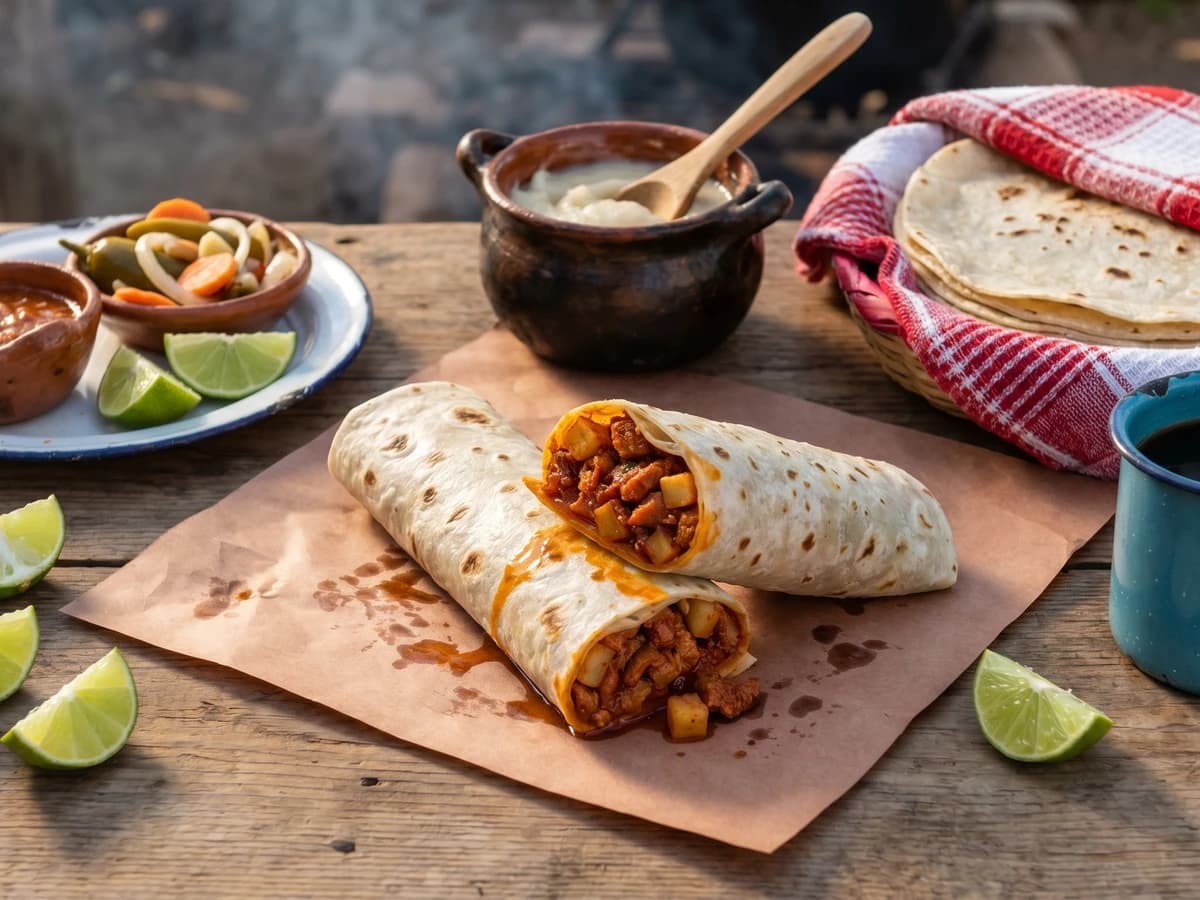
Sonora's working morning burrito: chicharrón de cáscara stewed in chile colorado with diced potato, rolled tight in a paper-thin tortilla sobaquera and eaten standing up at the carreta.
Chef Lupita
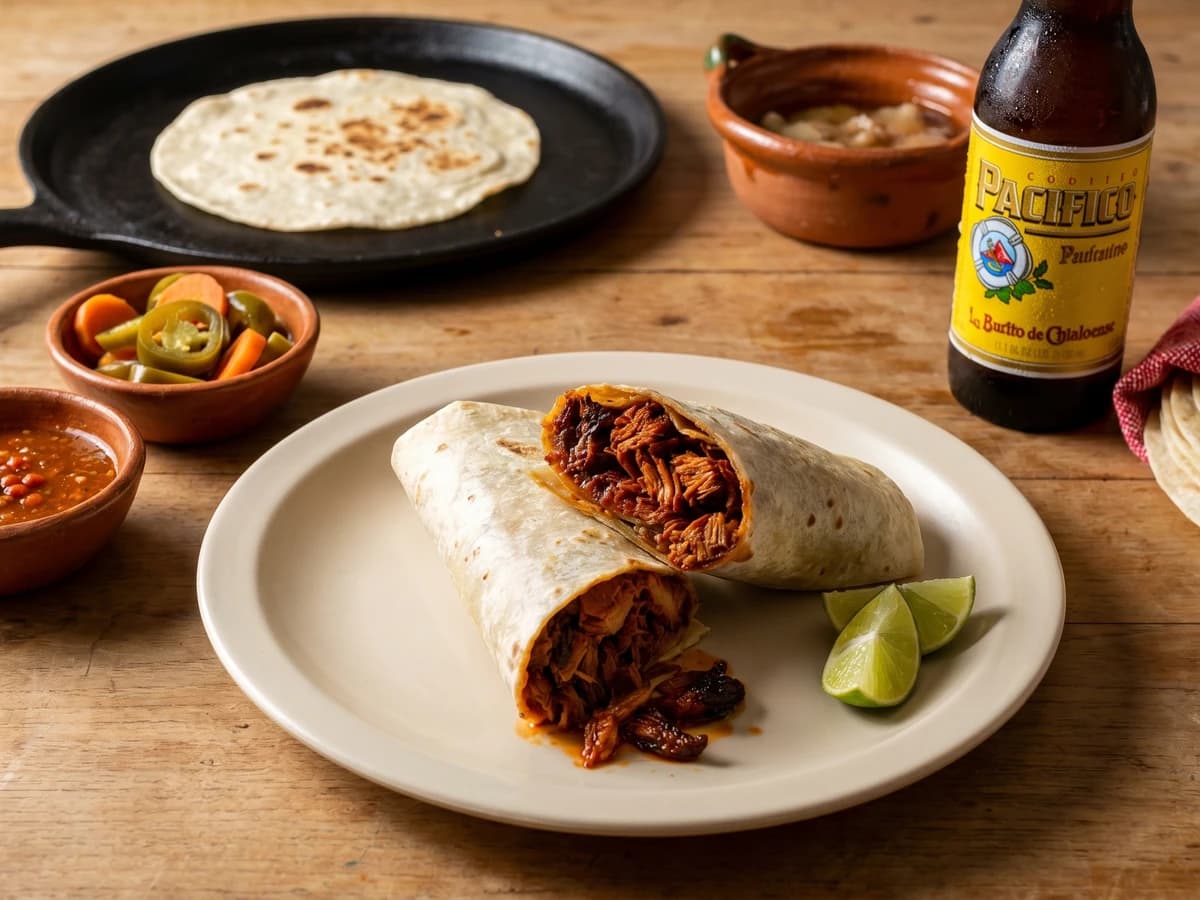
Mocorito's pork chilorio, shredded and confited in lard with chile ancho and pasilla, rolled into a thin handmade flour tortilla. The burrito Sinaloa sends out into the world.
Chef Lupita
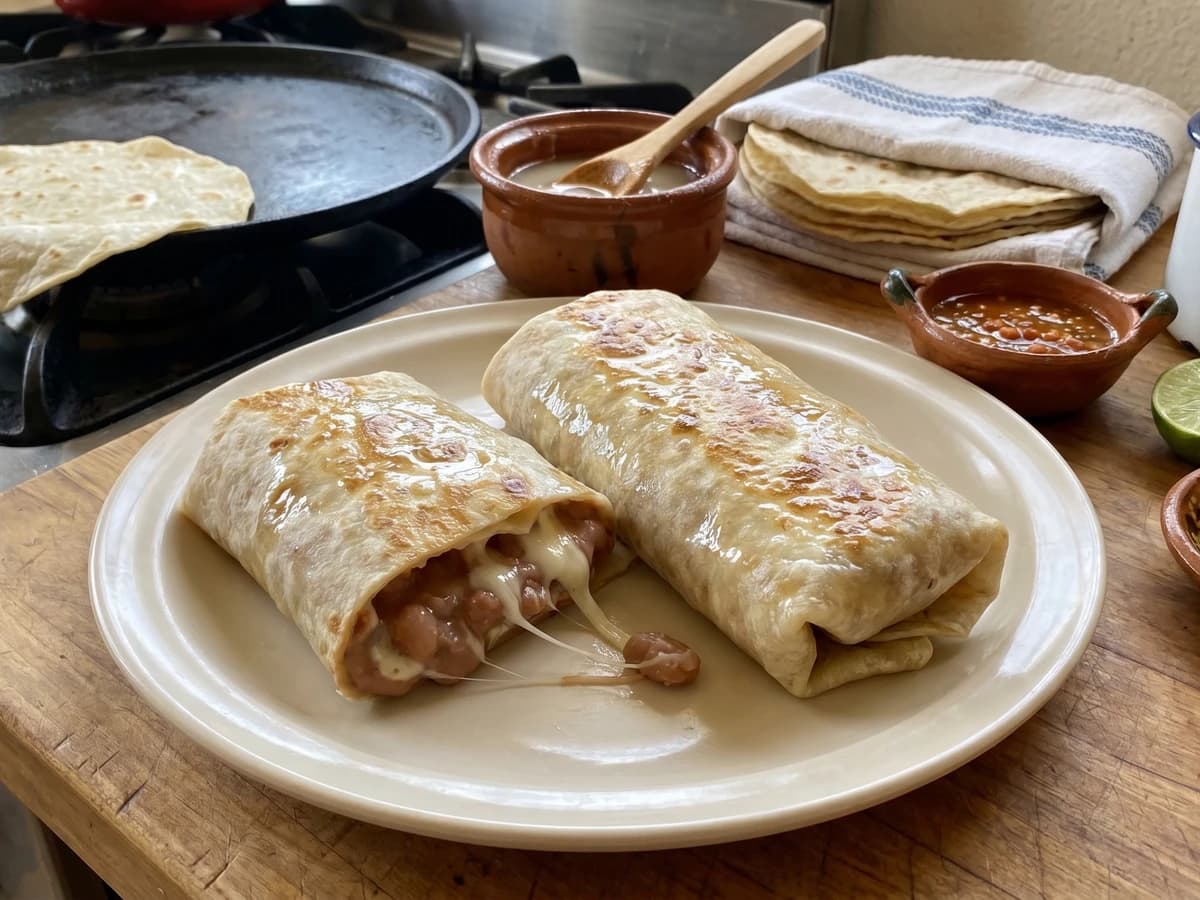
Sonora's morning burrito of mashed pinto frijoles puercos and melted queso asadero, wrapped in a paper-thin sobaquera and seared on the comal until the cheese pulls in long strings.