Chef Lupita
Birria Tacos with Consome
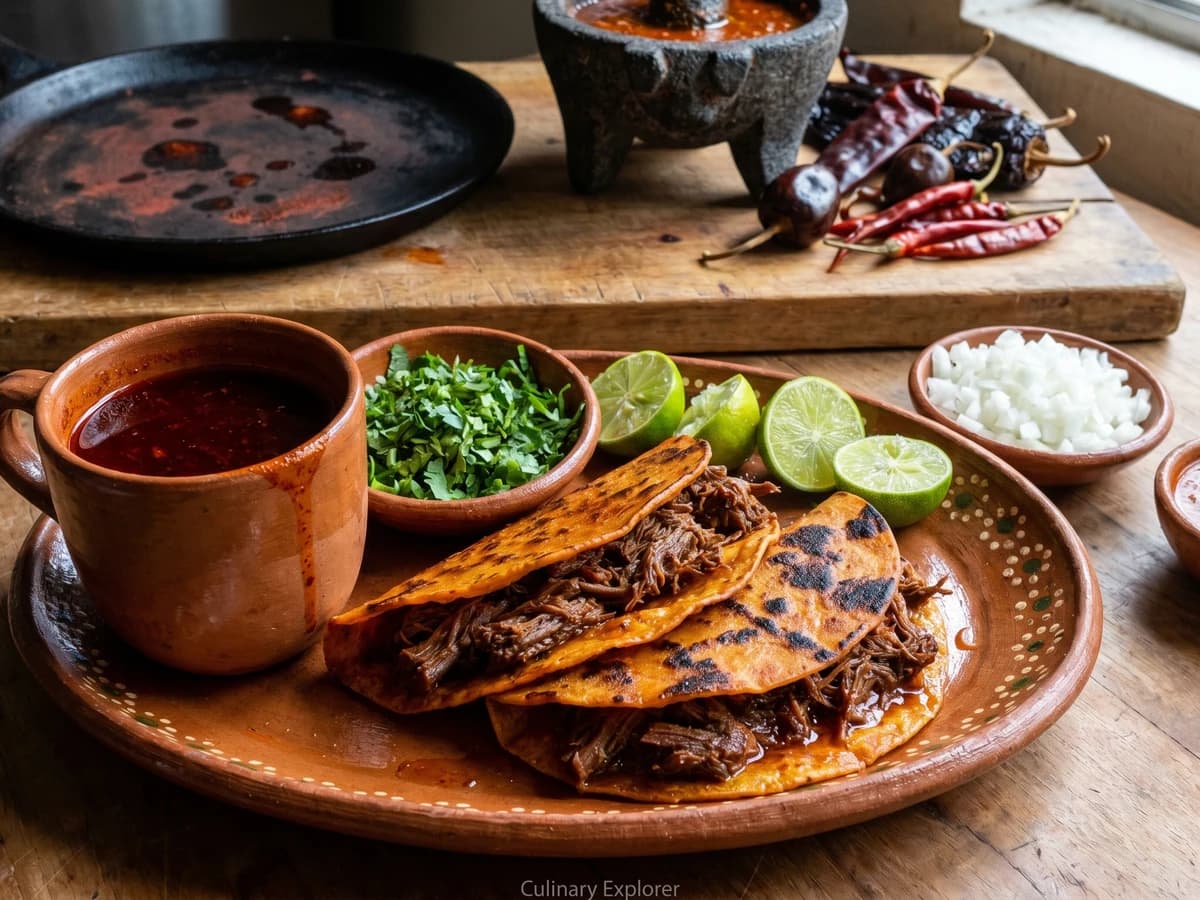
Jalisco's goat birria, born around Cocula and carried into Guadalajara's markets, slow-braised in ancho, guajillo, cascabel, and chile de arbol, then tucked into corn tortillas crisped in its own red fat.
A cooking platform built around craft, culture, and the stories behind what we eat.

Created by
Mérida's tacos of slow-cooked then fried pork belly, chopped over warm corn tortillas and melted under salty queso de bola, dressed with pickled red onion and a habanero salsa cut with naranja agria.
This is a Yucatán dish. Specifically from Mérida, where castacán is sold at storefronts and panucherias by the kilo and the cooks chop it on wooden boards stained dark from years of pork fat. Outside the Peninsula, this dish is barely known. Inside it, castacán is breakfast, lunch, and the late-afternoon snack that holds you over until cena.
Castacán is pork belly, simmered first to tenderness and then fried in lard until the skin crackles and the meat turns mahogany at the edges. It is not chicharron. Chicharron is dry. Castacán keeps its fat, keeps its meat, keeps the soft layer between the skin and the flesh. You chop it on a board with the skin and the fat and the meat all in one cut, and you pile it on a small warm tortilla with grated queso de bola, the Edam wax-wrapped wheel the Yucatecans adopted from Dutch traders centuries ago and made their own. The cheese is salty and dense. It softens against the hot pork. It does not stretch. If you want stretchy cheese, make something else.
The Peninsula has its own grammar. Recado, naranja agria, banana leaf, achiote, pib. Not chiles anchos and guajillos. Not crema and cilantro the way central Mexico does. The salsa here is habanero, charred and ground with sour orange and salt, nothing more. The pickled red onions are sharp with vinegar and oregano. The tortilla is small, the bite is concentrated, the heat is real. Mi madre nunca cocinó comida yucateca. She was from Jalisco. I learned this dish from doña Rosario at a panucheria off Calle 62, who let me sit on a stool and watch her chop castacán for a week before she told me how she seasoned the lard. Cada estado, su propia cocina. This one belongs to Yucatán.
Castacán is part of Yucatán's broader pork tradition, which emerged after the Spanish introduced pigs to the Peninsula in the 16th century and the Maya cooks absorbed pork into their existing repertoire of pit-cooking, smoking, and lard-frying. Queso de bola, the Dutch Edam that defines the dish, arrived through the Caribbean trade routes that connected Yucatán to Havana and Curaçao far more reliably than to central Mexico during the 18th and 19th centuries, when the Peninsula was effectively a maritime economy oriented toward Europe and the Antilles. This commercial isolation from the rest of Mexico is the reason Yucatecan cuisine reads as a separate culinary tradition, with its naranja agria, its recados, and its Dutch cheese, rather than as a regional variation of the national kitchen.
Quantity
2 pounds
in one slab
Quantity
1 tablespoon
Quantity
1
halved crosswise
Quantity
1 medium
halved
Quantity
2
Quantity
1 teaspoon
Quantity
1/2 cup, plus more if needed
Quantity
8 ounces
rind removed, coarsely grated
Quantity
18
Quantity
1 cup
Quantity
4 to 6
for the salsa
Quantity
4 medium
charred on a comal
Quantity
2
charred in their skins
Quantity
1/4 cup
or 2 tablespoons orange juice mixed with 2 tablespoons lime juice
Quantity
1 teaspoon
Quantity
for serving
Quantity
for the brave
| Ingredient | Quantity |
|---|---|
| skin-on pork bellyin one slab | 2 pounds |
| kosher salt | 1 tablespoon |
| head of garlichalved crosswise | 1 |
| white onionhalved | 1 medium |
| bay leaves | 2 |
| black peppercorns | 1 teaspoon |
| manteca de cerdo (pork lard) | 1/2 cup, plus more if needed |
| queso de bola (Edam from Holanda)rind removed, coarsely grated | 8 ounces |
| hand-pressed corn tortillas, small (4 inches) | 18 |
| pickled red onion (cebolla morada en escabeche) (optional) | 1 cup |
| chile habanerofor the salsa | 4 to 6 |
| tomatoescharred on a comal | 4 medium |
| garlic clovescharred in their skins | 2 |
| fresh naranja agria juiceor 2 tablespoons orange juice mixed with 2 tablespoons lime juice | 1/4 cup |
| kosher salt (for the salsa) | 1 teaspoon |
| lime wedges (optional) | for serving |
| sliced chile habanero on the side (optional) | for the brave |
Place the pork belly in a heavy pot and cover with cold water by two inches. Add the salt, halved garlic head, halved onion, bay leaves, and peppercorns. Bring to a gentle simmer over medium heat. Skim the gray foam in the first ten minutes. Reduce the heat until you see lazy bubbles every few seconds. Cover partially and cook for one hour and fifteen minutes, until a knife slides through the meat with no resistance but the slab still holds its shape. You are not trying to shred it. You are softening it so it will fry properly later.
Lift the belly out and lay it skin-side up on a sheet pan. Let it cool for at least thirty minutes, ideally an hour. The fat needs to firm up or the slices will fall apart in the lard. Once cool, slice the belly into strips about half an inch wide, cutting through the skin, the fat, and the meat in single pieces. You should have wide bacon-shaped strips with all three layers visible.
Heat a dry comal or heavy skillet over medium-high. Place the whole tomatoes, garlic cloves in their skins, and habaneros directly on the hot surface. Turn them every couple of minutes until the tomato skins are blackened and split, the garlic skins are scorched and the cloves inside are soft, and the habaneros are blistered and dark in spots. The smell will be sharp and a little eye-watering. Open a window. Pregúntale a las señoras del mercado, this is how they do it in Mérida.
Peel the charred garlic. Pull the stems off the habaneros, leaving the seeds if you want it serious, or removing them if you want it manageable. Place the tomatoes, garlic, and habaneros in a molcajete with the salt and grind to a coarse paste. Add the naranja agria juice and work it in. Taste. It should be hot, smoky, and bright from the sour orange. If you do not have naranja agria, the orange-lime mix gives you the same balance. Do not skip the sour. The Peninsula runs on it.
Melt the lard in a heavy cast iron skillet or wide cazuela over medium heat. The lard should be about a quarter inch deep. When it shimmers and a piece of onion peel browns in twenty seconds, you are ready. Lay the pork belly strips skin-side down in a single layer. Do not crowd the pan. Work in two batches if needed. Fry for four to five minutes per side, pressing the strips down with a spatula so the skin makes full contact with the hot lard. The skin will blister and turn deep amber. The fat will render further and crisp the edges. When the skin crackles under a fork and the meat side is dark mahogany, the castacán is ready. Lift the strips onto a wire rack.
Move the fried strips to a wooden cutting board and chop them into rough half-inch pieces. Skin, fat, and meat together in every cut. Keep them on the warm side of the comal while you finish the tortillas. The mix of crackling skin and tender interior is the whole point. Even pieces of pure fat are welcome. La manteca es el sabor.
Heat the comal over medium. Warm each tortilla for about twenty seconds per side until soft and pliable, with a few darker spots. Pile a generous tablespoon of chopped castacán on the center of each warm tortilla. Top with a small handful of grated queso de bola. Set the dressed tortillas back on the comal, off direct flame, and cover loosely with a clean cloth for thirty seconds. The cheese should melt against the hot castacán and the warm tortilla, not turn into liquid gold. Queso de bola is dense and salty and behaves nothing like Oaxaca string cheese. It softens, it does not stretch. Así se hace y punto.
Plate the tacos three to a portion on a Talavera plate or a simple white dish. Top each with a pinch of pickled red onion. Set the habanero salsa, lime wedges, and a side plate of sliced habanero on the table. Each person dresses their own taco. Eat them immediately. Castacán waits for nothing. Once the skin loses its crackle and the cheese sets cold, you have a different dish.
1 serving (about 185g)
Culinary guides, cultural storytelling, and the editorial depth that makes cooking meaningful.
Discover Culinary ExplorerChef Lupita
Jalisco's goat birria, born around Cocula and carried into Guadalajara's markets, slow-braised in ancho, guajillo, cascabel, and chile de arbol, then tucked into corn tortillas crisped in its own red fat.
Chef Lupita
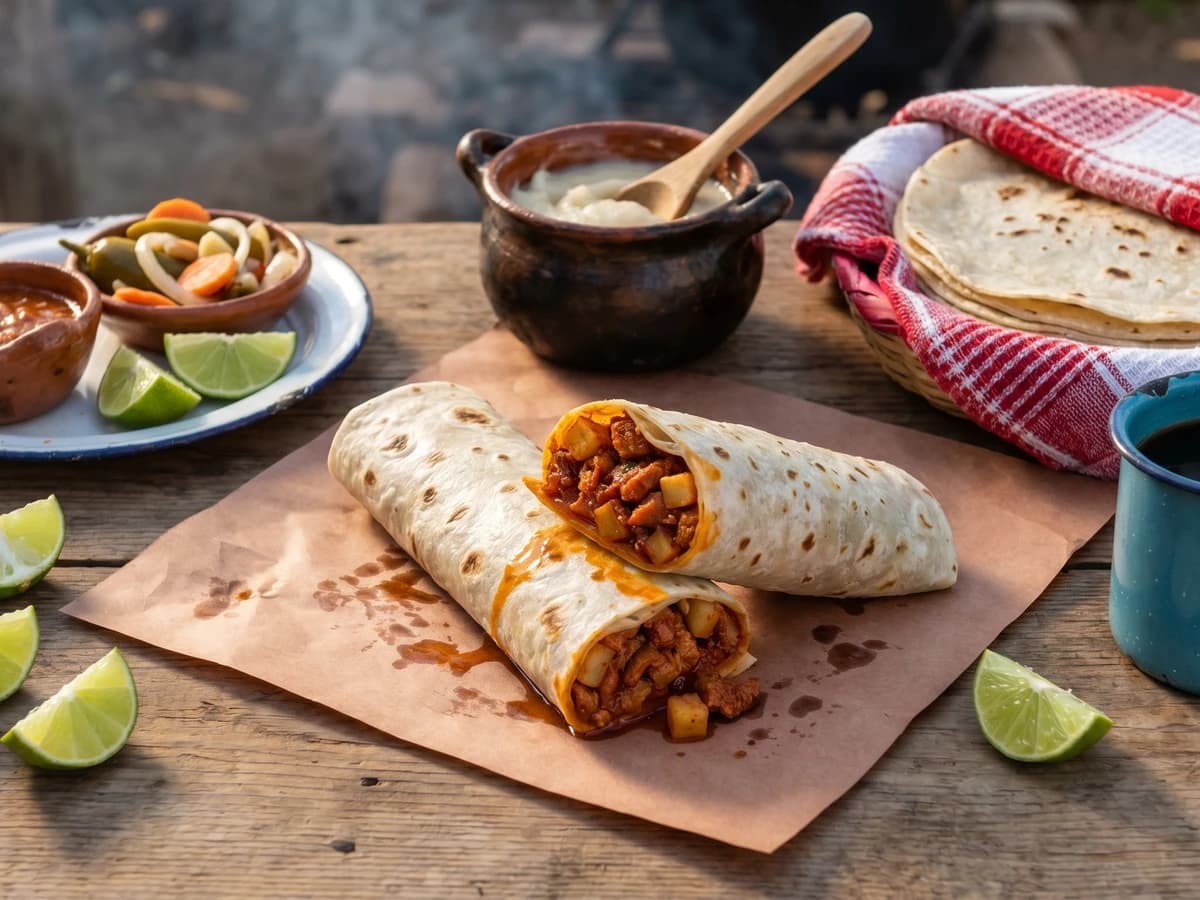
Sonora's working morning burrito: chicharrón de cáscara stewed in chile colorado with diced potato, rolled tight in a paper-thin tortilla sobaquera and eaten standing up at the carreta.
Chef Lupita
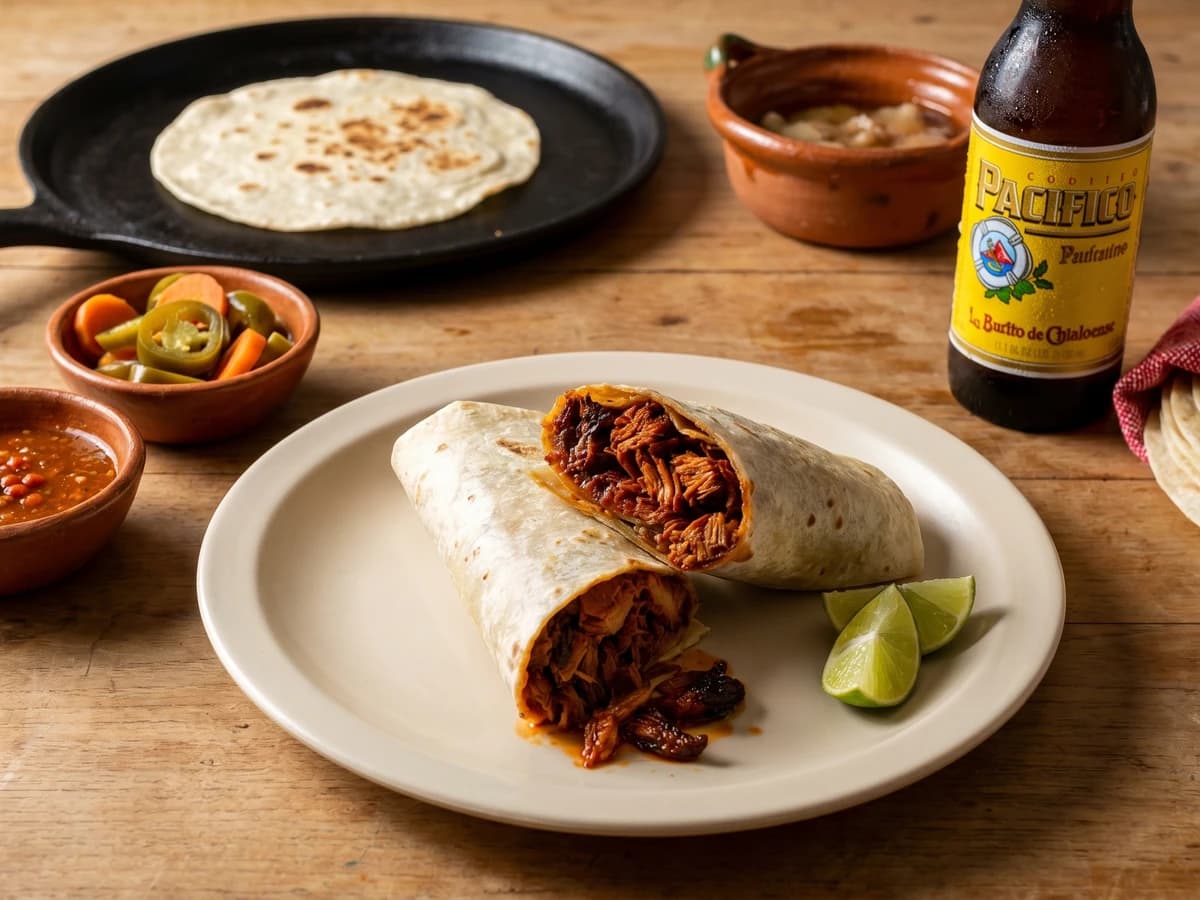
Mocorito's pork chilorio, shredded and confited in lard with chile ancho and pasilla, rolled into a thin handmade flour tortilla. The burrito Sinaloa sends out into the world.
Chef Lupita
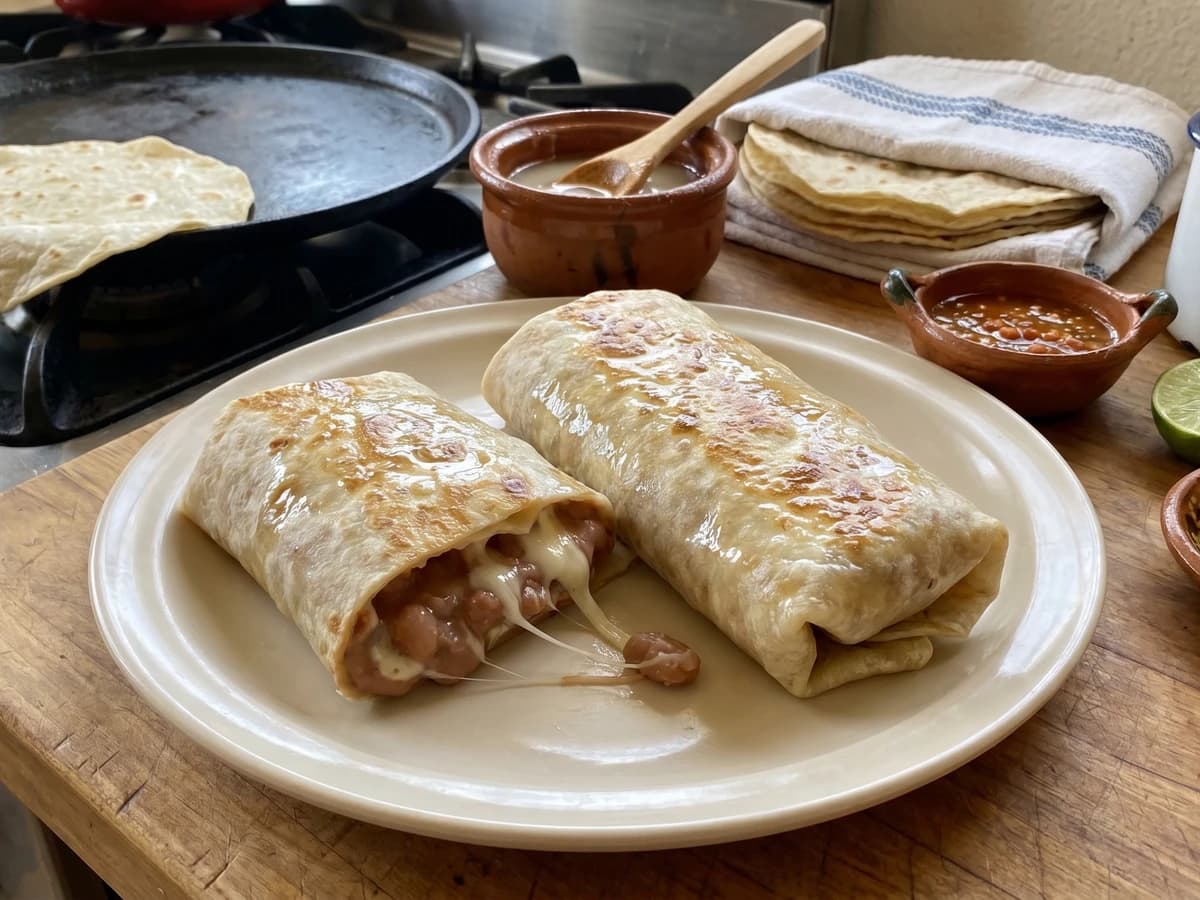
Sonora's morning burrito of mashed pinto frijoles puercos and melted queso asadero, wrapped in a paper-thin sobaquera and seared on the comal until the cheese pulls in long strings.