Chef Lupita
Birria Tacos with Consome
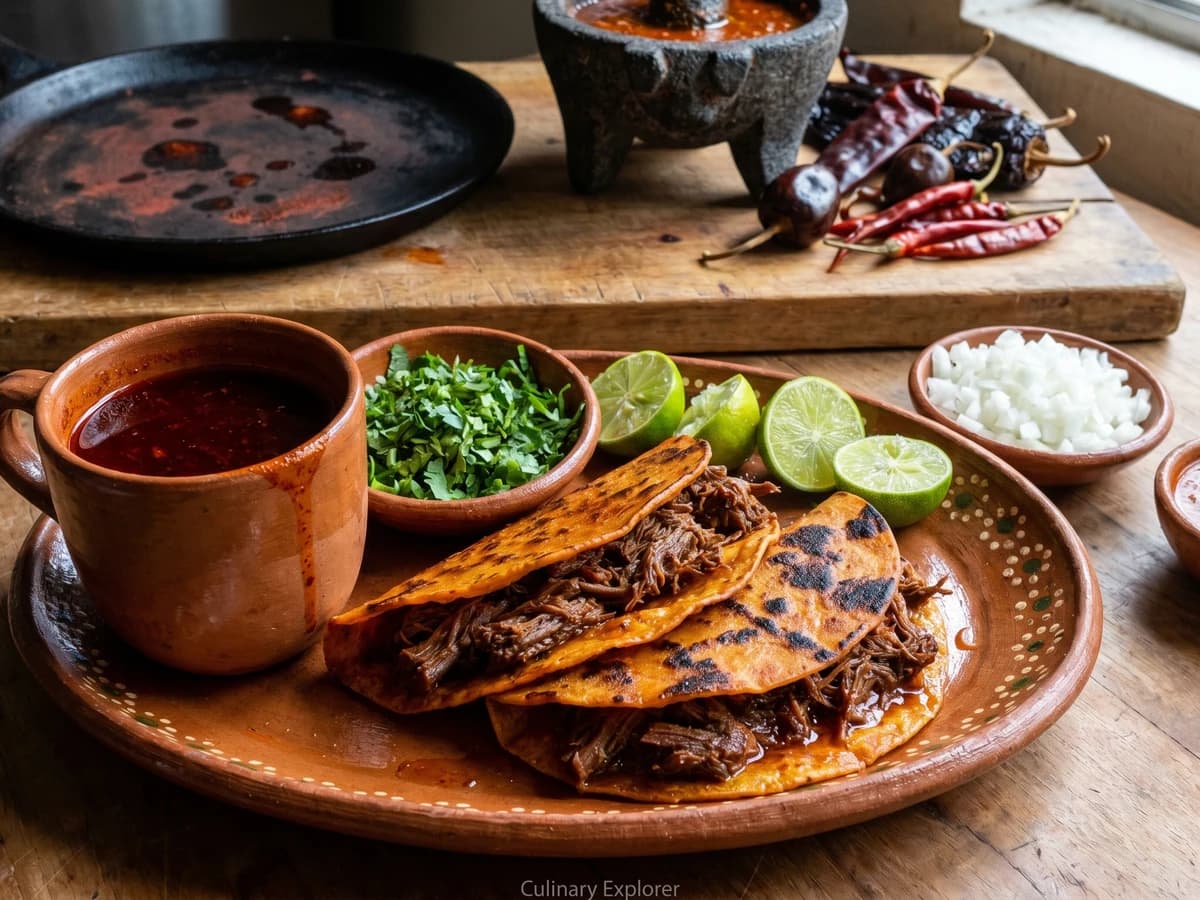
Jalisco's goat birria, born around Cocula and carried into Guadalajara's markets, slow-braised in ancho, guajillo, cascabel, and chile de arbol, then tucked into corn tortillas crisped in its own red fat.
A cooking platform built around craft, culture, and the stories behind what we eat.
Created by
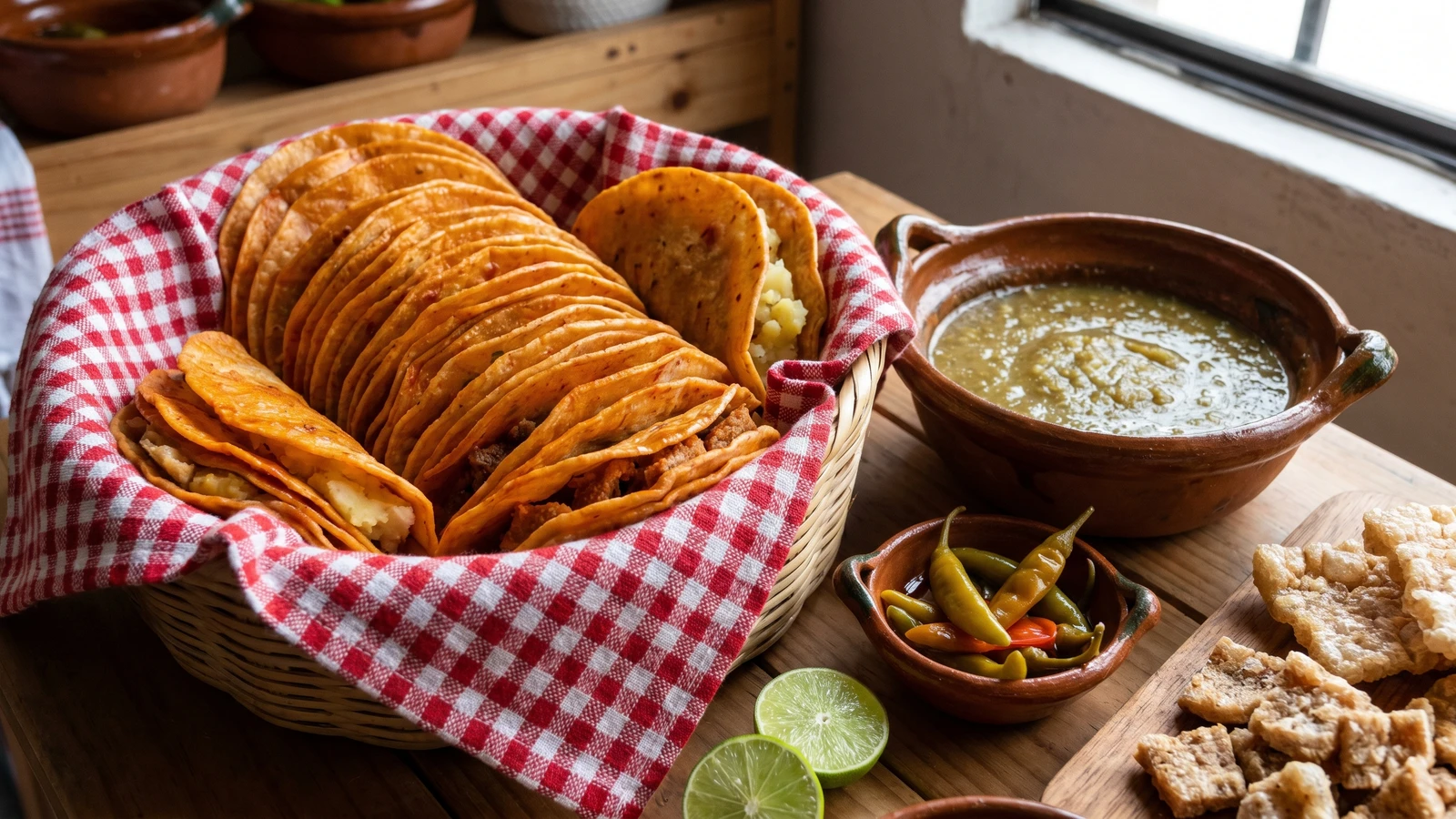
Queretaro's Bajio basket tacos are corn tortillas filled with papa, adobo, or chicharron, brushed with chile-guajillo oil, packed tight, and left to sweat under cloth.
Queretaro sits in the Bajio, between the dry hills, the old roads, and the market routes that feed workers before noon. These tacos live in the canasta, not on a plate. You find them near bus stops, plazas, school gates, and mercado entrances, stacked tight under cloth, warm, soft, and stained orange from chile oil. Esto no es comida de un solo Mexico. Cada estado, su propia cocina.
The method belongs to the women who learned to feed many people with little money and no wasted movement. Corn tortillas are filled with papa, adobo de guajillo and ancho, or chicharron prensado, folded, brushed with hot manteca de cerdo colored with chile guajillo, and packed into a lined basket so they finish by sweating in their own heat. That sweating is the technique. No me vengas con atajos.
In Queretaro, the fillings are practical: potato with onion and chile, shredded pork in a red adobo, chicharron prensado broken into rough pieces. The salsa on the side should be sharp, usually tomatillo with chile serrano or chile de arbol, not sour cream, not yellow cheese, not lettuce. A señora at the mercado would look at that and send you home.
My mother did not make these often, she was Jalisciense, but she respected any dish that could feed a family from one basket. The lesson is economy with discipline. If you line the basket badly, the tacos cool. If the oil is weak, they taste pale. If the tortillas are dry, they crack. Saber cocinar es saber vivir.
Tacos de canasta are a central Mexican street-food tradition that expanded through commuter routes in the mid-20th century, especially in Mexico City, Tlaxcala, Hidalgo, Puebla, and the Bajio. San Vicente Xiloxochitla in Tlaxcala is the best-known production center, but Queretaro developed its own market version through plazas, factory routes, and bus-terminal vendors who needed a portable meal that stayed warm for hours. The basket technique depends on residual heat, paper, plastic, and cloth trapping the chile-stained fat so the tortillas soften without turning into a casserole.
Quantity
36
freshly made or very pliable
Quantity
1 cup
for the chile oil
Quantity
6
stemmed and seeded
Quantity
2
stemmed and seeded
Quantity
1/2
sliced
Quantity
3
peeled
Quantity
1 teaspoon
Quantity
1 1/2 teaspoons, divided, plus more to taste
Quantity
2 pounds
peeled and cut into 1-inch chunks
Quantity
3 tablespoons
for the potato filling
Quantity
1/2
finely chopped for the potato filling
Quantity
1
finely chopped
Quantity
1 pound
Quantity
1/2 cup
Quantity
12 ounces
chopped into coarse pieces
Quantity
1/3 cup
for the chicharron filling
Quantity
1 pound
husked and rinsed
Quantity
3
stemmed
Quantity
1
peeled for the salsa
Quantity
1/4 cup
Quantity
1/4
finely chopped for the salsa
Quantity
for serving
Quantity
for serving
| Ingredient | Quantity |
|---|---|
| small corn tortillasfreshly made or very pliable | 36 |
| pork lard (manteca de cerdo)for the chile oil | 1 cup |
| dried chile guajillostemmed and seeded | 6 |
| dried chile anchostemmed and seeded | 2 |
| white onionsliced | 1/2 |
| garlic clovespeeled | 3 |
| dried Mexican oregano | 1 teaspoon |
| kosher salt | 1 1/2 teaspoons, divided, plus more to taste |
| white potatoespeeled and cut into 1-inch chunks | 2 pounds |
| pork lardfor the potato filling | 3 tablespoons |
| white onionfinely chopped for the potato filling | 1/2 |
| fresh chile serranofinely chopped | 1 |
| cooked shredded pork shoulder | 1 pound |
| chile adobo from the basket oil base | 1/2 cup |
| chicharron prensadochopped into coarse pieces | 12 ounces |
| waterfor the chicharron filling | 1/3 cup |
| tomatilloshusked and rinsed | 1 pound |
| fresh chile serranostemmed | 3 |
| garlic clovepeeled for the salsa | 1 |
| chopped cilantro | 1/4 cup |
| white onionfinely chopped for the salsa | 1/4 |
| lime halves (optional) | for serving |
| chiles en escabeche (optional) | for serving |
Heat a dry comal over medium. Toast the chile guajillo and chile ancho separately, about 20 to 30 seconds per side, just until the skins darken slightly and smell warm. Do not blacken them. Burned chile makes bitter oil, and the whole basket will taste like your mistake.
Put the toasted chiles in a bowl and cover with hot water for 15 minutes. Drain them, then blend with the sliced onion, 3 garlic cloves, Mexican oregano, 1 teaspoon salt, and 1/2 cup clean hot water until completely smooth. This is your adobo base. Strain it if your blender leaves skins behind. The oil must be clean enough to coat the tortillas, not gritty.
Melt 1 cup manteca de cerdo in a small cazuela or heavy saucepan over medium-low heat. Stir in the blended adobo carefully, because it will sputter. Cook 8 to 10 minutes, stirring, until the color deepens to brick red and the fat begins to separate at the edges. Reserve 1/2 cup of this adobo for the pork filling and keep the rest warm for brushing the tacos. La manteca es el sabor.
Boil the potatoes in salted water until tender, 15 to 18 minutes. Drain and mash them roughly, leaving small pieces. In a skillet, melt 3 tablespoons lard and cook the chopped onion with the chile serrano until the onion turns translucent. Add the potatoes and 1/2 teaspoon salt. Cook until the potato absorbs the fat and holds together without looking wet.
Warm the shredded pork shoulder in a skillet with the reserved 1/2 cup adobo. Cook over medium heat until the meat is coated and the sauce clings instead of pooling. Taste for salt. This is adobo filling, not a saucy stew. The taco has to close.
Put the chicharron prensado in a small skillet with 1/3 cup water. Cook over medium heat until it loosens, softens, and releases some fat, 6 to 8 minutes. Break it into coarse pieces with a spoon. Do not puree it. You want texture under the tortilla.
Line a deep wicker basket or insulated pot with a clean cotton servilleta, then a sheet of food-safe plastic or parchment, then another clean cloth. The cloth holds heat, the liner keeps the chile oil from escaping, and the basket gives the tacos their shape. This is why they are tacos de canasta. The container is part of the recipe.
Warm the tortillas on a comal until pliable. Fill each with a modest spoonful of papa, adobo pork, or chicharron prensado. Fold once. Do not overfill. A basket taco should lie flat and stack cleanly. If it bursts, you were greedy, and the canasta will punish you.
Brush the bottom cloth lightly with warm chile oil. Lay the tacos in tight rows, brushing each layer with more chile oil before adding the next. Keep the fillings in separate rows if you want people to know what they are grabbing. Fold the liner over the tacos, then fold the cloth over everything and close the basket. Let the tacos rest 45 minutes. They finish by sweating in their own heat and fat.
While the tacos rest, simmer the tomatillos and 3 serranos in water until the tomatillos turn olive green, about 8 minutes. Blend with 1 garlic clove and salt, then stir in the chopped cilantro and finely chopped white onion. The salsa should be sharp enough to cut through the lard. If it tastes sleepy, add salt and another serrano.
Open the basket at the table or picnic blanket. Serve the tacos warm and soft, with salsa verde, lime halves, and chiles en escabeche in small barro dishes. No plates are necessary, but a brown-glazed cazuela from Dolores Hidalgo looks right on a Bajio table. Recetas probadas y garantizadas.
1 serving (about 100g)
Culinary guides, cultural storytelling, and the editorial depth that makes cooking meaningful.
Discover Culinary ExplorerChef Lupita
Jalisco's goat birria, born around Cocula and carried into Guadalajara's markets, slow-braised in ancho, guajillo, cascabel, and chile de arbol, then tucked into corn tortillas crisped in its own red fat.
Chef Lupita
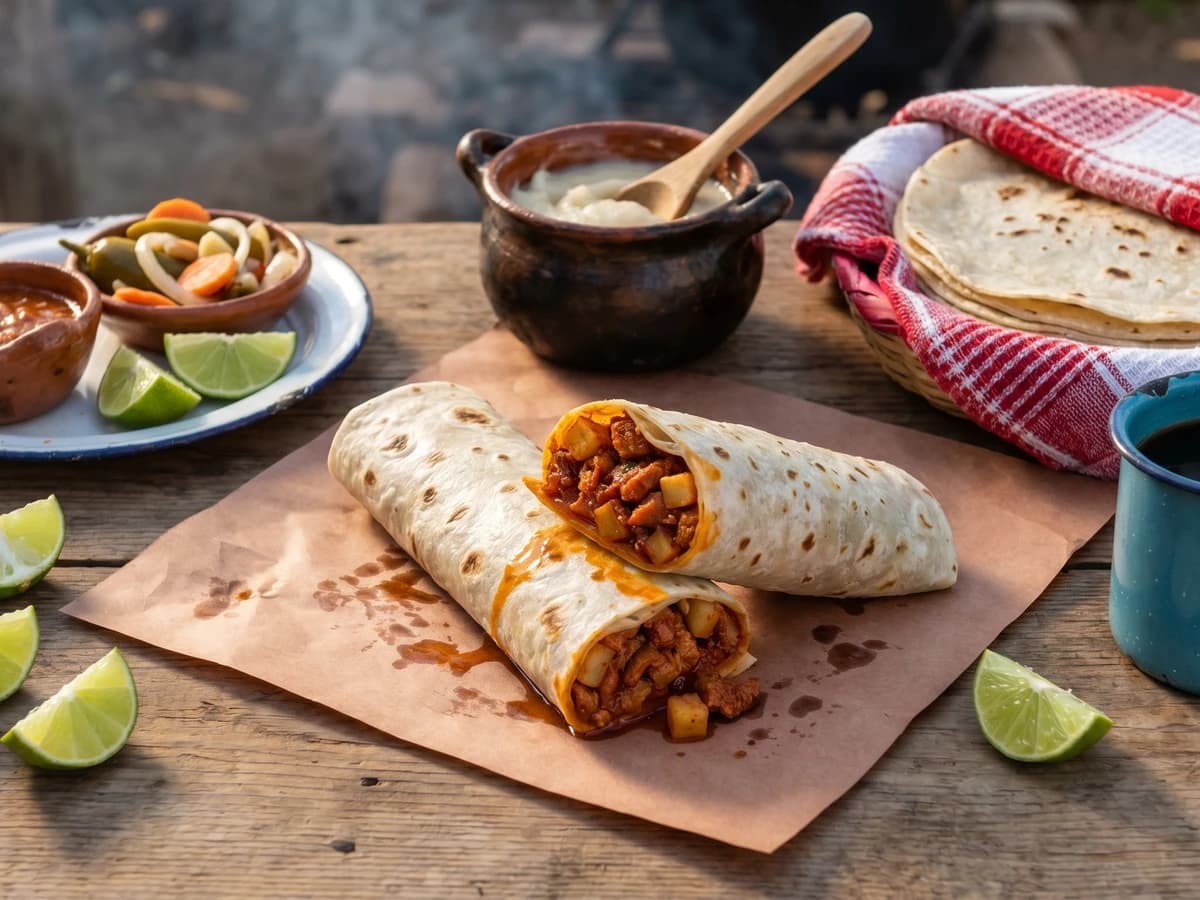
Sonora's working morning burrito: chicharrón de cáscara stewed in chile colorado with diced potato, rolled tight in a paper-thin tortilla sobaquera and eaten standing up at the carreta.
Chef Lupita
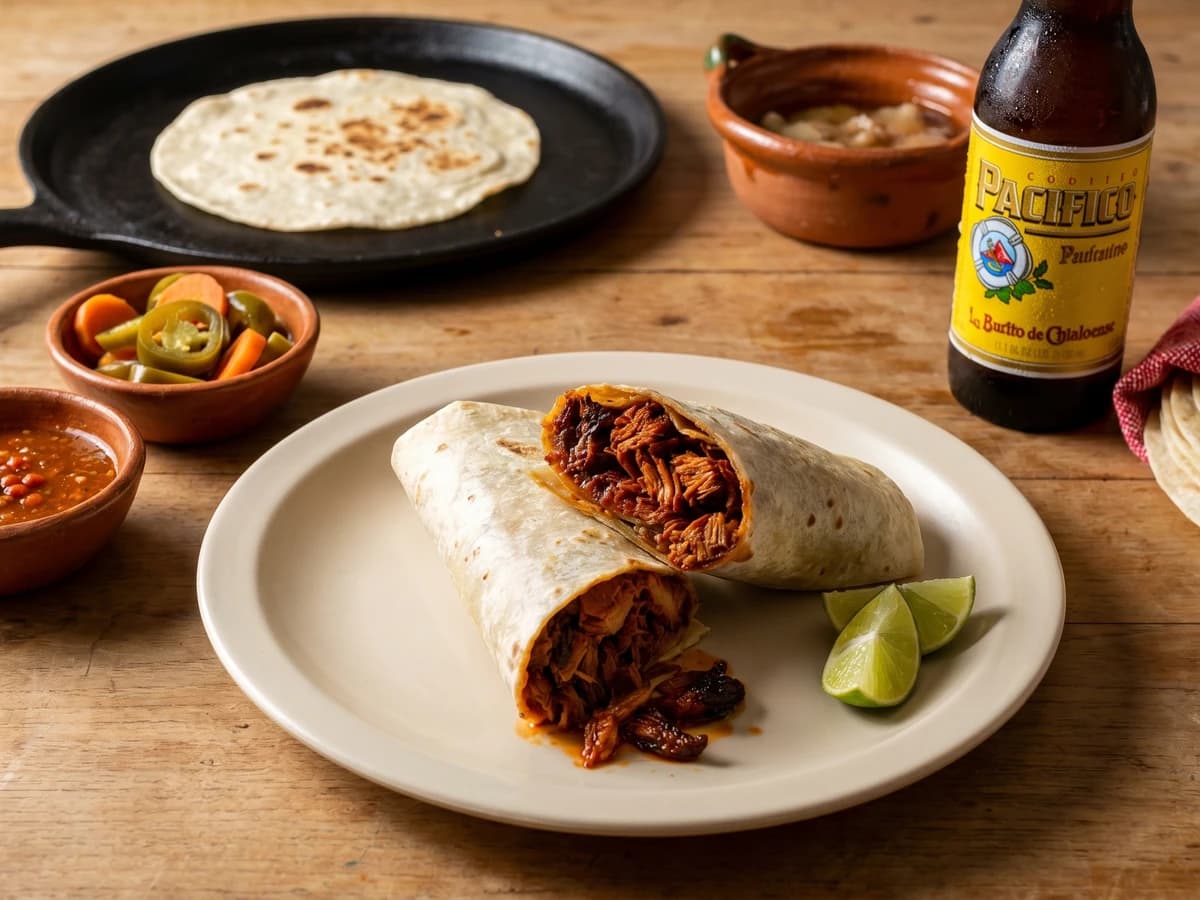
Mocorito's pork chilorio, shredded and confited in lard with chile ancho and pasilla, rolled into a thin handmade flour tortilla. The burrito Sinaloa sends out into the world.
Chef Lupita
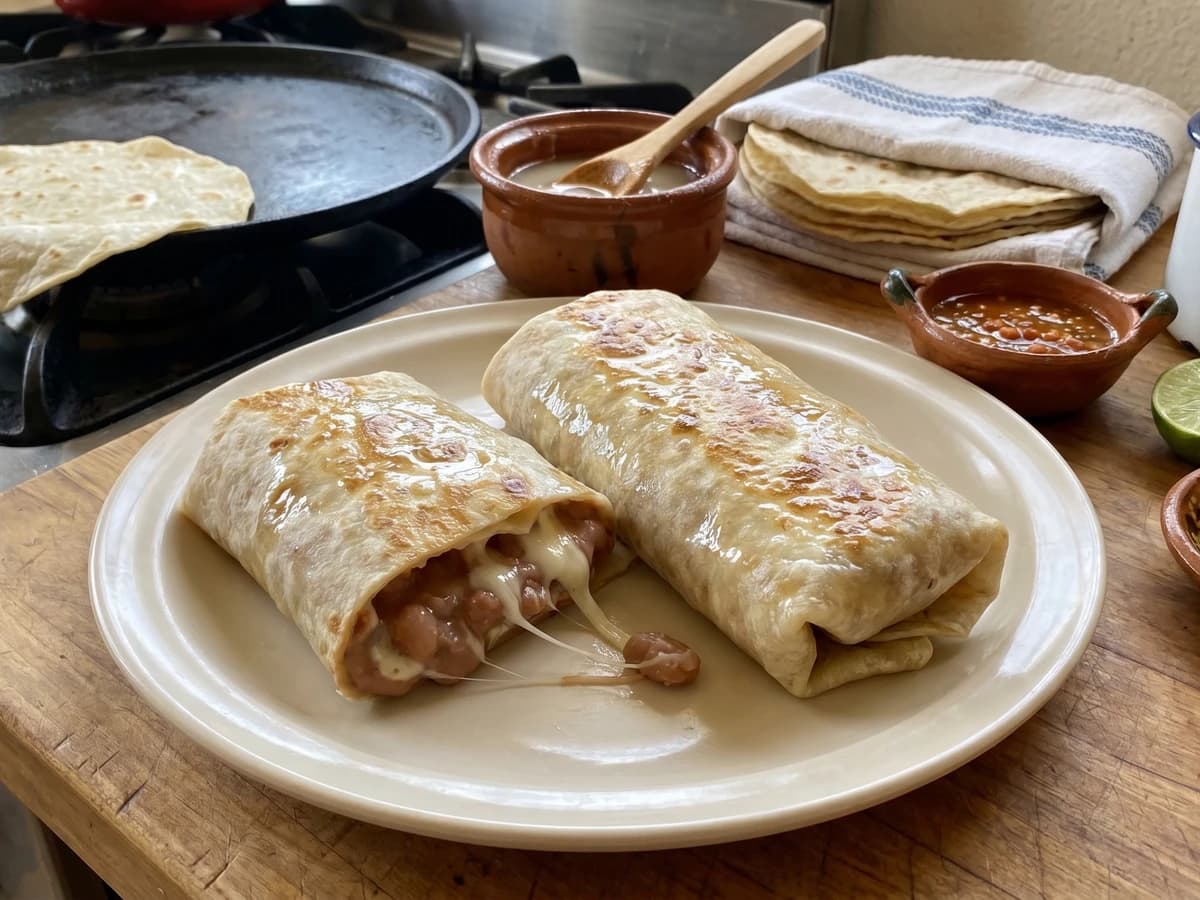
Sonora's morning burrito of mashed pinto frijoles puercos and melted queso asadero, wrapped in a paper-thin sobaquera and seared on the comal until the cheese pulls in long strings.