Chef Lupita
Birria Tacos with Consome
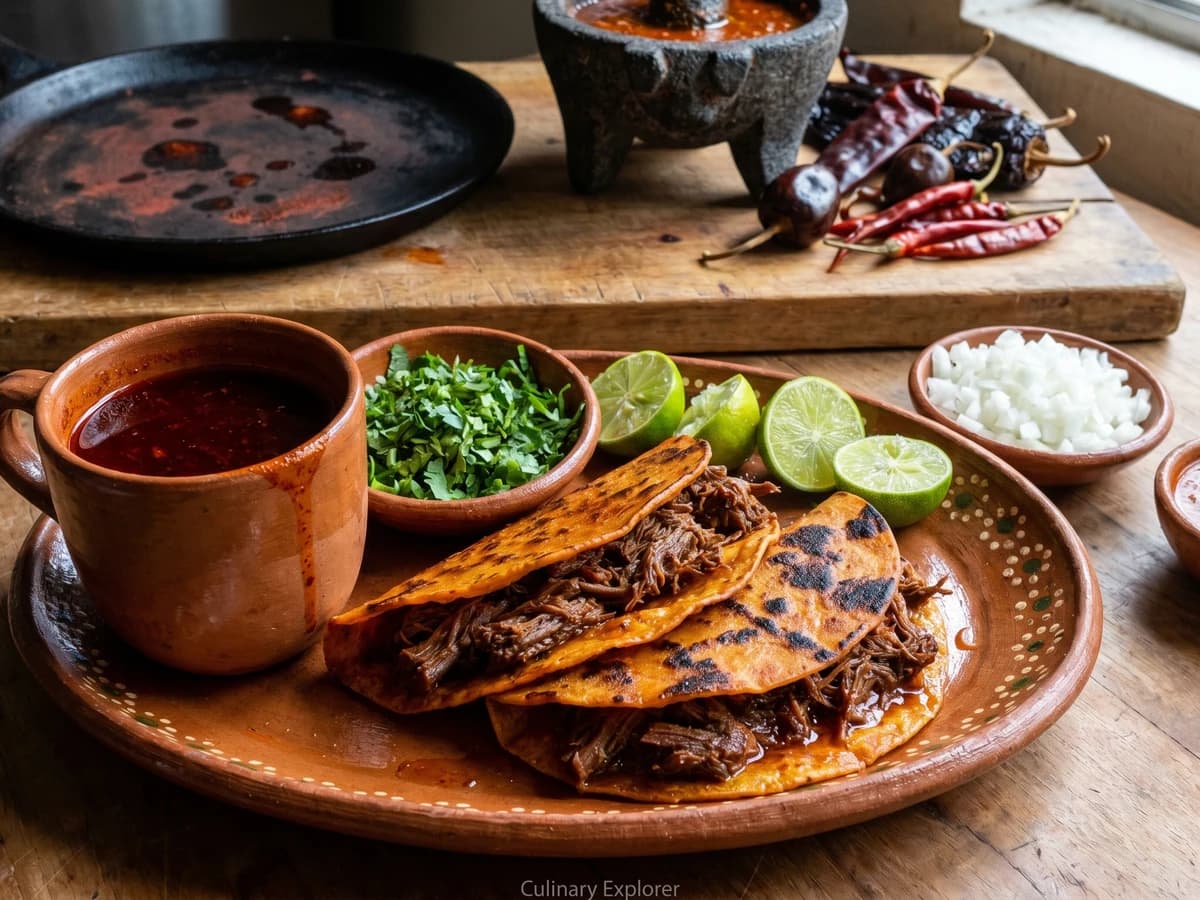
Jalisco's goat birria, born around Cocula and carried into Guadalajara's markets, slow-braised in ancho, guajillo, cascabel, and chile de arbol, then tucked into corn tortillas crisped in its own red fat.
A cooking platform built around craft, culture, and the stories behind what we eat.
Created by
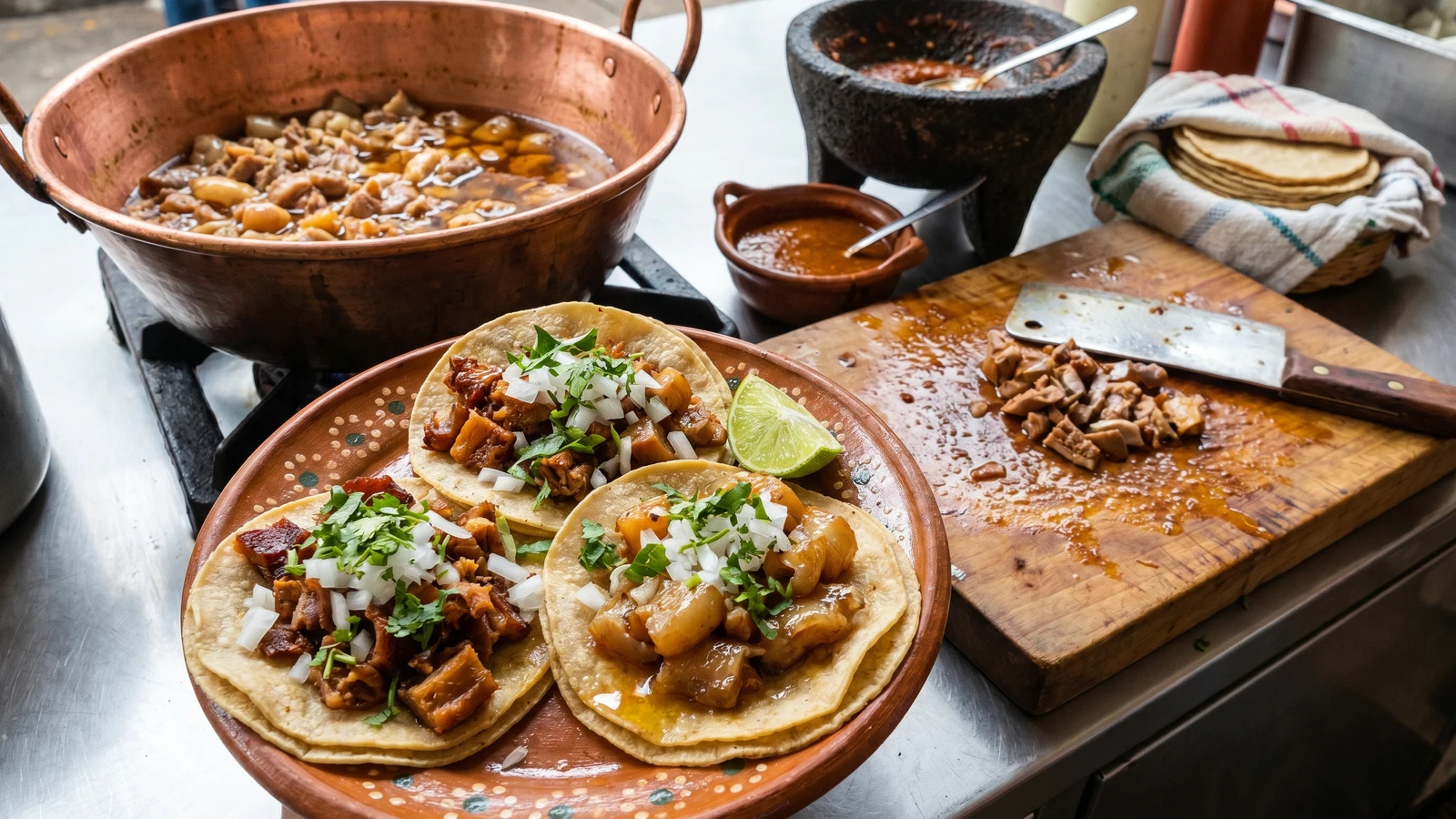
Mexico City's fritanga taco built on buche and nana simmered together, then crisped in lard until the edges turn amber. Two small tortillas, raw onion, cilantro, salsa de chile de arbol, lime.
This is a Ciudad de México taco. Specifically a fritanga taco, the kind sold from a copper cazo at a folding table on a Saturday morning in Colonia Doctores, Tepito, or Colonia Obrera, where the woman behind the cazo has been doing this since before you were born and her mother did it before her.
Buche is pork stomach. Nana is pork uterus. Put them together, chopped fine, simmered first and then confited in lard, and you have nenepil. The word comes from Nahuatl, nenepilli, meaning mixture or tongue, and it is what every chilanga knows to order when she walks up to a fritanga stand and wants the cook to know she is from here. Tourists order suadero. People from CDMX order nenepil.
Do not let the cuts scare you. These are the cuts that built Mexican working-class cooking and they are the cuts that make the best tacos in the capital. The buche is dense and chewy and takes on the chile flavor of whatever it sits in. The nana is softer, almost silky, and it carries the lard like a sponge. Together they are textured, rich, and savory in a way that suadero cannot touch. La manteca es el sabor.
My mother did not make nenepil at home. Nobody does. This is street food, fritanga food, weekend food. But I have stood at a cazo in Mercado de San Juan with a fritanguera who let me chop her buche while she watched and corrected my knife angle. She told me: 'The lard is not optional. The double tortilla is not optional. The salsa is not optional. Everything else is.' I wrote it down in the same notebook my mother left me. Saber cocinar es saber vivir.
Nenepil, from the Nahuatl 'nenepilli,' refers to a mixture of organ meats and dates to the working-class fritanga tradition that took shape in Mexico City's mercados during the late 19th and early 20th centuries, when slaughterhouses on the city's edges fed inexpensive offal into the popular food economy. The combination of buche and nana, simmered together and then confited in lard in copper cazos, became a signature of Mexico City taqueria culture, distinct from the suadero and lengua of more touristic stands. The cazo de cobre itself, the wide copper pot used to confit the meat, is a tradition tied to the town of Santa Clara del Cobre in Michoacán, whose copperwork has supplied Mexico's offal-confiting cooks for over a century.
Quantity
1 1/2 pounds
cleaned
Quantity
1 1/2 pounds
cleaned
Quantity
1 pound
Quantity
1 medium
halved
Quantity
1
halved crosswise
Quantity
3
Quantity
1 tablespoon
Quantity
2 tablespoons, plus more to taste
Quantity
1
halved
Quantity
1/4 cup
for cleaning the offal
Quantity
2 tablespoons
for scrubbing the buche and nana
Quantity
1
for cleaning the offal
Quantity
24
about 4 inches across
Quantity
1 medium
finely diced
Quantity
1 cup
chopped
Quantity
for serving
Quantity
for serving
Quantity
8
stemmed (for the salsa)
Quantity
4
unpeeled
Quantity
2 medium
husked (for the salsa)
Quantity
1/4 cup
Quantity
1/2 teaspoon
| Ingredient | Quantity |
|---|---|
| pork stomach (buche)cleaned | 1 1/2 pounds |
| pork uterus (nana)cleaned | 1 1/2 pounds |
| pork lard (manteca de cerdo) | 1 pound |
| white onionhalved | 1 medium |
| head of garlichalved crosswise | 1 |
| bay leaves | 3 |
| dried Mexican oregano | 1 tablespoon |
| kosher salt | 2 tablespoons, plus more to taste |
| orangehalved | 1 |
| distilled white vinegarfor cleaning the offal | 1/4 cup |
| kosher salt (for cleaning)for scrubbing the buche and nana | 2 tablespoons |
| limefor cleaning the offal | 1 |
| small hand-pressed corn tortillasabout 4 inches across | 24 |
| white onion (for serving) (optional)finely diced | 1 medium |
| fresh cilantro (optional)chopped | 1 cup |
| lime wedges (optional) | for serving |
| salsa verde cruda or salsa de chile de arbol (optional) | for serving |
| dried chile de arbolstemmed (for the salsa) | 8 |
| garlic cloves (for the salsa)unpeeled | 4 |
| tomatilloshusked (for the salsa) | 2 medium |
| water (for the salsa) | 1/4 cup |
| kosher salt (for the salsa) | 1/2 teaspoon |
This is the step nobody wants to talk about and the one that decides whether your tacos taste clean or barnyard. Rinse the buche and nana under cold running water. In a large bowl, rub them aggressively with the 2 tablespoons of salt and the cut lime, then add the vinegar and cold water to cover. Let them sit for 20 minutes. Rinse again. Repeat the salt-and-lime scrub one more time. The buche has folds, run your fingers through them. The nana has a thin membrane, leave it. When the smell pulls back and what you have is the clean iron scent of pork, you are ready. No me vengas con atajos. Skip this and your nenepil tastes like a butcher's bucket.
Place the cleaned buche and nana in a heavy stockpot. Cover with cold water by three inches and bring to a boil over high heat. Boil hard for 10 minutes. A gray foam will rise, that is what you want out. Pour everything off, rinse the meat and the pot, and start again. This double-water method is how the fritangeras of Mercado de San Juan and Mercado Medellin do it. The first pot pulls the funk. The second pot builds the flavor.
Return the buche and nana to the clean pot. Cover with cold water by two inches. Add the halved onion, halved garlic head, bay leaves, oregano, the 2 tablespoons of salt, and squeeze the orange over the pot before dropping the spent halves in. Bring to a gentle simmer over medium heat. Lazy bubbles. Not a rolling boil. A rolling boil turns these cuts to rubber. Cook partially covered for one hour and fifteen minutes. The buche should yield to a knife with very little resistance. The nana should be soft enough to tear with your fingers.
Lift the buche and nana out with a slotted spoon. Reserve one cup of the cooking broth. Discard the aromatics. While the meat is still warm but cool enough to handle, chop everything into small pieces, about the size of your thumbnail. Mix the two together on the cutting board. This is nenepil: buche and nana, together, chopped fine. One without the other is just buche tacos or just nana tacos. Together they earn the name.
In a heavy cast iron skillet, a wide cazuela, or if you have one, a copper cazo, melt the lard over medium heat until shimmering. Add the chopped nenepil in a single layer. It will sputter. Stir every couple of minutes with a wooden spoon. Cook for 25 to 35 minutes, until the edges of the buche turn deep amber and the nana takes on a rich golden color. The fat goes from pale yellow to a clear, chile-stained amber. La manteca es el sabor. This is the moment the fritangeras stand over for hours on weekend mornings in Colonia Doctores. Pull when the pieces have crisp edges but the centers are still soft.
Heat a dry comal over medium. Toast the chile de arbol, the unpeeled garlic cloves, and the tomatillos. The chiles take about 20 seconds per side, watch them, they burn faster than any other dried chile. The garlic blisters in five minutes. The tomatillos blacken in spots and turn olive green in about eight. Peel the garlic. Drop everything in the molcajete with the salt and the water and grind to a rough, rust-colored salsa. A blender will work if you do not have a molcajete, but pulse it, do not puree it. You want texture.
Heat a comal over medium-high. Warm the tortillas in pairs, stacked one on top of the other, flipping the pair together. CDMX street tacos are always served on two tortillas. The bottom one holds the grease. The top one holds the meat. This is not optional and it is not excess. Try it on one tortilla and the bottom will tear before you get it to your mouth. Así se hace y punto.
Lift the nenepil out of the lard with a slotted spoon and let it drain for a moment. Pile a generous spoonful onto each pair of warm tortillas. Top with a pinch of diced raw white onion and chopped cilantro. Set lime wedges and the salsa de chile de arbol on the table. Each person finishes their own. Eat them standing up if you can. That is how they taste right. Recetas probadas y garantizadas.
1 serving (about 270g)
Culinary guides, cultural storytelling, and the editorial depth that makes cooking meaningful.
Discover Culinary ExplorerChef Lupita
Jalisco's goat birria, born around Cocula and carried into Guadalajara's markets, slow-braised in ancho, guajillo, cascabel, and chile de arbol, then tucked into corn tortillas crisped in its own red fat.
Chef Lupita
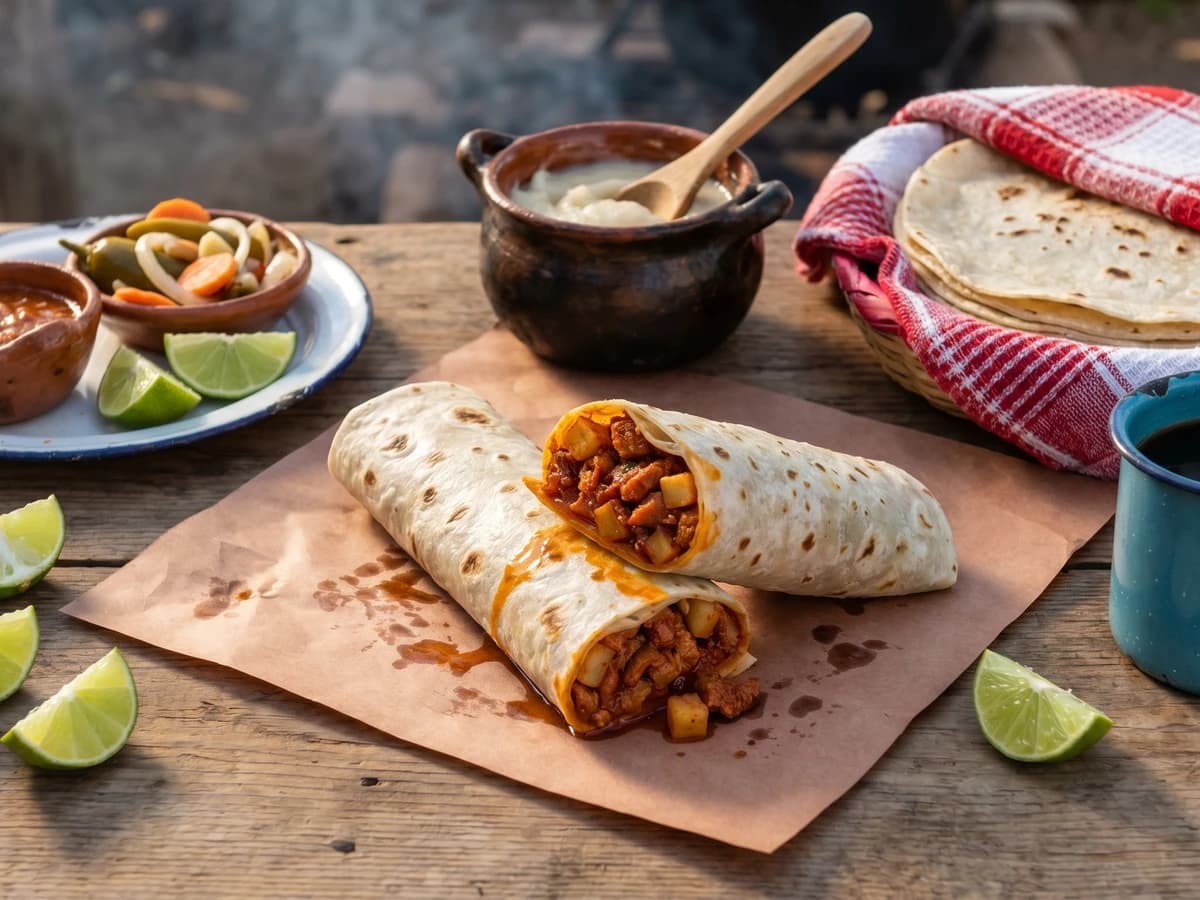
Sonora's working morning burrito: chicharrón de cáscara stewed in chile colorado with diced potato, rolled tight in a paper-thin tortilla sobaquera and eaten standing up at the carreta.
Chef Lupita
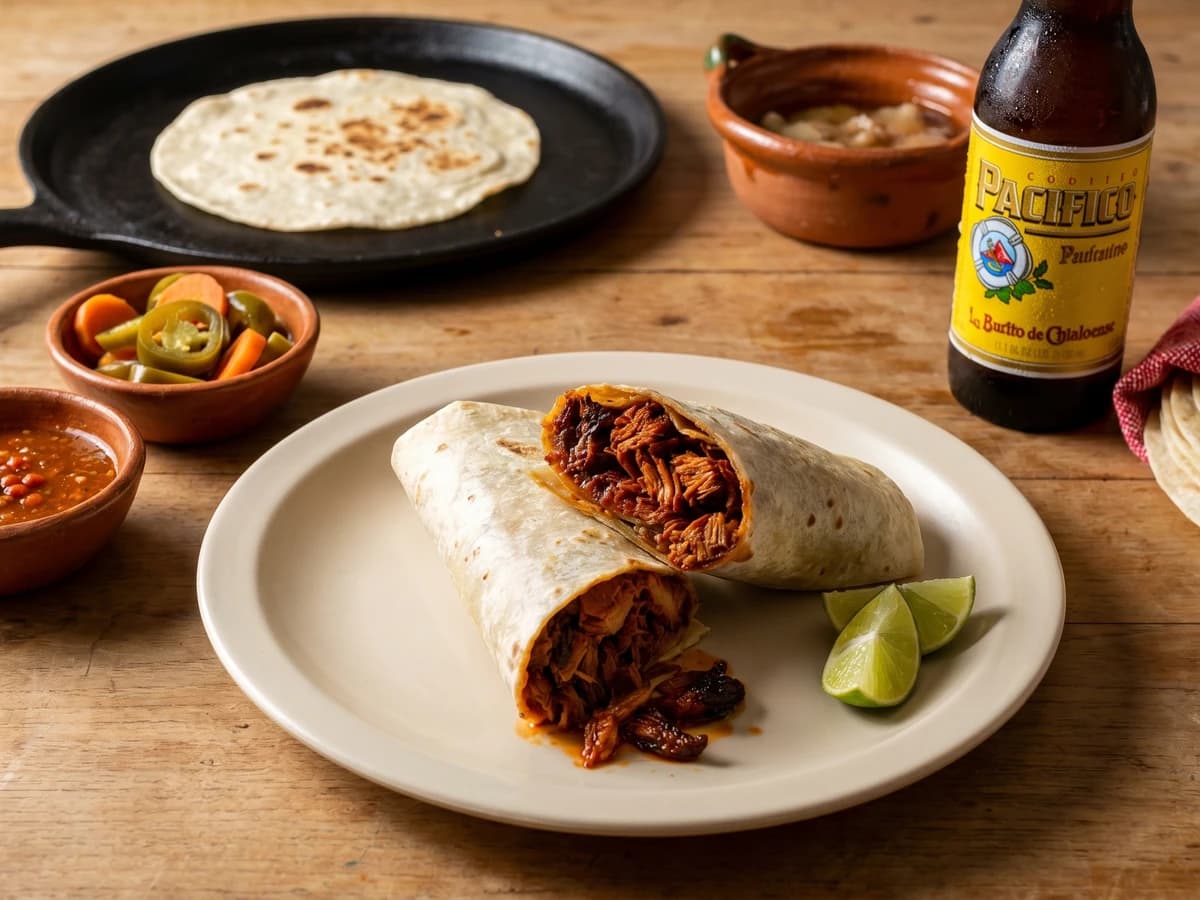
Mocorito's pork chilorio, shredded and confited in lard with chile ancho and pasilla, rolled into a thin handmade flour tortilla. The burrito Sinaloa sends out into the world.
Chef Lupita
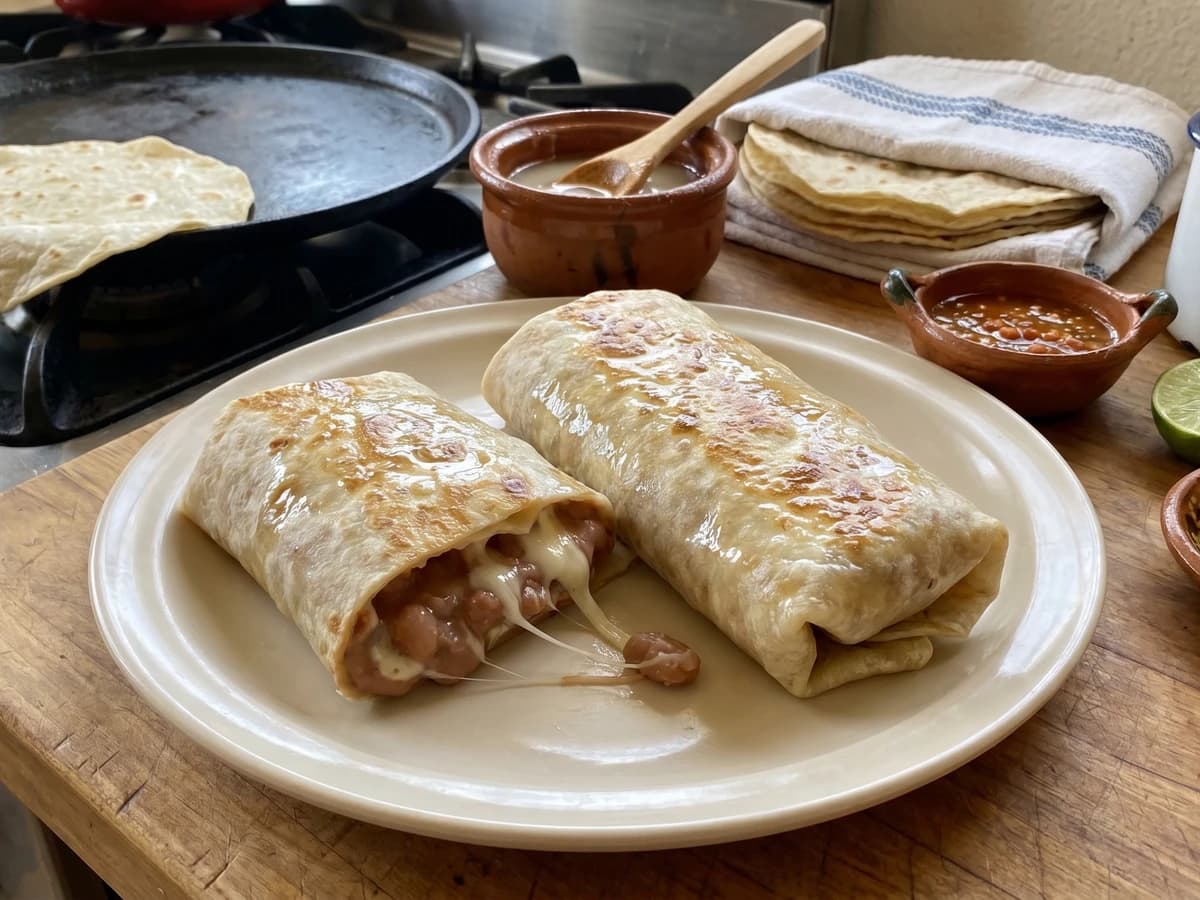
Sonora's morning burrito of mashed pinto frijoles puercos and melted queso asadero, wrapped in a paper-thin sobaquera and seared on the comal until the cheese pulls in long strings.