Chef Lupita
Birria Tacos with Consome
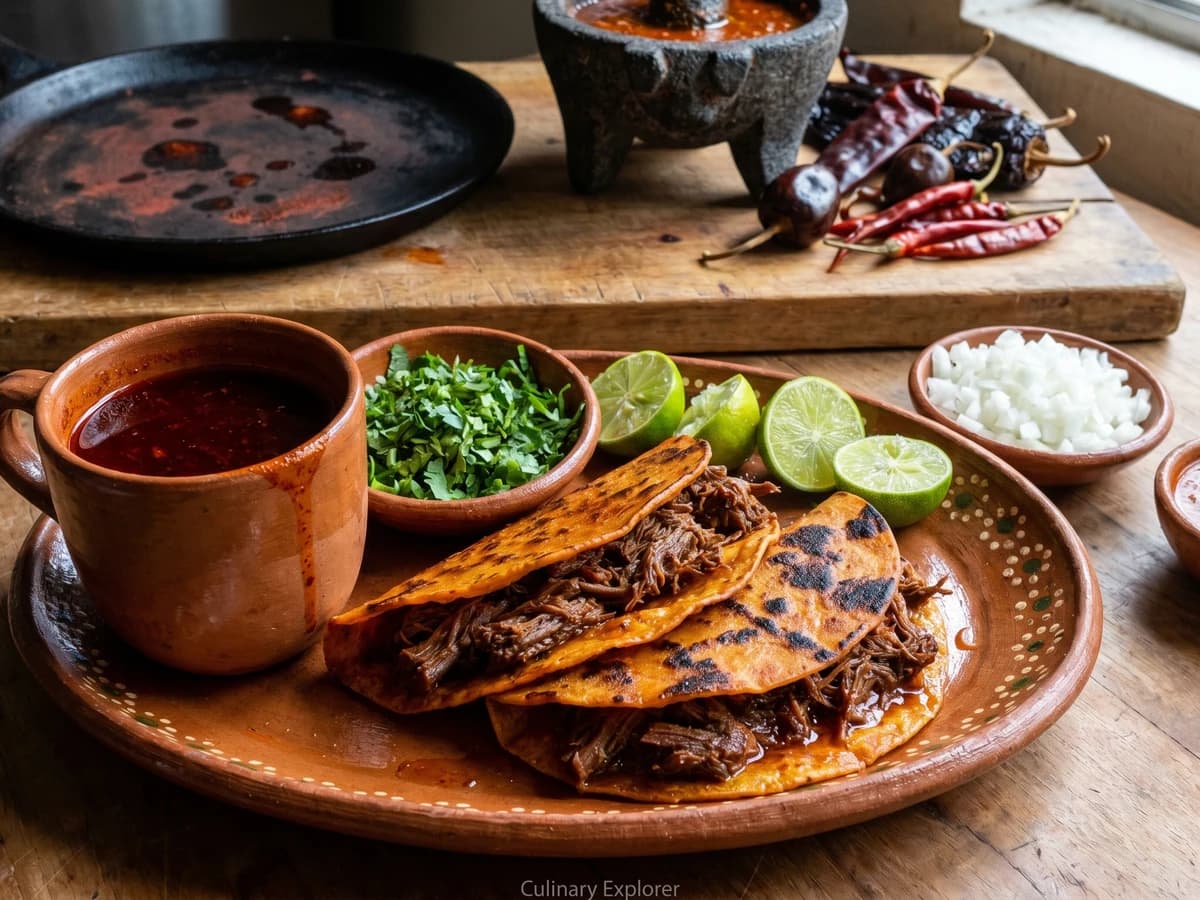
Jalisco's goat birria, born around Cocula and carried into Guadalajara's markets, slow-braised in ancho, guajillo, cascabel, and chile de arbol, then tucked into corn tortillas crisped in its own red fat.
A cooking platform built around craft, culture, and the stories behind what we eat.
Created by
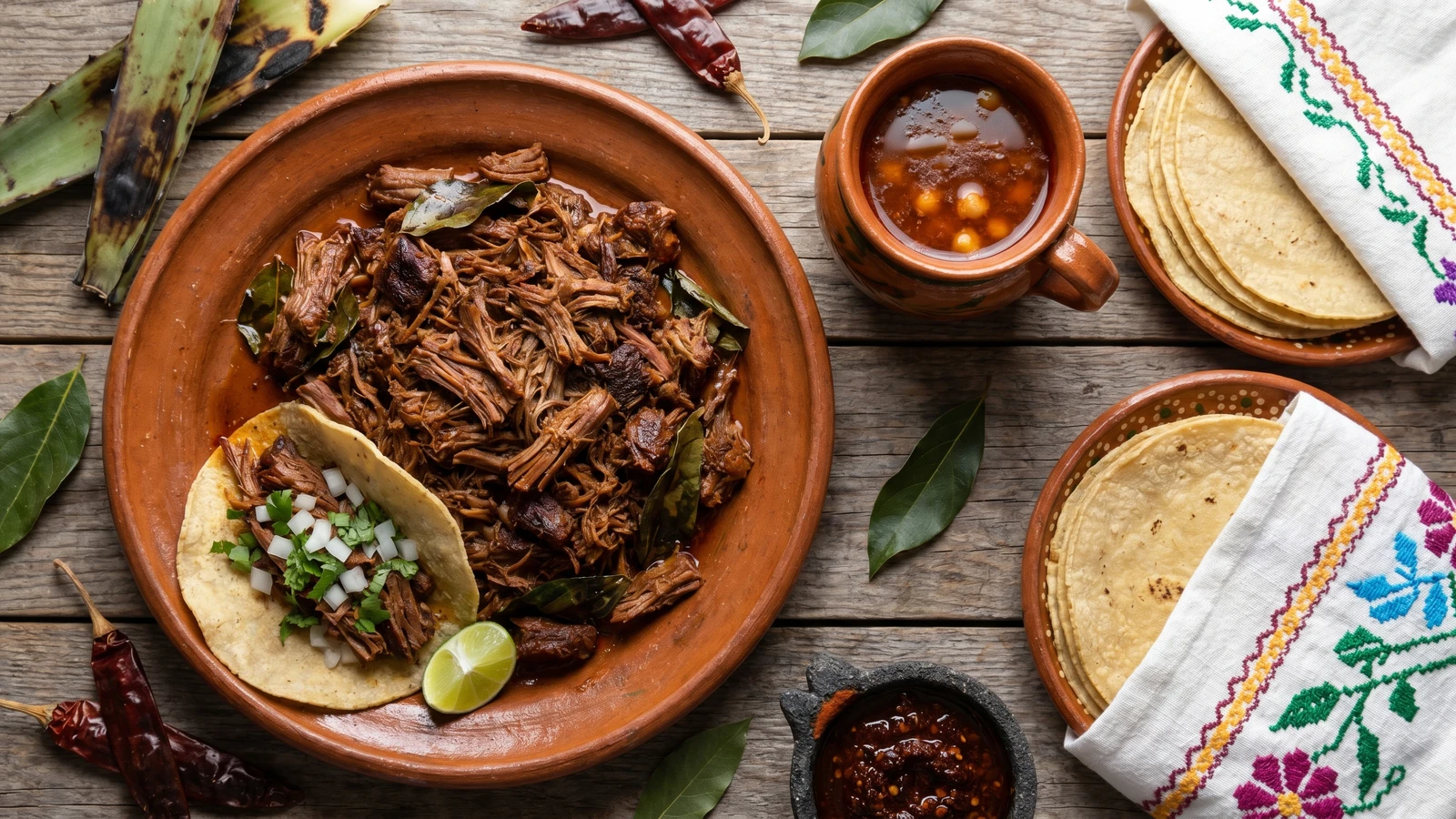
Young goat from the Mixteca Oaxaqueña, rubbed in guajillo and ancho adobo, layered with avocado leaves and maguey pencas, and slow-cooked until the bone gives up the meat. The consomé underneath is half the reason you make it.
This is from the Mixteca, the dry highland region of western Oaxaca where the land is rocky and the goats are lean and the women cook barbacoa in hornos de pozo dug into the earth behind their kitchens. Huajuapan de Leon is the capital of this tradition. Drive out of Oaxaca city heading northwest, past the mezcal country of the Valles Centrales, past Santiago Apoala, and you reach the Mixteca Baja, where the terrain turns arid and the maguey grows wild on the hillsides. That maguey is not decoration. Its pencas are the cooking vessel.
The goat is young, not cabrito (that is Monterrey's word), but chivo joven, under a year old, with meat that is lean but not tough if you know what you are doing. The adobo is built on chile guajillo and chile ancho, toasted and soaked and blended with garlic, cumin, cloves, black pepper, and a splash of vinegar. The avocado leaves go between the meat and the maguey pencas. They are not optional. Hojas de aguacate give the barbacoa a faint anise fragrance that you cannot get from anything else. Remove them and you have made a different dish.
I collected this recipe in Huajuapan from a senora named Dona Reina who had been making barbacoa de chivo for weddings, funerals, and fiestas patronales for over forty years. She told me the horno de pozo takes six hours to heat and five hours to cook and that anyone who tries to rush it deserves what they get. I have adapted it for a home oven because most people do not have a pit in their backyard, but I will tell you what you are missing: the smoke from the charcoal, the mineral taste of the earth, the way the maguey pencas char at the edges and perfume the meat with something no oven can replicate. This adaptation gets you close. Close enough to understand why the Mixteca takes this dish so seriously. Saber cocinar es saber vivir.
Pit-cooking in underground ovens predates the Spanish arrival and was practiced by the Mixtec people, who used earth ovens to cook wild game and agave hearts for centuries before goats existed in the Americas. The Spanish introduction of domestic goats in the 16th century transformed the Mixteca's cooking, because the semi-arid terrain proved ideal for goat herding where cattle could not thrive. By the 18th century, barbacoa de chivo had become the ceremonial centerpiece of the Mixteca Oaxaquena, prepared for patron saint festivals, weddings, and Dia de Muertos. The use of maguey pencas as wrapping material links barbacoa directly to the region's mezcal culture: the same Agave angustifolia and Agave karwinskii plants that produce mezcal also provide the cooking leaves, making barbacoa a byproduct of the landscape itself.
Quantity
5 to 6 pounds
cut into large pieces by your butcher (shoulder, leg, ribs, neck)
Quantity
10
stemmed and seeded
Quantity
4
stemmed and seeded
Quantity
2
stemmed
Quantity
6
peeled
Quantity
1 tablespoon
toasted
Quantity
8
Quantity
4
Quantity
1 tablespoon
Quantity
2 tablespoons
Quantity
1 tablespoon, plus more to taste
Quantity
1/2 cup
Quantity
15 to 20
Quantity
4 to 6 pencas or 2 packages
Quantity
1 medium
quartered
Quantity
1
halved crosswise
Quantity
3/4 cup
soaked overnight and drained
Quantity
1/2 cup
Quantity
2
Quantity
2 sprigs
Quantity
6 cups
Quantity
for serving
warmed
Quantity
for serving
Quantity
for serving
Quantity
for serving
Quantity
for serving
| Ingredient | Quantity |
|---|---|
| bone-in young goat (chivo joven)cut into large pieces by your butcher (shoulder, leg, ribs, neck) | 5 to 6 pounds |
| dried chile guajillostemmed and seeded | 10 |
| dried chile anchostemmed and seeded | 4 |
| dried chile moritastemmed | 2 |
| garlic clovespeeled | 6 |
| cumin seedstoasted | 1 tablespoon |
| whole black peppercorns | 8 |
| whole cloves | 4 |
| dried Mexican oregano | 1 tablespoon |
| apple cider vinegar | 2 tablespoons |
| kosher salt | 1 tablespoon, plus more to taste |
| water (for adobo) | 1/2 cup |
| dried avocado leaves (hojas de aguacate) | 15 to 20 |
| fresh maguey pencas, lightly roasted, or banana leaves as substitute | 4 to 6 pencas or 2 packages |
| white onion (for consomé)quartered | 1 medium |
| head of garlic (for consomé)halved crosswise | 1 |
| dried chickpeassoaked overnight and drained | 3/4 cup |
| white rice | 1/2 cup |
| dried avocado leaves (for consomé) | 2 |
| fresh epazote | 2 sprigs |
| water (for consomé) | 6 cups |
| hand-pressed corn tortillas (optional)warmed | for serving |
| lime wedges (optional) | for serving |
| diced raw white onion (optional) | for serving |
| chopped fresh cilantro (optional) | for serving |
| salsa de chile morita or salsa borracha (optional) | for serving |
Heat a dry comal or cast iron skillet over medium heat. Toast the guajillo, ancho, and morita chiles separately, pressing them flat against the surface with a spatula for about 30 seconds per side. The guajillo will puff and change color slightly. The ancho is thicker and needs a few seconds more. The morita is small and dark and burns fast, so watch it. When the kitchen smells like a chile vendor's stall, they are ready. Transfer them to a heatproof bowl, cover with hot tap water (not boiling, never boiling), and let them soften for 20 minutes.
Toast the cumin seeds in a dry skillet until fragrant, about one minute. Drain the soaked chiles and transfer them to a blender with the toasted cumin, peppercorns, cloves, garlic, oregano, vinegar, salt, and the half cup of water. Blend on high until completely smooth, scraping down as needed. You want a thick, dark red paste with no chunks. Taste it. It should be assertive: earthy from the guajillo, sweet from the ancho, a whisper of smoke from the morita, and enough salt to carry across the meat. Adjust now, because once it is on the goat you cannot fix it.
Place the goat pieces in a large bowl or deep roasting pan. Pour the adobo over every piece and use your hands to rub it into the meat, working it into the joints, between the ribs, under the bone. Every surface should be coated. Cover tightly with plastic wrap and refrigerate overnight, at least eight hours and up to twenty-four. The vinegar and the chiles break down the surface of the meat while the spices penetrate. This is not a step you skip. No me vengas con atajos.
If using fresh maguey pencas, pass each one over an open gas flame or under a broiler for two to three minutes per side until the surface softens and becomes pliable. They will darken and release a sweet, vegetal smell. Let them cool enough to handle. If using banana leaves, pass them briefly over the flame just until they turn darker green and become flexible, about 15 seconds per side. Cut away the thick central spine of the banana leaves. The maguey is the tradition. The banana leaf is the compromise. Both will hold the meat and trap the moisture.
Place a deep oven-safe pot or Dutch oven (at least 7 quarts) on the counter. Add the quartered onion, halved garlic head, soaked and drained chickpeas, rice, two avocado leaves, epazote sprigs, and the six cups of water. Season with a teaspoon of salt. This pot goes on the bottom of your roasting setup. The drippings from the goat will fall into it as the meat cooks, building the consomé. The chickpeas and rice cook in the broth and give it body. This is the soul of the dish. Some families fight over the consomé more than the meat.
Set a wire rack or a perforated pan insert over the consomé pot, making sure there is space between the rack and the liquid below. Line the rack with overlapping maguey pencas or banana leaves, letting the edges drape over the sides of the pot generously. You need enough overhang to fold back over the top and seal the package. Layer half the dried avocado leaves across the bottom of the lined rack. Place the marinated goat pieces on top in a single snug layer. Tuck the remaining avocado leaves between and on top of the meat pieces. Fold the overhanging pencas or banana leaves back over the meat, sealing it completely. No meat should be exposed.
Cover the entire pot tightly with a double layer of heavy-duty aluminum foil, pressing it against the rim to create a seal. Then place the lid on top. You are building a closed system. The goat will cook in its own juices and the trapped adobo, and those juices will drip down into the consomé below. Place the pot in an oven preheated to 325 degrees Fahrenheit. Cook for four and a half to five hours. Do not open the pot for the first four hours. The seal matters. Every time you open it, you lose moisture and heat and add time.
After four and a half hours, carefully remove the lid and foil. Pull back the maguey pencas. The meat should be deeply bronzed from the adobo, tender enough that it pulls away from the bone with no resistance, and fragrant with the anise of the avocado leaves and the earthy sweetness of the roasted maguey. If the meat still clings to the bone, reseal and return to the oven for another 30 to 45 minutes. The goat tells you when it is done. You do not tell the goat.
Carefully lift the rack with the meat off the pot. The consomé below will be a deep red-brown broth, rich with rendered goat fat and adobo drippings, the chickpeas tender, the rice swollen and soft. Taste it. Adjust the salt. Remove and discard the avocado leaves and epazote stems. Skim some of the fat off the surface if you like, but leave enough for the flavor. Ladle the consomé into small clay bowls or cups. This is served alongside the tacos, not poured over them. Some people drink it first. Some people drink it last. There is no wrong order.
Pull the goat meat from the bones, shredding it into rough pieces with two forks or your hands. Discard the bones, the spent avocado leaves, and the maguey pencas. Pile the shredded meat on a warm comal or clay platter. Serve with warm corn tortillas, lime wedges, diced raw white onion, chopped cilantro, and salsa de chile morita. Each person builds their own taco. The consomé goes in a cup on the side. Recetas probadas y garantizadas.
1 serving (about 350g)
Culinary guides, cultural storytelling, and the editorial depth that makes cooking meaningful.
Discover Culinary ExplorerChef Lupita
Jalisco's goat birria, born around Cocula and carried into Guadalajara's markets, slow-braised in ancho, guajillo, cascabel, and chile de arbol, then tucked into corn tortillas crisped in its own red fat.
Chef Lupita
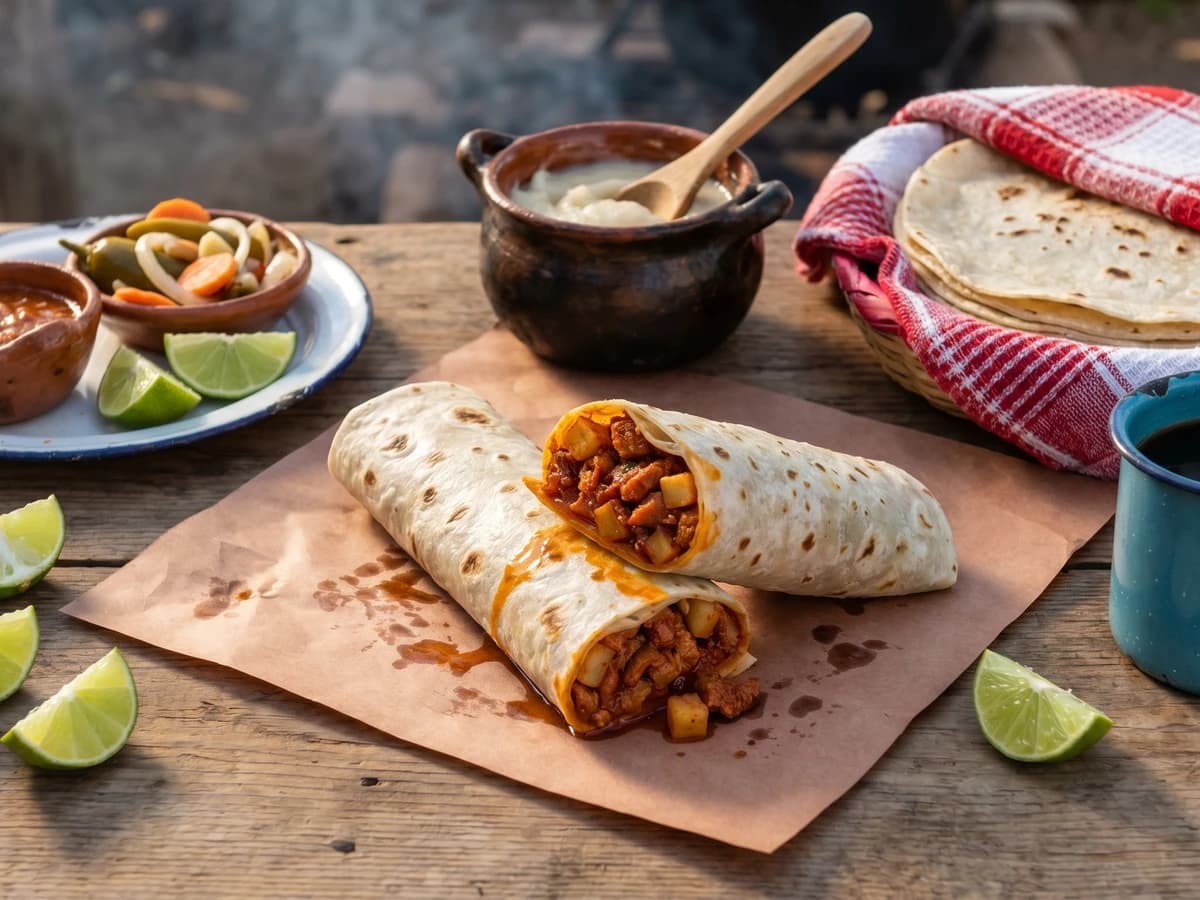
Sonora's working morning burrito: chicharrón de cáscara stewed in chile colorado with diced potato, rolled tight in a paper-thin tortilla sobaquera and eaten standing up at the carreta.
Chef Lupita
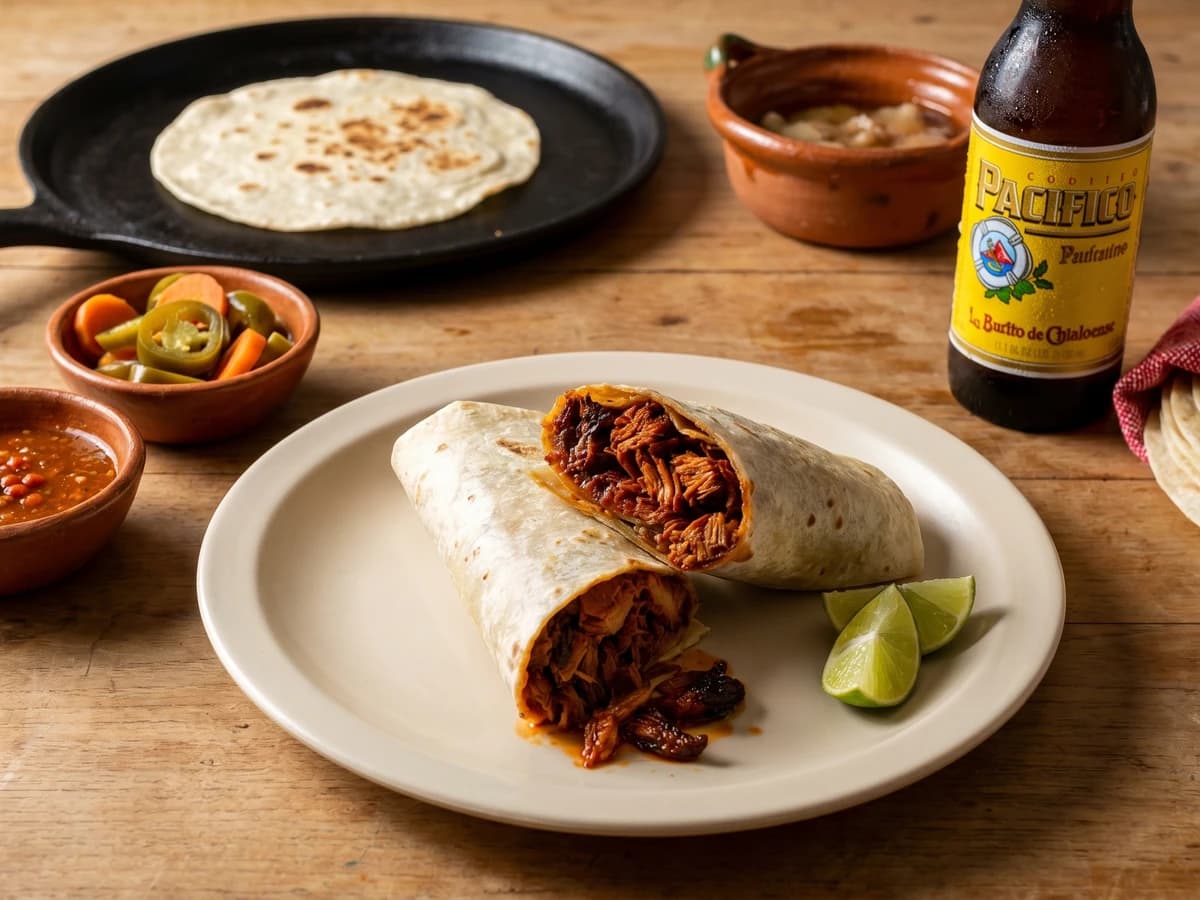
Mocorito's pork chilorio, shredded and confited in lard with chile ancho and pasilla, rolled into a thin handmade flour tortilla. The burrito Sinaloa sends out into the world.
Chef Lupita
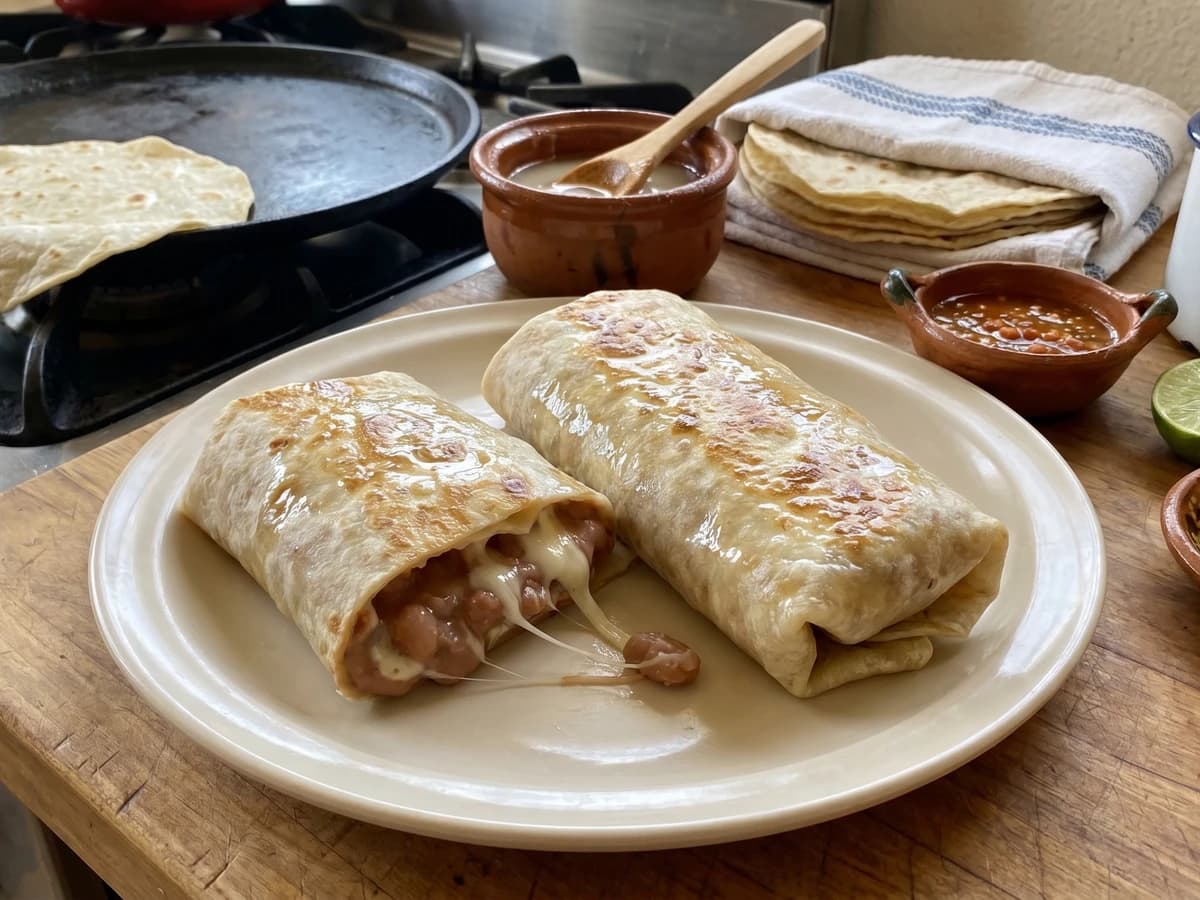
Sonora's morning burrito of mashed pinto frijoles puercos and melted queso asadero, wrapped in a paper-thin sobaquera and seared on the comal until the cheese pulls in long strings.