
Chef Graziella
Carciofi alla Giudia
The legendary fried artichokes of Rome's Jewish quarter, each leaf crisp enough to shatter between your teeth, the heart tender as butter. Four ingredients. Technique is everything.
A cooking platform built around craft, culture, and the stories behind what we eat.

Created by
Rome's beloved rice croquettes, crisp and golden outside, hiding molten mozzarella that stretches into telephone wires when you break them open. Street food that proves frying is a noble art.
In Rome, supplì are sold from glass cases in pizzerias and rosticcerie, grabbed hot and eaten standing on the sidewalk. They are not fancy. They are not complicated. They are, when made correctly, one of the most satisfying things you can put in your mouth.
The name 'al telefono' comes from the mozzarella. When you bite through the crisp coating and pull the two halves apart, the cheese stretches into long, thin strings that resemble telephone wires. This only happens when the supplì is hot and the cheese is properly melted. Cold supplì are not supplì al telefono. They are simply disappointment.
The foundation is risotto cooked with a simple tomato ragù. Americans often confuse supplì with arancini, the rice balls of Sicily. They are cousins, not twins. Arancini are larger, often stuffed with ragù and peas, sometimes round, sometimes pear-shaped. Supplì are smaller, always oval, always filled with mozzarella, always Roman. Do not conflate them. Romans find this irritating.
Supplì emerged in 19th-century Rome as a way to use leftover risotto, transformed by resourceful cooks into something better than the original dish. The name likely derives from the French 'surprise,' referring to the hidden cheese center. By the early 20th century, they had become fixtures of Roman street food culture, sold alongside pizza bianca and fiori di zucca.
Quantity
3 tablespoons
Quantity
1 small
diced fine
Quantity
8 ounces
Quantity
1/2 cup
Quantity
1 can (14 ounces)
crushed by hand
Quantity
to taste
Quantity
to taste
freshly ground
Quantity
4 tablespoons
Quantity
1 1/2 cups
Quantity
4 cups
warm
Quantity
1/2 cup
freshly grated
Quantity
2 large
beaten
Quantity
8 ounces
cut into 24 small cubes
Quantity
1 1/2 cups
Quantity
3 large
beaten with 2 tablespoons water
Quantity
2 cups
Quantity
about 6 cups
for frying
| Ingredient | Quantity |
|---|---|
| extra virgin olive oil | 3 tablespoons |
| yellow oniondiced fine | 1 small |
| ground beef | 8 ounces |
| dry white wine | 1/2 cup |
| San Marzano tomatoescrushed by hand | 1 can (14 ounces) |
| kosher salt | to taste |
| black pepperfreshly ground | to taste |
| unsalted butter | 4 tablespoons |
| Arborio or Carnaroli rice | 1 1/2 cups |
| chicken brothwarm | 4 cups |
| Parmigiano-Reggianofreshly grated | 1/2 cup |
| eggs for ricebeaten | 2 large |
| fresh mozzarellacut into 24 small cubes | 8 ounces |
| all-purpose flour | 1 1/2 cups |
| eggs for breadingbeaten with 2 tablespoons water | 3 large |
| fine dried breadcrumbs | 2 cups |
| vegetable oilfor frying | about 6 cups |
In a heavy saucepan, warm the olive oil over medium heat. Add the onion and cook slowly until completely soft and pale gold, about 12 minutes. Do not brown it. Add the ground beef and break it into small pieces with a wooden spoon. Cook until it loses its raw color, stirring often, about 8 minutes.
Pour in the wine and let it bubble until evaporated completely. Add the crushed tomatoes and season with salt and pepper. Reduce heat to low and simmer gently, uncovered, until thick and concentrated, about 30 minutes. The ragù should be dense, not watery. Set aside to cool.
In a wide, heavy pot, melt the butter over medium heat. Add the rice and stir for 2 minutes to coat each grain. The rice should become translucent at the edges. Add warm broth one ladleful at a time, stirring frequently, waiting until each addition is nearly absorbed before adding the next. This takes about 18 minutes. The rice should be tender but still have a slight firmness at the center.
Remove the rice from heat. Stir in the Parmigiano-Reggiano and the cooled ragù. Let the mixture cool for 10 minutes, then stir in the 2 beaten eggs. The eggs bind everything together. Season with salt if needed. Spread the mixture onto a rimmed baking sheet in an even layer. Refrigerate until completely cold and firm, at least 2 hours or overnight.
Wet your hands lightly to prevent sticking. Take about 2 tablespoons of the cold rice mixture and flatten it in your palm. Place one cube of mozzarella in the center. Mold the rice around the cheese, forming an oval shape about the size of a small egg. The mozzarella must be completely enclosed. Set on a parchment-lined tray. Repeat with the remaining rice and cheese.
Set up three shallow dishes: flour in the first, beaten eggs in the second, breadcrumbs in the third. Roll each supplì in flour, shaking off the excess. Dip in egg, letting the excess drip off. Roll thoroughly in breadcrumbs, pressing gently to adhere. Place on a clean tray. Refrigerate for at least 30 minutes to set the coating.
In a deep, heavy pot, heat the vegetable oil to 350°F. The oil should be at least 3 inches deep. Fry the supplì in batches of 4 or 5, turning occasionally, until deep golden brown on all sides, about 4 minutes per batch. Do not crowd the pot. The temperature will drop if you add too many at once, and they will absorb oil and become greasy.
Transfer the fried supplì to a wire rack set over a baking sheet. Let them rest for 1 minute only. The mozzarella inside should be melted and stretchy, pulling into long strings when you bite through the crust. This is why they are called 'al telefono.' Serve immediately. They wait for no one.
1 serving (about 85g)
Culinary guides, cultural storytelling, and the editorial depth that makes cooking meaningful.
Discover Culinary ExplorerChef Graziella
The legendary fried artichokes of Rome's Jewish quarter, each leaf crisp enough to shatter between your teeth, the heart tender as butter. Four ingredients. Technique is everything.

Chef Graziella
Rome's springtime ritual: whole artichokes stuffed with mint and garlic, braised upside-down until the leaves pull away like butter. The technique is precise, the reward profound.
Chef Graziella
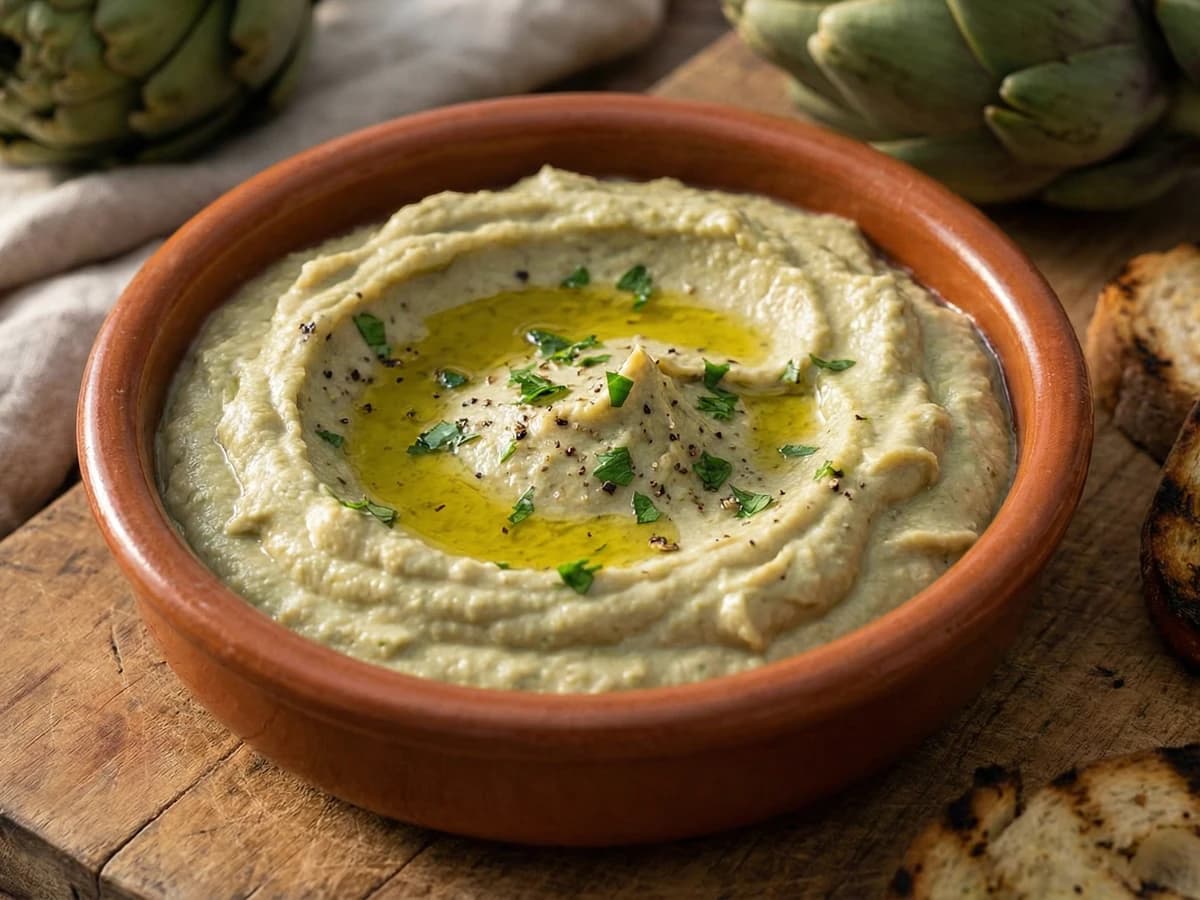
Roman artichokes pureed with sharp pecorino and bright lemon, spread onto warm bread or scooped with crisp vegetables. This is spring on the table.

Chef Graziella
Rome's beloved fried zucchini blossoms, stuffed with mozzarella that stretches and anchovy that provides salt and depth. A fleeting summer pleasure that rewards those who seek out perfect ingredients.