Chef Joost
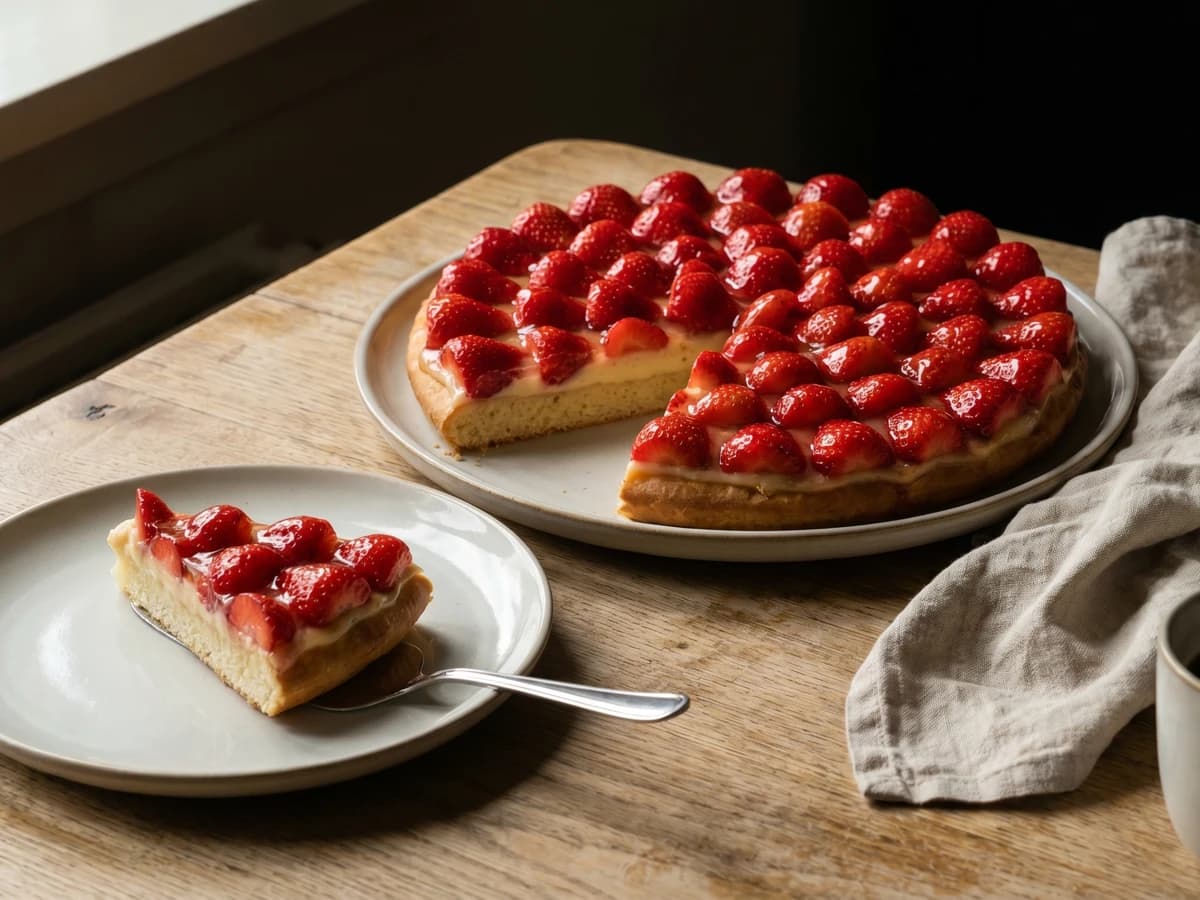
Aardbeienvlaai (Limburg Strawberry Vlaai)
The summer vlaai that politely breaks Limburg's baked-fruit rule: soft gistdeeg, cool pastry cream, and strawberries left fresh because June knows better than the oven.
A cooking platform built around craft, culture, and the stories behind what we eat.

Created by
The Gouda waffle-cookie born from thrift: two thin yeast waffles, split while still flexible, joined with cinnamon syrup, then softened over a coffee cup like a small lesson in Dutch patience.
Stroopwafels are what happens when a baker refuses to let yesterday's dough become waste. I first understood them in Gouda, not from a museum case but from a market stall where the iron clapped shut, the waffle came out soft as a letter, and the woman behind the counter cut it open before I had finished asking whether it needed to cool. It did not. Cooling is for the finished thing; the making is a race.
But let me tell you a secret. The stroopwafel is not a grand pastry pretending to be humble. It is humble pastry that discovered it could be magnificent if split quickly enough and given a seam of syrup. The name already tells you the whole contract: stroop, syrup, and wafel, waffle. No courtly disguise, no Latin to impress the neighbours. Gouda's genius was thrift: crumbs, scraps, spice, and heat turned into a cookie that now rides in every Dutch train bag and sits over every coffee cup, softening its middle while the grid stays crisp at the rim.
What I want from you is nerve at the iron and no theatre. The waffle must be sliced while it is still flexible, because once it cools it becomes a lid, not a book. Keep the syrup warm enough to spread slowly, not run, and press the halves together without fuss. Hou het altijd simpel: a small ball of yeast dough, a hot iron, a knife, a spoonful of cinnamon caramel. History and cookery, they cannot be separated, but neither should they make the afternoon difficult.
The stroopwafel belongs first to Gouda, where local tradition credits baker Gerard Kamphuisen with making the earliest version around 1810 from bakery scraps pressed in an iron and bound with syrup. Early Gouda stroopwafels were cheap enough to earn the nickname armenkoeken, poor people's cookies, and the city remained the centre of the trade through the nineteenth century. Its name is as plain as its origin: stroop is syrup, wafel is waffle, and the national coffee-table ritual came later, when thrift had already done the hard work.
Quantity
500g
Quantity
7g
Quantity
80g
Quantity
1 teaspoon
Quantity
5g
Quantity
180g
softened
Quantity
120ml
Quantity
1 large
Quantity
250g
Quantity
200g
Quantity
100g
Quantity
1 teaspoon
Quantity
pinch
Quantity
as needed
for greasing the iron
| Ingredient | Quantity |
|---|---|
| all-purpose flour or Dutch patentbloem | 500g |
| instant yeast | 7g |
| light brown basterdsuiker or light brown sugar | 80g |
| ground cinnamon | 1 teaspoon |
| fine sea salt | 5g |
| unsalted buttersoftened | 180g |
| lukewarm milk | 120ml |
| egg | 1 large |
| Dutch keukenstroop or golden syrup | 250g |
| dark brown basterdsuiker or dark brown sugar | 200g |
| unsalted butter | 100g |
| ground cinnamon | 1 teaspoon |
| fine sea salt | pinch |
| melted butter or neutral oil (optional)for greasing the iron | as needed |
Stir the flour, yeast, brown sugar, cinnamon, and salt together in a large bowl. Add the softened butter, lukewarm milk, and egg, then knead for eight to ten minutes until the dough is smooth, soft, and no longer smears butter against the bowl. Cover and let it rise for about one hour, until puffy rather than dramatically doubled.
Put the keukenstroop, dark brown sugar, butter, cinnamon, and a pinch of salt in a small saucepan. Warm gently, stirring, until the sugar dissolves and the mixture falls from the spoon in a slow ribbon, about four to five minutes. Keep it warm over the lowest heat, because cold stroop tears the waffle and hot stroop runs away like gossip.
Heat a stroopwafel iron or a shallow pizzelle iron. If your iron is not reliably nonstick, brush it very lightly with melted butter or oil. Divide the risen dough into fourteen balls, about 65g each, and keep them covered so the surface does not dry.
Place one dough ball in the centre of the hot iron, close it firmly, and cook for sixty to ninety seconds, until the waffle is golden brown with darker edges and still bends when lifted. The first one teaches you the heat of your iron; eat the lesson and adjust. Too pale and it tastes of dough, too dark and it will crack before you can fill it.
Working at once, lay the hot waffle on a board and slice it horizontally with a thin sharp knife, turning the waffle as you cut so you make two even discs. Spoon a tablespoon of warm stroop over the cut face, spread it almost to the edge, and press the top back on. This is the whole trick of the dish: once the waffle cools, it becomes a door that will not open.
Move the filled stroopwafel to a wire rack and repeat with the remaining dough. Let them set until the syrup holds the halves together. Serve one across the top of a cup of coffee for a minute or two, so the seam softens while the rim keeps its crisp bite. Hou het altijd simpel: coffee, waffle, patience.
1 serving (about 100g)
Culinary guides, cultural storytelling, and the editorial depth that makes cooking meaningful.
Discover Culinary ExplorerChef Joost
The summer vlaai that politely breaks Limburg's baked-fruit rule: soft gistdeeg, cool pastry cream, and strawberries left fresh because June knows better than the oven.

Chef Joost
A Limburg vlaai is not a pie trying to be grand. It is a thin yeast-dough round, fruit-bright and generous, made for birthdays, coffee, and second slices.

Chef Joost
The December bakery counter made small: cold leafed pastry wrapped around lemon-scented amandelspijs, brushed gold, and scattered with almonds so one person gets the whole holiday in both hands.

Chef Joost
A thin Amsterdam cookie carrying a cog ship in its name: caramelized butter dough, almond nougatine, and a 1934 contest that turned municipal pride into something for coffee.