
Chef Ally
Spanish Paella
A golden celebration of saffron-scented rice, fresh seafood, and smoky chorizo, cooked in a single pan until a coveted crispy crust forms on the bottom, meant to be shared with the people you love.
A cooking platform built around craft, culture, and the stories behind what we eat.

Created by
Plump Manila clams burst open in a fragrant bath of rendered chorizo, ripe tomatoes, and dry white wine, creating a broth so good you'll fight over who gets to sop up the last drops with crusty bread.
The Manila clam arrived in Pacific Northwest waters as a stowaway, tucked into shipments of Japanese oyster seed in the 1930s. It found the cold, clean waters of Puget Sound very much to its liking and established itself so thoroughly that most folks now consider it native. This happy accident gave us one of the finest steaming clams on the continent: sweet, briny, and tender with shells that pop open eagerly when they hit hot liquid.
Pairing these clams with Spanish chorizo makes perfect sense when you understand the Pacific Northwest's culinary geography. Spanish and Portuguese fishermen worked these waters for generations. Their influence lingers in the region's love of cured meats, garlic, and wine-based broths. The chorizo renders its paprika-stained fat into the pot, creating a base that transforms simple steaming liquid into something worth savoring spoonful by spoonful.
This is honest one-pot cooking. No fussy techniques, no obscure ingredients, no pretension. You need good clams, decent chorizo, a splash of wine, and fifteen minutes of your attention. The dish rewards you with briny sweetness cut by spice, brightness from tomatoes and parsley, and a broth that begs for bread. Make sure you have plenty. The bread, I mean. Though more wine never hurts either.
I've served this to dinner party guests who thought they were getting something complicated. They weren't. They were getting something good, which is better.
Quantity
3 pounds
scrubbed
Quantity
8 ounces
casings removed, crumbled
Quantity
1 cup
Quantity
1 can (14 ounces)
Quantity
4 cloves
thinly sliced
Quantity
1 medium
minced
Quantity
1/2 teaspoon
Quantity
3 tablespoons
Quantity
1/4 cup
roughly chopped
Quantity
for serving
Quantity
to finish
| Ingredient | Quantity |
|---|---|
| Manila clamsscrubbed | 3 pounds |
| Spanish chorizocasings removed, crumbled | 8 ounces |
| dry white wine | 1 cup |
| fire-roasted diced tomatoes | 1 can (14 ounces) |
| garlicthinly sliced | 4 cloves |
| shallotminced | 1 medium |
| red pepper flakes | 1/2 teaspoon |
| extra-virgin olive oil | 3 tablespoons |
| fresh flat-leaf parsleyroughly chopped | 1/4 cup |
| crusty sourdough bread | for serving |
| flaky sea salt (optional) | to finish |
Place your clams in a large bowl of cold salted water (it should taste like the sea) and let them sit for 20 minutes. They'll expel any grit hiding inside their shells. Discard any clams that remain open when you tap them sharply on the counter. Dead clams are not your friends. Drain, rinse under cold water, and scrub any stubborn debris from the shells with a stiff brush.
Set a large Dutch oven or heavy pot over medium heat. Add the olive oil and crumbled chorizo. Cook, breaking the meat into smaller pieces with a wooden spoon, until the chorizo renders its fat and the edges turn crispy and deep red, about 4 to 5 minutes. Your kitchen will smell of smoked paprika and garlic. This is the foundation of your broth. Don't rush it.
Add the sliced garlic, minced shallot, and red pepper flakes to the pot. Stir them into the rendered chorizo fat and cook until the garlic turns golden at the edges and the shallot softens, about 90 seconds. Watch the garlic closely. Golden is beautiful. Brown is bitter.
Pour in the diced tomatoes with their juices. Let them sizzle and sputter in the hot fat for a minute, then add the white wine. Bring everything to a vigorous simmer. The alcohol will burn off quickly, leaving behind the wine's acidity and fruit. Let the liquid reduce slightly for about 2 minutes while you get your clams ready.
Add all the clams to the pot in a single layer if possible. Cover immediately with a tight-fitting lid. The steam will do the work now. Cook for 5 to 7 minutes, shaking the pot once or twice without removing the lid. When you hear the shells clicking against each other and the pot, peek inside. Most clams should be wide open, revealing their plump, cream-colored meat.
Remove the pot from heat. Scatter the chopped parsley over the clams and give everything a gentle toss to distribute the herbs through the broth. Taste the liquid. It should be briny, slightly spicy, and bright from the tomatoes. A pinch of flaky salt on top adds texture but may not be necessary. Ladle the clams and plenty of broth into wide, shallow bowls. Serve immediately with thick slices of crusty bread for mopping. Provide an empty bowl for the shells and plenty of napkins. This is not a tidy meal.
1 serving (about 290g)
Culinary guides, cultural storytelling, and the editorial depth that makes cooking meaningful.
Discover Culinary ExplorerChef Ally
A golden celebration of saffron-scented rice, fresh seafood, and smoky chorizo, cooked in a single pan until a coveted crispy crust forms on the bottom, meant to be shared with the people you love.

Chef Juliette
John Dory has the delicacy of sole and the firmness of turbot. A light flouring, a quick butter sauté, and nut-brown beurre noisette show exactly why looks never mattered.

Chef Juliette
Fresh haddock proves its delicacy in the meunière pan: a fine flour crust, moist pearly flakes, and beurre noisette sharpened with lemon and parsley, ready from one skillet in half an hour.
Chef Juliette
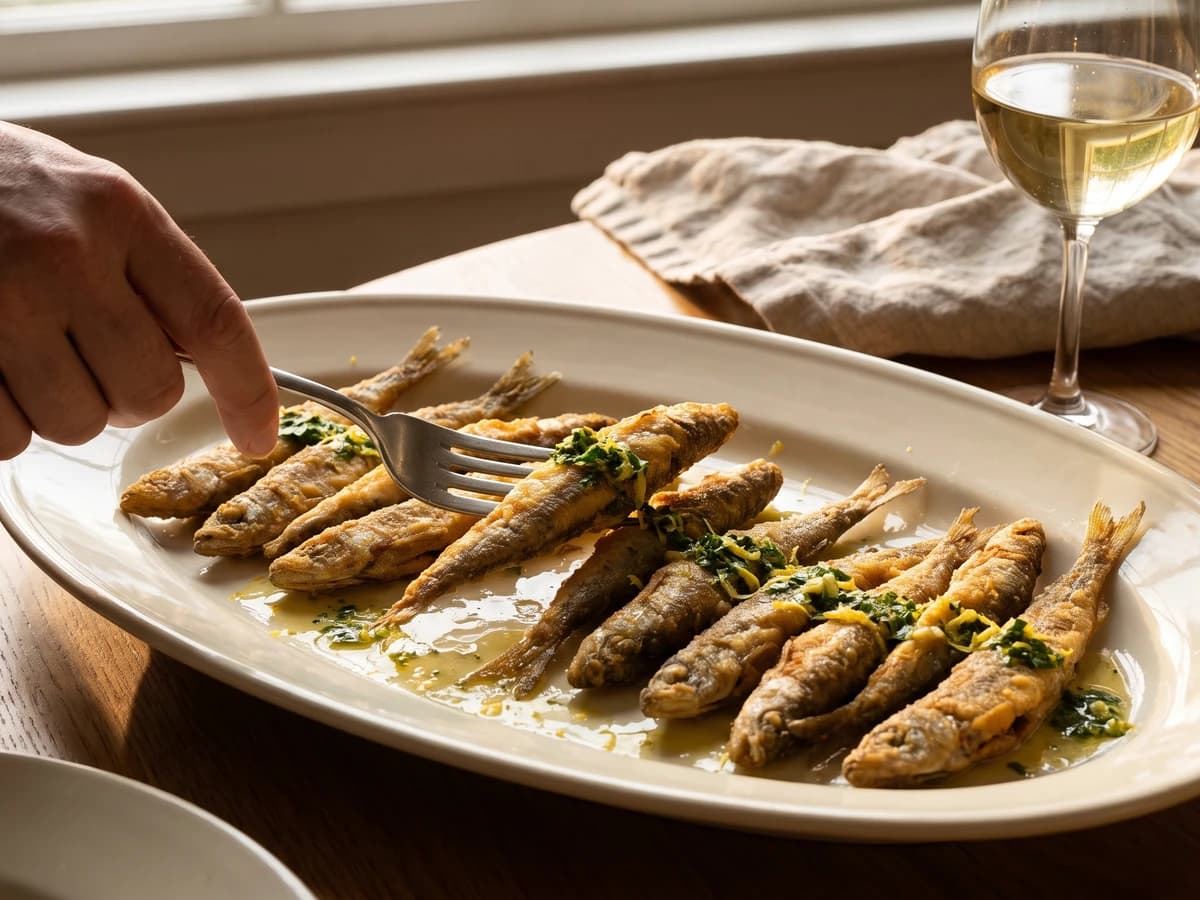
Éperlans à l’Anglaise turns small fish into a lesson in disciplined coating: boned smelts under a close, crisp crumb, pan-fried in clarified butter and finished with bright, half-melted maître d’hôtel butter.