
Chef Dean
Basler Brunsli
Chewy Swiss chocolate-almond cookies perfumed with cinnamon and cloves, their crackled sugar crust giving way to fudgy, intensely flavored centers that have graced Basel's Christmas tables for over three centuries.
A cooking platform built around craft, culture, and the stories behind what we eat.

Created by
Ivory-white picture cookies stamped with intricate carved molds, scented with anise and aged like fine wine. These Swabian heirlooms transform your kitchen into a 15th-century German bakehouse.
Springerle are among the oldest cookies in Western baking, dating to 14th-century Swabian convents where nuns carved wooden molds depicting religious scenes for Christmas celebrations. The word itself comes from an old German term meaning "little knight" or "little jumper," a reference to the way the dough springs up during baking while the stamped design remains sharp and white on top.
These are not cookies for the impatient. The dough requires extensive beating to achieve the proper texture. The stamped cookies must dry overnight, sometimes longer, before they see the inside of an oven. And then comes the ripening, two to three weeks in a sealed tin where the rock-hard cookies gradually soften and their anise perfume intensifies. This is baking as meditation, as connection to centuries of tradition.
My first encounter with proper Springerle came from a German grandmother in Milwaukee who kept her great-grandmother's molds wrapped in linen. She made exactly one batch each year, beginning the week before Thanksgiving so they would be ready for Christmas. The ritual mattered as much as the cookies themselves. Her molds showed horses, flowers, and a particularly stern-looking gentleman she claimed was her ancestor. I never determined if she was joking.
The technique differs fundamentally from other cookies. No butter, no leavening agents, no shortcuts. Just eggs beaten with sugar until they become a pale, thick ribbon, then flour folded in to create a smooth, rollable dough. The alchemy happens during drying: a thin crust forms on the surface while the interior remains softer, causing the bottom to puff into a characteristic "foot" during baking while the top stays flat and detailed.
Quantity
4
Quantity
500g (4 cups)
sifted
Quantity
1/2 teaspoon
Quantity
1/4 teaspoon
Quantity
500g (4 cups)
plus more for dusting
Quantity
2 tablespoons
for baking sheets
| Ingredient | Quantity |
|---|---|
| large eggs, room temperature | 4 |
| powdered sugarsifted | 500g (4 cups) |
| anise oil | 1/2 teaspoon |
| fine sea salt | 1/4 teaspoon |
| all-purpose flourplus more for dusting | 500g (4 cups) |
| whole anise seedsfor baking sheets | 2 tablespoons |
In the bowl of a stand mixer fitted with the whisk attachment, combine the eggs and sifted powdered sugar. Beat on medium-high speed for 15 to 20 minutes. This is not a typo. The mixture must transform from pale yellow to nearly white, increasing dramatically in volume until it falls from the whisk in a thick, continuous ribbon that holds its shape on the surface for several seconds. This aeration is the soul of Springerle. Without it, your cookies will be dense and your designs will spread.
Drizzle in the anise oil and salt with the mixer running on low. Beat just until incorporated, about 30 seconds. The anise scent should rise from the bowl immediately, sharp and sweet. If using extract instead of oil, add slightly more to compensate for its milder potency.
Switch to the paddle attachment. Add the flour in three additions, mixing on low speed just until each portion disappears into the batter. The dough will be soft and slightly sticky but should hold together when pressed. Resist the urge to add more flour. A stiff dough produces cookies that crack when stamped.
Scrape the dough onto a lightly floured surface and divide it in half. Wrap each portion tightly in plastic and refrigerate for at least 1 hour or up to overnight. This rest allows the gluten to relax and makes rolling infinitely easier. Cold dough also stamps more cleanly.
Line baking sheets with parchment paper. Scatter anise seeds evenly across the parchment in a thin layer. The seeds will toast gently during baking, releasing their oils into the cookie bottoms. This is the traditional method. If you prefer a more subtle flavor, skip the seeds entirely.
On a well-floured surface, roll one portion of dough to exactly 1/2-inch thickness. Use a ruler. Consistency matters here because your molds are designed for a specific dough depth. Too thin and the design lacks definition. Too thick and the cookies take forever to dry. Keep the remaining dough refrigerated while you work.
Dust your Springerle mold generously with flour, tapping off any excess. Press the mold firmly and evenly into the dough, applying steady pressure for 2 to 3 seconds. Lift straight up. The design should be crisp and deep. If the dough sticks or the design looks muddy, add more flour to the mold. Cut around the stamped design with a sharp knife or use a bench scraper for clean edges.
Place the stamped cookies on your prepared baking sheets, design-side up, directly onto the anise seeds. Leave 1/2 inch between cookies. They will not spread. Continue stamping and cutting until all dough is used, gathering scraps gently. Re-roll scraps only once. Overworked dough produces tough cookies.
Leave the baking sheets uncovered at room temperature for 12 to 24 hours. The cookies must develop a dry, matte surface that feels papery to the touch. Press gently with your fingertip. No impression should remain. This dried crust is what keeps the design intact during baking while allowing the bottom to puff. Humidity affects drying time. In a dry climate, 12 hours suffices. In humid conditions, allow 24 hours or use a dehumidified room.
Heat your oven to 300°F (150°C). Position a rack in the center. Bake one sheet at a time for 12 to 15 minutes. The cookies should remain nearly white on top with just the faintest hint of gold at the edges. The bottom will be pale golden, and the characteristic "foot" (a puffy base layer) should have formed. Do not overbake. Browning destroys the visual appeal of these cookies.
Transfer cookies to a wire rack immediately. They will be quite firm, almost hard. This is correct. Let them cool completely, at least 30 minutes. The texture will seem wrong. Trust the process.
Pack the cooled cookies in an airtight tin or container, layered between sheets of parchment paper. Add a small slice of apple or a piece of bread to the container. Seal and store at room temperature for 2 to 3 weeks before serving. The moisture from the apple gradually softens the cookies while the anise flavor deepens and mellows. Replace the apple slice every few days. After ripening, the cookies should yield gently to pressure while maintaining their structural integrity.
1 cookie (about 18g)
Culinary guides, cultural storytelling, and the editorial depth that makes cooking meaningful.
Discover Culinary ExplorerChef Dean
Chewy Swiss chocolate-almond cookies perfumed with cinnamon and cloves, their crackled sugar crust giving way to fudgy, intensely flavored centers that have graced Basel's Christmas tables for over three centuries.

Chef Dean
Tender, golden Swiss butter cookies perfumed with fresh lemon zest, brushed with egg wash to achieve that signature glossy finish that has graced holiday tins from Zurich to Geneva for generations.

Chef Dean
Nuremberg's legendary soft gingerbread cookies, rich with ground nuts and ancient spices, baked on delicate wafer bases and finished with gleaming chocolate or snow-white icing. A gift-worthy tradition since the medieval spice trade.
Chef Dean
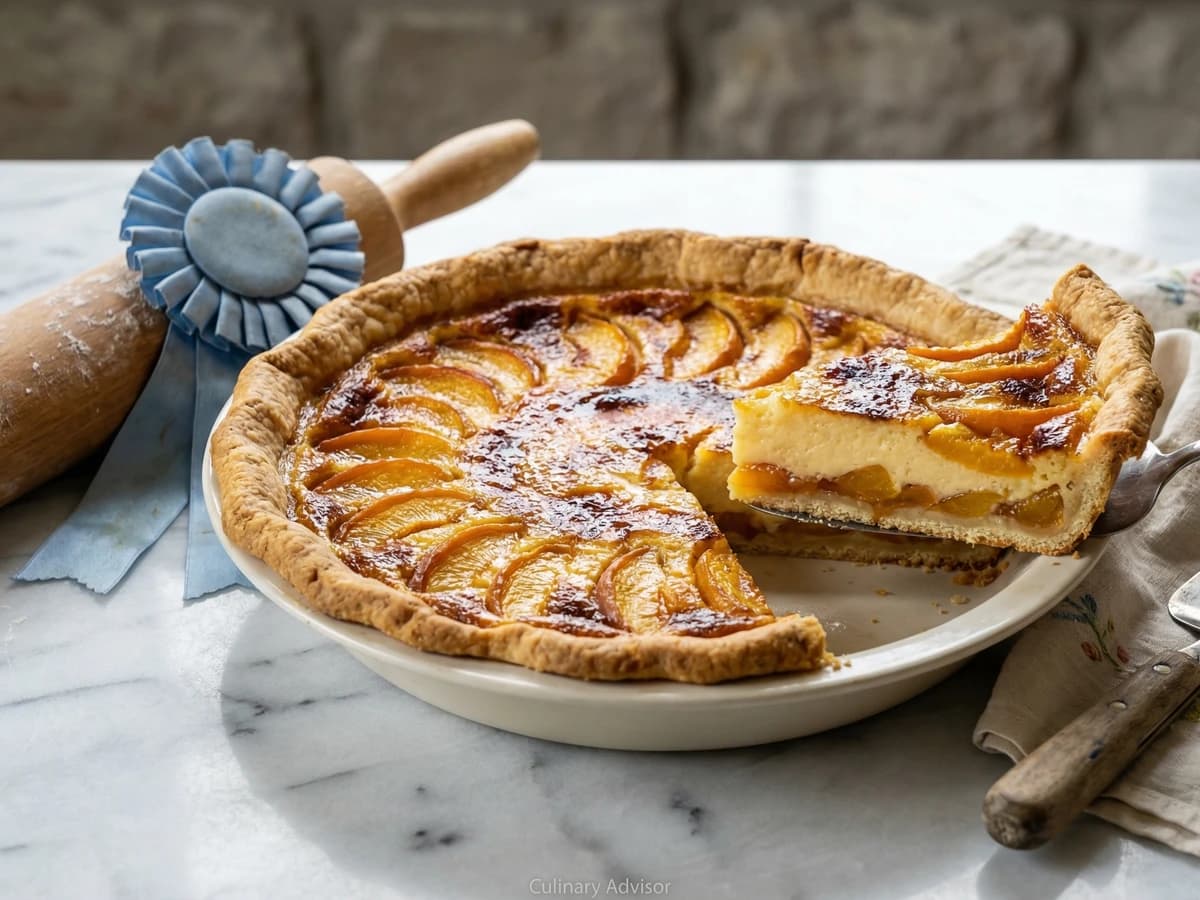
A pillowy yeasted crust cradling ripe fruit beneath a trembling layer of sweet cream custard, baked until golden and served with the pride of generations of German-Russian grandmothers who carried this recipe across an ocean and a continent.