
Chef Dean
Mailänderli
Tender, golden Swiss butter cookies perfumed with fresh lemon zest, brushed with egg wash to achieve that signature glossy finish that has graced holiday tins from Zurich to Geneva for generations.
A cooking platform built around craft, culture, and the stories behind what we eat.
Created by
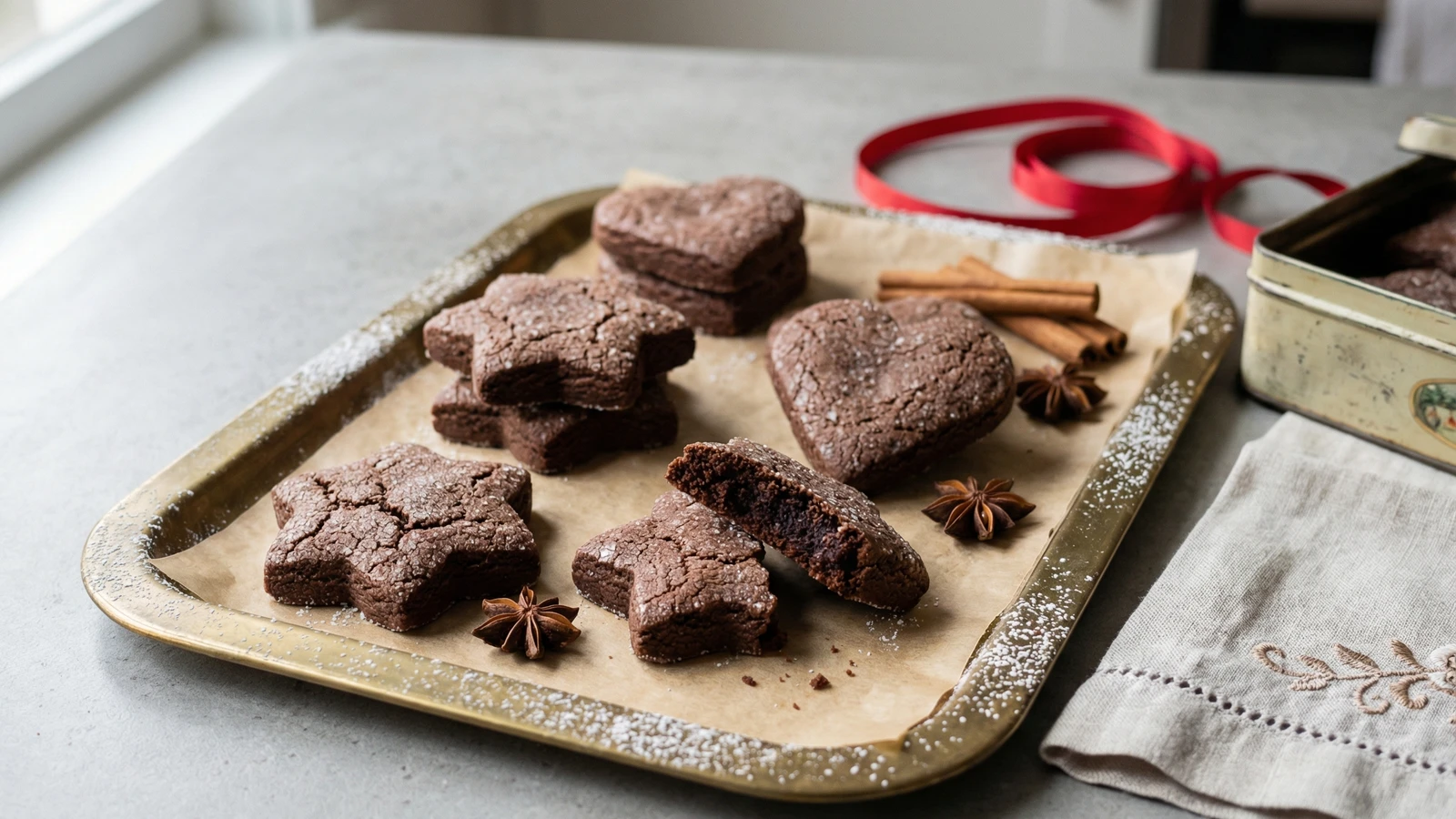
Chewy Swiss chocolate-almond cookies perfumed with cinnamon and cloves, their crackled sugar crust giving way to fudgy, intensely flavored centers that have graced Basel's Christmas tables for over three centuries.
Basel sits at the meeting point of three nations, and its culinary traditions reflect centuries of cultural exchange. The Brunsli emerged from this crossroads in the 1700s, a confection that owes its existence to the city's position on the spice trade routes and its wealthy merchant class who could afford exotic ingredients like chocolate, almonds, and cinnamon. These were cookies for the privileged at first. Now they belong to everyone.
What makes the Brunsli remarkable is what it lacks: flour. Ground almonds provide all the structure, creating a cookie that happens to be gluten-free centuries before that term meant anything to anyone. The texture walks a tightrope between chewy and fudgy, dense with chocolate yet somehow light on the tongue. Spices warm the edges without overwhelming the cocoa.
The overnight rest is not a suggestion. During those hours, the sugar draws moisture from the dough, creating the characteristic crackled crust while the interior stays soft. Rush this step and you'll have pleasant cookies. Give them their time and you'll understand why Basel guards this recipe as cultural heritage.
I've watched Swiss home bakers roll out Brunsli on marble slabs passed down through generations, cutting stars and hearts with tins their grandmothers used. The ritual matters as much as the recipe. Set aside an afternoon, pour yourself something warming, and let the process unfold without hurry.
Quantity
350g (3½ cups)
Quantity
200g (1 cup), plus 100g (½ cup) for rolling
Quantity
200g (7 oz)
finely grated
Quantity
30g (¼ cup)
Quantity
1½ teaspoons
Quantity
¼ teaspoon
Quantity
⅛ teaspoon
Quantity
2 (about 70g)
Quantity
2 tablespoons
| Ingredient | Quantity |
|---|---|
| blanched almond flour | 350g (3½ cups) |
| granulated sugar | 200g (1 cup), plus 100g (½ cup) for rolling |
| bittersweet chocolate, 70% cacaofinely grated | 200g (7 oz) |
| Dutch-process cocoa powder | 30g (¼ cup) |
| ground cinnamon | 1½ teaspoons |
| ground cloves | ¼ teaspoon |
| fine sea salt | ⅛ teaspoon |
| large egg whites | 2 (about 70g) |
| kirsch (cherry brandy) | 2 tablespoons |
Using the finest holes of a box grater or a microplane, grate the chocolate into a large bowl. Work in a cool kitchen if possible. The chocolate should resemble coarse sand, not clumped shards. This takes patience, about ten minutes for the full amount, but the fine texture is essential for the cookie's fudgy interior.
Add the almond flour, 200g sugar, cocoa powder, cinnamon, cloves, and salt to the grated chocolate. Whisk thoroughly until no streaks of cocoa remain and the spices are evenly distributed. The mixture will smell deeply of chocolate and warm spice, almost like hot cocoa on a cold morning.
In a small bowl, whisk the egg whites with the kirsch until just combined. Pour over the dry ingredients and stir with a sturdy wooden spoon or your hands until a stiff, slightly sticky dough forms. It will seem dry at first. Keep working it. The dough should hold together when pressed but not feel wet or tacky.
Spread the remaining 100g sugar on a clean work surface. Divide the dough in half. Working with one portion at a time, press it into a rough rectangle and set it on the sugared surface. Roll to exactly 1 centimeter (⅜ inch) thickness, flipping and pressing more sugar into both sides as you work. The sugar coating is not decorative. It creates the crackled crust and prevents sticking without adding flour.
Using small cookie cutters (stars, hearts, and crescents are traditional), cut shapes as close together as possible. Transfer to parchment-lined baking sheets, leaving 1 inch between cookies. They will not spread. Gather scraps, re-roll once in fresh sugar, and cut again. The dough handles well but becomes tough if worked more than twice.
Leave the baking sheets uncovered at room temperature for 12 to 24 hours. The cookies will develop a dry, matte surface while staying soft inside. This resting period is what separates authentic Brunsli from ordinary chocolate cookies. You'll know they're ready when the tops feel dry to the touch and have lost their shine.
Position racks in the upper and lower thirds of your oven and preheat to 250°F (120°C). Yes, that temperature is correct. Low heat preserves the chewy interior. Bake for 6 to 8 minutes, rotating sheets halfway through. The cookies are done when they feel set on top but still give slightly when pressed. They will firm as they cool.
Let cookies rest on the baking sheets for 5 minutes, then transfer to wire racks to cool completely. They will feel fragile when warm but gain structure as they reach room temperature. The texture you're seeking: a thin sugary crust that yields to a dense, almost brownie-like interior.
1 serving (about 94g)
Culinary guides, cultural storytelling, and the editorial depth that makes cooking meaningful.
Discover Culinary ExplorerChef Dean
Tender, golden Swiss butter cookies perfumed with fresh lemon zest, brushed with egg wash to achieve that signature glossy finish that has graced holiday tins from Zurich to Geneva for generations.

Chef Dean
Nuremberg's legendary soft gingerbread cookies, rich with ground nuts and ancient spices, baked on delicate wafer bases and finished with gleaming chocolate or snow-white icing. A gift-worthy tradition since the medieval spice trade.
Chef Dean
A pillowy yeasted crust cradling ripe fruit beneath a trembling layer of sweet cream custard, baked until golden and served with the pride of generations of German-Russian grandmothers who carried this recipe across an ocean and a continent.

Chef Dean
Thin, shattering spice cookies pressed into carved wooden molds, carrying the warm perfume of cinnamon, cardamom, and cloves that has announced the arrival of St. Nicholas for six hundred years.