
Chef Lupita
Acúmara Tatemada al Comal
Michoacán's Lake Pátzcuaro acúmara, a whole kurucha from the lago tatemada on a comal de leña and served with chile perón atápakua, corn tortillas, and P'urhépecha discipline.
A cooking platform built around craft, culture, and the stories behind what we eat.
Created by
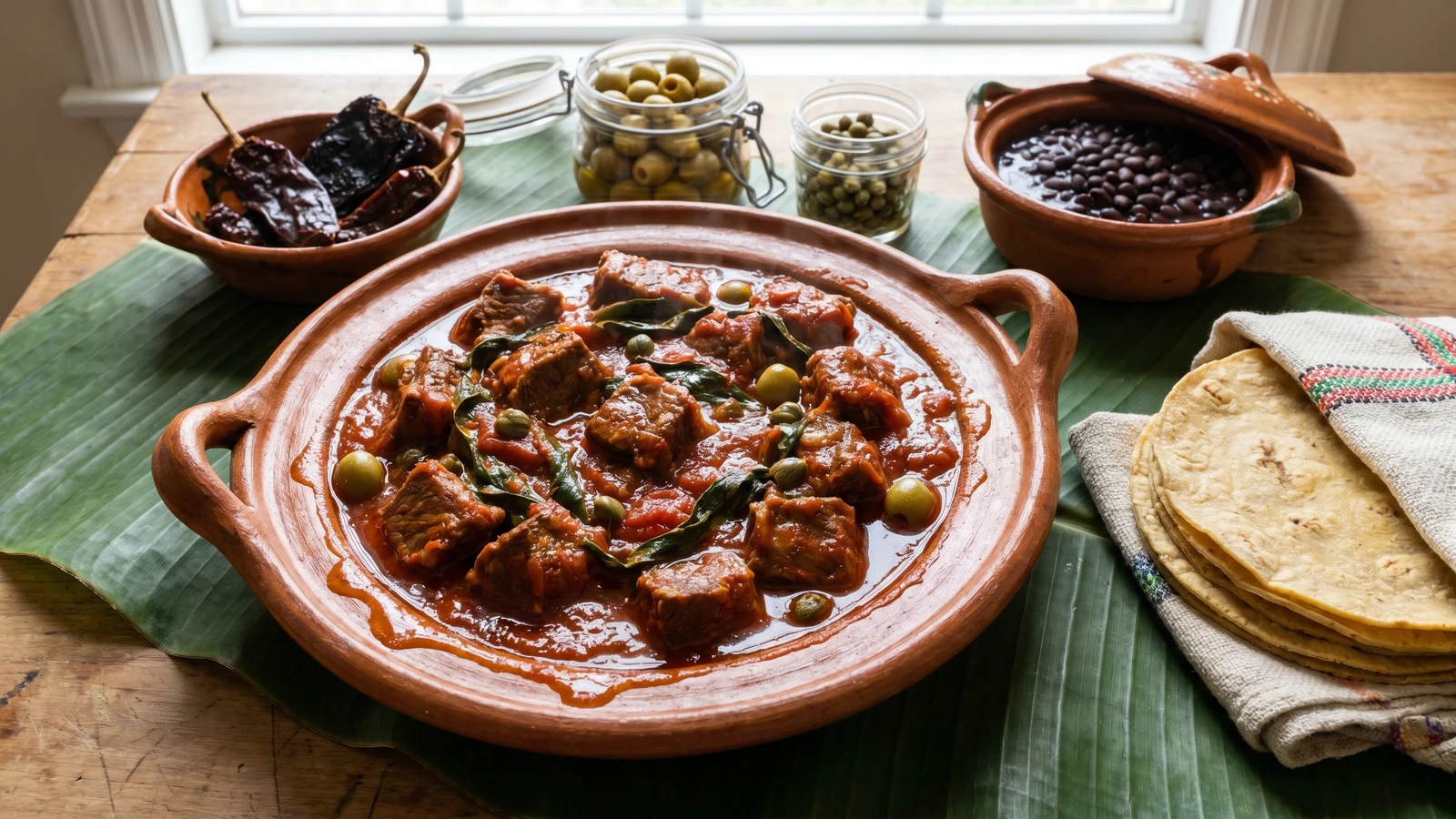
Veracruz's Sotavento beef, slow-simmered in jitomate, chile ancho, chipotle, and acuyo leaf, with olives and capers reminding you this coast has always cooked with many hands.
Veracruz, the Sotavento, the low, wet country around the Papaloapan basin and the old river towns near Tlacotalpan and Alvarado. This is where acuyo grows big and fragrant, where the kitchen smells of tomato, smoke, river air, and the jars of olives and capers that remind you Veracruz has always faced the sea.
Acuyo is not decoration. It is the leaf that makes this dish belong to the Gulf. Some people call it hoja santa, but in Veracruz many cooks call it acuyo, and it carries that anise-tarragon perfume that wraps the beef while it simmers. You use chile ancho for depth and chipotle meco for smoke. Not a fistful of anonymous chile powder. Preguntale a las senoras del mercado. They know the difference.
I learned versions of this in Sotavento kitchens where the women cooked in clay cazuelas and served from the same pot, with black beans waiting on the back burner and corn tortillas wrapped in a servilleta. The technique is patient but not precious: brown the beef, fry the recaudo, simmer slowly, finish with olives and capers. The coast is in that last salty bite.
This is not food from a single Mexico. This is Veracruz, Indigenous leaf, Afro-Gulf memory, Spanish pantry, and a home cook who knows how to make Sunday food on a weekday if she starts early. Saber cocinar es saber vivir.
The Sotavento region of Veracruz grew around river and port exchange, especially through the Papaloapan basin and the colonial Gulf trade centered on Veracruz after the 16th century. Acuyo, or hoja santa, is native to Mesoamerica and was used in Indigenous cooking long before olives, capers, and cattle arrived with Spanish colonization. The combination of local herbs with Mediterranean pantry ingredients is one of the signatures of Veracruz cooking, especially in coastal and river towns shaped by Indigenous, Spanish, and Afro-Caribbean presence.
Quantity
2 1/2 pounds
cut into 2-inch pieces
Quantity
1 1/2 teaspoons, plus more to taste
Quantity
1/2 teaspoon
Quantity
2 tablespoons
Quantity
1 medium
thinly sliced
Quantity
4
peeled
Quantity
4
halved
Quantity
2
stemmed and seeded
Quantity
2
stemmed
Quantity
6 large leaves
rinsed and patted dry
Quantity
1/2 teaspoon
Quantity
1
Quantity
1/4 teaspoon
Quantity
2 cups
Quantity
1/3 cup
rinsed
Quantity
2 tablespoons
rinsed
Quantity
1 tablespoon
Quantity
1 tablespoon
Quantity
for serving
Quantity
for serving
| Ingredient | Quantity |
|---|---|
| beef chuckcut into 2-inch pieces | 2 1/2 pounds |
| kosher salt | 1 1/2 teaspoons, plus more to taste |
| freshly ground black pepper | 1/2 teaspoon |
| manteca de cerdo (pork lard) | 2 tablespoons |
| white onionthinly sliced | 1 medium |
| garlic clovespeeled | 4 |
| jitomates de bola or Roma tomatoeshalved | 4 |
| dried chile anchostemmed and seeded | 2 |
| dried chile chipotle meco or chipotle secostemmed | 2 |
| fresh acuyo leaves (hoja santa)rinsed and patted dry | 6 large leaves |
| Mexican oregano | 1/2 teaspoon |
| bay leaf | 1 |
| ground allspice | 1/4 teaspoon |
| beef broth or water | 2 cups |
| green olives with pimientorinsed | 1/3 cup |
| capersrinsed | 2 tablespoons |
| olive brine | 1 tablespoon |
| fresh lime juice | 1 tablespoon |
| warm corn tortillas (optional) | for serving |
| cooked black beans (optional) | for serving |
Pat the beef dry and season it with the salt and black pepper. Let it sit while you prepare the chiles and tomatoes. Dry meat browns. Wet meat steams in its own shame, and no señora in the Sotavento has time for that.
Heat a dry comal over medium. Toast the chile ancho for about 20 seconds per side, just until the skin softens and smells sweet. Toast the chipotle meco a little longer, turning often, until it releases its smoky smell. Do not blacken them. Burned chipotle makes the whole cazuela bitter.
Place the toasted chiles in a bowl and cover with hot water for 15 minutes. Meanwhile, put the tomato halves, cut side down, on the comal with the garlic cloves. Let the tomato skins blister and darken in spots and let the garlic soften. That char gives the sauce its backbone.
Drain the chiles and place them in a blender with the charred tomatoes, garlic, 2 acuyo leaves torn into pieces, Mexican oregano, allspice, and 1 cup of beef broth or water. Blend until completely smooth. The sauce should smell green from the acuyo, smoky from the chipotle, and deep from the ancho. Strain it if your blender leaves chile skin behind.
Melt the manteca in a wide clay cazuela or heavy Dutch oven over medium-high heat. Brown the beef in batches, leaving space between the pieces. You want dark edges on the meat and browned bits on the bottom of the pot. La manteca es el sabor. Oil will cook the beef, yes, but it will not give you the same Veracruz depth.
Lower the heat to medium. Add the sliced onion to the pot and cook until softened, about 5 minutes. Pour in the blended sauce. It will sputter. Stir and scrape the bottom of the cazuela for 6 to 8 minutes, until the sauce darkens, thickens, and the fat begins to show at the edges. This is where the raw tomato becomes a real recaudo.
Return the beef and any juices to the pot. Add the remaining 1 cup broth or water and the bay leaf. Lay 3 whole acuyo leaves over the meat like a lid, then cover the pot. Simmer gently for 1 hour and 45 minutes to 2 hours, stirring every 30 minutes, until the beef yields when pressed with a spoon. The acuyo perfumes the meat slowly. No me vengas con atajos.
Remove and discard the spent whole acuyo leaves and bay leaf. Stir in the olives, capers, olive brine, and the last acuyo leaf, finely sliced. Simmer uncovered for 10 minutes, until the sauce clings to the beef in glossy spoonfuls. Taste for salt, then brighten with lime juice. The olives and capers should season the pot, not bully it.
Bring the cazuela to the table with warm corn tortillas and black beans. Not pinto beans. This is Veracruz. Spoon the beef with plenty of sauce, catching a few olives and capers in every serving. Cada estado, su propia cocina.
1 serving (about 420g)
Culinary guides, cultural storytelling, and the editorial depth that makes cooking meaningful.
Discover Culinary ExplorerChef Lupita
Michoacán's Lake Pátzcuaro acúmara, a whole kurucha from the lago tatemada on a comal de leña and served with chile perón atápakua, corn tortillas, and P'urhépecha discipline.

Chef Lupita
Puebla's weekday adobo of pork shoulder braised in a thick guajillo and ancho sauce sharpened with vinegar, cumin, and clove. The deep red of a market spice stall, the dish a poblana cooks without thinking.

Chef Lupita
Loreto's pit-roasted clams, planted hinge-up in beach sand and tatemadas under a fast fire of dried romerillo brush, the resinous Baja desert shrub that gives this dish its smoke.

Chef Lupita
Oaxaca's eighth mole, the silky, almond-and-cinnamon almendrado, served over poached chicken. Mild, sweet, restrained, and a quiet rebuttal to anyone who thinks Mexican food has to be hot to be Mexican.