
Chef Lupita
Adobo de Puerco Poblano
Puebla's weekday adobo of pork shoulder braised in a thick guajillo and ancho sauce sharpened with vinegar, cumin, and clove. The deep red of a market spice stall, the dish a poblana cooks without thinking.
A cooking platform built around craft, culture, and the stories behind what we eat.
Created by
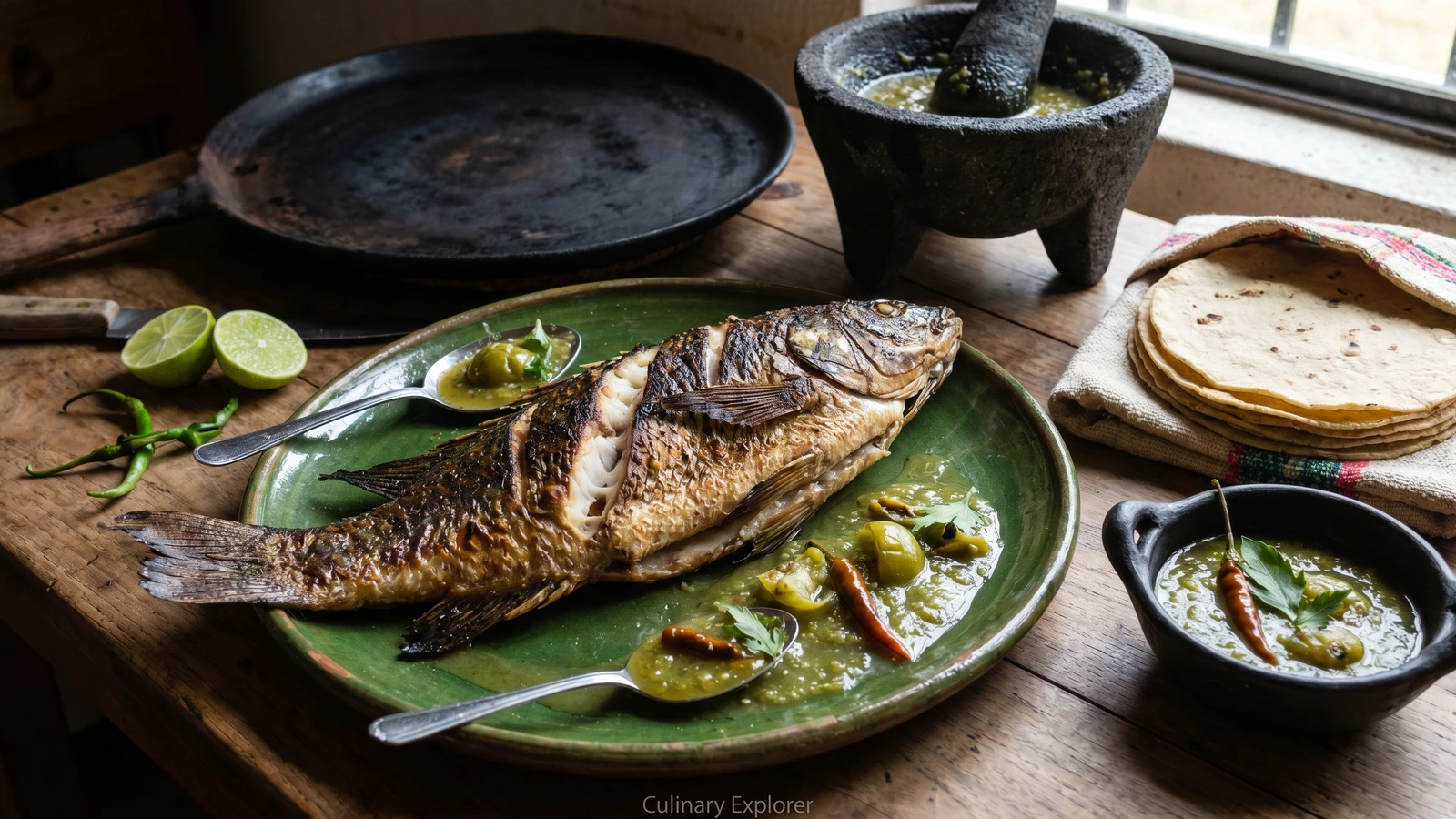
Michoacán's Lake Pátzcuaro acúmara, a whole kurucha from the lago tatemada on a comal de leña and served with chile perón atápakua, corn tortillas, and P'urhépecha discipline.
Michoacán, the Lake Pátzcuaro ribera, is where this acúmara lives. Not the coast. Not a restaurant fillet. The lago gives the kurucha, the milpa gives the tomatillo and corn, the monte gives the leña and the herbs. Cada estado, su propia cocina.
Acúmara is a bony lake fish, and that is the point. The cocineras of Janitzio do not remove its identity to make it convenient. They clean it, salt it, tuck in epazote or nurite, and lay it whole on a comal blackened by years of fire. The skin tightens, the edges char, the flesh stays close to the spine, and you eat slowly with tortilla in hand. No me vengas con atajos. Foil turns it soft. Oil makes it taste tired. The comal and the leña do the work.
I learned this handling from women along the ribera, and I heard the same discipline from cocineras tradicionales of Zacán, Janitzio, Cocucho, Cherán, and Uruapan. They are the transmission vector, not decoration for a festival poster. The atápakua on the side is not a bottled salsa. It is tomatillo, chile perón, garlic, epazote, and a little masa to give it body. The fish stays the center. Saber cocinar es saber vivir.
Acúmara, Algansea lacustris, is endemic to Lake Pátzcuaro and belongs to the P'urhépecha food system that long predates the 16th-century Spanish conquest. By the early 1500s, the P'urhépecha state ruled from Tzintzuntzan under the Cazonci, and lake fish formed part of daily food, market exchange, and tribute around the basin. In 2010 UNESCO inscribed Traditional Mexican Cuisine as Intangible Cultural Heritage using the Michoacán paradigm, centered on living community practice, milpa agriculture, nixtamalized corn, and the knowledge of cocineras tradicionales in P'urhépecha territory.
Quantity
4, 8 to 10 ounces each
scaled, gutted, gills removed, heads and bones left on
Quantity
2 teaspoons, plus more to taste
Quantity
4 sprigs
Quantity
2 sprigs
if available
Quantity
8
husked and rinsed
Quantity
1
Quantity
1
stemmed
Quantity
1
stemmed
Quantity
2
unpeeled
Quantity
1
cut into thick slices
Quantity
1/2 cup fresh masa or 2 tablespoons masa harina mixed with 1/2 cup warm water
Quantity
1 tablespoon
Quantity
1/2 teaspoon
Quantity
12
warmed on the comal, for serving
| Ingredient | Quantity |
|---|---|
| whole acúmara (Algansea lacustris)scaled, gutted, gills removed, heads and bones left on | 4, 8 to 10 ounces each |
| sal de grano | 2 teaspoons, plus more to taste |
| fresh epazote | 4 sprigs |
| fresh nurite (optional)if available | 2 sprigs |
| tomatillos milperoshusked and rinsed | 8 |
| ripe jitomate guaje | 1 |
| fresh chile perón amarillostemmed | 1 |
| fresh chile serranostemmed | 1 |
| garlic clovesunpeeled | 2 |
| small white onioncut into thick slices | 1 |
| fresh masa or masa harina slurry | 1/2 cup fresh masa or 2 tablespoons masa harina mixed with 1/2 cup warm water |
| chopped fresh epazote | 1 tablespoon |
| sal de grano for the atápakua | 1/2 teaspoon |
| hand-pressed corn tortillas (optional)warmed on the comal, for serving | 12 |
Use acúmara only if it is legally caught or responsibly raised from the Lake Pátzcuaro region. Ask the fish seller where it came from. If they cannot name the ribera, do not buy it. This fish is not a generic white fish with a prettier name. Rinse the cleaned fish, check that the gills are removed, and leave the head, tail, spine, and espinas in place.
Pat the acúmara very dry. Make two shallow diagonal cuts on each side, just through the skin and into the flesh, not down to the bone. Rub each fish inside and out with sal de grano. Tuck one sprig of epazote into each cavity, adding nurite if you have it. Let the fish rest at room temperature for 20 minutes while the fire settles. Dry fish chars. Wet fish tears.
Set a comal over leña or carbón until it holds steady medium-high heat. Place the tomatillos, jitomate, chile perón, chile serrano, garlic, and onion slices directly on the dry comal. Turn them with tongs until the skins blister, black spots appear, and the tomatillos soften enough to collapse slightly. The chile perón should smell fruity before it smells sharp. If it burns black all over, throw it out and use another.
Peel the garlic. In a molcajete, grind the garlic with 1/2 teaspoon sal de grano until it becomes a paste. Add the chile perón and serrano, then the tomatillos, jitomate, and onion. Work them into a rough sauce, not a blender puree. Transfer to a small black-clay cazuela or heavy saucepan. Stir in the fresh masa or masa harina slurry and the chopped epazote.
Set the cazuela over medium heat and cook the atápakua for 8 to 10 minutes, stirring with a wooden spoon, until the masa loses its raw taste and the sauce lightly coats the spoon. It should be loose enough to spoon beside the fish, not thick like porridge. Taste for salt. This is P'urhépecha atápakua logic: vegetable, chile, corn body, herb. Not a bottled salsa pretending to help.
Wipe the comal clean and let it heat again over the fire. Sprinkle a few grains of salt where the fish will sit. Do not add oil and do not use foil. The skin needs direct contact with the hot surface so it can tighten and release. Cooking on foil gives you soft fish in a wrapper. That is not tatemado.
Lay the fish on the hot comal with space between them. Cook without moving for 5 to 7 minutes, depending on thickness. When the skin has dark patches, the edges around the fins crisp, and the fish releases with a wide spatula, turn it once. Cook the second side 4 to 6 minutes more. The flesh near the shoulder should flake when pressed, the eye should be opaque, and a thermometer at the thickest part should read 145F if you use one. Así se hace y punto.
Spoon the warm atápakua onto a Capula or Tzintzuntzan barro plate and place the whole acúmara beside it, or serve the sauce in a small cazuelita at the table. Warm the corn tortillas on the same comal. Eat with your hands and a tortilla, lifting the flesh along the spine and watching for fine bones. The espinas are part of the plate's truth, not a mistake.
1 serving (about 330g)
Culinary guides, cultural storytelling, and the editorial depth that makes cooking meaningful.
Discover Culinary ExplorerChef Lupita
Puebla's weekday adobo of pork shoulder braised in a thick guajillo and ancho sauce sharpened with vinegar, cumin, and clove. The deep red of a market spice stall, the dish a poblana cooks without thinking.

Chef Lupita
Loreto's pit-roasted clams, planted hinge-up in beach sand and tatemadas under a fast fire of dried romerillo brush, the resinous Baja desert shrub that gives this dish its smoke.

Chef Lupita
Oaxaca's eighth mole, the silky, almond-and-cinnamon almendrado, served over poached chicken. Mild, sweet, restrained, and a quiet rebuttal to anyone who thinks Mexican food has to be hot to be Mexican.
Chef Lupita
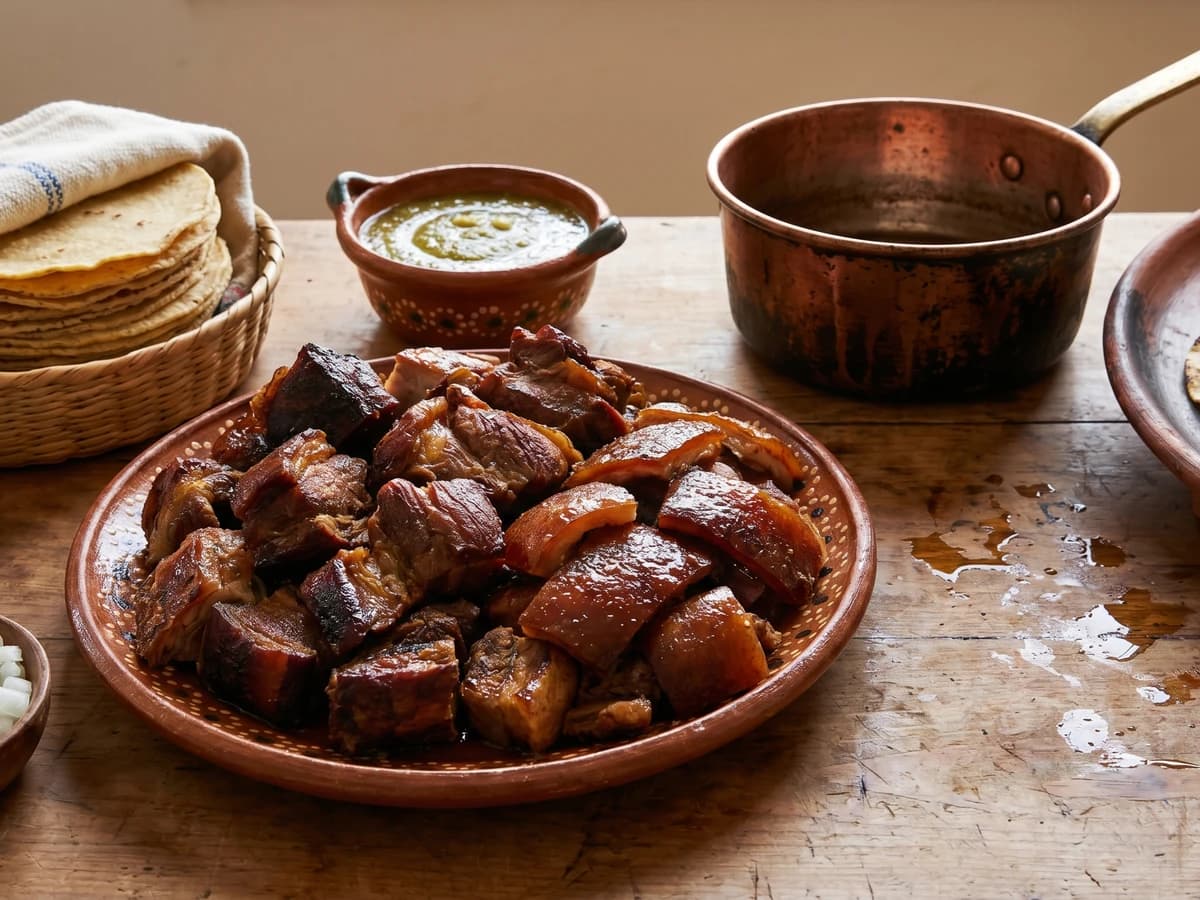
Guanajuato's Apaseo el Grande carnitas, pork shoulder and skin cooked slowly in manteca de cerdo with orange, salt, and milk, then torn and crisped on the comal for celebration tacos.