
Chef Lupita
Acúmara Tatemada al Comal
Michoacán's Lake Pátzcuaro acúmara, a whole kurucha from the lago tatemada on a comal de leña and served with chile perón atápakua, corn tortillas, and P'urhépecha discipline.
A cooking platform built around craft, culture, and the stories behind what we eat.
Created by
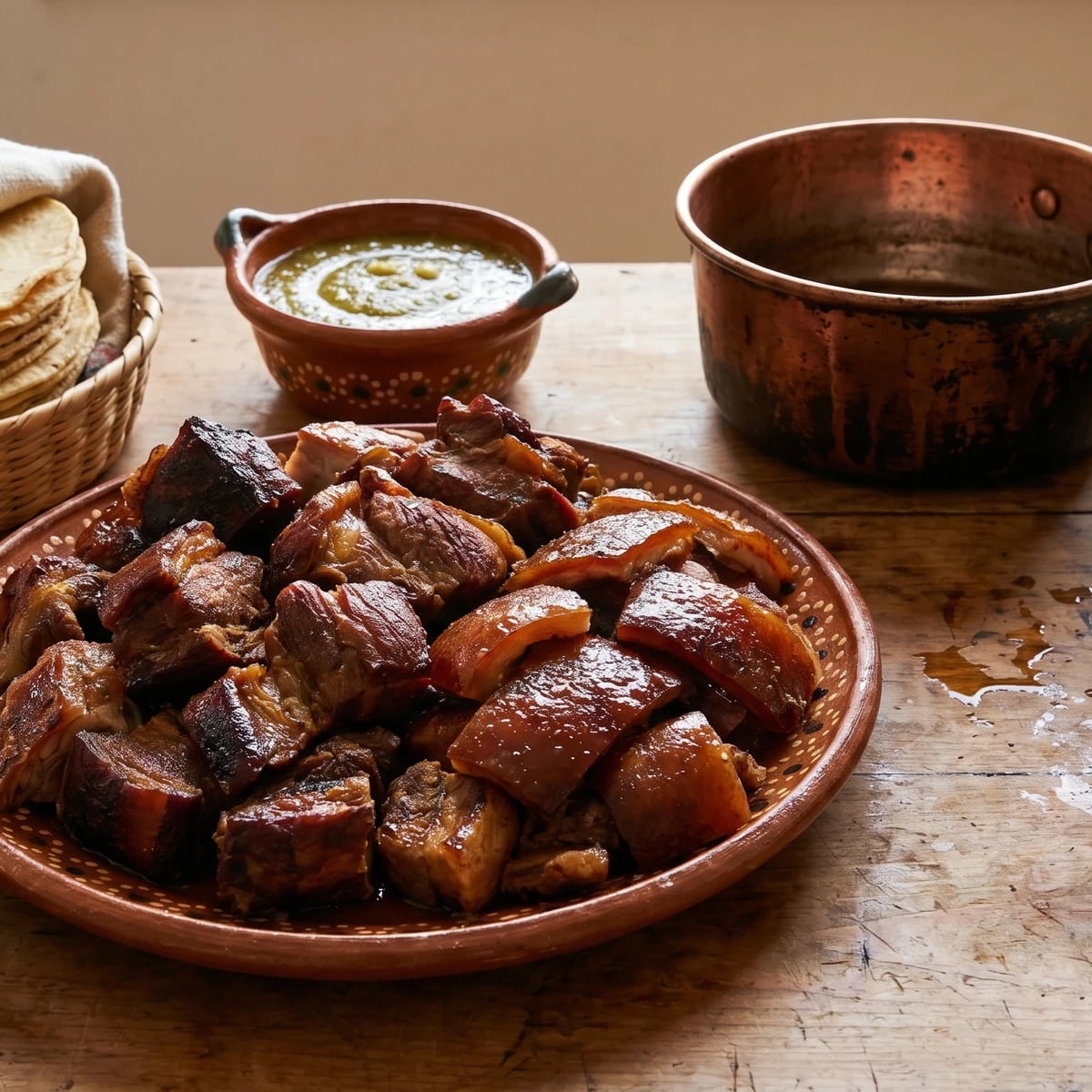
Guanajuato's Apaseo el Grande carnitas, pork shoulder and skin cooked slowly in manteca de cerdo with orange, salt, and milk, then torn and crisped on the comal for celebration tacos.
Guanajuato, eastern Bajio, Apaseo el Grande between Celaya and Queretaro: this is where these carnitas live. They are not Quiroga carnitas wearing another state's clothes, and they are not northern carne asada. The pot is pork shoulder, skin, manteca de cerdo, naranja, salt, and a measured splash of leche, then the meat finishes on the comal until the edges crisp and the inside still pulls apart.
I learned this register from women who cooked for baptisms, patron saint days, and rancho weddings in the Apaseos. The men may stand by the street cazo in many towns, but inside family kitchens the senoras control the salt, the tortillas, the salsa, the barro on the table, and the moment the meat is ready. That timing is not decoration. La cocina no es decoracion, es trabajo.
Do not bury this pork under bay leaves, cola, oregano, or garlic because another state does it that way. Guanajuato's version is cleaner: good pork, fresh lard from a carniceria, orange for brightness, milk for browning, and a hot comal for the finish. If your manteca tastes stale, the dish will taste stale. Si no conoces el mercado, no conoces la cocina.
Serve it on barro from Apaseo el Alto or a Guanajuato ceramic platter, with hand-pressed corn tortillas, salsa de tomatillo y chile serrano, raw white onion, cilantro, and lime. This is a 32-state cuisine. Guanajuato gets its own voice.
Apaseo el Grande sits in eastern Guanajuato, in the Bajio corridor between Celaya and Queretaro, a region shaped by haciendas, grain fields, livestock, and the movement of goods through central Mexico after the 16th-century arrival of Spanish pigs. Pork cooked in its own lard became practical festival food because one animal could feed a large household or market crowd, and lard was already central to Bajio cooking. The Apaseo el Grande register is distinct from Michoacan's Quiroga style: it leans on naranja, salt, and a small splash of leche, with a final comal crisp instead of cola or heavier seasoning.
Quantity
5 pounds
cut into fist-sized pieces
Quantity
1 pound
cut into wide strips
Quantity
2 1/2 pounds, plus more if needed
Quantity
2 tablespoons
Quantity
1/2 cup
Quantity
1 large
halved
Quantity
1/2 cup
Quantity
1 pound
husked and rinsed
Quantity
3
stemmed
Quantity
1 small
peeled
Quantity
1/2 cup, packed
Quantity
1/2 teaspoon, plus more to taste
Quantity
for serving
warmed on a comal
Quantity
for serving
Quantity
for serving
Quantity
for serving
| Ingredient | Quantity |
|---|---|
| skin-on pork shouldercut into fist-sized pieces | 5 pounds |
| pork belly with skin or pork cueritoscut into wide strips | 1 pound |
| fresh pork lard (manteca de cerdo) | 2 1/2 pounds, plus more if needed |
| fine sea salt or kosher salt | 2 tablespoons |
| water | 1/2 cup |
| sweet orangehalved | 1 large |
| whole milk | 1/2 cup |
| tomatilloshusked and rinsed | 1 pound |
| fresh chile serranostemmed | 3 |
| garlic clovepeeled | 1 small |
| fresh cilantro leaves and tender stems | 1/2 cup, packed |
| kosher salt for the salsa | 1/2 teaspoon, plus more to taste |
| hand-pressed corn tortillas (optional)warmed on a comal | for serving |
| finely diced raw white onion (optional) | for serving |
| chopped fresh cilantro (optional) | for serving |
| lime wedges (optional) | for serving |
Put the pork shoulder, pork belly, and cueritos in a large bowl. Sprinkle with the salt and turn every piece with your hands so the salt reaches the meat, fat, and skin. Let it sit 45 minutes at room temperature while you set up the cazo. Overnight in the refrigerator is better for a celebration, but bring the meat back toward room temperature before cooking. Cold pork dropped into hot fat tightens before it has a chance to cook properly.
Set a copper cazo or a heavy 7-quart Dutch oven over medium-low heat. Add the manteca de cerdo and the water. Let the lard melt gently. The water sits under the fat and keeps the first stage of cooking steady, then it cooks away. You want warm fat, not an angry fry. La manteca es el sabor, and vegetable oil has no place in this pot.
Lower the salted pork pieces into the warm lard, skin side down when you can. The fat should come at least halfway up the meat. If it does not, add more manteca. Squeeze the orange halves over the pot and drop the spent halves in. Keep the heat at a slow, steady bubble for about 1 hour and 30 minutes, turning the pork every 20 minutes. The meat should go from pink to pale gold and the skin should begin to soften. Do not boil it hard. This is carnitas, not a punishment.
When the pork is tender enough for a fork to enter with little resistance but still holds its shape, remove and discard the orange halves. Lower the heat. Pour the milk slowly down the side of the pot, keeping your face and hands back because the lard will bubble sharply. Cook 35 to 45 minutes more, turning the pieces gently. The milk will break into tiny solids that brown in the fat and help build those deep amber edges. Too much milk makes the pot taste sweet and heavy. A splash is enough. Así se hace y punto.
Raise the heat to medium. Cook 20 to 30 minutes more, moving the pork only enough to keep it from sticking. Listen for the sound changing from wet bubbling to a cleaner frying crackle. The shoulder should have mahogany edges, the belly should look glossy and browned, and the cueritos should be tender with crisp spots. Pull the meat out before it dries. Carnitas should tear, not crumble.
While the carnitas rest, heat a dry comal over medium. Roast the tomatillos and chile serrano until the tomatillos turn olive green with charred spots and the serranos blister. Crush the garlic and salt in a molcajete, then add the serranos, tomatillos, and cilantro and work it into a rough salsa. A blender is acceptable if you pulse, not puree. This salsa should taste bright and sharp enough to cut through pork fat.
Lift the carnitas from the lard with a slotted spoon and drain them on a rack. Strain the lard and save it. Heat a clay or cast iron comal until a tortilla puffs on contact. Tear the pork into rough serving pieces, spoon a little of the cooking lard onto the comal, and press the cut sides of the meat down for 2 to 3 minutes until the edges crisp. This final comal finish is the Apaseo register. It is not Quiroga. Cada estado, su propia cocina.
Pile the carnitas onto a warm barro platter from Apaseo el Alto or a Guanajuato ceramic plate. Put the corn tortillas in a cloth-lined chiquihuite. Set out the salsa de tomatillo y chile serrano, raw white onion, cilantro, and lime wedges. Build each taco with meat first, then salsa, then onion and cilantro. Corn tortillas belong here. Recetas probadas y garantizadas.
1 serving (about 335g)
Culinary guides, cultural storytelling, and the editorial depth that makes cooking meaningful.
Discover Culinary Explorer
Chef Lupita
Michoacán's Lake Pátzcuaro acúmara, a whole kurucha from the lago tatemada on a comal de leña and served with chile perón atápakua, corn tortillas, and P'urhépecha discipline.

Chef Lupita
Puebla's weekday adobo of pork shoulder braised in a thick guajillo and ancho sauce sharpened with vinegar, cumin, and clove. The deep red of a market spice stall, the dish a poblana cooks without thinking.

Chef Lupita
Loreto's pit-roasted clams, planted hinge-up in beach sand and tatemadas under a fast fire of dried romerillo brush, the resinous Baja desert shrub that gives this dish its smoke.

Chef Lupita
Oaxaca's eighth mole, the silky, almond-and-cinnamon almendrado, served over poached chicken. Mild, sweet, restrained, and a quiet rebuttal to anyone who thinks Mexican food has to be hot to be Mexican.