Chef Lesia
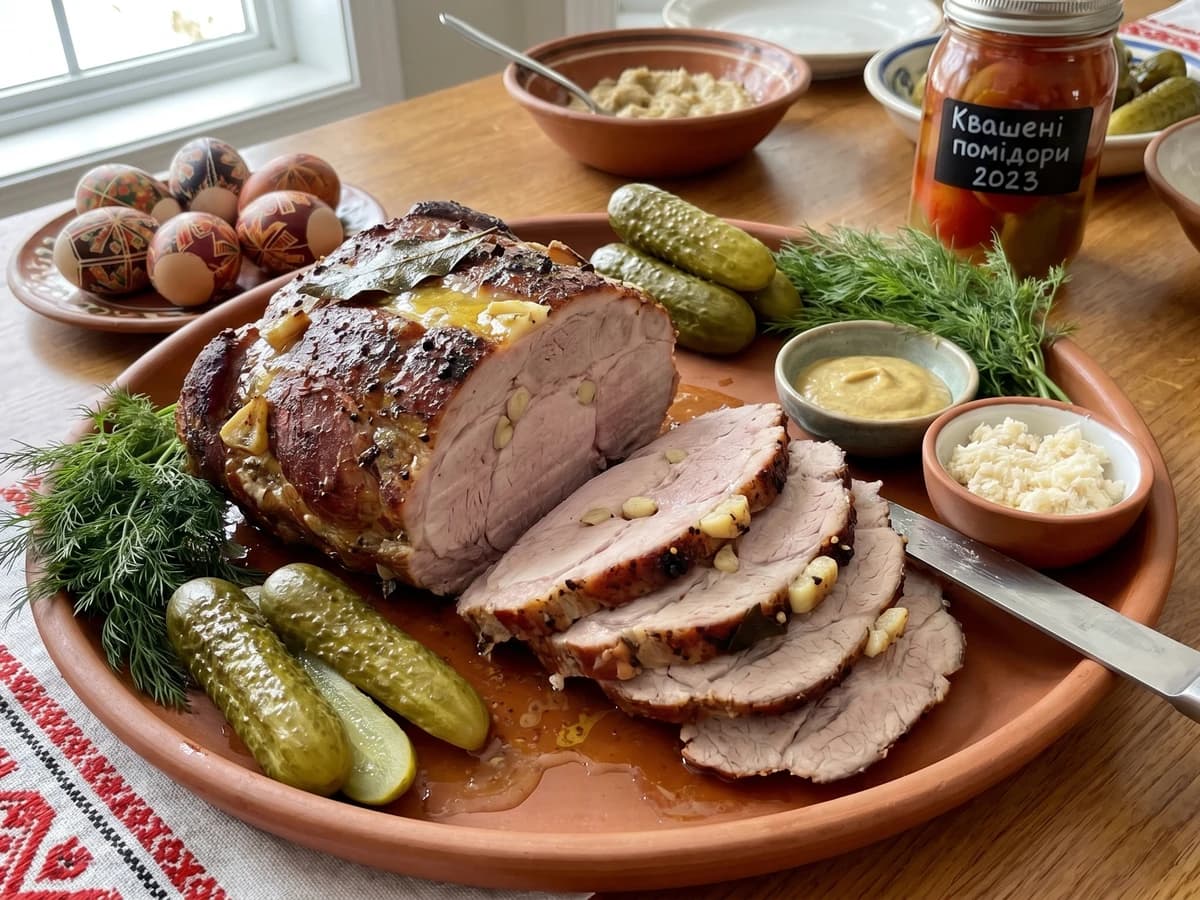
Buzhenyna (буженина, garlic-studded roast pork)
A whole pork neck takes garlic into little knife pockets, roasts until the crust goes dark and fragrant, then rests overnight so every cold slice tastes better than shop ham.
A cooking platform built around craft, culture, and the stories behind what we eat.
Created by
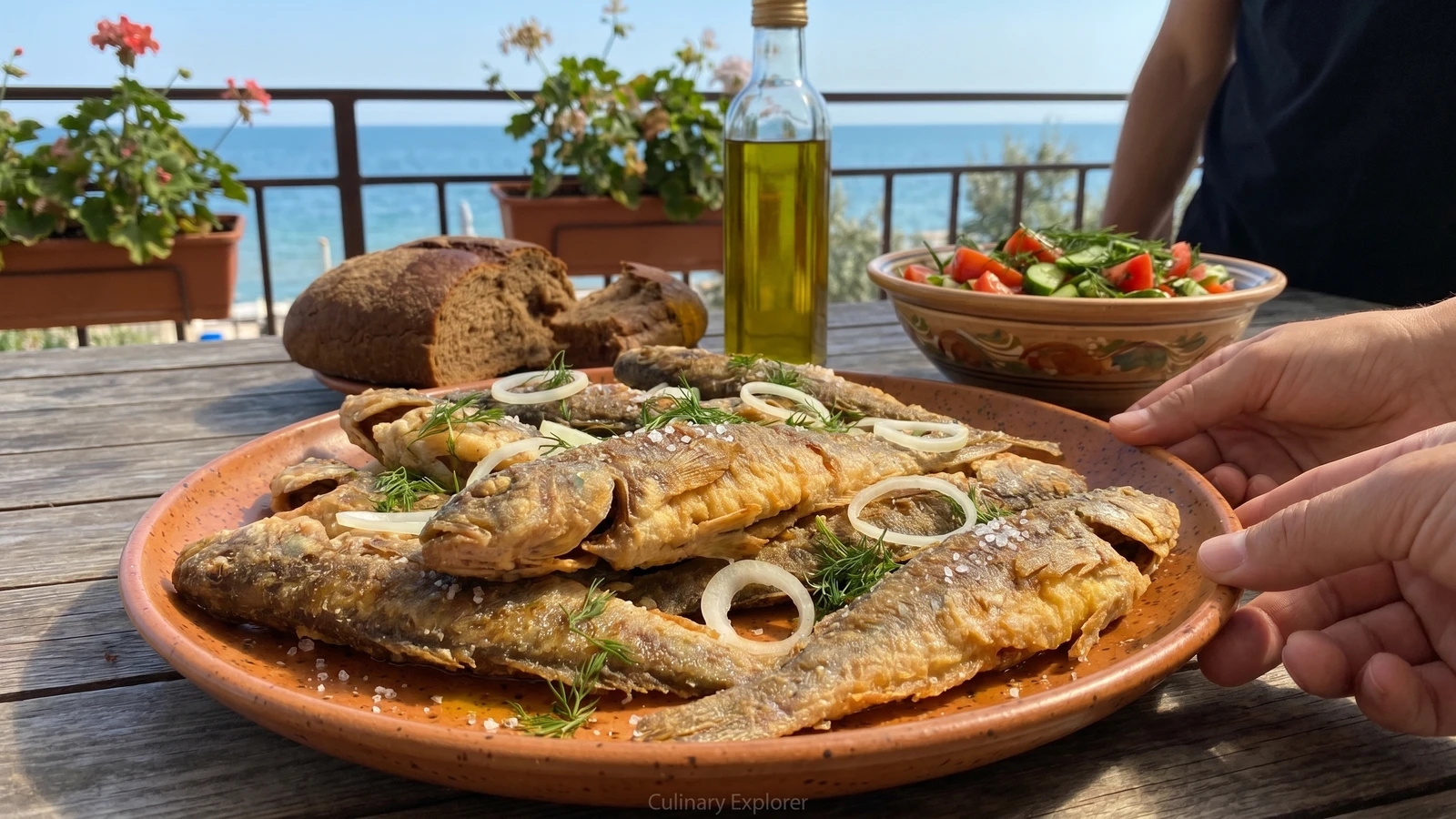
The Azov coast teaches thrift with a frying pan: small gobies, flour-dusted and loud in sunflower oil, eaten hot enough to singe your fingers, head and tail, with bread waiting.
The smallest fish asks the biggest confidence from you: eat it head to tail. These little Azov gobies go into flour looking plain and stubborn, then hit sunflower oil with a dry angry crackle and come out bronze, salty, and crisp enough that the bones stop being a problem and become part of the bite.
This is not polite seafood. It belongs to the Azov coast, to Berdiansk and Mariupol kitchens, to seaside flats with sand still near the door, to a plate set down in the middle where everyone reaches at once. My father would call this enough for eight guests or one hungry Ukrainian, then take the best tail himself.
The one thing that decides the dish is dryness before flour. Salt the cleaned fish, let it give up its wetness, then pat until the paper stops sticking; wet fish softens under its coat, dry fish fries. Listen for the oil, lively but not smoking, a steady rush around each fish. Aunt Nadia wrote only "until it sounds right," which is rude in a recipe and perfect in a pan.
If you can't find gobies, use smelt, sprats, small sardines, or whitebait. It is a bit more modern, and not the same coast, but the method still knows what it is doing. Fry a heap. There is no tradition of a polite little plate.
Bychky, literally "little bulls" for their blunt heads, are small gobies of the Black Sea and Azov basin and one of the everyday fish of Pryazovia, the Ukrainian Azov coast around Mariupol, Berdiansk, and Henichesk. The Sea of Azov is shallow and historically rich with them, so markets sold gobies by the heap, fresh for frying in summer and salted or dried for winter. Since 2014, and especially after 2022, occupation, war, and ecological damage have broken ordinary access to that coast, which is why diaspora kitchens often make the same pan with smelt, sprats, or small sardines.
Quantity
1 kg
8 to 12 cm, or smelt, sprats, or small sardines
Quantity
1 1/2 teaspoons
divided
Quantity
150g
Quantity
1/2 teaspoon
freshly ground
Quantity
1/2 teaspoon
Quantity
200ml
for shallow frying, refined or lightly refined if your green oil smokes quickly
Quantity
1 small bunch
roughly chopped
Quantity
1 small
very thinly sliced
Quantity
to serve
Quantity
to serve
Quantity
to serve
| Ingredient | Quantity |
|---|---|
| small fresh Azov gobies8 to 12 cm, or smelt, sprats, or small sardines | 1 kg |
| fine sea saltdivided | 1 1/2 teaspoons |
| plain flour | 150g |
| black pepperfreshly ground | 1/2 teaspoon |
| sweet paprika (optional) | 1/2 teaspoon |
| sunflower oilfor shallow frying, refined or lightly refined if your green oil smokes quickly | 200ml |
| dillroughly chopped | 1 small bunch |
| red onion (optional)very thinly sliced | 1 small |
| dark rye bread | to serve |
| tomato and cucumber salad with unrefined green sunflower oil | to serve |
| lemon wedges (optional) | to serve |
If the fishmonger has not done it, scrape the fish lightly if the scales feel rough, slit each belly, and pull out the guts. For very small gobies, leave the heads and tails on; for larger fish, remove the heads if you prefer. Rinse briefly, then stop. They need to be clean, not waterlogged.
Toss the cleaned fish with 1 teaspoon of the salt and set them in a colander over a bowl while they give up a little moisture. Pat them dry with kitchen paper until the skin feels tacky rather than wet. This is the step that does not forgive laziness. Dry fish fries; wet fish sulks.
Mix the flour with the remaining salt, black pepper, and paprika if using. Dredge the fish a handful at a time, pressing flour into the bellies and around the fins, then shake off more than you think you should. You want a thin dusty coat, not a dumpling jacket.
Pour sunflower oil into a wide heavy pan to the depth of a little finger nail. Heat it until a pinch of flour fizzes at once and turns pale gold, but the oil is not smoking. If your unrefined green sunflower oil darkens too fast, don't be heroic; use refined sunflower oil for the frying and save the green oil for the tomato salad. Ukraine in a bottle of oil deserves to taste clean.
Lay the fish into the oil in one layer, away from your hand, and give them space. The sound should be busy and sharp at first, then settle into a steadier crackle as the flour cooks. Turn once when the underside is bronze and the tails have curled. They're ready when the crust is freckled brown, the fins are crisp, and the smell changes from raw flour to toasted seed and clean sea.
Lift the fish onto a rack or paper-lined tray and salt them while the oil still shines on the crust. Pile them onto a big plate with dill and raw onion, if you like it, then eat immediately with dark bread and a tomato-cucumber salad dressed in green sunflower oil. Fingers are the right tool.
1 serving (about 360g)
Culinary guides, cultural storytelling, and the editorial depth that makes cooking meaningful.
Discover Culinary ExplorerChef Lesia
A whole pork neck takes garlic into little knife pockets, roasts until the crust goes dark and fragrant, then rests overnight so every cold slice tastes better than shop ham.

Chef Lesia
Small Azov gobies go into tomato bright as market cloth and come out soft enough that the bones give up. This is Mariupol food: cheap, red, generous, and better tomorrow.

Chef Lesia
The first sound is the meat against the board: flat, sharp, changing as the fibres loosen. Fry the cutlets fast, then let onion gravy do the soft finishing.

Chef Lesia
A heap of tiny silver fish becomes supper by the oldest Odesa trick: clean them, press them together, fry until the edges crackle, and let lemon and dill do the talking.