Chef Lupita
Birria Tacos with Consome
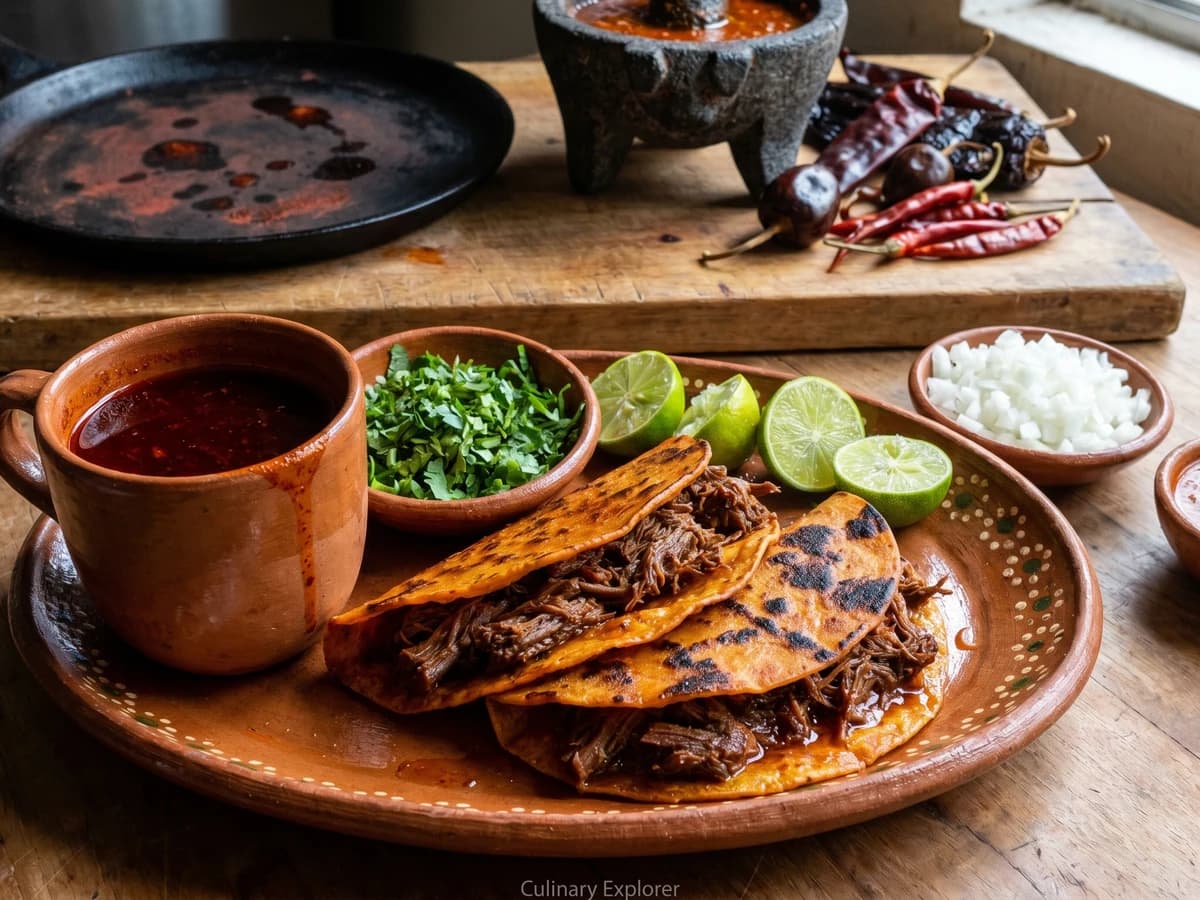
Jalisco's goat birria, born around Cocula and carried into Guadalajara's markets, slow-braised in ancho, guajillo, cascabel, and chile de arbol, then tucked into corn tortillas crisped in its own red fat.
A cooking platform built around craft, culture, and the stories behind what we eat.

Created by
Two paper-thin flour tortillas from the Noroeste pressed around ham, queso asadero, and a smear of pinto beans, crisped on a lard-slicked comal until the cheese pulls in long strings.
Sincronizadas belong to the north. To Chihuahua, Sonora, Coahuila, Nuevo León, the states where the flour tortilla is not a Tex-Mex shortcut but a regional birthright. The wheat grew where the corn struggled. The tortilla de harina is what the Noroeste cooks built instead, and the sincronizada is what they made when they wanted something fast, hot, and filling on a weeknight or after a long day.
This is not a quesadilla. A quesadilla is one tortilla folded over cheese. A sincronizada is two tortillas pressed flat with ham and cheese between them, synchronized, which is where the name comes from. The order of the layers matters. Beans on the bottom tortilla so the cheese has something to anchor to. Ham next. Queso asadero on top, because asadero is the cheese that melts the way this dish needs it to melt: long strings, no graininess, a clean pull when you lift a wedge off the plate. Chihuahua cheese works. Oaxaca string cheese works in a pinch. Cheddar does not. I will say it once and not apologize: there is no yellow cheese in northern Mexican cooking.
The lard is not optional. The flour tortilla browns differently in manteca than it does in oil or butter. It blisters. It develops the dark spots that tell you the comal was hot enough. My mother did not make sincronizadas. She was from Jalisco and we ate corn tortillas in our house. I learned this dish from a senora in Hermosillo who fed her grandchildren on a cast iron comal balanced over a propane burner in her courtyard, with a small clay pot of lard beside her and a jar of pickled chiles within reach. Asi se hace y punto.
The flour tortilla is a Noroeste creation born from the wheat that Spanish missionaries planted in the arid lands of Sonora, Chihuahua, and the rest of northern Mexico beginning in the 17th century, where corn was harder to cultivate at scale than in the central and southern valleys. The sincronizada itself is a 20th-century dish, popularized in the cafés and loncherías of northern Mexico and Mexico City as a quick, affordable lunch built around three ingredients that were widely available after the postwar expansion of industrial ham production: flour tortillas, sliced ham, and melting cheese. The name 'sincronizada' references the synchronized layering of the two tortillas, distinguishing it from the quesadilla (one tortilla folded) and the gringa (a sincronizada made with al pastor pork instead of ham, born in the taquerías of Mexico City).
Quantity
8
8-inch, the thinnest you can find or make
Quantity
1 cup
warm and loose enough to spread
Quantity
8 ounces (about 2 cups)
shredded
Quantity
8 thin slices
trimmed to fit the tortilla
Quantity
2 tablespoons
for the comal
Quantity
for serving
Quantity
for serving
Quantity
for serving
Quantity
for serving
| Ingredient | Quantity |
|---|---|
| thin flour tortillas (tortillas de harina)8-inch, the thinnest you can find or make | 8 |
| refried pinto beanswarm and loose enough to spread | 1 cup |
| queso asaderoshredded | 8 ounces (about 2 cups) |
| good cooked ham (jamón de pierna)trimmed to fit the tortilla | 8 thin slices |
| manteca de cerdo (pork lard)for the comal | 2 tablespoons |
| salsa de chiltepín (optional) | for serving |
| pickled jalapeños and carrots (optional) | for serving |
| lime wedges (optional) | for serving |
| sliced avocado (optional) | for serving |
Warm the refried pinto beans in a small saucepan over low heat until they are spreadable, not stiff. If they are too thick, loosen them with a tablespoon of warm water or a little bean broth. Set a heavy cast iron comal or wide skillet over medium heat. The comal needs to be hot before the first tortilla touches it. A cold comal gives you a soggy sincronizada and that is not what we are making.
Lay one flour tortilla flat on the counter. Spread two tablespoons of warm refried beans evenly across the surface, leaving a half-inch border. Lay two slices of ham on top, edge to edge. Scatter a generous handful of shredded queso asadero over the ham, about half a cup. Cap with a second tortilla and press lightly so the beans hold everything together. Repeat with the remaining tortillas. The order matters: beans on the bottom for grip, ham next, cheese on top so it melts down through the ham.
Smear a teaspoon of manteca across the hot comal. Lay one sincronizada on the comal and press down with a wide spatula. Cook for two to three minutes. Lift an edge with the spatula. The bottom tortilla should be golden brown with dark blistered spots. The cheese underneath should be starting to melt. La manteca es el sabor. Butter will not give you the same browning. Vegetable oil will not give you the same flavor. Use the lard.
Slide the spatula all the way under the sincronizada and flip in one motion. Add another teaspoon of manteca to the comal beside it if the pan looks dry. Press down again with the spatula. Cook for another two to three minutes, until the second tortilla matches the first: golden, blistered, crisp at the edges. The cheese should be fully melted and starting to crawl out the sides. That is the signal. Pull it off the comal.
Transfer the sincronizada to a wooden board. Let it rest for thirty seconds, no longer. Cut into four wedges with a sharp knife or a pizza cutter. The cheese should pull in long strings between the pieces. Serve right away with salsa de chiltepín, pickled jalapeños, lime, and avocado on the side. Sincronizadas wait for nobody. The moment they cool, the tortilla loses its crisp and the cheese seizes up. Eat them hot or do not bother.
1 serving (about 245g)
Culinary guides, cultural storytelling, and the editorial depth that makes cooking meaningful.
Discover Culinary ExplorerChef Lupita
Jalisco's goat birria, born around Cocula and carried into Guadalajara's markets, slow-braised in ancho, guajillo, cascabel, and chile de arbol, then tucked into corn tortillas crisped in its own red fat.
Chef Lupita
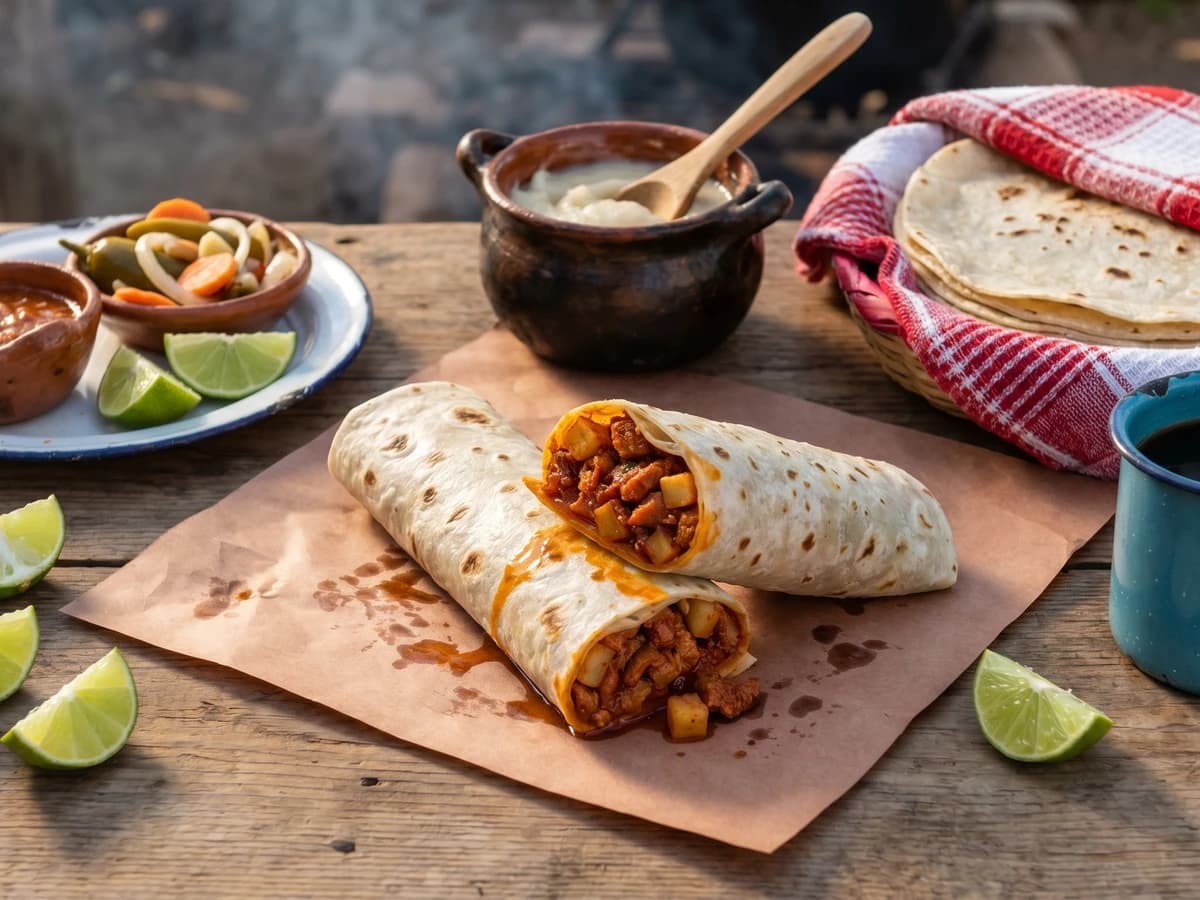
Sonora's working morning burrito: chicharrón de cáscara stewed in chile colorado with diced potato, rolled tight in a paper-thin tortilla sobaquera and eaten standing up at the carreta.
Chef Lupita
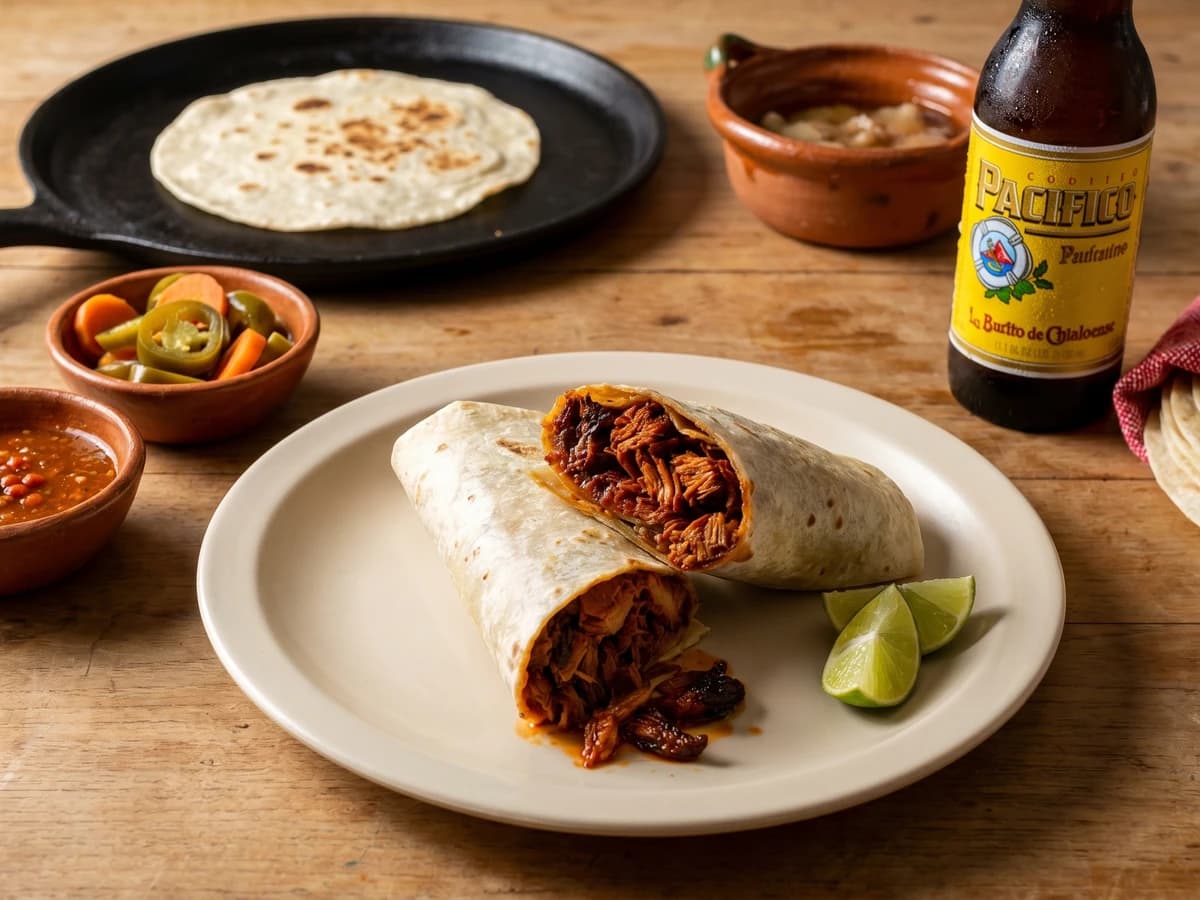
Mocorito's pork chilorio, shredded and confited in lard with chile ancho and pasilla, rolled into a thin handmade flour tortilla. The burrito Sinaloa sends out into the world.
Chef Lupita
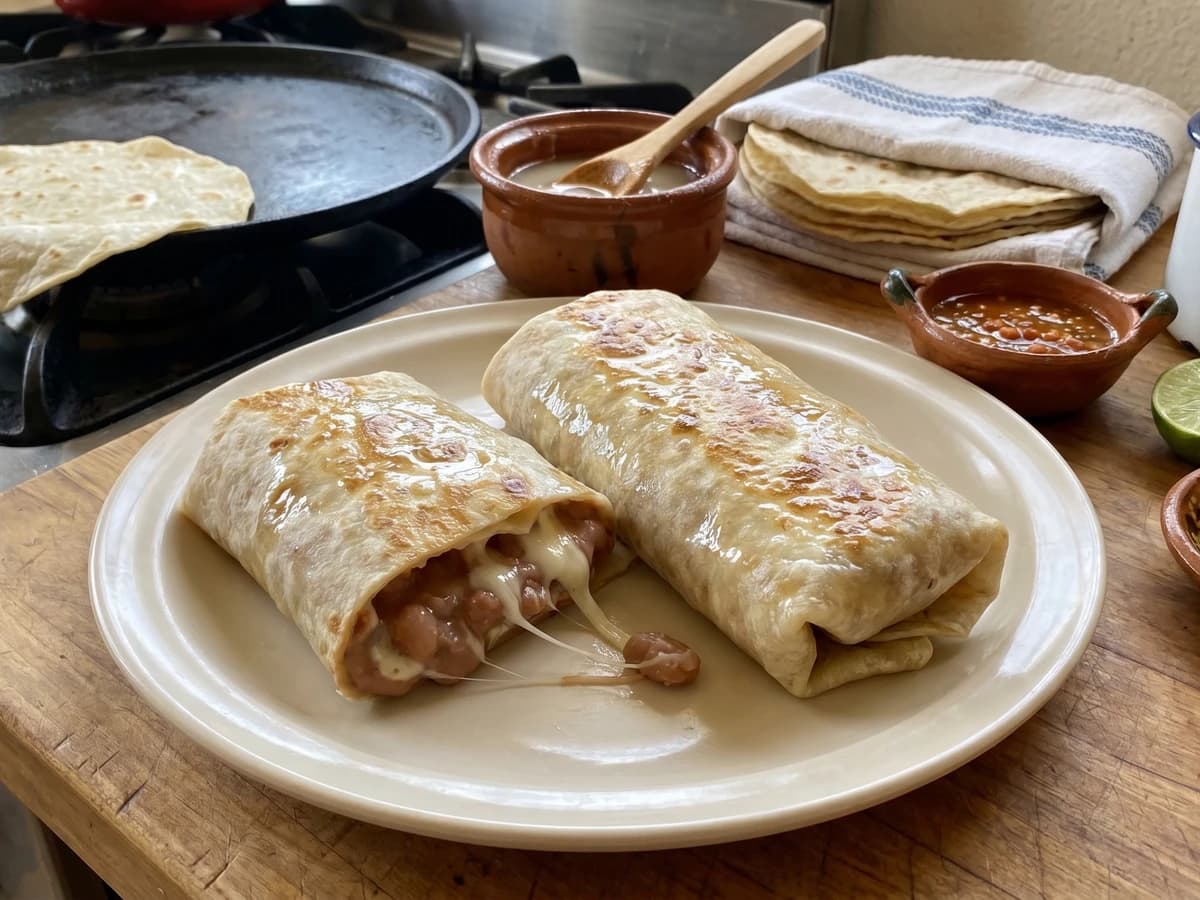
Sonora's morning burrito of mashed pinto frijoles puercos and melted queso asadero, wrapped in a paper-thin sobaquera and seared on the comal until the cheese pulls in long strings.