Chef Lesia
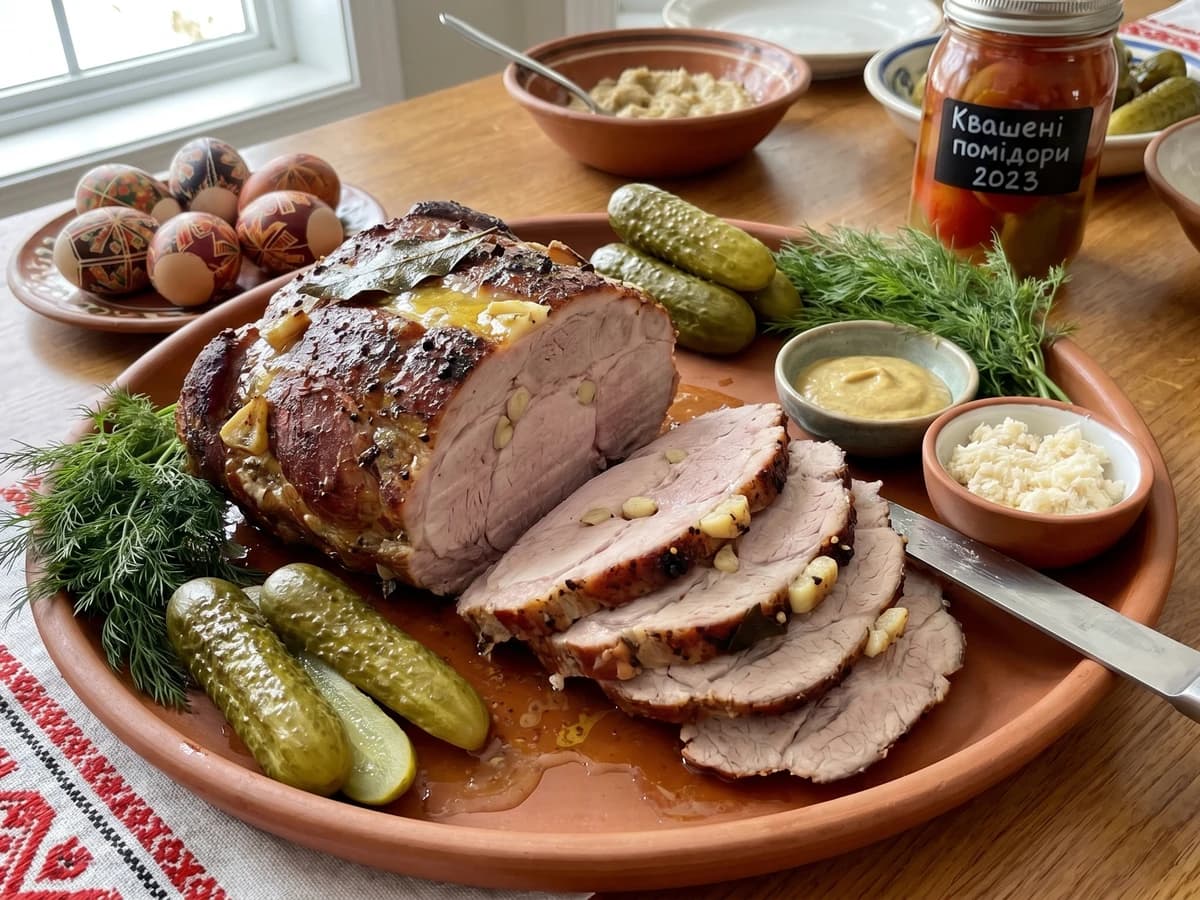
Buzhenyna (буженина, garlic-studded roast pork)
A whole pork neck takes garlic into little knife pockets, roasts until the crust goes dark and fragrant, then rests overnight so every cold slice tastes better than shop ham.
A cooking platform built around craft, culture, and the stories behind what we eat.

Created by
Fish changes under the knife. Not paste, not mince, but small clean pieces that hold their own in the pan and make a patty with chew, juice, and a little river left in it.
Fish changes under the knife. The flesh goes from slippery sheets to small clean pieces, irregular and pearly, and that roughness is the whole pleasure of sichenyky. Put it through a machine and you get something smoother, useful on a tired Tuesday, yes, but quieter. Chop it by hand and every bite remembers the fish.
These are the patties I think of when the market has pike, zander, carp, hake, or any firm white fish that smells clean and cold, never tired. Onion goes in softened, not raw, because raw onion shouts over delicate fish; a little bread holds the juices; egg gathers everything together; dill wakes it up. Aunt Nadia would have written, "fry until it sounds right," which is annoying until you hear it: the pan starts angry, then settles into a steady dry crackle as the crust forms.
The one thing that decides the dish is texture. Chop, don't mash. Leave the mixture coarse enough that you can see the fish, then rest it so the bread drinks up the onion sweetness and the patties hold without being bullied. Make a full pan. They are good hot with potatoes and smetana, better cold the next day, stolen from the fridge with a salted cucumber in the other hand.
Sichenyky take their name from the Ukrainian verb sichy, to chop, and the dish belongs to the older home-kitchen practice of cutting meat or fish by hand before the mincer became common. Fish versions are especially at home along the Dnipro, the southern rivers, and the Black Sea steppe, where pike, carp, zander, gobies, and later market hake all found their way into everyday patties. Soviet catering turned many chopped cutlets into smooth standardized mince, but the hand-cut version keeps the older texture alive.
Quantity
900g
skinless and boneless, patted dry
Quantity
1 medium
finely diced
Quantity
2 tablespoons, plus more for frying
Quantity
80g
crusts removed
Quantity
80ml
Quantity
1 large
Quantity
2 tablespoons, plus more for coating
Quantity
1 small bunch
finely chopped
Quantity
1 teaspoon, plus more to taste
Quantity
1/2 teaspoon
freshly ground
Quantity
1 teaspoon
Quantity
2 tablespoons
for the mixture
Quantity
to serve
Quantity
to serve
| Ingredient | Quantity |
|---|---|
| firm white fish filletsskinless and boneless, patted dry | 900g |
| onionfinely diced | 1 medium |
| unrefined sunflower oil | 2 tablespoons, plus more for frying |
| day-old white breadcrusts removed | 80g |
| milk or water | 80ml |
| egg | 1 large |
| fine breadcrumbs | 2 tablespoons, plus more for coating |
| dillfinely chopped | 1 small bunch |
| fine sea salt | 1 teaspoon, plus more to taste |
| black pepperfreshly ground | 1/2 teaspoon |
| lemon zest (optional) | 1 teaspoon |
| smetana (sour cream) (optional)for the mixture | 2 tablespoons |
| smetana (optional) | to serve |
| salted cucumbers or fermented tomatoes (optional) | to serve |
Warm 2 tablespoons sunflower oil in a small pan and cook the onion gently until it turns translucent, sweet-smelling, and soft enough to press with a spoon. You're not browning it. Raw onion fights the fish; softened onion becomes part of its sweetness. Scrape it onto a plate and let it cool.
Tear the bread into a bowl and pour over the milk or water. Let it drink, then squeeze it firmly in your fist so it is damp, not dripping. This little piece of bread is not filler. It catches the fish juices and keeps the patties tender.
Check the fish with your fingers for bones, then pat it very dry. Chop it with a sharp knife into small uneven pieces, some almost minced, some the size of lentils. Stop before it becomes paste. You should still be able to see fish, and the board should smell clean and faintly sweet, never sour.
Put the chopped fish in a bowl with the cooled onion, squeezed bread, egg, breadcrumbs, dill, salt, pepper, lemon zest if using, and smetana if you want a softer patty. Mix with your hand until it clings together when pressed, then rest it in the fridge until it firms and the smell turns rounder, onion and dill no longer separate from the fish.
Wet your hands and shape the mixture into oval patties, each about the size of a small plum flattened slightly. Coat lightly in breadcrumbs, pressing just enough so the crumbs hold. Don't pack them hard. A bullied fish patty eats like rubber, and nobody came to the table for that.
Film a wide pan with sunflower oil and set it over medium heat. Lay in the patties with space between them and fry until the underside is deep golden and the pan's sound changes from wet sputter to a steadier crisp crackle. Turn once and cook the second side the same way. The patties should feel springy at the center, with clear juices at the edge.
Move the sichenyky to a warm plate and scatter over a little more dill. Serve with boiled potatoes, buckwheat, smetana, and something sour from a jar: salted cucumbers, kvasheni pomidory, or a spoonful of pelustka, the beet-pink cabbage pickle whose name means petal. Hot is lovely. Cold tomorrow is not a compromise.
1 serving (about 195g)
Culinary guides, cultural storytelling, and the editorial depth that makes cooking meaningful.
Discover Culinary ExplorerChef Lesia
A whole pork neck takes garlic into little knife pockets, roasts until the crust goes dark and fragrant, then rests overnight so every cold slice tastes better than shop ham.

Chef Lesia
Small Azov gobies go into tomato bright as market cloth and come out soft enough that the bones give up. This is Mariupol food: cheap, red, generous, and better tomorrow.

Chef Lesia
The first sound is the meat against the board: flat, sharp, changing as the fibres loosen. Fry the cutlets fast, then let onion gravy do the soft finishing.

Chef Lesia
A heap of tiny silver fish becomes supper by the oldest Odesa trick: clean them, press them together, fry until the edges crackle, and let lemon and dill do the talking.