
Chef Jeong-sun
Albaechu-mul-kimchi (Baby Cabbage Water Kimchi)
Tender baby napa cabbage in a clear pear-garlic brine, lightly fermented until the broth turns clean and bright, the summer kimchi a beginner can make without a kimjang floor.
A cooking platform built around craft, culture, and the stories behind what we eat.
Created by
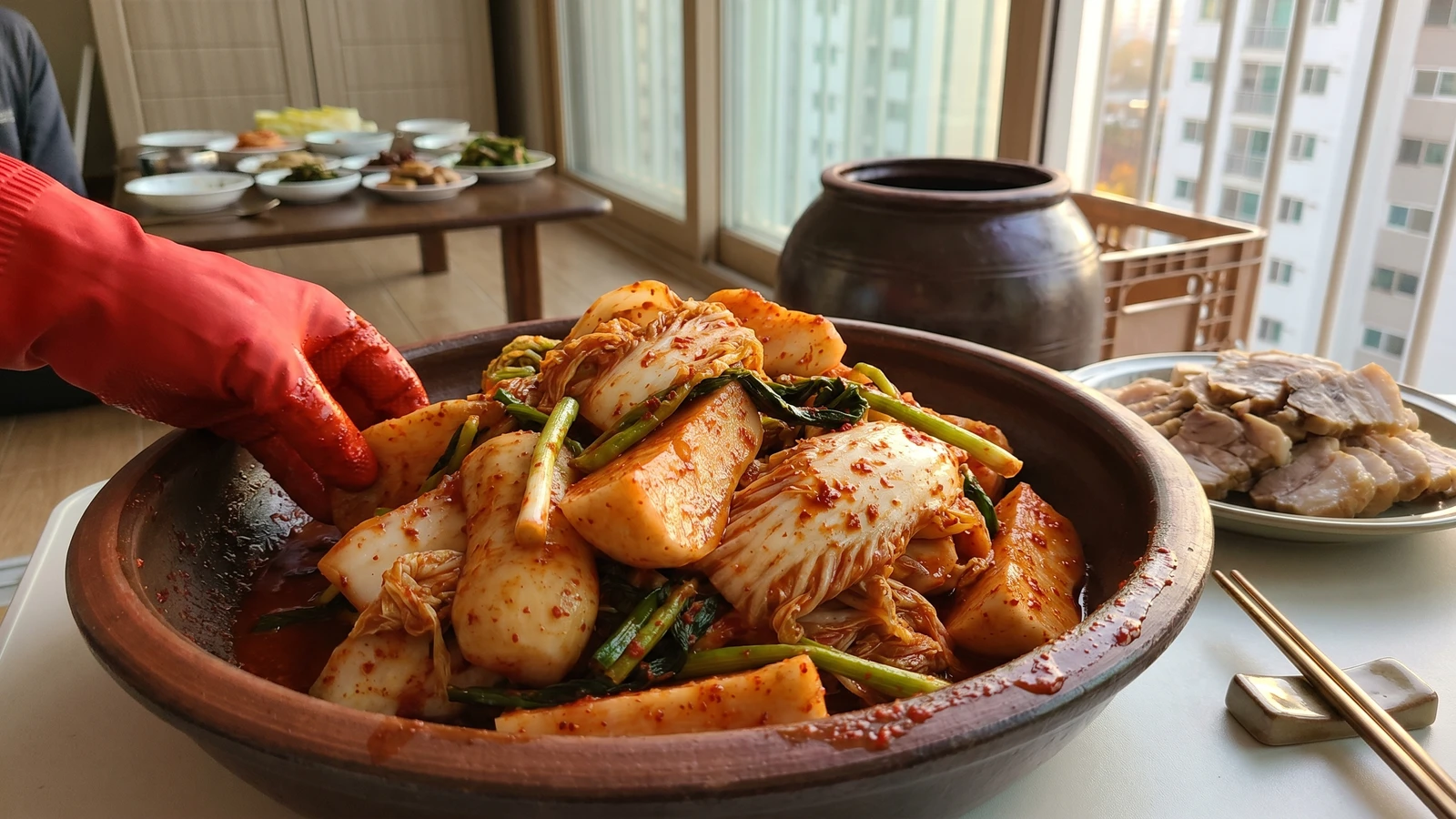
A rough-cut kimjang kimchi of radish and cabbage that stays crunchier than baechu kimchi, born from trimmings and now served proudly beside bossam and bowls of rice.
People hear that seokbakji began from kimjang trimmings and think it is leftover kimchi. No. Trimmings are not scraps when a careful hand cuts them on purpose. After the cabbages for baechu-kimchi were stacked, my teacher put the rough radish pieces and loose cabbage ribs into a separate basin and said, this one should keep its bite.
The dish lives or dies by size and salt. Cut the radish in rough blocks large enough to crunch, and cut the cabbage wider so it does not disappear after fermentation. Salt until the cabbage stems bend without snapping and the radish tastes seasoned halfway through. Then drain hard. If you leave extra water, the paste slips off and the kimchi ferments thin, with no grip.
Tonight it will ask you for two hours of salting, twenty minutes of mixing and packing, and patience until tomorrow. That is all. It is looser than baechu-kimchi, more relaxed at the table, especially beside suyuk or bossam, where the radish bite cuts the richness. Notebook 41 says 2.4 kilograms vegetables to 80 grams coarse salt and 60 grams gochugaru. Write it down. Memory is a borrowed bowl.
Seokbakji (섞박지) takes its name from 섞다 (seokda, to mix): radish, cabbage pieces, and sometimes kimjang offcuts are seasoned together instead of being packed leaf by leaf. It belongs to the late-autumn kimjang economy of Korean homes, where trimmed cabbage leaves, radish ends, and extra seasoning paste were made into a looser kimchi for quicker eating. On the modern table it is especially familiar beside boiled pork such as suyuk or bossam, and in soup restaurants where crunchy radish kimchi balances rich beef broth.
Quantity
1.6kg
scrubbed and cut into rough 4cm chunks about 1.5cm thick
Quantity
800g
core removed and cut into 5cm pieces
Quantity
80g, about 5 tablespoons
divided
Quantity
2 cups
divided
Quantity
1 tablespoon
Quantity
3/4 cup
for rice paste
Quantity
60g, about 2/3 cup
Quantity
1/4 cup
Quantity
2 tablespoons
minced
Quantity
8 large cloves
minced
Quantity
2 teaspoons
grated
Quantity
1/2, about 120g
peeled and grated
Quantity
1/2 small, about 80g
grated
Quantity
2 teaspoons
Quantity
5
cut into 4cm lengths
Quantity
60g
cut into 4cm lengths
Quantity
1/2 cup cool boiled water mixed with 1/2 teaspoon sea salt and 1 teaspoon fish sauce
| Ingredient | Quantity |
|---|---|
| Korean radish (mu)scrubbed and cut into rough 4cm chunks about 1.5cm thick | 1.6kg |
| napa cabbagecore removed and cut into 5cm pieces | 800g |
| Korean coarse sea salt (cheonilyeom)divided | 80g, about 5 tablespoons |
| water for saltingdivided | 2 cups |
| sweet rice flour (chapssal-garu) | 1 tablespoon |
| water or mild kelp brothfor rice paste | 3/4 cup |
| gochugaru (Korean chili flakes) | 60g, about 2/3 cup |
| anchovy fish sauce (myeolchi-aekjeot) | 1/4 cup |
| salted shrimp (saeujeot)minced | 2 tablespoons |
| garlicminced | 8 large cloves |
| fresh gingergrated | 2 teaspoons |
| Korean pear or sweet applepeeled and grated | 1/2, about 120g |
| oniongrated | 1/2 small, about 80g |
| sugar | 2 teaspoons |
| scallionscut into 4cm lengths | 5 |
| Korean mustard greens (gat) (optional)cut into 4cm lengths | 60g |
| optional packing brine (optional) | 1/2 cup cool boiled water mixed with 1/2 teaspoon sea salt and 1 teaspoon fish sauce |
Whisk the sweet rice flour with 3/4 cup water or mild kelp broth in a small pot. Cook over medium-low heat, stirring, until it turns glossy and lightly thick, 3 to 5 minutes. Cool it completely. The rice paste is not there to make the kimchi heavy; it helps the gochugaru cling to rough radish and cabbage, and it gives fermentation a little food.
Scrub the radish well and peel only tough or bruised spots. Cut it into irregular 4cm chunks, about 1.5cm thick, so every piece has a flat face for the seasoning and enough body to stay crisp. Cut the napa cabbage into 5cm pieces, keeping both leaf and rib. Small pieces ferment fast and lose their bite; this kimchi wants a rough hand, not a careless one.
Put the radish in one large bowl with 50g of the salt and 1 cup water. Put the cabbage in another bowl with the remaining 30g salt and 1 cup water. Toss both well, then turn them every 20 minutes. Salt the radish for about 1 hour 30 minutes and the cabbage for about 1 hour. The cabbage stem should bend without snapping, and a radish piece should taste lightly salty toward the center.
Rinse the radish and cabbage once under cold running water, just enough to remove harsh surface salt. Do not soak them. Drain in a colander for 30 minutes, tossing once halfway through. Taste a cabbage rib after draining. It should be pleasantly seasoned, not bland and not sharp. Water left clinging here will loosen the paste later, so give the draining its full time.
In a very large bowl, stir together the cooled rice paste, gochugaru, fish sauce, minced saeujeot, garlic, ginger, grated pear, grated onion, and sugar. Let it sit 10 minutes so the chili flakes swell and deepen in color. The paste should taste a little saltier than you would eat by itself, because the vegetables will soften it. It should be thick enough to smear, not pour.
Add the drained radish to the seasoning first and rub the paste over every cut face with a gloved hand. Radish is dense and needs this direct attention. When the white surfaces are stained red, add the cabbage, scallions, and mustard greens if using. Fold gently until everything is coated. Do not crush the cabbage. It has already done its work in the salt.
Pack the kimchi into a clean 3-liter glass jar or onggi, pressing down firmly to remove air pockets but leaving at least 5cm headspace. After 30 minutes, liquid should begin to collect around the pieces. If the top looks dry, add the optional packing brine 2 tablespoons at a time, only until the surface is moist. Too much added brine makes seokbakji weak; enough keeps the fermentation even.
Set the jar on a tray and close it loosely, or close it fully and open it once a day to release gas. Leave it at cool room temperature, about 18 to 21C, for 18 to 24 hours. In a cold winter kitchen it may need 36 hours; in a warm room, check at 12 hours. When you see small bubbles in the brine and the smell moves from raw garlic to sour and savory, press the kimchi down and refrigerate it.
Start eating after 3 days in the refrigerator, when the radish is still loud under the teeth and the cabbage has softened just enough. It is best from day 5 to day 14, served cold beside bossam, suyuk, seolleongtang, or a plain bowl of rice. Use clean chopsticks every time. Kimchi is generous, but it is still alive food and should be treated cleanly.
1 serving (about 215g)
Culinary guides, cultural storytelling, and the editorial depth that makes cooking meaningful.
Discover Culinary ExplorerChef Jeong-sun
Tender baby napa cabbage in a clear pear-garlic brine, lightly fermented until the broth turns clean and bright, the summer kimchi a beginner can make without a kimjang floor.

Chef Jeong-sun
The kimchi from before chili, salted napa cabbage packed with radish, pear, jujube, and pine nuts in a clear brine that turns quietly tart in the jar.

Chef Jeong-sun
A pale summer cucumber kimchi, split and stuffed with radish and chives, then held in a cool pear brine so the cucumber stays clean, crunchy, and plainly itself.

Chef Jeong-sun
Flat spring bomdong cabbage, lightly brined and tucked into a clear pear-radish kimchi broth, made without chili and eaten young while the leaves still taste like spring.