
Chef Takumi
Awamori Mizuwari (泡盛水割り, awamori with water)
Awamori mizuwari is not a trick of the bar. It is three parts awamori, seven parts cold water, and enough patience to let the black-kōji aroma open.
A cooking platform built around craft, culture, and the stories behind what we eat.
Created by
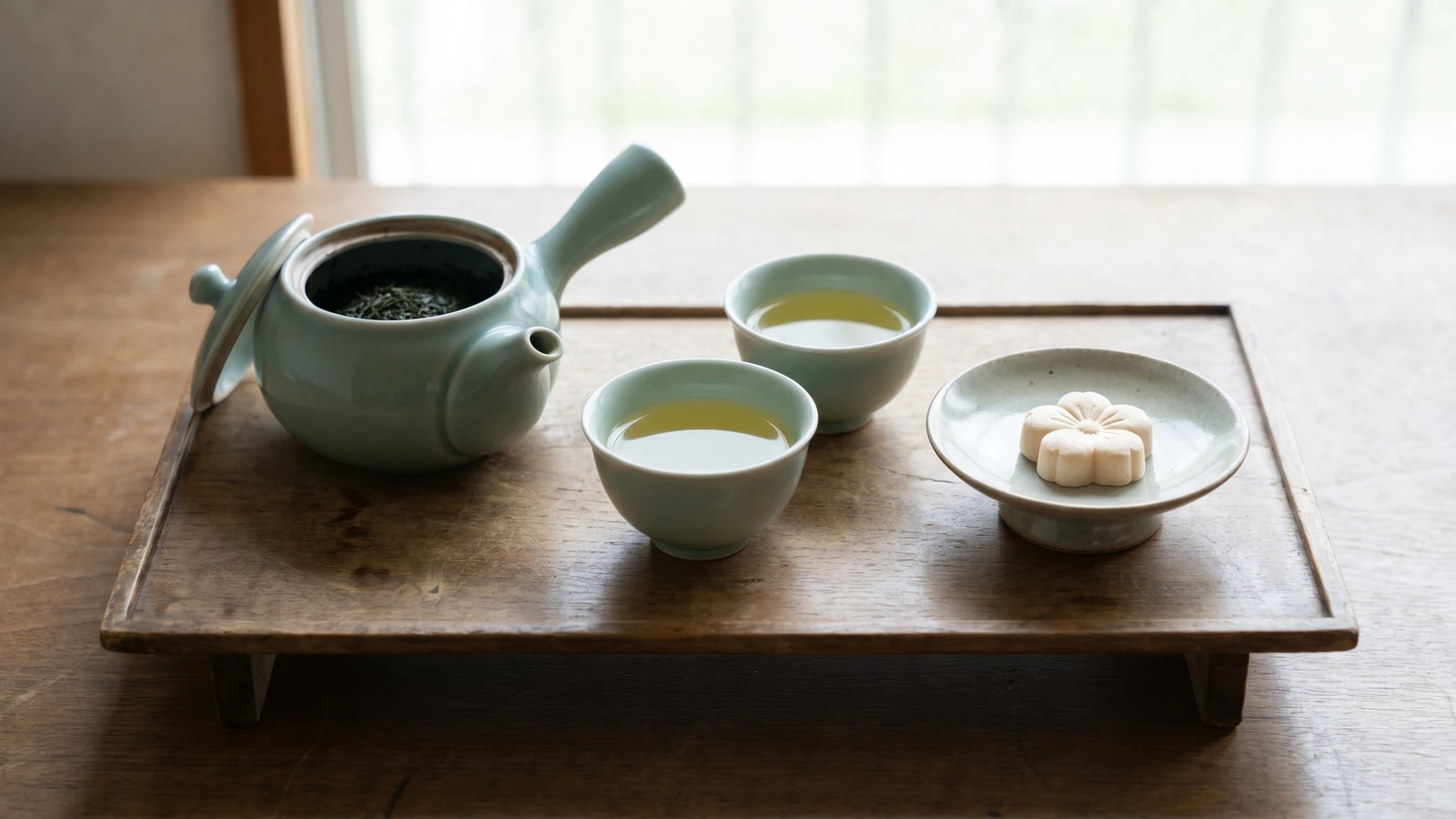
Sencha is everyday tea, but it punishes boiling water. Give the leaves warm water, one measured minute, and the cup turns clear green, softly grassy, and cleanly sweet.
Sencha is the green tea we reach for on an ordinary day, which is exactly why it deserves care. In spring, shincha, the first new tea, is shun, bright and soft from the new leaf. Through the rest of the year, sencha is the quiet cup after rice, after work, after too much talking.
Temperature is the first secret. The sweetness in sencha comes out before the sharper catechins take over, so cooler water gives the cup time to stay gentle. The second secret is dose and time: enough leaf to give the tea its body, then one quiet minute. More water isn't kindness. It only thins the cup and tempts you to steep longer, which is where the roughness begins.
A kyūsu, the small side-handled teapot, makes this easy because it pours fast and holds the leaves back. A small teapot and a fine strainer will do the same work at home. Pour every last drop into the cups, little by little between them, because the last drops are strongest and a wet leaf left drowning keeps brewing. This is honmono made reachable: good leaves, soft water, a cool hand with the kettle, and nothing hidden.
Modern sencha took shape in 1738, when Nagatani Sōen of Ujitawara, near Uji, refined a method of steaming, hand-rolling, and drying fresh leaves into bright green needles. The tea was carried to Edo and sold by the Yamamoto house, and its clear infusion helped make sencha both an everyday drink and the center of senchadō, the literati tea practice that grew in the eighteenth century.
Quantity
6g
freshly opened if possible
Quantity
200ml, plus extra for warming cups
boiled, then cooled to 70 to 80 Celsius
Quantity
1 small piece
for serving
| Ingredient | Quantity |
|---|---|
| sencha leavesfreshly opened if possible | 6g |
| soft waterboiled, then cooled to 70 to 80 Celsius | 200ml, plus extra for warming cups |
| higashi or other wagashi sweet (optional)for serving | 1 small piece |
Bring the soft water to a full boil, then take it off the heat. Boiling first gives you a clean, repeatable starting point, and if your water has a faint tap-water smell, it helps drive that off. Sencha is plain enough that poor water has nowhere to hide.
Pour 200ml of the boiled water into a yuzamashi, a cooling pitcher, or into the serving cups, and let it cool to 70 to 80 Celsius. A thermometer is useful until your hand learns the heat. This is the first secret: hotter water pulls bitterness from the leaf before the sweetness has time to speak.
Put 6g of sencha into a kyūsu, the small side-handled teapot. Use a scale the first few times, because needle-shaped leaves lie about volume. The dose is the second secret: too little leaf tempts you to steep longer, and long steeping is how a gentle cup turns sharp.
Pour the cooled water over the leaves, cover, and steep for 60 to 75 seconds. Leave the pot alone. The leaves will relax, the liquor will turn clear yellow-green, and the aroma will rise from the opened leaf. Deep-steamed fukamushi sencha extracts faster, so give it 30 to 45 seconds instead.
Pour between the two cups a little at a time, back and forth, so both cups have the same strength. Tip the kyūsu gently and pour out the last drops. Those final drops are the richest, and leaving tea around the leaves keeps extracting bitterness while everyone is politely finding a seat.
For a second infusion, add water at 80 to 85 Celsius and steep only 15 to 30 seconds. The leaves are already open, so they give flavor quickly. Pour to the last drop again, and expect a brighter, lighter cup.
1 serving (about 100g)
Culinary guides, cultural storytelling, and the editorial depth that makes cooking meaningful.
Discover Culinary ExplorerChef Takumi
Awamori mizuwari is not a trick of the bar. It is three parts awamori, seven parts cold water, and enough patience to let the black-kōji aroma open.

Chef Takumi
Hot awamori asks for one small discipline: pour the hot water first, then the spirit. Do that, and the glass turns round, fragrant, and calmer than its strength suggests.

Chef Takumi
Bancha is the honest daily cup: late-season leaves, hot water, a short steep, and a clean amber-green liquor that asks for no ceremony to be good.

Chef Takumi
Whole black soybeans, roasted until their skins split, make a clear amber tea with a roasted sweetness and no caffeine. Drink it plain, then eat the softened beans while they still hold their warmth.