Chef Dean
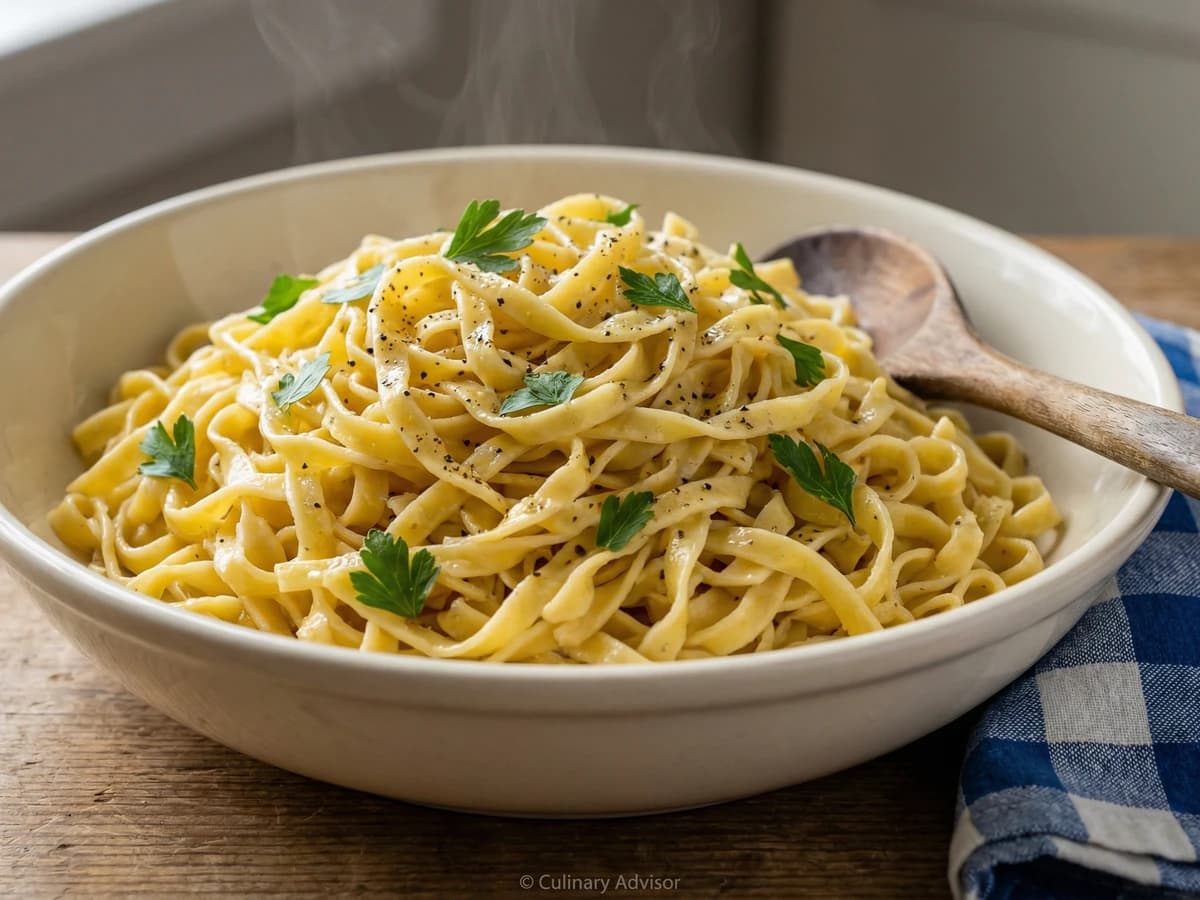
Amish Buttered Egg Noodles
The humblest side dish in the Pennsylvania Dutch tradition, where wide egg noodles and good butter need nothing more than salt and a warm bowl to become the thing everyone remembers from the church supper.
A cooking platform built around craft, culture, and the stories behind what we eat.
Created by
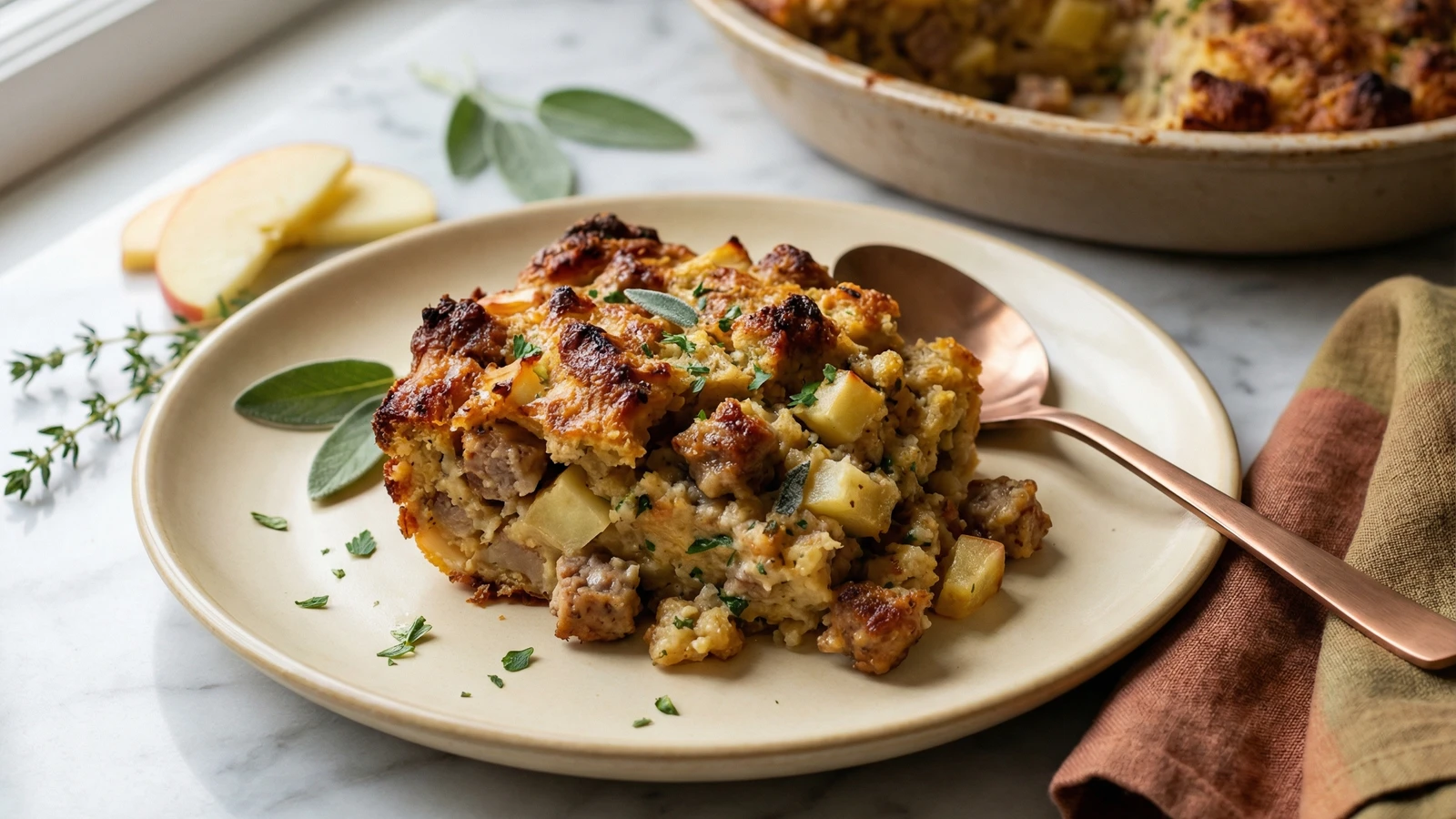
Crusty bread cubes mingled with crumbled Italian sausage and tart apple, bound by sage-perfumed stock and baked until the top shatters golden while the interior stays moist and giving.
Stuffing is the soul of the American Thanksgiving table. Not the turkey, which often disappoints despite our best efforts. The stuffing. This is the dish that absorbs the spirit of the meal, that speaks to abundance and comfort and the particular genius of American home cooking.
I've spent decades refining this version, which owes debts to both Pennsylvania Dutch tradition and Italian-American kitchens where sausage finds its way into everything worth eating. The combination sounds simple because it is. Pork sausage brings fat and fennel. Tart apples cut through that richness. Good bread, properly dried, provides structure. Sage and thyme perfume every bite. These are not exotic ingredients. They are honest ones.
The technique matters more than the recipe. Your bread must be truly dry, almost stale, so it drinks up stock without turning to paste. Your sausage must brown properly, building fond on the bottom of the pan. Your apples must be tart, not sweet, or you'll end up with something closer to dessert. Follow these principles and you'll produce stuffing worthy of the center of your table.
Make it the day before if you can. The flavors deepen overnight. Reheat it covered, then uncover for the final twenty minutes to restore that essential crust. This is a dish that rewards planning, though it forgives improvisation too.
Quantity
1 1/2 pounds
cut into 3/4-inch cubes
Quantity
1 1/2 pounds
casings removed
Quantity
8 tablespoons (1 stick)
divided
Quantity
2 large
diced (about 3 cups)
Quantity
4
diced (about 1 1/2 cups)
Quantity
3 medium
peeled and cut into 1/2-inch cubes
Quantity
4
minced
Quantity
2 tablespoons
chopped
Quantity
1 tablespoon
Quantity
1 teaspoon
Quantity
1/2 teaspoon
Quantity
2 1/2 cups
warmed
Quantity
2
beaten
Quantity
1/2 cup
chopped
| Ingredient | Quantity |
|---|---|
| crusty bread (ciabatta or sourdough)cut into 3/4-inch cubes | 1 1/2 pounds |
| Italian sausage (sweet or hot)casings removed | 1 1/2 pounds |
| unsalted butterdivided | 8 tablespoons (1 stick) |
| yellow onionsdiced (about 3 cups) | 2 large |
| celery stalksdiced (about 1 1/2 cups) | 4 |
| Granny Smith applespeeled and cut into 1/2-inch cubes | 3 medium |
| garlic clovesminced | 4 |
| fresh sagechopped | 2 tablespoons |
| fresh thyme leaves | 1 tablespoon |
| kosher salt | 1 teaspoon |
| freshly ground black pepper | 1/2 teaspoon |
| low-sodium chicken stockwarmed | 2 1/2 cups |
| large eggsbeaten | 2 |
| fresh parsleychopped | 1/2 cup |
Spread bread cubes in a single layer on two rimmed baking sheets. Let them sit uncovered at room temperature overnight, or dry them in a 250°F oven for 45 minutes to an hour, stirring once halfway through. The bread should feel thoroughly dry and light when lifted, with no soft spots remaining. This step cannot be rushed. Moist bread will turn your stuffing into a soggy, pasty disappointment.
Heat a large, heavy skillet (12-inch cast iron is ideal) over medium-high heat. Add the sausage, breaking it into rough crumbles with a wooden spoon. Cook without stirring for the first two minutes, letting it develop color against the hot pan. Then stir and continue cooking until the sausage is browned throughout and no pink remains, about 8 to 10 minutes total. The pan should have a rich layer of fond on the bottom. Transfer sausage to a large bowl, leaving the rendered fat in the skillet.
Reduce heat to medium. Add 4 tablespoons of butter to the sausage fat in the skillet. Once it foams, add the onions and celery with a pinch of salt. Cook, stirring occasionally, until the vegetables soften and the onions turn translucent with golden edges, 10 to 12 minutes. The celery should still have the faintest bite. Add the garlic, sage, and thyme. Stir until fragrant, about one minute. The kitchen should smell like Thanksgiving itself.
Add the apple cubes to the skillet with the aromatics. Toss to combine and cook for 3 to 4 minutes, just until the apples begin to soften at the edges but still hold their shape. They will continue cooking in the oven. You want them to provide textural contrast, not dissolve into the mixture. Transfer the entire contents of the skillet to the bowl with the sausage.
Add the dried bread cubes to the bowl with the sausage and vegetables. Toss gently to distribute everything evenly. In a measuring cup or small bowl, whisk together the warm chicken stock and beaten eggs. Pour this mixture over the bread, tossing as you go to ensure even absorption. The bread should be moistened throughout but not waterlogged. It should hold together when pressed but not drip liquid. Add the parsley, remaining salt, and pepper. Toss once more.
Preheat your oven to 375°F. Use the remaining 4 tablespoons of butter to generously grease a 9x13-inch baking dish (or a 3-quart casserole dish with similar surface area). Transfer the stuffing mixture to the prepared dish, spreading it evenly but not packing it down. The top should have peaks and valleys, irregular terrain that will crisp beautifully. Dot the surface with any remaining butter if desired.
Cover the dish tightly with aluminum foil, sealing the edges. Bake for 35 minutes. During this time, the steam trapped under the foil will cook the stuffing through and meld the flavors. The eggs will set. The bread will absorb the last of the stock.
Remove the foil and continue baking for 25 to 30 minutes more, until the top turns deep golden brown and the edges pull away slightly from the dish, crackling and crisp. The center should feel set when you press it gently. An instant-read thermometer inserted into the center should register at least 165°F. Let the stuffing rest for 10 minutes before serving. This rest allows the structure to firm up, making serving easier.
1 serving (about 380g)
Culinary guides, cultural storytelling, and the editorial depth that makes cooking meaningful.
Discover Culinary ExplorerChef Dean
The humblest side dish in the Pennsylvania Dutch tradition, where wide egg noodles and good butter need nothing more than salt and a warm bowl to become the thing everyone remembers from the church supper.

Chef Dean
Golden-topped, impossibly creamy shredded potato casserole with a shattering cornflake crust. This is the dish that appears at every church supper, potluck, and time of need across the American heartland.

Chef Dean
Golden-topped stuffing with tender, savory bread cubes perfumed by fresh sage and sweet onions. This is the dish people return to year after year, the one that makes Thanksgiving taste like Thanksgiving.

Chef Dean
Plump hominy kernels braised in smoky bacon fat with roasted Hatch chiles, cumin, and a bright hit of lime. This is the side dish that disappears first at every potluck, the one neighbors ask you to bring again and again.