Chef Dean
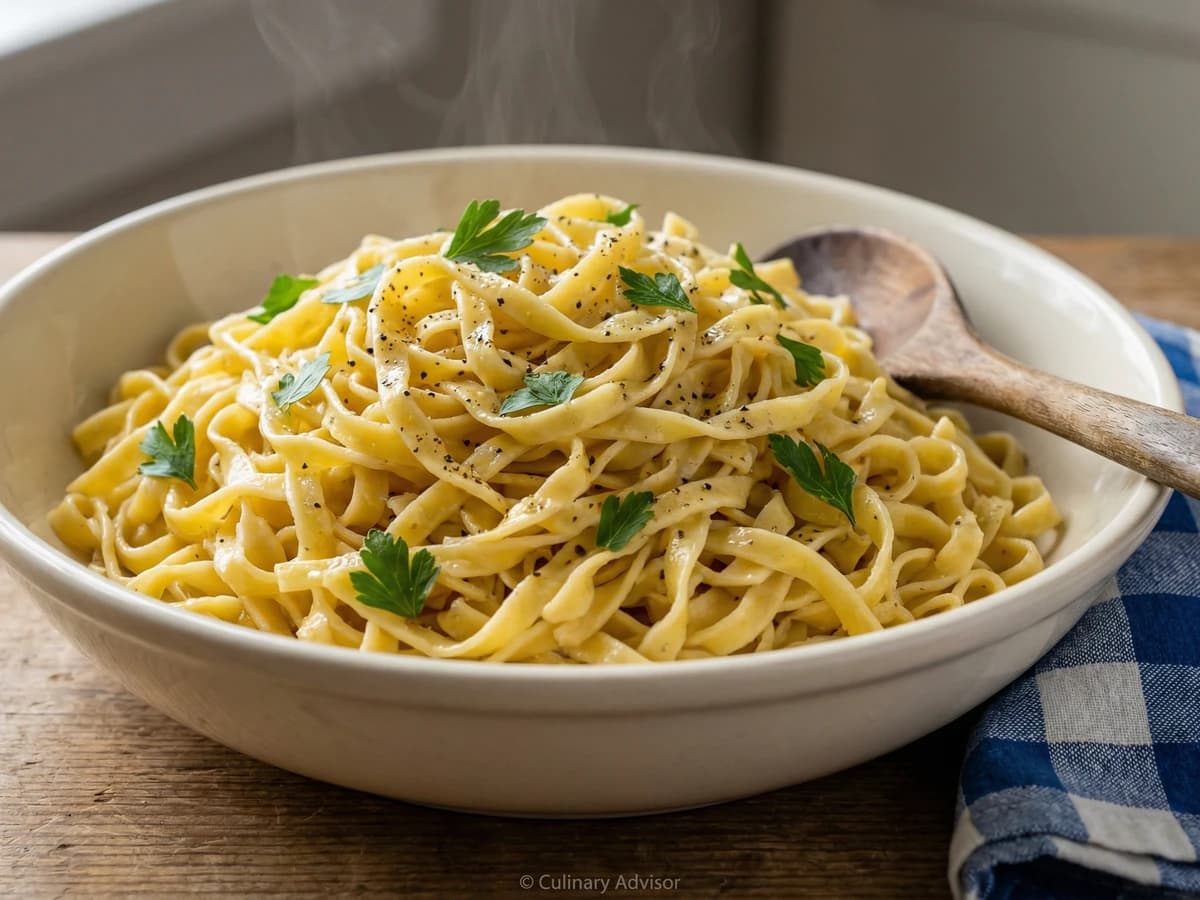
Amish Buttered Egg Noodles
The humblest side dish in the Pennsylvania Dutch tradition, where wide egg noodles and good butter need nothing more than salt and a warm bowl to become the thing everyone remembers from the church supper.
A cooking platform built around craft, culture, and the stories behind what we eat.
Created by
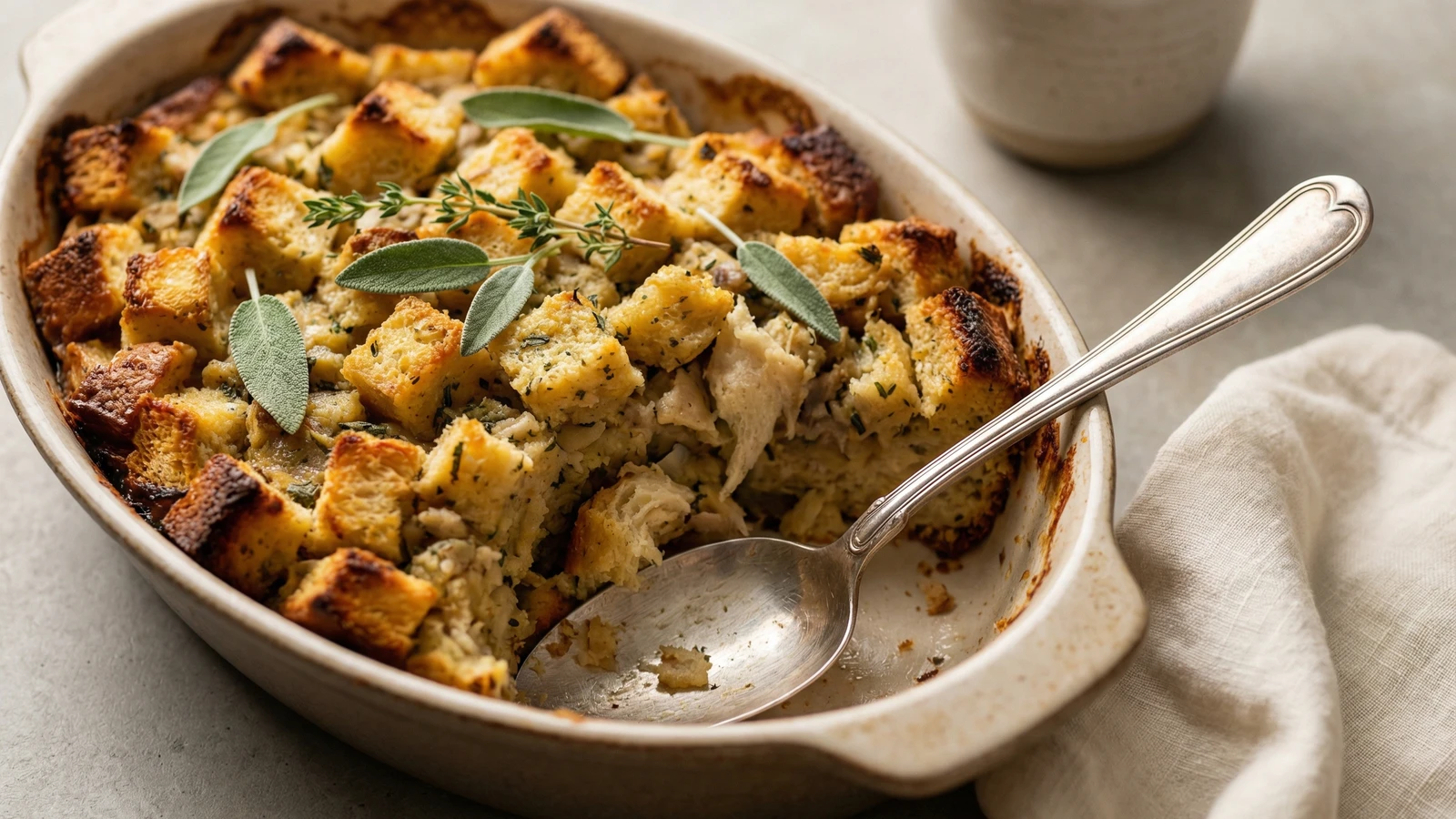
Golden-topped stuffing with tender, savory bread cubes perfumed by fresh sage and sweet onions. This is the dish people return to year after year, the one that makes Thanksgiving taste like Thanksgiving.
Stuffing is older than the republic itself. Colonial cooks brought the technique from England, where forcemeats and bread-based mixtures had filled birds for centuries. But American cooks transformed it into something distinctly our own, adapting to regional ingredients and family traditions until every household developed its own sacred recipe. Mess with someone's stuffing at your peril.
The debate over stuffing versus dressing is largely geographic. In the South, it's dressing, baked separately in a pan. Up North and out West, it's stuffing, whether or not it ever sees the inside of a bird. I've cooked it both ways thousands of times. The truth is this: baking it in a dish gives you that glorious contrast of crispy top and moist interior that cooking inside a turkey simply cannot match. The turkey stays safer too, reaching proper temperature without your bread turning to paste.
The secret to great stuffing lives in three places: properly dried bread, generous butter, and fresh sage. Stale bread absorbs stock without becoming soggy. Butter carries flavor into every crevice. And fresh sage, that velvet-leafed herb with its earthy, almost musky perfume, transforms simple ingredients into something that smells like every good Thanksgiving you've ever had.
I've taught this recipe to nervous cooks facing their first holiday dinner and to veterans looking to finally get it right. The technique is forgiving. The results are honest. Make it once and you'll understand why this humble dish inspires such devotion.
Quantity
1 pound (about 12 cups)
cut into 3/4-inch cubes
Quantity
8 tablespoons
Quantity
2 cups (about 2 medium)
diced
Quantity
1 1/2 cups (about 4 ribs)
diced
Quantity
1/4 cup
chopped
Quantity
1 tablespoon
Quantity
2 teaspoons
Quantity
1 teaspoon
Quantity
2 1/2 cups
warmed
Quantity
2
beaten
Quantity
1/4 cup
chopped
| Ingredient | Quantity |
|---|---|
| sturdy white breadcut into 3/4-inch cubes | 1 pound (about 12 cups) |
| unsalted butter | 8 tablespoons |
| yellow oniondiced | 2 cups (about 2 medium) |
| celerydiced | 1 1/2 cups (about 4 ribs) |
| fresh sage leaveschopped | 1/4 cup |
| fresh thyme leaves | 1 tablespoon |
| kosher salt | 2 teaspoons |
| freshly ground black pepper | 1 teaspoon |
| chicken or turkey stockwarmed | 2 1/2 cups |
| large eggsbeaten | 2 |
| fresh parsleychopped | 1/4 cup |
Spread bread cubes in a single layer across two sheet pans. Let them sit uncovered at room temperature overnight, or dry them in a 250°F oven for 45 minutes to an hour, tossing halfway through. The cubes should feel dry on the surface but still have some give when squeezed. Bone-dry bread makes cardboard stuffing. You want stale, not desiccated.
Melt the butter in a large skillet over medium heat. When it foams, add the onion and celery with a pinch of salt. Cook, stirring occasionally, until the vegetables are soft and the onion turns translucent, about 10 minutes. You're not looking for color here. Low and slow draws out sweetness. The kitchen will start to smell promising.
Add the sage and thyme to the skillet during the last two minutes of cooking. Stir them into the butter and vegetables until fragrant. Fresh sage should soften slightly and release its distinctive aroma, somewhere between eucalyptus and pine with a peppery finish. This brief bloom in hot butter carries the herb flavor throughout the dish.
Transfer the dried bread cubes to your largest mixing bowl. Pour the hot vegetable mixture over the bread and toss gently to distribute. Season with the salt and pepper. Toss again. In a separate bowl, whisk the beaten eggs into the warm stock, then pour this mixture over the bread. Fold everything together until the bread is evenly moistened. Add the parsley and give it one final turn.
Butter a 9x13-inch baking dish generously. Transfer the stuffing mixture into the dish, spreading it evenly. Don't pack it down. Gentle pressure only. The stuffing needs airspace between the cubes to develop those crispy edges. Cover tightly with buttered foil, butter side facing down.
Place the dish in a 375°F oven and bake for 30 minutes covered. The steam trapped under the foil will ensure the interior cooks through and the bread absorbs the last of the stock. Your kitchen will fill with the unmistakable smell of Thanksgiving.
Remove the foil and continue baking for 25 to 35 minutes more. The top should turn deep golden brown, the edges pulling away from the dish and crisping into the best bites of the entire pan. A few peaks will darken to a mahogany color. This is correct. When you tap the surface, it should feel firm and sound hollow.
Let the stuffing rest for 10 minutes before serving. This allows the interior to set slightly, making it easier to scoop clean portions. Serve directly from the baking dish at the table, family style, letting guests fight over the corner pieces with the crispiest edges.
1 serving (about 195g)
Culinary guides, cultural storytelling, and the editorial depth that makes cooking meaningful.
Discover Culinary ExplorerChef Dean
The humblest side dish in the Pennsylvania Dutch tradition, where wide egg noodles and good butter need nothing more than salt and a warm bowl to become the thing everyone remembers from the church supper.

Chef Dean
Golden-topped, impossibly creamy shredded potato casserole with a shattering cornflake crust. This is the dish that appears at every church supper, potluck, and time of need across the American heartland.

Chef Dean
Plump hominy kernels braised in smoky bacon fat with roasted Hatch chiles, cumin, and a bright hit of lime. This is the side dish that disappears first at every potluck, the one neighbors ask you to bring again and again.

Chef Dean
Tender corn kernels swimming in a silky, butter-rich cream sauce that coats each bite with honest American goodness. This is the side dish that steals the show at any table.