Chef Graziella
Braciole alla Napoletana
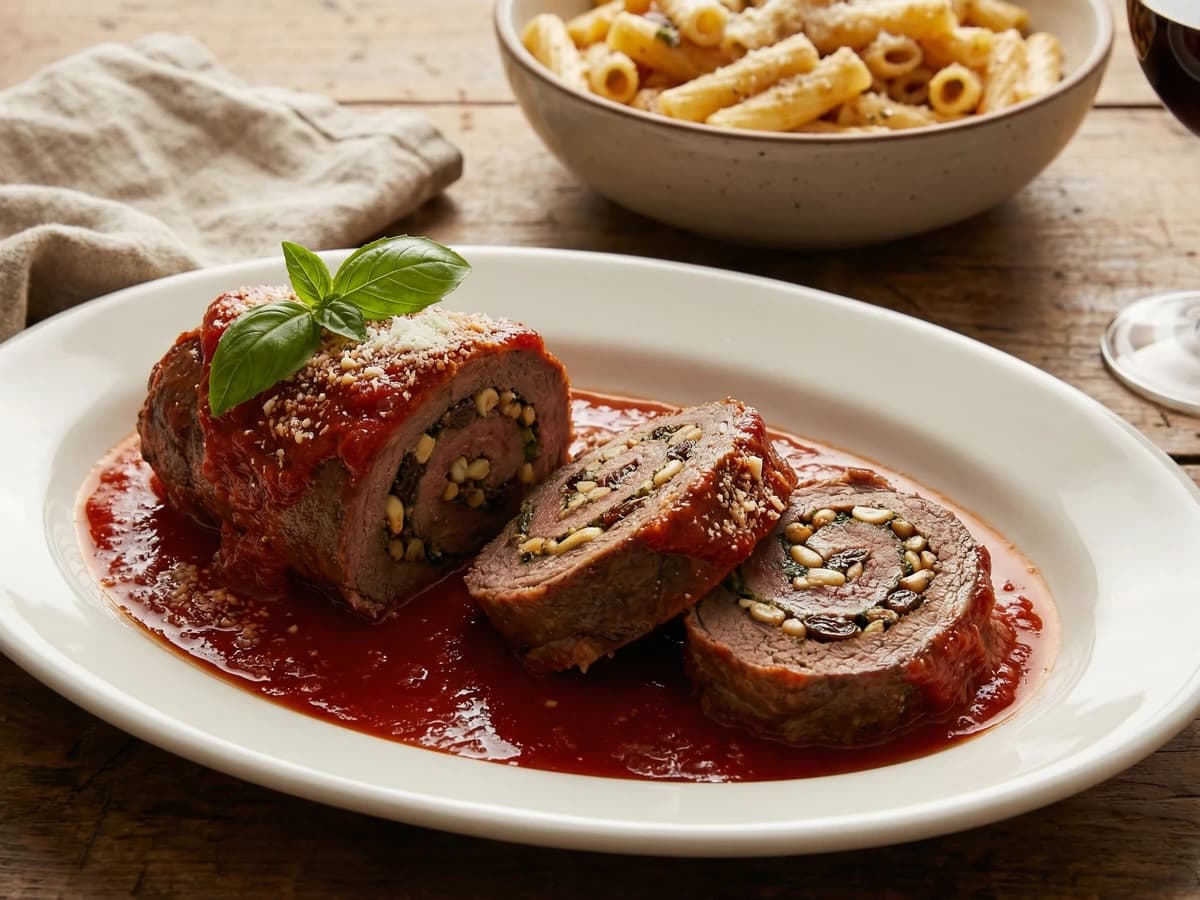
The Sunday ritual of Naples: beef rolls stuffed with pine nuts, raisins, and garlic, braised in tomato sauce until surrendering to tenderness. The sauce goes to the pasta. The meat comes second.
A cooking platform built around craft, culture, and the stories behind what we eat.
Created by
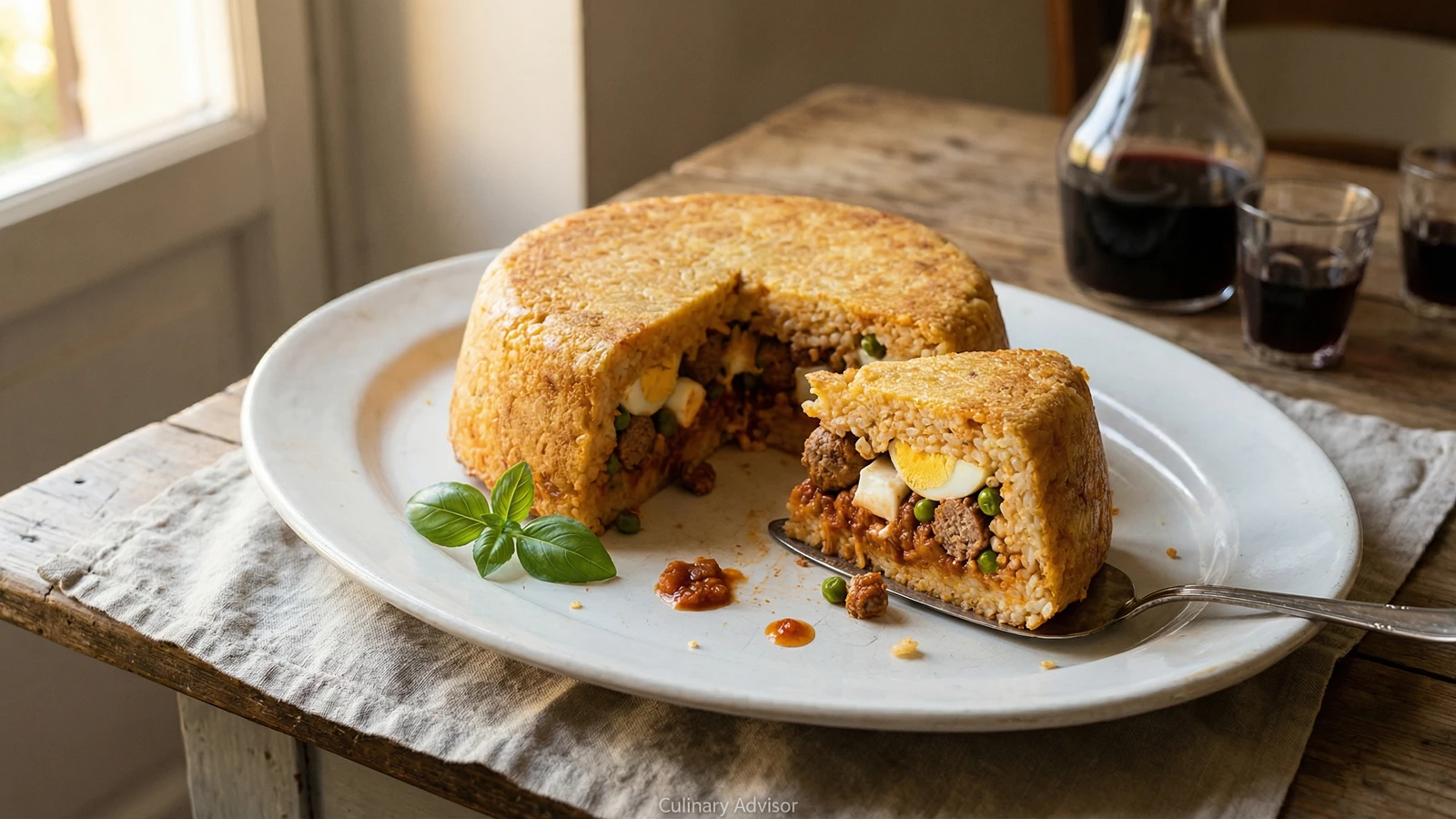
The baroque rice timbale of Naples, a golden dome concealing meatballs, eggs, cheese, and ragù. This is what the Bourbon court ate. This is proof that Southern Italy has rice traditions Americans have never learned.
Americans believe Italian rice means risotto. They are wrong. The South has its own rice traditions, and sartù di riso stands among the most magnificent. This is a baroque creation, a molded timbale stuffed with tiny meatballs, cubes of melting cheese, hard-boiled eggs, sweet peas, and tomato ragù. When you slice it at the table, the interior reveals its treasures like a jewel box opening.
The name comes from the French 'surtout,' a type of elaborate centerpiece, because this dish arrived in Naples when the Bourbon kings brought French chefs to their court. But those French cooks learned something in Naples: the Italian instinct for ingredient integrity. The sartù they created was French in concept, Neapolitan in soul.
This is not a weeknight dinner. It requires components made separately, assembled with care, baked until golden. It rewards the cook who plans ahead, who understands that some dishes deserve the labor. For a holiday table, for a celebration, for the moment when you want to prove that home cooking can achieve magnificence, there is sartù.
Sartù emerged from the kitchens of Naples' Bourbon court in the 18th century, where French chefs created elaborate molded dishes to please King Ferdinand IV. The name derives from the French 'surtout,' an ornate table centerpiece. Over generations, Neapolitan cooks stripped away French pretension and made it their own, keeping the spectacle but grounding it in local ingredients: San Marzano tomatoes, mozzarella di bufala, and the tiny meatballs called polpettine.
Quantity
2 pounds
Quantity
8 cups
hot
Quantity
6 tablespoons, divided
Quantity
1 cup
freshly grated
Quantity
4
lightly beaten
Quantity
1/4 teaspoon
freshly grated
Quantity
1 pound
Quantity
1/4 cup
Quantity
2 tablespoons
Quantity
1
Quantity
2 tablespoons
minced
Quantity
to taste
Quantity
to taste
freshly ground
Quantity
1/4 cup
Quantity
1 medium
diced fine
Quantity
1
diced fine
Quantity
1 small
peeled and diced fine
Quantity
1/2 cup
Quantity
1 can (28 ounces)
passed through food mill
Quantity
1 cup
fresh or frozen
Quantity
4
hard-boiled and quartered
Quantity
8 ounces
cut into 1/2-inch cubes
Quantity
4 ounces
cut into 1/2-inch cubes
Quantity
1/2 cup
for the mold
| Ingredient | Quantity |
|---|---|
| Arborio or Carnaroli rice | 2 pounds |
| meat brothhot | 8 cups |
| unsalted butter | 6 tablespoons, divided |
| Parmigiano-Reggianofreshly grated | 1 cup |
| large eggs for ricelightly beaten | 4 |
| nutmegfreshly grated | 1/4 teaspoon |
| ground beef | 1 pound |
| fresh breadcrumbs | 1/4 cup |
| whole milk | 2 tablespoons |
| large egg for meatballs | 1 |
| flat-leaf parsleyminced | 2 tablespoons |
| kosher salt | to taste |
| black pepperfreshly ground | to taste |
| extra virgin olive oil | 1/4 cup |
| yellow oniondiced fine | 1 medium |
| celery stalkdiced fine | 1 |
| carrotpeeled and diced fine | 1 small |
| dry white wine | 1/2 cup |
| San Marzano tomatoespassed through food mill | 1 can (28 ounces) |
| peasfresh or frozen | 1 cup |
| large eggshard-boiled and quartered | 4 |
| fresh mozzarellacut into 1/2-inch cubes | 8 ounces |
| provola or smoked mozzarellacut into 1/2-inch cubes | 4 ounces |
| fine dry breadcrumbsfor the mold | 1/2 cup |
In a heavy saucepan, warm the olive oil over medium heat. Add the onion, celery, and carrot. Cook slowly, stirring occasionally, until completely soft and the onion turns pale gold, about 15 minutes. Add the wine and let it evaporate completely. Add the passed tomatoes, season with salt and pepper, and simmer gently for 45 minutes to one hour. The sauce should reduce and concentrate. Set aside. You need about two cups for the sartù.
Soak the fresh breadcrumbs in the milk until absorbed. In a bowl, combine the ground beef, soaked breadcrumbs, one egg, parsley, half a teaspoon of salt, and a few grinds of pepper. Mix with your hands until just combined. Overworking makes tough meatballs. Form into balls the size of small grapes, no larger than a hazelnut. You should have about forty.
In a large skillet, heat two tablespoons of butter over medium-high heat. Working in batches to avoid crowding, brown the meatballs on all sides. They need not cook through; the oven will finish them. Transfer to a plate as they brown. This takes about ten minutes total.
Bring the meat broth to a simmer in a large pot. Add the rice and cook, stirring occasionally, until nearly tender but still with a firm core, about 12 minutes. The rice should be slightly underdone; it will finish in the oven. Drain, reserving the broth for another use. The rice should not be wet.
Transfer the drained rice to a large bowl. While still warm, add three tablespoons of butter cut into pieces, the Parmigiano-Reggiano, the beaten eggs, and the nutmeg. Stir thoroughly until the butter melts and the eggs coat the grains. Season with salt and pepper. The mixture should be cohesive but not gluey. Let it cool until you can handle it.
Generously butter a 12-cup round baking dish or charlotte mold, using about one tablespoon of soft butter. Coat completely with the dry breadcrumbs, tipping out the excess. The crumbs create the golden crust that defines sartù. Heat oven to 375 degrees Fahrenheit.
Press two-thirds of the rice mixture firmly against the bottom and sides of the prepared mold, creating walls about one inch thick. The rice should come all the way up the sides. Spread half the ragù over the bottom. Scatter half the meatballs, half the mozzarella and provola cubes, and half the peas. Arrange the hard-boiled egg quarters in a single layer. Add the remaining meatballs, cheese, and peas. Top with the remaining ragù. Cover with the remaining rice, pressing firmly to seal completely. The filling must be enclosed.
Bake until the top is golden and the rice pulls away slightly from the sides of the mold, about 45 minutes to one hour. The internal temperature should reach 160 degrees. Let rest for 15 minutes before unmolding. This resting is essential. Without it, the sartù collapses.
Run a thin knife around the edges. Place a large serving platter over the mold, hold firmly, and invert with confidence. Lift the mold away. The sartù should stand golden and proud, the breadcrumb crust crisp. If any rice sticks, simply press it back into place. Cut into wedges at the table, revealing the treasures within. Serve immediately.
1 serving (about 450g)
Culinary guides, cultural storytelling, and the editorial depth that makes cooking meaningful.
Discover Culinary ExplorerChef Graziella
The Sunday ritual of Naples: beef rolls stuffed with pine nuts, raisins, and garlic, braised in tomato sauce until surrendering to tenderness. The sauce goes to the pasta. The meat comes second.
Chef Graziella
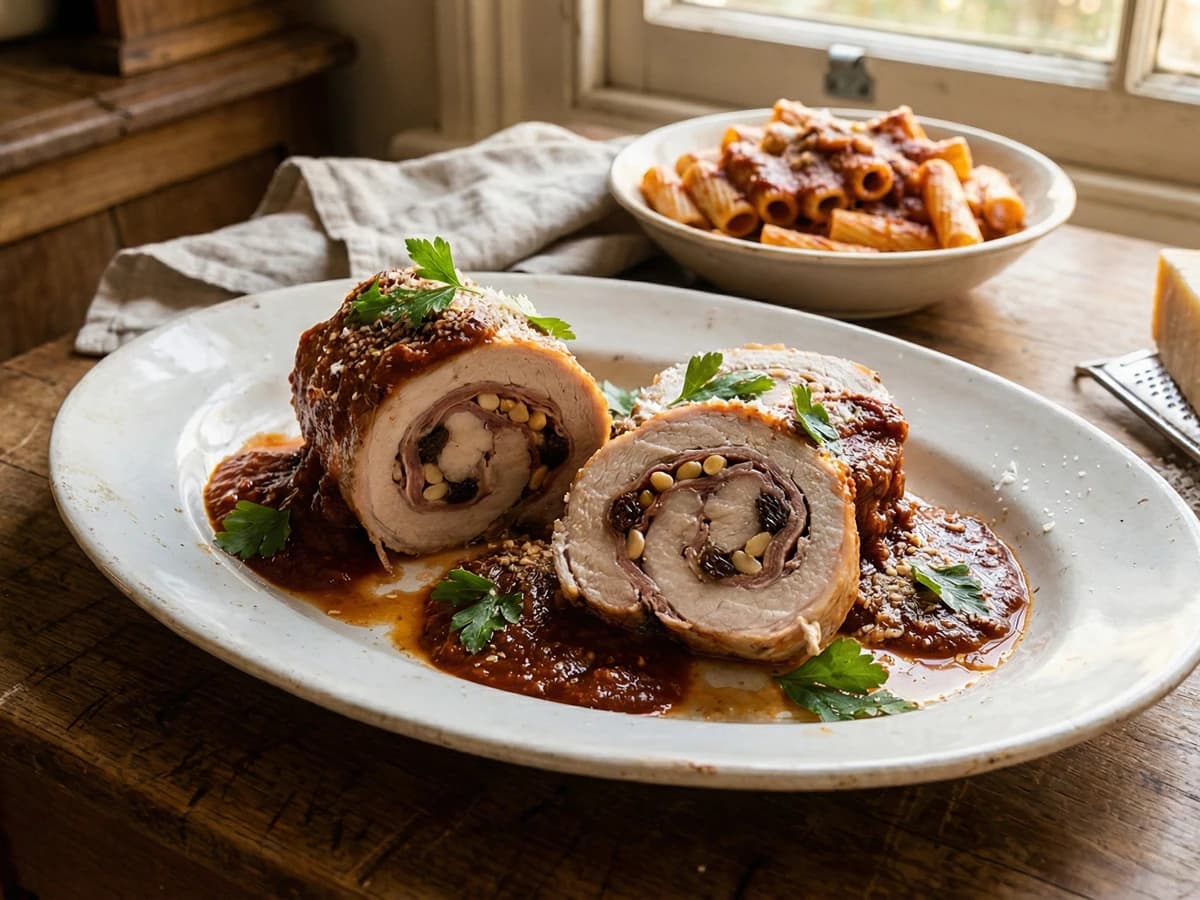
Pork rolls stuffed with pine nuts, raisins, and prosciutto, then braised slowly in tomato sauce until fork-tender. In Naples, the sauce dresses pasta for the first course, and the meat follows as the second.

Chef Graziella
The baroque potato cake of Naples, where silky mashed potatoes enfold a hidden treasure of cheeses and cured meats, then bake until a golden crust gives way to molten richness within.
Chef Graziella
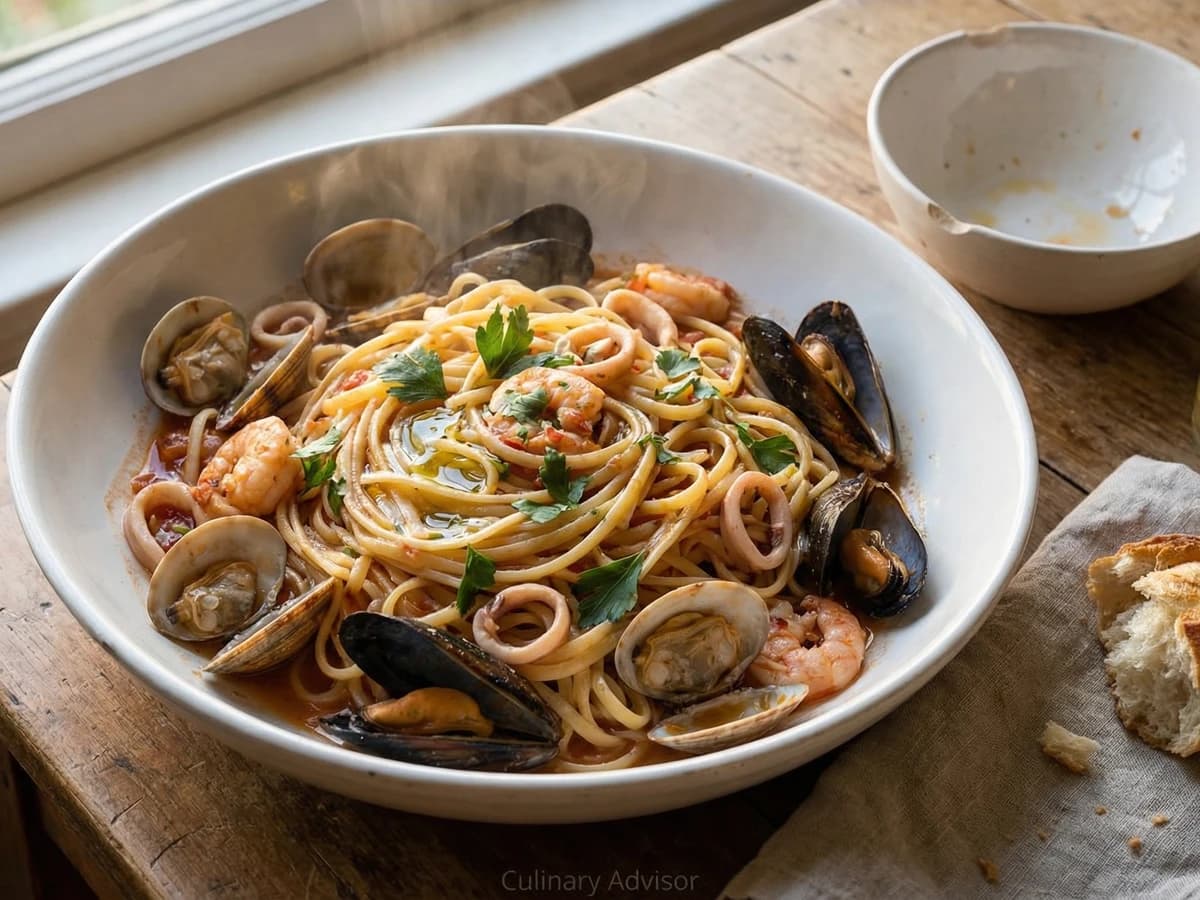
A tumble of clams, mussels, shrimp, and squid over linguine, bright with tomato and white wine. The fishermen's pasta of the Amalfi coast, where the rocks meet the sea.