Culinary Explorer
A cooking platform built around craft, culture, and the stories behind what we eat.
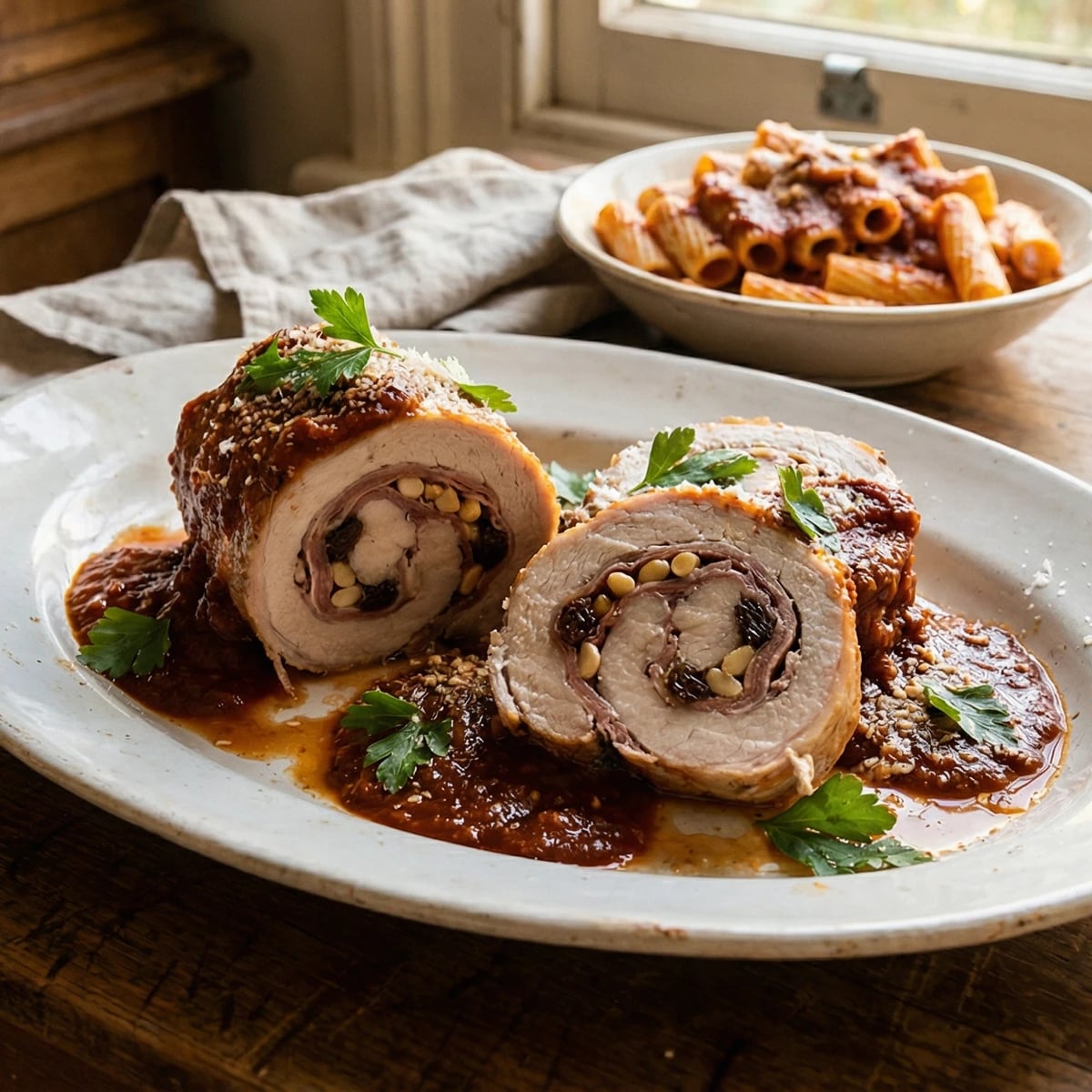
Braciole di Maiale alla Napoletana
Created by Chef Graziella
Pork rolls stuffed with pine nuts, raisins, and prosciutto, then braised slowly in tomato sauce until fork-tender. In Naples, the sauce dresses pasta for the first course, and the meat follows as the second.
In Naples, Sunday dinner is sacred, and braciole is its centerpiece. Thin slices of pork wrapped around a filling of prosciutto, pine nuts, raisins, and sharp Pecorino, simmered for hours in tomato sauce until the meat surrenders completely. The sauce absorbs the essence of the pork while the filling holds its shape inside each roll, a small surprise when you cut into it.
The combination of sweet raisins and salty prosciutto is not an accident. It reflects centuries of Neapolitan cooking, where Arab and Spanish influences left their mark on the cuisine. This is not a fusion experiment. This is tradition, the way it has been done in modest Neapolitan kitchens for generations.
You cannot rush braciole. The long braise breaks down the connective tissue in the pork until a fork meets no resistance. The sauce thickens and deepens, becoming something more than tomatoes. If you are not willing to give this two hours of patient simmering, make something else. But if you do it properly, you will understand why Neapolitan families have gathered around this dish every Sunday for as long as anyone can remember.
Ingredients
pork loin or leg
Quantity
2 pounds
sliced into 8 thin cutlets (about 1/4 inch)
prosciutto di Parma
Quantity
8 thin slices
pine nuts
Quantity
1/3 cup
| Ingredient | Quantity |
|---|---|
| pork loin or legsliced into 8 thin cutlets (about 1/4 inch) | 2 pounds |
| prosciutto di Parma | 8 thin slices |
| pine nuts | 1/3 cup |
Where cooking meets culture.
Culinary guides, cultural storytelling, and the editorial depth that makes cooking meaningful.
Discover Culinary Explorer