
Chef Zohra
Batbout Farci (بطبوط)
Small semolina breads cooked in a pan until they puff, then split and filled generously. Batbout farci is the sandwich you make for picnics, school bags, and one more guest.
A cooking platform built around craft, culture, and the stories behind what we eat.
Created by
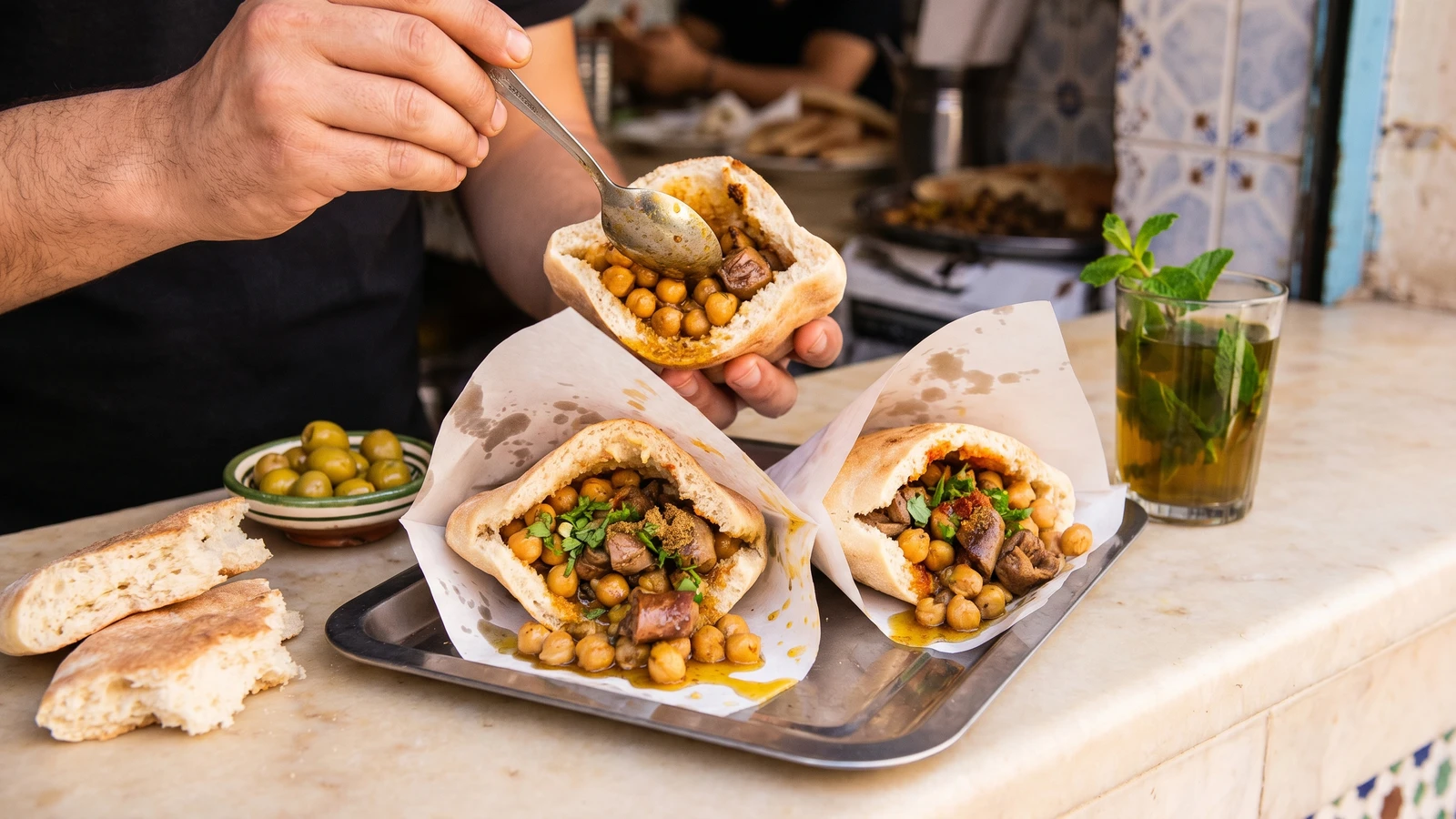
A hot medina sandwich where cumin chickpeas soften the bite of spiced fried offal, all packed into bread and eaten before the sauce has time to settle.
This sandwich belongs to the street, to the hour when hunger is louder than manners and a cart can feed you better than a chair. Chickpeas go in soft and saucy, the taqliya goes in hot from the pan, and the bread catches what would otherwise run down your wrist. You eat it standing if you must. It still counts as a table, if someone made room for you.
Taqliya means the quick fried offal here, liver, heart, kidney if your butcher is honest and the pieces are fresh. The rule is not to overcook it. Offal turns tough when it waits too long in the pan, so the chickpeas are already tender before the meat touches the heat. That is the whole why of the dish: cook the chickpeas slow enough to become generous, cook the taqliya fast enough to stay alive under the teeth.
This is budget food, yes, but budget food has its pride. Cumin must smell awake, paprika should still have color, and the bread must be sturdy enough to hold the sauce. Make four sandwiches and expect a fifth hand. Une table, c'est une porte qu'on laisse ouverte, even when the table is a cart in the medina.
Hot chickpea and offal sandwiches belong to the urban street foods of Moroccan medinas, especially the Atlantic and inland market cities where butchers, porters, students, and shopkeepers needed filling food at a small price. The practice draws on older Moroccan nose-to-tail cooking, where liver, heart, kidney, tripe, and feet each had their own treatment rather than being hidden. Its exact dating is not fixed in written sources, but the form is tied to 20th-century medina cart culture and to the spice routes that made cumin, paprika, and dried chile everyday tools in Moroccan market cooking.
Quantity
300g
soaked overnight, or use 2 cans drained chickpeas
Quantity
1 small
finely grated
Quantity
3
crushed
Quantity
3 tbsp
Quantity
1 tsp, plus more to finish
Quantity
1 tsp
Quantity
1/2 tsp
to taste
Quantity
1/2 tsp
Quantity
1 small bunch
chopped
Quantity
1 small bunch
chopped
Quantity
1
finely chopped
Quantity
500g
trimmed and cut into small pieces
Quantity
1 tbsp
Quantity
to taste
Quantity
4 small
Quantity
to taste
| Ingredient | Quantity |
|---|---|
| dried chickpeassoaked overnight, or use 2 cans drained chickpeas | 300g |
| onionfinely grated | 1 small |
| garlic clovescrushed | 3 |
| olive oil | 3 tbsp |
| ground cumin | 1 tsp, plus more to finish |
| sweet paprika | 1 tsp |
| hot paprika or cayenneto taste | 1/2 tsp |
| ground ginger | 1/2 tsp |
| corianderchopped | 1 small bunch |
| parsleychopped | 1 small bunch |
| preserved lemon peel (optional)finely chopped | 1 |
| mixed fresh offal, liver and hearttrimmed and cut into small pieces | 500g |
| white vinegar or lemon juice | 1 tbsp |
| sea salt and black pepper | to taste |
| Moroccan sandwich loaves, batbout, or split khobz | 4 small |
| harissa or crushed fresh chile (optional) | to taste |
Drain the soaked chickpeas and put them in a pot with fresh water to cover by 5 cm. Simmer until tender, 60 to 75 minutes, then drain, keeping a cup of the cooking liquid. If using canned chickpeas, rinse them and warm them with a little water for 10 minutes so they don't taste flat.
Warm 2 tablespoons olive oil in a wide pan. Add the grated onion and cook until it melts down and loses its sharp smell, then add half the garlic, cumin, sweet paprika, hot paprika, ginger, salt, and pepper. Stir until the oil turns brick-red and fragrant, then add the chickpeas and enough cooking liquid to make them saucy, not soupy.
Let the chickpeas simmer 12 to 15 minutes, until glossy and thick enough to mound on a spoon. Stir in half the chopped coriander and parsley, plus the preserved lemon peel if using. Taste for salt and cumin. La balance est dans les yeux, and also in the nose.
Pat the offal dry. Toss it with the remaining garlic, a little salt, black pepper, a pinch more cumin, and the vinegar or lemon juice. Keep the pieces small so they cook fast and fit properly inside the bread.
Heat the remaining tablespoon of olive oil in a heavy skillet until the surface looks lively. Add the offal in one layer and fry 3 to 5 minutes, turning once or twice, until the liver is browned outside but still tender inside and the heart has a firm bite. Do not let it sit there drying out. The chickpeas waited for the taqliya, not the other way around.
Warm the bread, split it, and spoon in a generous layer of chickpeas with their sauce. Add the hot taqliya, more herbs, harissa if your table wants heat, and a last pinch of cumin. Press the bread closed just enough to catch the filling, then serve at once.
1 serving (about 330g)
Culinary guides, cultural storytelling, and the editorial depth that makes cooking meaningful.
Discover Culinary ExplorerChef Zohra
Small semolina breads cooked in a pan until they puff, then split and filled generously. Batbout farci is the sandwich you make for picnics, school bags, and one more guest.
Chef Zohra
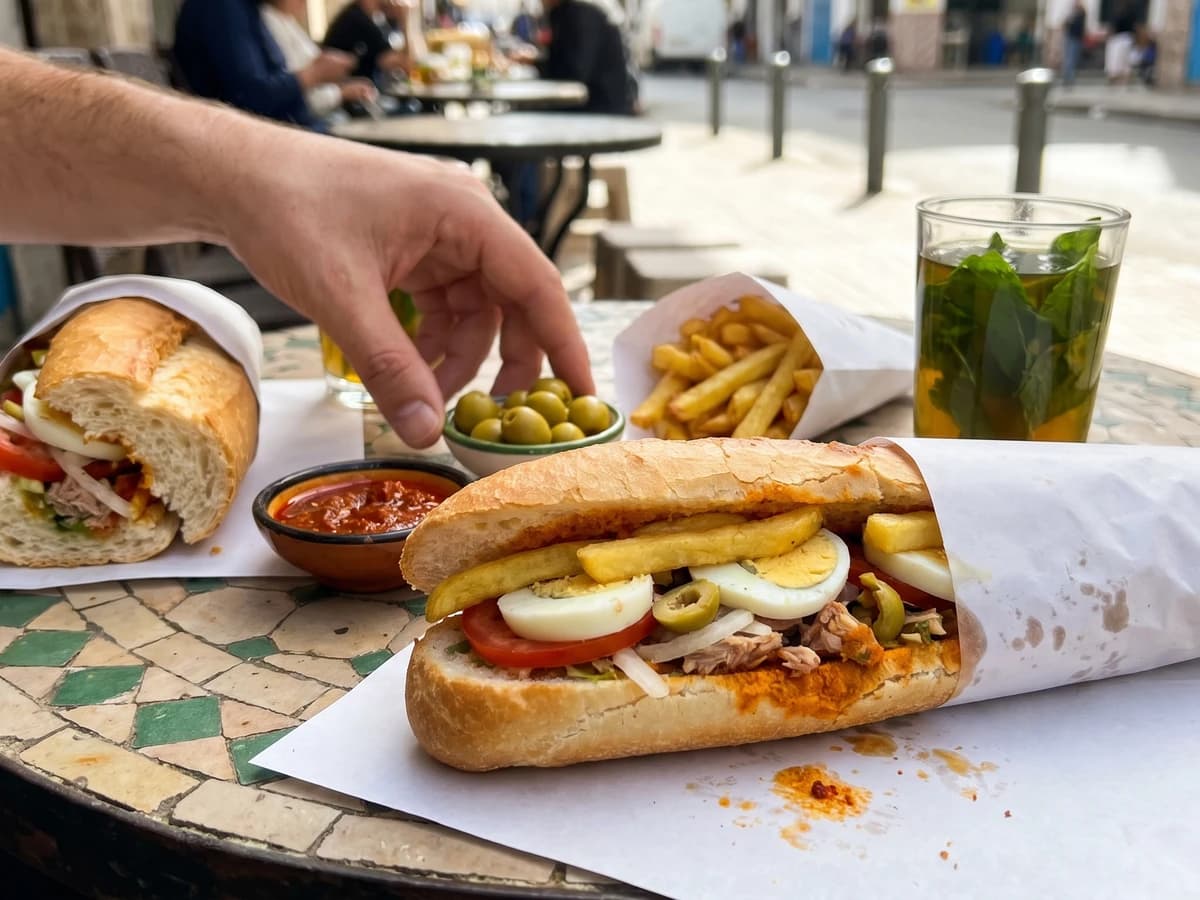
The northern street sandwich: crisp bread opened wide, harissa rubbed into the crumb, tuna or kefta, egg, olives, and hot fries pushed right in so supper can travel in one hand.

Chef Zohra
A northern street sandwich with a Spanish name and a Moroccan hand: harissa, tuna or kefta, sliced egg, olives, salad, and hot fries pressed into one generous baguette.

Chef Zohra
From Rissani comes a buried bread for guests: thin dough sealed around spiced meat, onions, herbs, and almonds, baked hot so the crust browns while the filling stays generous.