
Chef Zohra
Batbout Farci (بطبوط)
Small semolina breads cooked in a pan until they puff, then split and filled generously. Batbout farci is the sandwich you make for picnics, school bags, and one more guest.
A cooking platform built around craft, culture, and the stories behind what we eat.
Created by
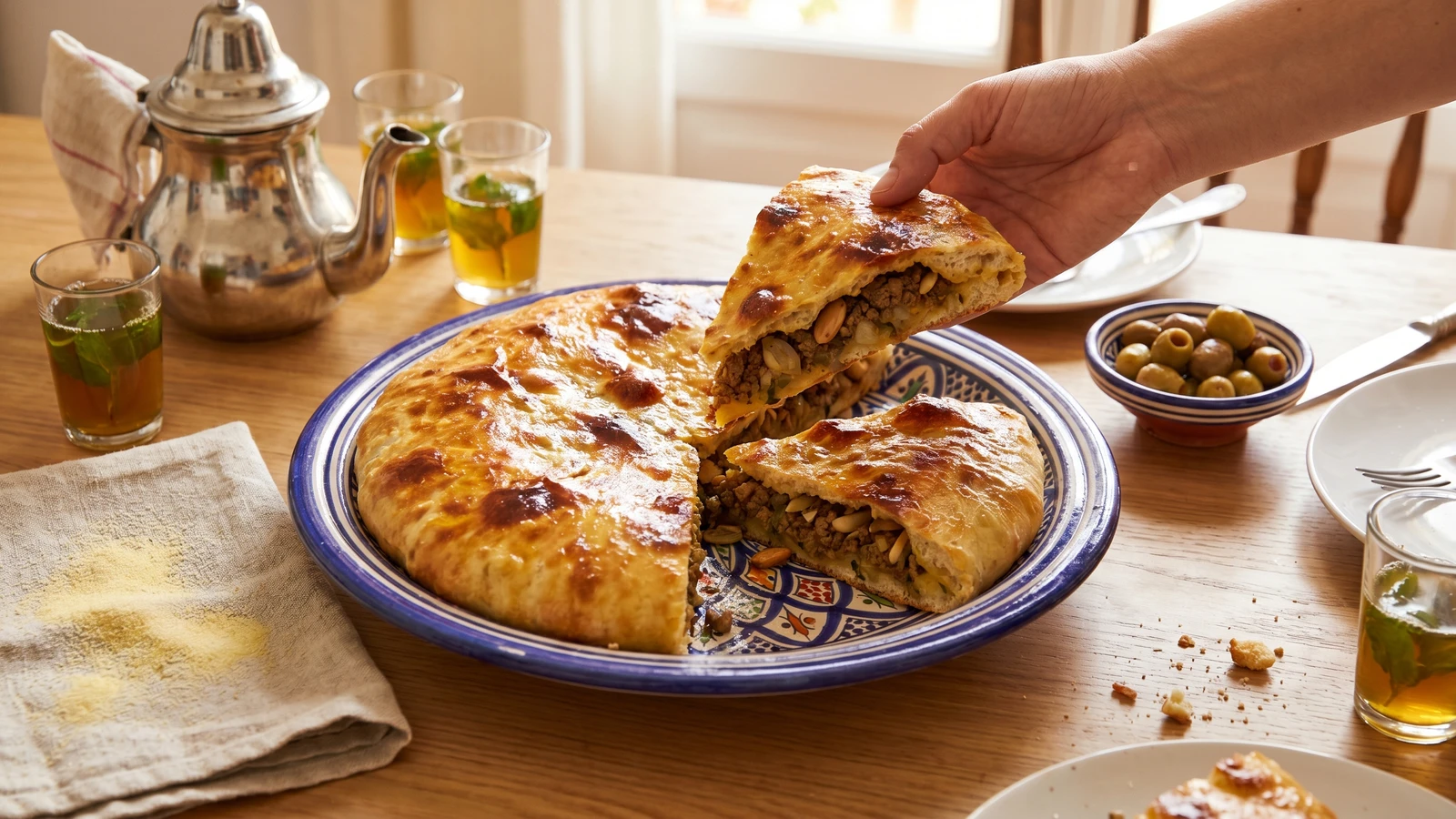
From Rissani comes a buried bread for guests: thin dough sealed around spiced meat, onions, herbs, and almonds, baked hot so the crust browns while the filling stays generous.
The whole dish turns on the seal. Madfouna means buried, and before it means anything romantic it means this: thin bread closed tightly around a spiced filling so the meat cooks in its own juices and the crust takes the heat. If the filling is loose and wet, it leaks. If the edge is careless, the bread opens. Close it well and you understand the dish.
People call it Berber pizza because the shape helps them recognize it. I still say Madfouna Filaliya, the buried bread of Tafilalet, because the Moroccan name carries the place and the gesture. This is not one more flatbread with meat inside. It belongs to Rissani and the eastern oases, to the feast of welcome, to a table where guests are fed before anyone asks how far they traveled.
In the old way, the bread is baked in embers and ash, the fire above and below doing what an oven must now learn to do. At home, heat your stone or tray hard, cook the filling until it is no longer raw, then cool it before sealing. That is the kindness for a home kitchen: the crust can brown while the inside stays safe and juicy.
Cut it in wedges while the table is already reaching. Put olives near it, mint tea if you have it, and leave one chair ready. Une table, c'est une porte qu'on laisse ouverte, a table is a door you leave open.
Madfouna Filaliya belongs to the Tafilalet oases around Rissani, near Sijilmassa, the caravan city active from the 8th century on the trans-Saharan routes carrying gold, salt, dates, leather, and spices. The Filaliya name marks Tafilalet identity, a region tied to the Alaouite dynasty from the 17th century, while the buried-in-embers method points to older Amazigh and oasis bread practices kept mostly by oral transmission. Cooks disagree on when meat, almonds, and festival spices became fixed in the filling, and that uncertainty is honest.
Quantity
400g
plus more for dusting
Quantity
150g
plus more for dusting
Quantity
1 1/2 tsp
divided
Quantity
1 tsp
Quantity
3 tbsp
plus more for brushing
Quantity
300ml
as needed
Quantity
450g
15 to 20 percent fat if possible
Quantity
2 medium
finely chopped
Quantity
2
minced
Quantity
2 tbsp
Quantity
1 tbsp
Quantity
1 tsp
Quantity
1 tsp
Quantity
1 tsp
Quantity
1/2 tsp
Quantity
1/4 tsp
Quantity
1/2 tsp
Quantity
1 pinch
bloomed in 2 tbsp warm water
Quantity
80g
toasted and roughly chopped
Quantity
1/2
pulp discarded and peel minced
Quantity
1 small bunch
chopped
Quantity
1 small bunch
chopped
| Ingredient | Quantity |
|---|---|
| all-purpose flourplus more for dusting | 400g |
| fine semolinaplus more for dusting | 150g |
| fine sea saltdivided | 1 1/2 tsp |
| active dry yeast | 1 tsp |
| olive oilplus more for brushing | 3 tbsp |
| warm wateras needed | 300ml |
| minced lamb or beef15 to 20 percent fat if possible | 450g |
| onionsfinely chopped | 2 medium |
| garlic clovesminced | 2 |
| smen or olive oil | 2 tbsp |
| ras el hanout | 1 tbsp |
| ground cumin | 1 tsp |
| sweet paprika | 1 tsp |
| ground ginger | 1 tsp |
| ground turmeric | 1/2 tsp |
| ground cinnamon | 1/4 tsp |
| black pepper | 1/2 tsp |
| saffron threadsbloomed in 2 tbsp warm water | 1 pinch |
| blanched almondstoasted and roughly chopped | 80g |
| preserved lemon peel (optional)pulp discarded and peel minced | 1/2 |
| flat-leaf parsleychopped | 1 small bunch |
| fresh corianderchopped | 1 small bunch |
Mix the flour, semolina, yeast, 1 teaspoon of the salt, and olive oil in a wide bowl. Add the warm water little by little, working with your hand until the dough gathers soft but not sticky. Knead for 8 to 10 minutes, until it feels smooth and elastic under your palm, then cover and let it rest 30 to 45 minutes.
Toast the blanched almonds in a dry pan until they smell warm and nutty and turn pale gold in patches. Roughly chop them, not to powder. You want the almonds to be felt inside the bread, a little bite among the meat and onions.
Warm the smen or olive oil in a wide skillet and cook the onions with the remaining salt until they soften and lose their raw bite. Add the meat, garlic, ras el hanout, cumin, paprika, ginger, turmeric, cinnamon, black pepper, and bloomed saffron. Cook, breaking the meat small, until the liquid has cooked away and the fat glistens lightly at the edge of the pan.
Take the pan off the heat. Stir in the toasted almonds, preserved lemon peel if using, parsley, and coriander. Let the filling cool until it is only warm to the touch. This matters: hot filling softens the dough before you can seal it, and wet filling tears the bread.
Heat the oven to 245°C or 475°F with a baking stone or heavy tray inside. Divide the dough into four pieces. Roll each piece into a thin round about 25 to 28cm wide, dusting with fine semolina so it moves without sticking. Keep the middle thin and the edges clean.
Lay one dough round on parchment dusted with semolina. Spread half the filling over it, leaving a 2cm border. Cover with a second round, press the air out gently, then pinch and fold the edge all the way around until it is closed tight. The seal is the dish: it keeps the juices inside while the bread bakes.
Brush the top lightly with olive oil and slide the madfouna onto the hot stone or tray. Bake 18 to 22 minutes, turning once if your oven browns unevenly, until the crust is deep gold with darker blisters and the bread feels firm when tapped. If you use a thermometer, the center should pass 71°C or 160°F.
Rest the bread 8 to 10 minutes before cutting so the juices settle back into the filling. Slice into wedges and serve from the center of the table, with olives, tea, and napkins close by. This is food for hands, conversation, and one more guest.
1 serving (about 270g)
Culinary guides, cultural storytelling, and the editorial depth that makes cooking meaningful.
Discover Culinary ExplorerChef Zohra
Small semolina breads cooked in a pan until they puff, then split and filled generously. Batbout farci is the sandwich you make for picnics, school bags, and one more guest.
Chef Zohra
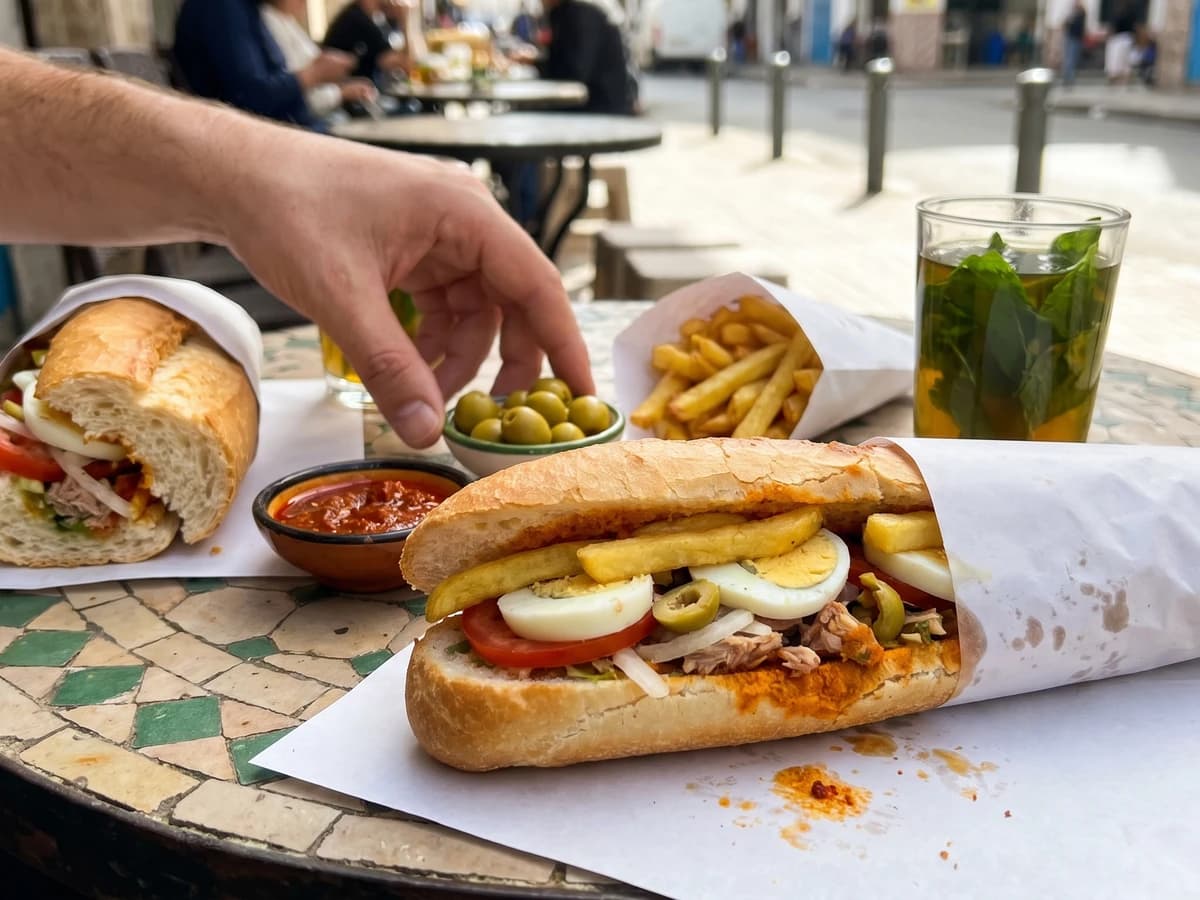
The northern street sandwich: crisp bread opened wide, harissa rubbed into the crumb, tuna or kefta, egg, olives, and hot fries pushed right in so supper can travel in one hand.

Chef Zohra
A northern street sandwich with a Spanish name and a Moroccan hand: harissa, tuna or kefta, sliced egg, olives, salad, and hot fries pressed into one generous baguette.

Chef Zohra
A Tafilalet bread sealed around spiced meat, onions, almonds, and herbs, baked until the crust turns gold and the filling perfumes the whole table.