
Chef Dean
German Sauerbraten
A magnificent pot roast transformed by days of vinegar-spice marination into fork-tender slices bathed in dark, glossy gingersnap gravy. This is the centerpiece your Christmas table deserves.
A cooking platform built around craft, culture, and the stories behind what we eat.
Created by
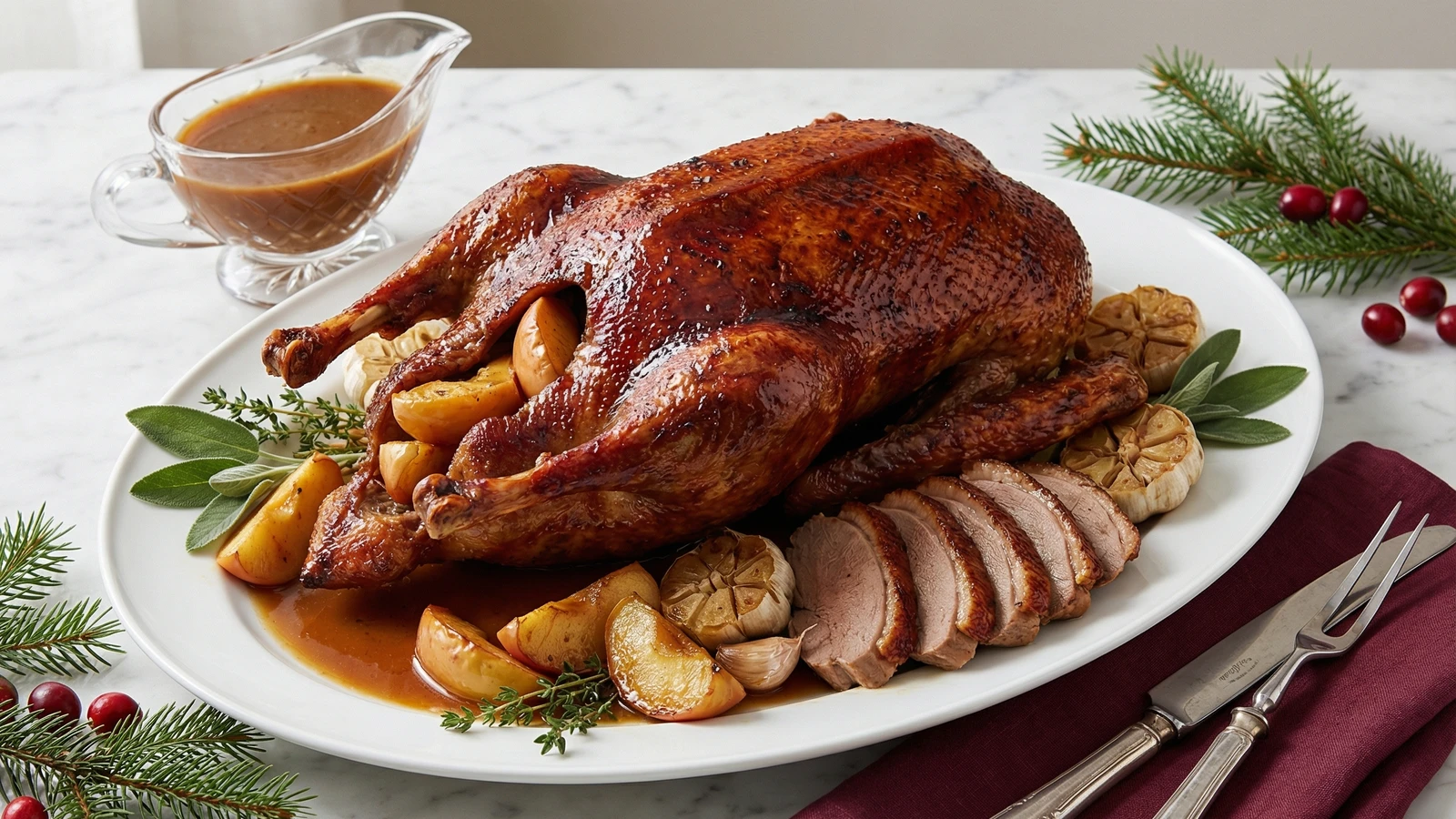
A magnificently bronzed goose with shatteringly crisp skin, its cavity filled with tart apples and fresh sage. This is the Christmas centerpiece your great-grandmother made, and it deserves a place on your table again.
Before turkey conquered the American holiday table, goose reigned supreme. German immigrants brought this tradition to Pennsylvania and the Midwest, where farm families fattened their birds through autumn for the December feast. The goose nearly vanished from our kitchens during the twentieth century. That was our loss. No bird delivers richer, more satisfying dark meat.
Goose requires different thinking than turkey. The thick layer of subcutaneous fat that keeps the bird warm through northern European winters must render slowly, basting the meat from within while the skin transforms into something approaching crackling. This takes time. It takes attention. The reward is worth every minute.
The apple stuffing inside isn't meant to absorb drippings like bread stuffing would. Those tart apple quarters steam in the cavity, perfuming the meat while providing a built-in accompaniment. The sage adds its medicinal warmth. Together they cut through the richness of the goose itself.
I've roasted hundreds of geese over the years. The technique I'm giving you here produces consistently beautiful results. Start the bird breast-down to protect the delicate breast meat while the legs get a head start. Flip it halfway through. Prick the skin religiously to let the fat escape. Trust the process. By the time you carry this golden bird to your table, you'll understand why generations considered it the finest celebration a cook could offer.
Quantity
1 (10-12 pounds)
Quantity
2 tablespoons
Quantity
1 tablespoon
Quantity
6 medium
quartered and cored
Quantity
1 large
quartered
Quantity
12
Quantity
4 sprigs
Quantity
4 cloves
smashed
Quantity
1 cup
Quantity
2 cups
Quantity
2 tablespoons
Quantity
2 tablespoons
| Ingredient | Quantity |
|---|---|
| whole goose, giblets and neck removed | 1 (10-12 pounds) |
| kosher salt | 2 tablespoons |
| freshly ground black pepper | 1 tablespoon |
| Granny Smith applesquartered and cored | 6 medium |
| yellow onionquartered | 1 large |
| fresh sage leaves | 12 |
| fresh thyme | 4 sprigs |
| garlicsmashed | 4 cloves |
| dry white wine | 1 cup |
| chicken stock | 2 cups |
| all-purpose flour | 2 tablespoons |
| cold butter | 2 tablespoons |
Remove the goose from refrigeration and pull out any giblets or neck from the cavity. Check both ends. Trim any excess fat from the cavity opening and neck area. This fat can be rendered separately for cooking potatoes. Pat the entire bird dry inside and out with paper towels. The skin must be completely dry.
Using a sharp paring knife or metal skewer, prick the skin all over the breast, thighs, and back. Angle your tool at 45 degrees so you pierce through the fat layer but not into the meat itself. You want dozens of tiny holes. This allows the fat to escape during roasting, transforming the skin from flabby to crisp. Be thorough. Be patient.
Combine the salt and pepper. Rub this mixture over every inch of the goose, inside and out. Work it into the pricked skin. Season the cavity well. Let the bird sit at room temperature for one hour while you prepare the stuffing and preheat your oven to 325°F.
Toss the quartered apples with the onion quarters, sage leaves, thyme sprigs, and smashed garlic. Pack this mixture loosely into the goose cavity. Don't compress it. The steam needs room to circulate. Tuck the wing tips behind the back and tie the legs together with kitchen twine if they seem loose.
Set a V-rack inside a large roasting pan. Place the goose breast-side down on the rack. This protects the breast meat during the initial rendering phase while the fattier thighs face the heat source. Pour one cup of water into the bottom of the roasting pan to catch drippings and prevent smoking.
Roast the goose breast-down for 1 hour and 30 minutes. Every 30 minutes, open the oven and carefully drain the accumulated fat from the pan into a heatproof bowl. This fat is liquid gold. You'll use it for the gravy and save the rest for the best roasted potatoes of your life.
Remove the pan from the oven. Using clean kitchen towels or silicone oven mitts, carefully flip the goose breast-side up. The skin should already be golden where it faced the rack. Prick any pale areas of skin again. Return to the oven.
Roast breast-side up for another 1 hour and 30 minutes, continuing to drain fat every 30 minutes. Increase the oven temperature to 400°F for the final 30 minutes to crisp the skin. The goose is done when an instant-read thermometer inserted into the thickest part of the thigh reads 165°F and the juices run clear when pierced.
Transfer the goose to a carving board and tent loosely with foil. Let it rest for 30 minutes. This is not optional. The juices need time to redistribute through the meat. A goose carved immediately will bleed out onto your board, leaving the meat dry. Use this time to make the gravy.
Pour off all but 2 tablespoons of fat from the roasting pan, leaving any browned bits behind. Set the pan over medium heat across two burners. Add the flour and whisk constantly for 2 minutes until golden and fragrant. This is your roux. Pour in the white wine and scrape up every fond particle from the bottom. Add the chicken stock gradually, whisking to prevent lumps.
Simmer the gravy for 10 minutes until it coats a spoon. Taste and adjust seasoning. Strain through a fine-mesh sieve into a warm gravy boat, pressing on any solids. Whisk in the cold butter for glossiness and body. Keep warm.
Remove the apple stuffing to a serving bowl. Carve the goose as you would a turkey: remove the legs at the joint, separate thigh from drumstick, slice the breast meat against the grain. Arrange on a warm platter. Serve immediately with the roasted apples, gravy, and your favorite accompaniments.
1 serving (about 480g)
Culinary guides, cultural storytelling, and the editorial depth that makes cooking meaningful.
Discover Culinary ExplorerChef Dean
A magnificent pot roast transformed by days of vinegar-spice marination into fork-tender slices bathed in dark, glossy gingersnap gravy. This is the centerpiece your Christmas table deserves.

Chef Dean
Thick bone-in pork chops braised until fork-tender atop a bed of tangy sauerkraut, apple, and caraway. This is the dish German immigrants brought to Pennsylvania and the Midwest, now as American as apple pie and twice as lucky on New Year's Day.

Chef Juliette
John Dory has the delicacy of sole and the firmness of turbot. A light flouring, a quick butter sauté, and nut-brown beurre noisette show exactly why looks never mattered.

Chef Juliette
Fresh haddock proves its delicacy in the meunière pan: a fine flour crust, moist pearly flakes, and beurre noisette sharpened with lemon and parsley, ready from one skillet in half an hour.