
Chef Lupita
Acúmara Tatemada al Comal
Michoacán's Lake Pátzcuaro acúmara, a whole kurucha from the lago tatemada on a comal de leña and served with chile perón atápakua, corn tortillas, and P'urhépecha discipline.
A cooking platform built around craft, culture, and the stories behind what we eat.
Created by
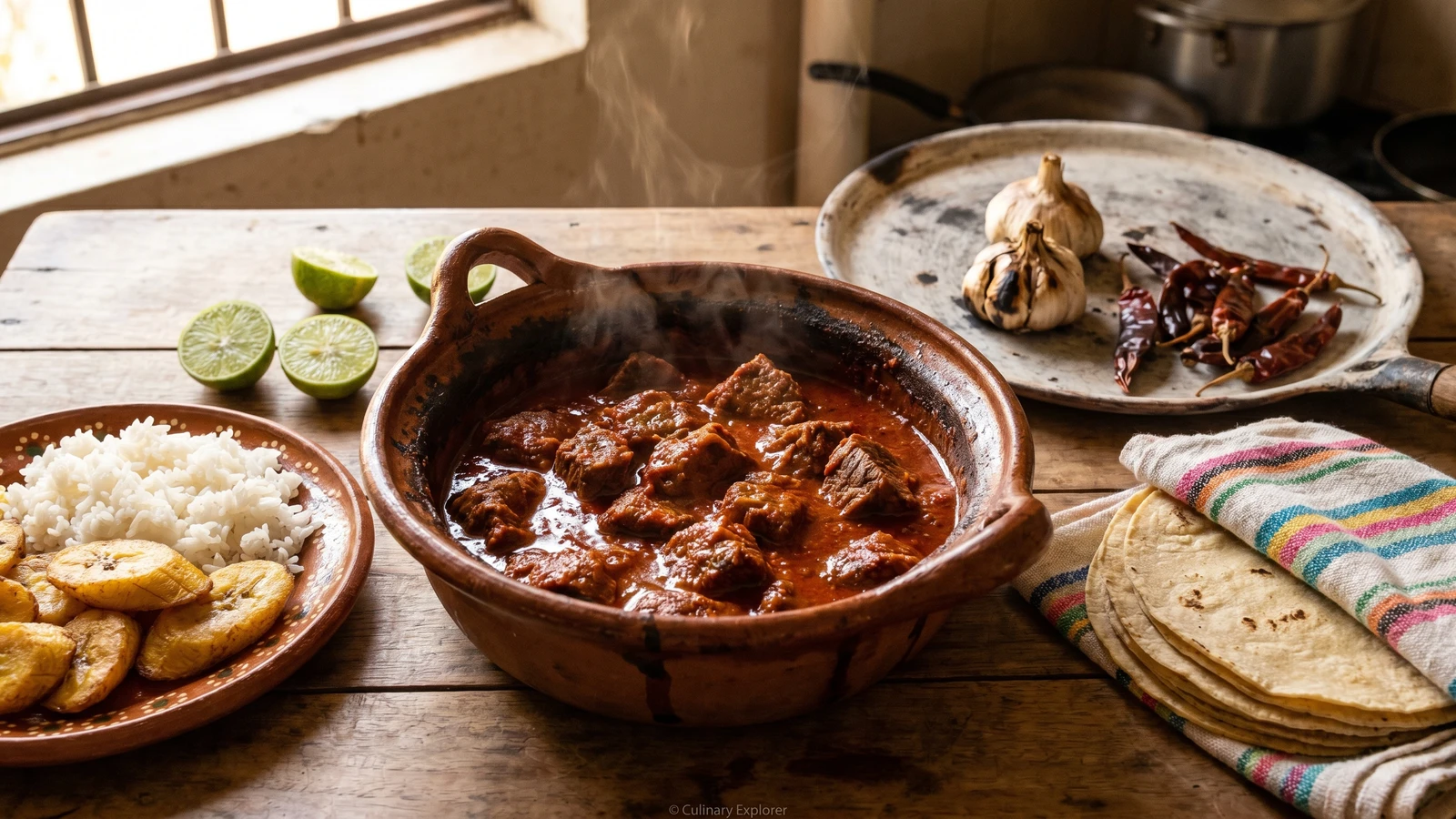
The Costa Chica's beef braised in a fierce paste of chile costeño, guajillo, and pasilla oaxaqueño with two whole heads of charred garlic. The chileajo of the Afro-Mexican coast, foundational and unapologetic.
This is from the Costa Chica. Not Oaxaca city, not Acapulco. The Costa Chica, that long ribbon of Pacific coast that runs from Guerrero into Oaxaca, through Cuajinicuilapa and Pinotepa Nacional, where the pueblos are Afro-Mexican and have been for four hundred years. La tercera raíz no es nota al pie. Es plato principal. This dish proves it.
Chileajo is two words made one: chile and ajo. Chile and garlic. That is the spine of it. The chile costeño is the one that matters here, the small red coastal chile that grows along this stretch and carries a fire you do not find inland. You build it out with guajillo for body and pasilla oaxaqueño for smoke, but the costeño is the soul. Then garlic. Two whole heads, charred black on the comal and peeled clove by clove. Then manteca de cerdo, because the frying habit on this coast crossed the ocean with the people who settled it, and it is not negotiable. La manteca es el sabor.
The beef is not an accident either. The Costa Chica is cattle country, and it was Black vaqueros who worked these herds on the colonial estates. Res en chileajo is what you cook when there is meat to braise slow and a paste worth braising it in. I learned this version in a kitchen in Cuajinicuilapa, from a woman who charred her garlic straight in the coals and measured nothing. I wrote down what I could. The rest I cooked until it was right. Saber cocinar es saber vivir.
The chile costeño takes its name from la costa, the Pacific coast of Guerrero and Oaxaca, where Afro-Mexican communities have lived since the 16th century, when enslaved Africans were brought to work the colonial cattle estates of the region. Chileajo, joining the Spanish 'ajo' (garlic) to 'chile' from the Nahuatl 'chilli,' exists across the Mixteca and the coast as a family of garlic-forward chile braises, but the Costa Chica version carries the Afro-descendant kitchen's heavy hand with garlic, lard, and coastal spice. Mexico's Afro-Mexican population received formal constitutional recognition through a 2019 reform to Article 2 and was counted for the first time in the 2020 national census, which identified roughly two and a half million people, about two percent of the country.
Quantity
3 pounds
cut into 2-inch pieces
Quantity
1/2
Quantity
4
Quantity
2
Quantity
1 tablespoon, plus more to taste
Quantity
6
stemmed and seeded
Quantity
5
stemmed and seeded
Quantity
2
stemmed and seeded
Quantity
2
left whole for charring
Quantity
1 teaspoon
Quantity
4
Quantity
3
Quantity
6
Quantity
1 teaspoon
Quantity
2 tablespoons
Quantity
3 tablespoons
Quantity
for serving
Quantity
for serving
Quantity
for serving
Quantity
for serving
| Ingredient | Quantity |
|---|---|
| bone-in beef shank (chambarete) or beef chuckcut into 2-inch pieces | 3 pounds |
| white onion | 1/2 |
| garlic cloves (for the broth) | 4 |
| bay leaves | 2 |
| kosher salt | 1 tablespoon, plus more to taste |
| dried chile costeñostemmed and seeded | 6 |
| dried chile guajillostemmed and seeded | 5 |
| dried chile pasilla oaxaqueñostemmed and seeded | 2 |
| heads of garlicleft whole for charring | 2 |
| cumin seeds | 1 teaspoon |
| allspice berries (pimienta gorda) | 4 |
| whole cloves | 3 |
| black peppercorns | 6 |
| dried Mexican oregano | 1 teaspoon |
| pineapple vinegar (vinagre de piña) or apple cider vinegar | 2 tablespoons |
| lard (manteca de cerdo) | 3 tablespoons |
| white rice (optional) | for serving |
| fried ripe plátano macho (optional) | for serving |
| hand-pressed corn tortillas (optional) | for serving |
| lime halves (optional) | for serving |
Put the beef in a large pot with the onion, the 4 garlic cloves, the bay leaves, and the salt. Cover with cold water by two inches. Bring to a gentle simmer and skim the gray foam that rises in the first fifteen minutes. Cook at a lazy bubble, partly covered, for about two hours, until the meat is tender enough to pull but still holds its shape. Lift the beef out and keep it. Save every drop of the broth. You will build the chileajo on it.
Heat a dry comal or heavy skillet over medium. Lay the two whole heads of garlic on it and char them, turning, until the skins blacken in spots and the cloves go soft, about ten minutes. Set aside to cool. On the same comal, toast the costeño, guajillo, and pasilla oaxaqueño separately, a few seconds per side, pressing each flat with a spatula. They should puff and smell sharp and sweet, never blacken. The costeño is small and thin. It burns in a blink. Watch it.
In the same dry pan, toast the cumin, allspice, cloves, and peppercorns over medium heat until fragrant, under a minute. Shake the pan so they do not scorch. Toasting wakes up the oils in the spice the same way it does in the chile. You can crush them or leave them whole for the blender to handle.
Put the toasted chiles in a bowl and cover with hot water, not boiling. Boiling water cooks the skins and turns the paste bitter. Soak for twenty minutes, until pliable, then drain. Peel the charred garlic. Into the blender go the chiles, all that garlic, the toasted spices, the oregano, the vinegar, and one cup of the reserved beef broth. Blend until completely smooth, adding broth a splash at a time only if the blades stall. You want a thick, clinging paste, not a soup.
Pass the paste through a fine-mesh strainer set over a bowl, pressing hard on the solids with the back of a ladle. The costeño and guajillo skins will not break down all the way, and you do not want them in the final dish. What comes through is deep brick red and glossy. Discard what stays behind in the strainer.
Melt the manteca in a clay cazuela or heavy pot over medium heat. When it shimmers, pour in the strained paste. Stand back, it will sputter. Fry it, stirring almost constantly, for eight to ten minutes, until it darkens, thickens, and the fat begins to break out around the edges. This is the step that makes chileajo chileajo. Raw paste tastes flat and harsh. Fried paste tastes deep and round. La manteca es el sabor. No me vengas con atajos.
Add the beef to the cazuela and turn it until every piece is coated. Pour in two to three cups of the reserved broth, enough to come halfway up the meat. Simmer uncovered for thirty to forty minutes, until the sauce thickens into a coat that clings to the beef and a sheen of red-stained fat rises to the top. Taste for salt. It should be assertive, garlicky, and hot, the way the coast makes it. Serve it in the cazuela with white rice, fried plátano macho, hot corn tortillas, and lime. Así se hace y punto.
1 serving (about 430g)
Culinary guides, cultural storytelling, and the editorial depth that makes cooking meaningful.
Discover Culinary ExplorerChef Lupita
Michoacán's Lake Pátzcuaro acúmara, a whole kurucha from the lago tatemada on a comal de leña and served with chile perón atápakua, corn tortillas, and P'urhépecha discipline.

Chef Lupita
Puebla's weekday adobo of pork shoulder braised in a thick guajillo and ancho sauce sharpened with vinegar, cumin, and clove. The deep red of a market spice stall, the dish a poblana cooks without thinking.

Chef Lupita
Loreto's pit-roasted clams, planted hinge-up in beach sand and tatemadas under a fast fire of dried romerillo brush, the resinous Baja desert shrub that gives this dish its smoke.

Chef Lupita
Oaxaca's eighth mole, the silky, almond-and-cinnamon almendrado, served over poached chicken. Mild, sweet, restrained, and a quiet rebuttal to anyone who thinks Mexican food has to be hot to be Mexican.