Chef Lupita
Birria Tacos with Consome
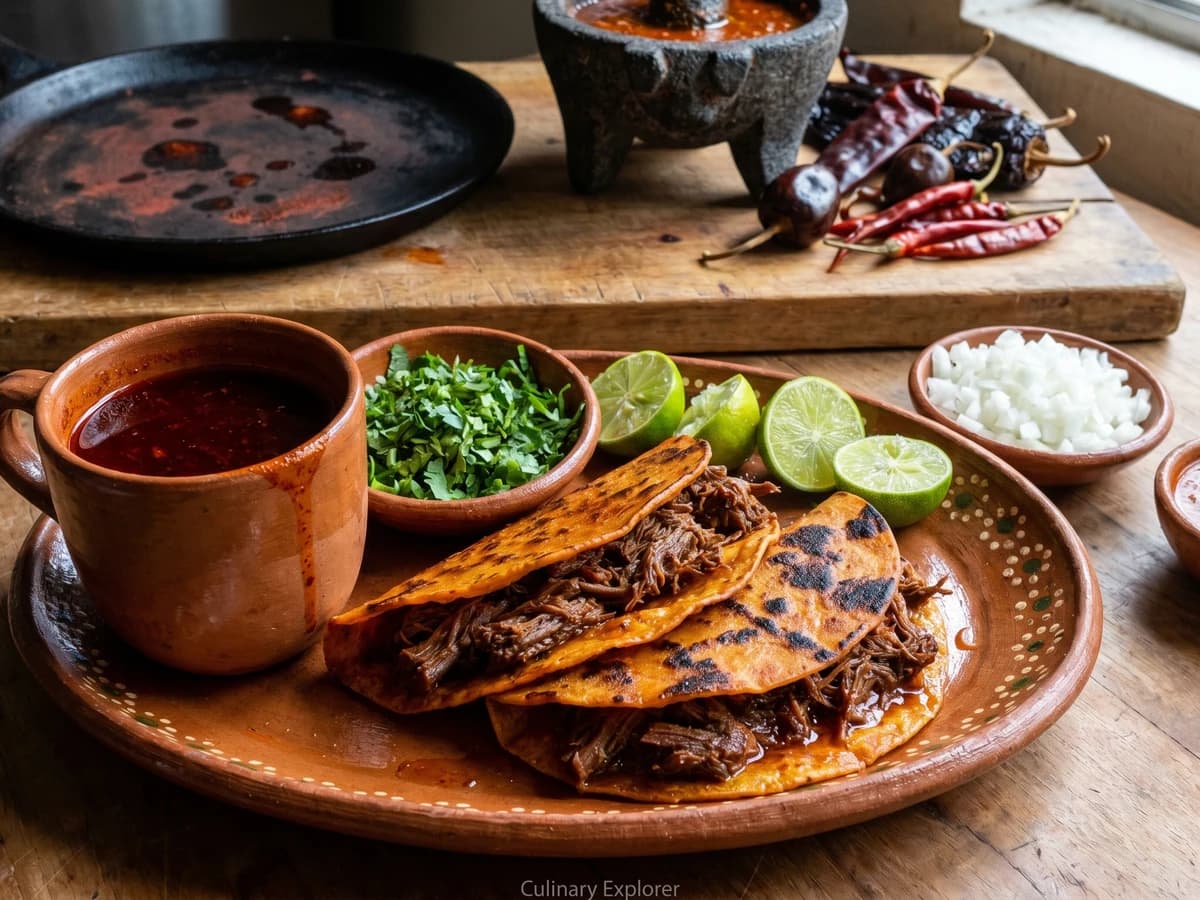
Jalisco's goat birria, born around Cocula and carried into Guadalajara's markets, slow-braised in ancho, guajillo, cascabel, and chile de arbol, then tucked into corn tortillas crisped in its own red fat.
A cooking platform built around craft, culture, and the stories behind what we eat.
Created by
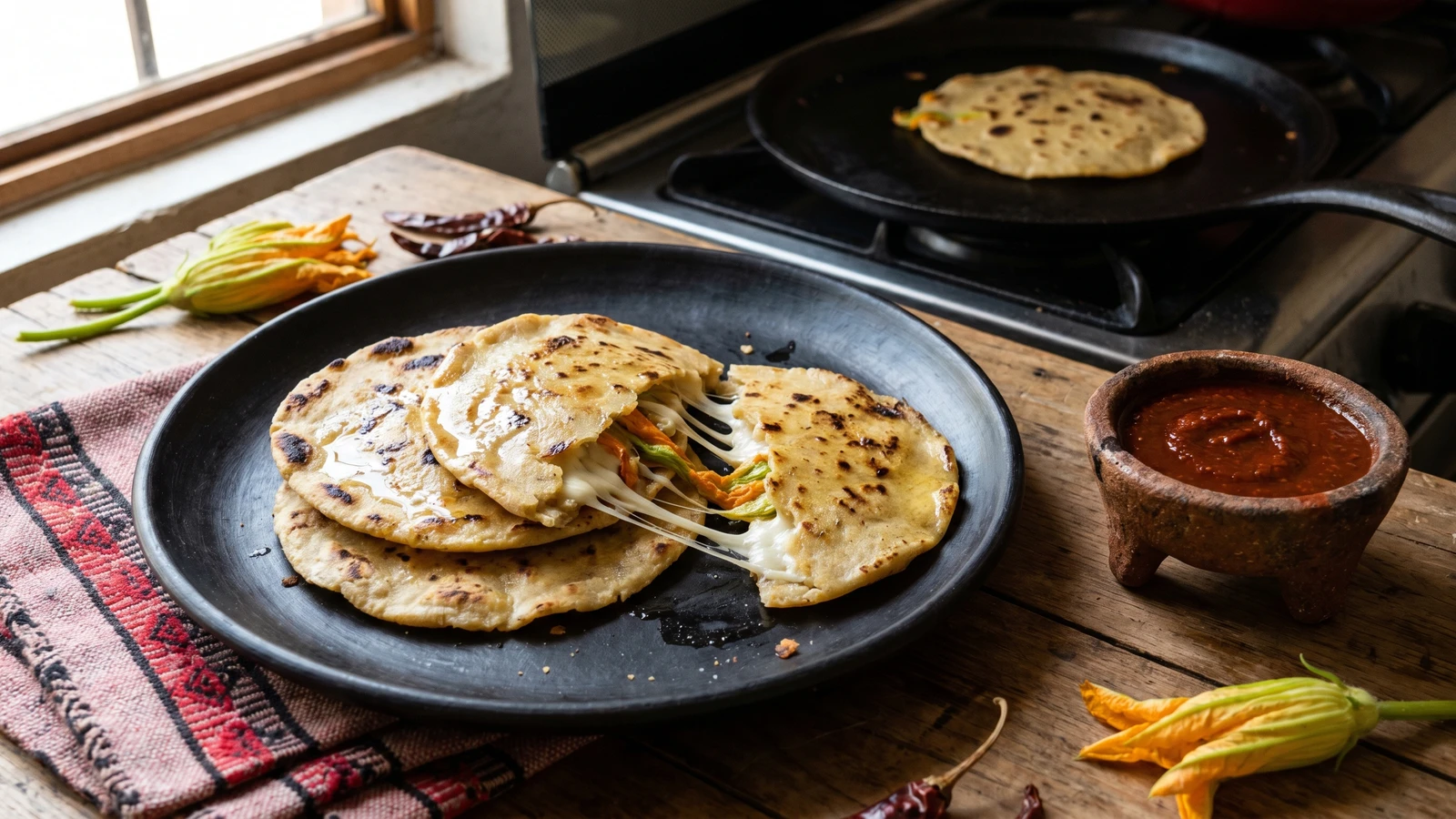
Oaxaca's market quesadilla, hand-pressed from fresh masa, folded around threads of quesillo and squash blossoms cooked with epazote, comal-toasted until the cheese pulls in long, stubborn strings.
This is an Oaxacan quesadilla. Not a Mexico City quesadilla, not a Chihuahua quesadilla, and certainly not whatever gets called a quesadilla north of the border with cheddar and a flour tortilla. In Oaxaca, you press the masa by hand, fill it with quesillo and whatever the mercado is selling that morning, fold it closed, and lay it on a hot comal. That is the entire architecture. Simple to describe. Difficult to do well.
The quesillo is what makes this Oaxacan. It is a string cheese, pulled and wound into balls by hand in the Valles Centrales, and it melts into long threads that stretch when you pull the quesadilla apart. No other cheese does this the same way. Monterey Jack will melt. Mozzarella will melt. Neither one will give you those threads that cling to the tortilla and snap when you finally bite through. If you can find real quesillo from Oaxaca, use it. If you cannot, use the best Mexican quesillo available and know what you are missing.
Flor de calabaza, squash blossoms, is a rainy-season ingredient in Oaxaca. The women at the Mercado 20 de Noviembre and the Central de Abastos sell them in bundles, bright orange and green, still damp from the morning. You clean them, strip the pistils, chop them roughly, and cook them fast in a little lard with white onion and epazote. Not cilantro. Not parsley. Epazote. It is the herb that belongs here, and it has a mineral, almost medicinal flavor that rounds out the sweetness of the blossoms. My mother did not make Oaxacan quesadillas, she was from Jalisco, but she kept a page in her notebook about flor de calabaza that said: "Don't overcook. Two minutes. The flower is already tender." She was right.
In Oaxaca, the argument about whether a quesadilla must contain cheese does not exist. Of course it does. The word has queso in it. Cada estado, su propia cocina, and in this state, the quesadilla is cheese first, filling second, debate never.
The quesadilla as a hand-pressed, comal-cooked preparation predates the arrival of European dairy, with Nahuatl-speaking peoples folding corn tortillas around beans, chiles, and squash since the pre-Classic period. Quesillo, Oaxaca's signature string cheese, was developed in the Valles Centrales in the late 19th century, likely adapted from Italian pasta filata techniques brought by immigrant cheesemakers who settled in the region; the cheese is still made by hand-pulling curds in hot whey water and winding them into distinctive ball shapes. Flor de calabaza, the blossom of Cucurbita species native to Mesoamerica, has been a seasonal food source in the Oaxacan diet for at least two thousand years, appearing in archaeological food residue studies from the Mitla and Monte Alban sites.
Quantity
1 pound
or 2 cups masa harina mixed with 1 1/4 cups warm water
Quantity
1/2 teaspoon
Quantity
1 tablespoon
plus more for greasing the comal
Quantity
12 ounces
pulled into long threads
Quantity
2 cups, about 12 to 15 blossoms
pistils and stems removed, roughly chopped
Quantity
1 tablespoon
Quantity
1/3 cup
finely diced
Quantity
1
stemmed and finely diced
Quantity
3 sprigs
leaves stripped and roughly chopped
Quantity
1/4 teaspoon
Quantity
for serving
| Ingredient | Quantity |
|---|---|
| fresh masa for tortillasor 2 cups masa harina mixed with 1 1/4 cups warm water | 1 pound |
| fine salt (for masa) | 1/2 teaspoon |
| pork lard (manteca de cerdo) for the masaplus more for greasing the comal | 1 tablespoon |
| quesillo (Oaxacan string cheese)pulled into long threads | 12 ounces |
| flor de calabaza (squash blossoms)pistils and stems removed, roughly chopped | 2 cups, about 12 to 15 blossoms |
| pork lard (manteca de cerdo) for the filling | 1 tablespoon |
| white onionfinely diced | 1/3 cup |
| fresh chile serranostemmed and finely diced | 1 |
| fresh epazoteleaves stripped and roughly chopped | 3 sprigs |
| fine salt (for filling) | 1/4 teaspoon |
| salsa de pasilla oaxaqueno or salsa verde (optional) | for serving |
Hold each blossom by the base and gently peel back the petals. Pull out the pistil and the little cluster of stamens inside. They are bitter and gritty. Strip any thorny leaves from the stems but keep the tender stems attached if they are thin. Rinse quickly under cold water. Do not soak them. Squash blossoms absorb water and turn to paste if you leave them sitting wet. Shake them gently and lay them on a clean towel. Chop them roughly into two or three pieces each.
Melt the tablespoon of lard in a skillet over medium heat. Add the diced onion and the chile serrano. Cook for two minutes, until the onion is translucent but not browned. Add the chopped squash blossoms and the epazote. Stir once, season with the quarter teaspoon of salt, and cook for no more than two minutes. The blossoms will collapse into soft, bright strips almost immediately. The moment they are wilted and the epazote is fragrant, take the skillet off the heat. Overcooked squash blossoms turn to mush and lose the delicate sweetness that makes them worth buying. Set the filling aside.
If you are using fresh masa, knead it with the half teaspoon of salt and the tablespoon of lard until the dough is smooth and does not crack at the edges when you press it flat. If it cracks, it is too dry. Add water a teaspoon at a time, kneading after each addition, until the dough is pliable. If you are using masa harina, combine it with the warm water, salt, and lard, stir until a shaggy dough forms, then knead for three minutes until smooth. The dough should feel like soft clay. It should not stick to your hands and it should not crack when you press a ball flat between your palms.
Divide the masa into eight equal balls, each about the size of a golf ball. Heat a comal or cast iron griddle over medium-high heat and grease it lightly with a little lard on a folded paper towel. Take one ball, place it between two pieces of plastic cut from a produce bag, and press it in a tortilla press to about five inches across, thicker than a regular tortilla. The disk should be sturdy enough to fold without cracking. Peel back the top plastic. Lay a generous portion of quesillo threads across one half of the disk, then spoon a tablespoon of the squash blossom filling on top of the cheese. Fold the tortilla in half over the filling, pressing the edges to seal. The quesillo should be touching the masa on both sides so it melts into the tortilla, not sitting on top of it.
Lay the quesadilla on the hot, lightly greased comal. Cook for about two and a half to three minutes on the first side. The bottom should develop golden-brown spots and the masa should set firm enough that the quesadilla holds its shape when you flip it. Turn it carefully with a spatula and cook the second side for two to three minutes more. You will know it is ready when the masa is toasted with dark spots, the edges are set, and the quesillo inside has melted into threads. Press gently on the top with your spatula. If you feel give and resistance, the cheese has done its job. Work in batches, keeping finished quesadillas warm wrapped in a clean kitchen towel or cloth servilleta.
Stack the quesadillas on a warm plate or in a basket lined with a cloth servilleta. Serve with salsa de pasilla oaxaqueno if you can make one, or a simple salsa verde of tomatillo and chile serrano. Eat them while the quesillo still pulls in threads. A cold quesadilla is a dead quesadilla. The cheese sets, the masa stiffens, and the magic is gone. Recetas probadas y garantizadas.
1 serving (about 230g)
Culinary guides, cultural storytelling, and the editorial depth that makes cooking meaningful.
Discover Culinary ExplorerChef Lupita
Jalisco's goat birria, born around Cocula and carried into Guadalajara's markets, slow-braised in ancho, guajillo, cascabel, and chile de arbol, then tucked into corn tortillas crisped in its own red fat.
Chef Lupita
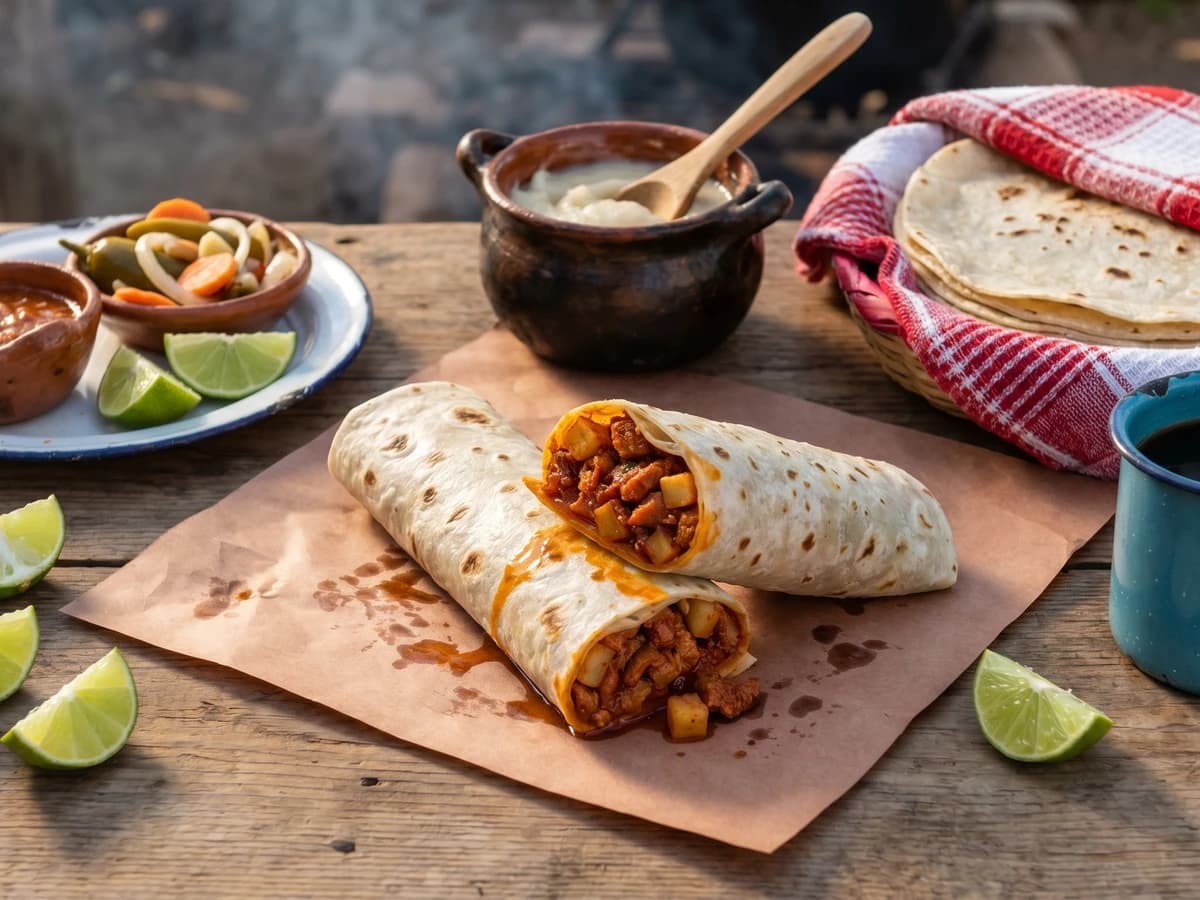
Sonora's working morning burrito: chicharrón de cáscara stewed in chile colorado with diced potato, rolled tight in a paper-thin tortilla sobaquera and eaten standing up at the carreta.
Chef Lupita
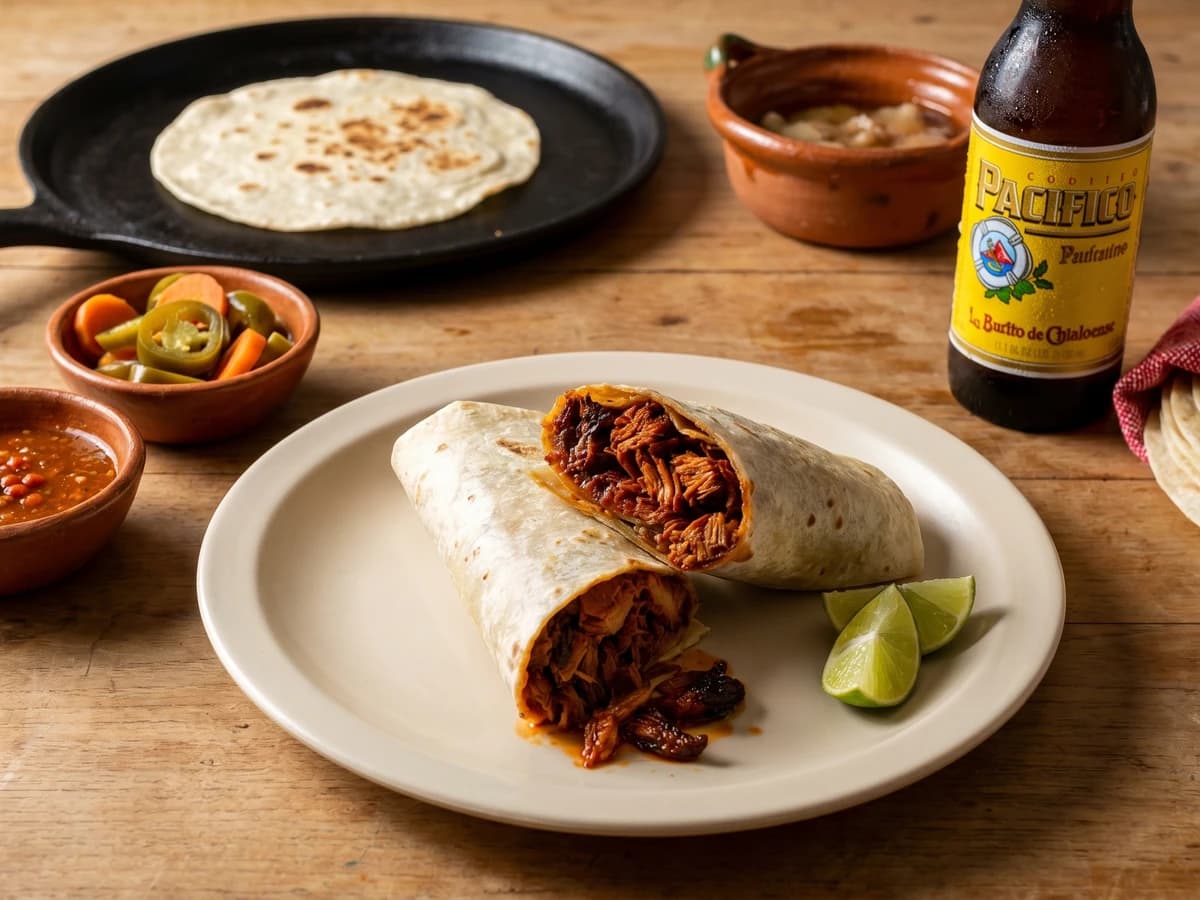
Mocorito's pork chilorio, shredded and confited in lard with chile ancho and pasilla, rolled into a thin handmade flour tortilla. The burrito Sinaloa sends out into the world.
Chef Lupita
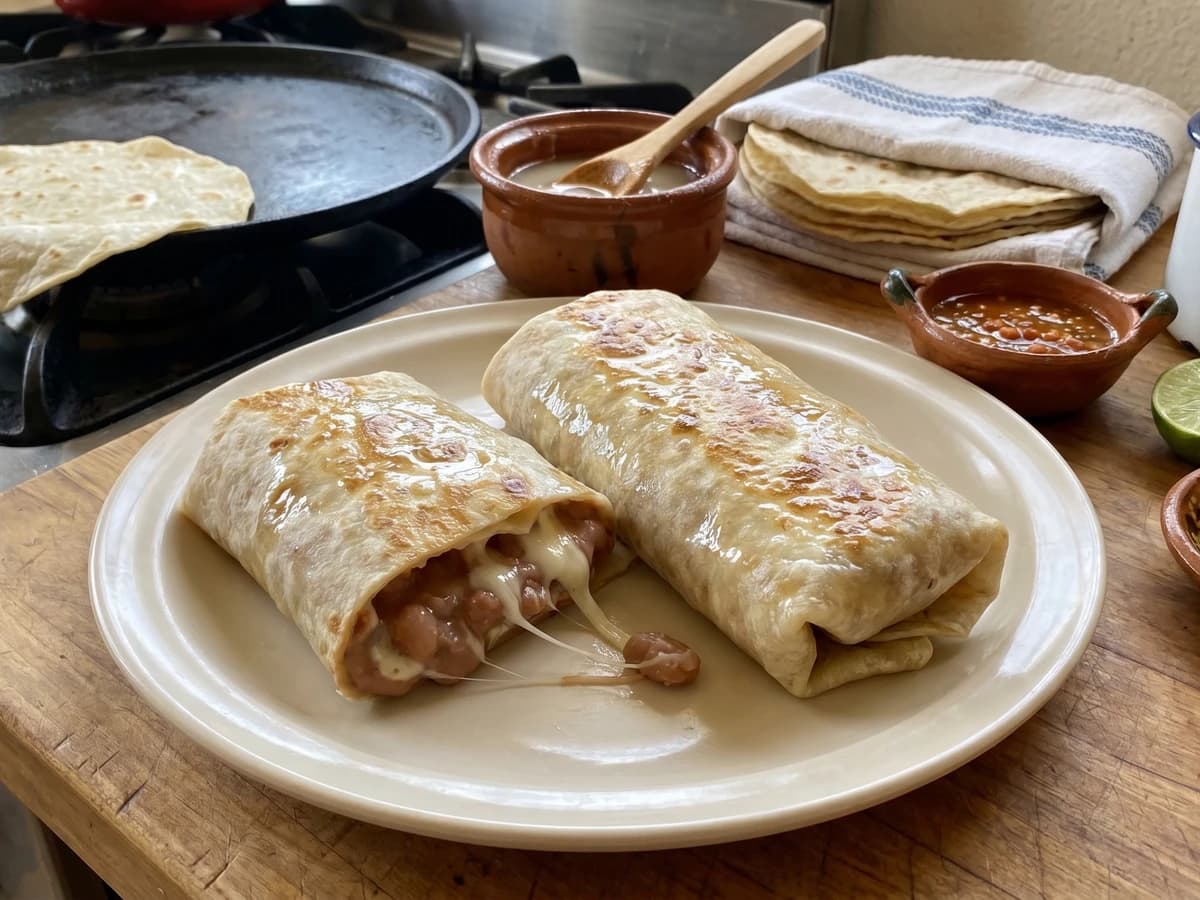
Sonora's morning burrito of mashed pinto frijoles puercos and melted queso asadero, wrapped in a paper-thin sobaquera and seared on the comal until the cheese pulls in long strings.