Chef Lupita
Birria Tacos with Consome
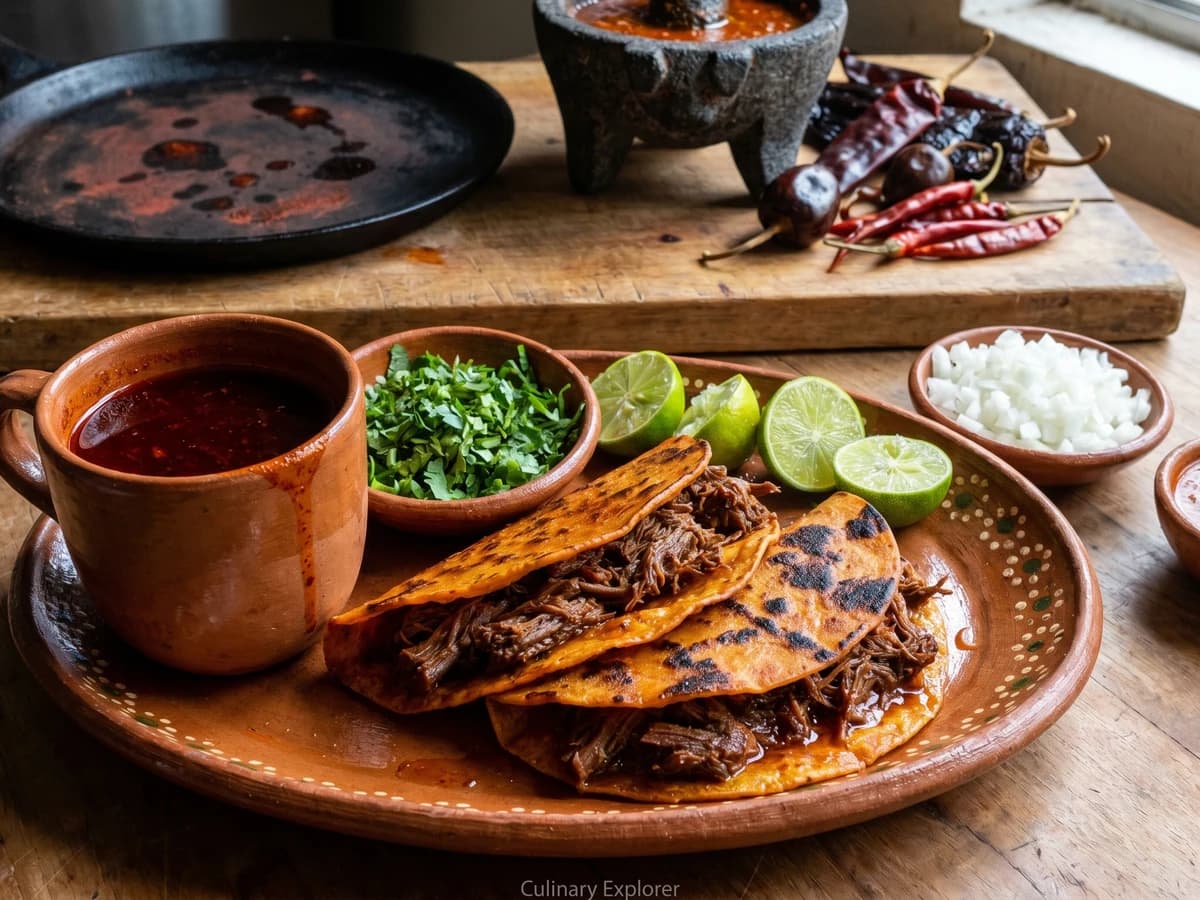
Jalisco's goat birria, born around Cocula and carried into Guadalajara's markets, slow-braised in ancho, guajillo, cascabel, and chile de arbol, then tucked into corn tortillas crisped in its own red fat.
A cooking platform built around craft, culture, and the stories behind what we eat.
Created by
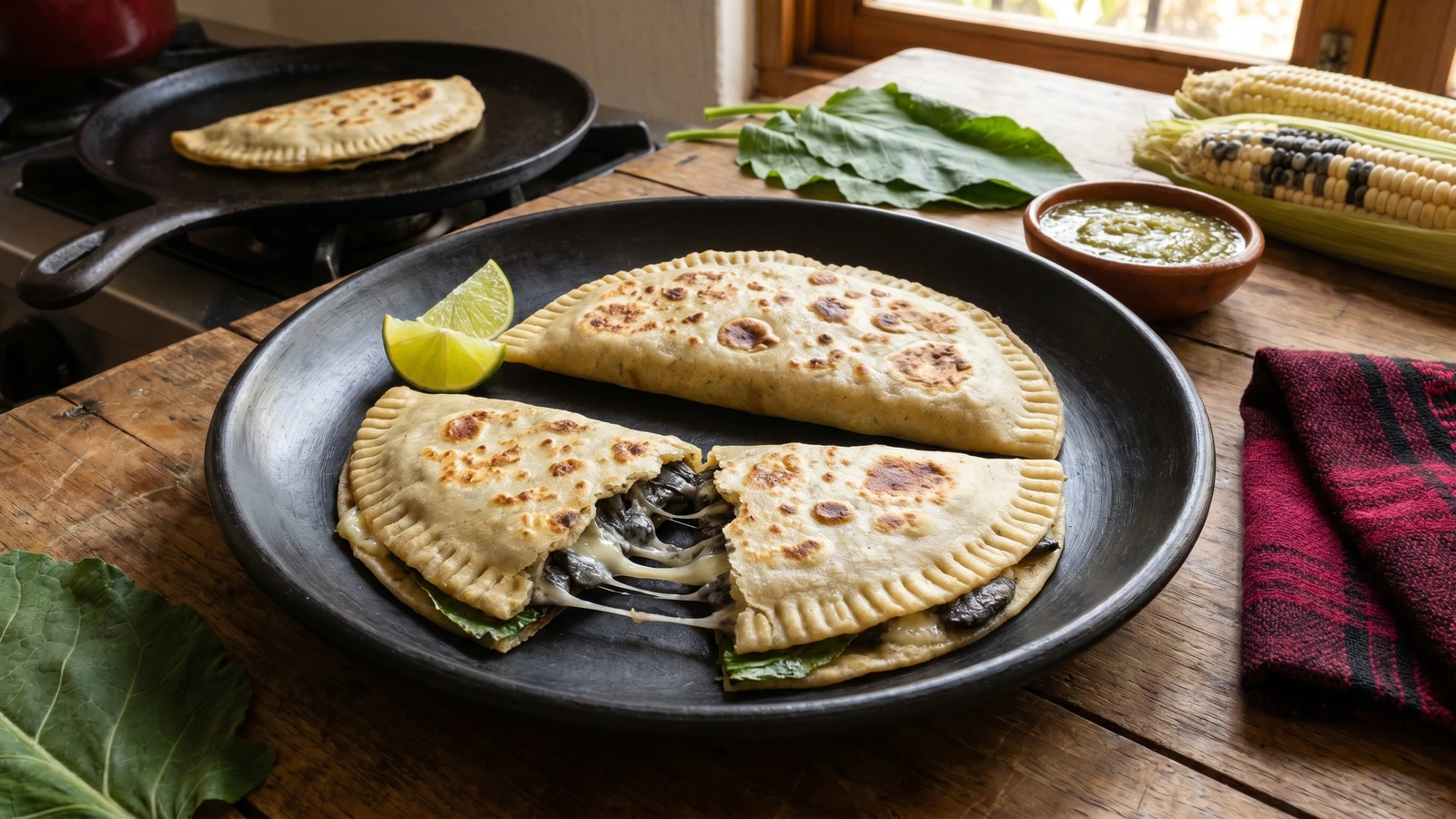
Fresh masa quesadillas from Oaxaca filled with huitlacoche sautéed in lard with garlic and epazote, layered with hoja santa and quesillo, pressed by hand and cooked on a darkened comal until the edges crisp and the cheese pulls in long threads.
This is Oaxacan. The huitlacoche, the hoja santa, the quesillo, the hand-pressed masa on the comal. Every ingredient in this quesadilla tells you where you are on the map.
Huitlacoche appears in the markets of Oaxaca's Valles Centrales during the rainy season, June through October, when the corn fungus swells inside the ears and turns the kernels into something silver-gray and extraordinary. The vendors at the Central de Abastos in Oaxaca city sell it by the kilo from plastic tubs, still wet from the milpa. If you've never worked with it, the look is strange. Trust the cooks who have been buying it for centuries. The flavor is earthy, mushroom-deep, with an inkiness that stains the pan and rewards the patience. My mother never cooked with huitlacoche. She was Jalisciense and it wasn't part of her vocabulary. The first time I tasted it was at a market stall in Etla, north of Oaxaca city, folded into a quesadilla with a strip of hoja santa and a long pull of quesillo. I understood in one bite why this ingredient has survived five hundred years of people trying to call it a disease.
The hoja santa is the other half of the equation. That large, heart-shaped leaf with the anise backbone. It doesn't just flavor the filling, it perfumes the entire quesadilla from inside the fold, releasing its oils against the hot masa. You lay a piece of leaf against the quesillo so the heat draws out the fragrance. In Oaxaca, the senoras at the market don't measure hoja santa. They tear it. You'll learn to do the same. Saber cocinar es saber vivir.
Huitlacoche, from the Nahuatl 'cuitlacochin' meaning sleeping excrement (a characteristically blunt Aztec descriptor), has been consumed in Mesoamerica since pre-Columbian times, when it was harvested from milpas and valued as a seasonal delicacy rather than a crop disease. The Spanish colonizers largely rejected it, and for centuries European and North American agriculture classified Ustilago maydis as corn smut to be destroyed, while Mexican cooks continued to prize it as an ingredient worthy of quesadillas, tamales, and sopas. Oaxaca's position as one of the centers of corn biodiversity, with dozens of native maize varieties still cultivated in the Valles Centrales and Sierra Norte, made it a natural stronghold for huitlacoche cookery, and the combination with hoja santa, a leaf native to southern Mexico and used in Oaxacan, Veracruzano, and Chiapaneco kitchens, represents a pairing that predates the arrival of European cheese by centuries.
Quantity
1 pound
Quantity
2 tablespoons
Quantity
1/2 medium
finely diced
Quantity
2
minced
Quantity
1
stemmed and finely chopped
Quantity
1 sprig
leaves stripped and roughly chopped
Quantity
to taste
Quantity
2 pounds
Quantity
8 ounces
pulled into long thin strands
Quantity
8 to 10
center rib removed, torn into halves or thirds
Quantity
for serving
Quantity
for serving
| Ingredient | Quantity |
|---|---|
| fresh or frozen huitlacoche | 1 pound |
| lard (manteca de cerdo) | 2 tablespoons |
| white onionfinely diced | 1/2 medium |
| garlic clovesminced | 2 |
| fresh chile serranostemmed and finely chopped | 1 |
| epazoteleaves stripped and roughly chopped | 1 sprig |
| kosher salt | to taste |
| fresh masa for tortillas (masa de maiz nixtamalizado) | 2 pounds |
| quesillo (Oaxacan string cheese)pulled into long thin strands | 8 ounces |
| fresh hoja santa leavescenter rib removed, torn into halves or thirds | 8 to 10 |
| salsa verde cruda (optional) | for serving |
| lime wedges (optional) | for serving |
Melt the lard in a wide skillet over medium heat. Add the diced onion and cook until it softens and turns translucent, about three minutes. Add the garlic and chile serrano and cook one minute more, until the garlic smells sharp but has not browned. Add the huitlacoche, breaking up the larger pieces with a wooden spoon. It will release liquid almost immediately. That's good. Let it cook, stirring occasionally, for eight to ten minutes. The liquid will cook off and the mixture will darken to a deep gray-black, glossy and thick enough to hold its shape on the spoon. Stir in the epazote and salt in the last minute. The epazote goes in late because heat kills its flavor. Pull the skillet off the heat and set it aside.
Pull the quesillo apart into long, thin strands, the way you would pull string cheese. Oaxacan quesillo is not grated. It is not cubed. It is pulled. The strands melt into long threads inside the quesadilla, and when you tear one open, the cheese should stretch. If your quesillo is dry or crumbly, it is old. Find a better source.
Rinse the hoja santa leaves and pat them dry. Remove the thick center rib by folding the leaf along the vein and tearing or cutting it out. The rib is tough and fibrous. Tear each leaf into pieces roughly the size of your palm, enough to line one side of the quesadilla. The leaves should be large enough to cover the filling but small enough to fold inside the masa without poking out the edges.
Heat a dry comal or cast iron griddle over medium-high heat. Take a ball of fresh masa about the size of a large egg, roughly 80 grams. Press it between your palms or use a tortilla press lined with plastic to flatten it into an oval about six inches across and a quarter-inch thick. The masa should be moist and pliable, not cracking at the edges. If it cracks, it is too dry. Knead in a tablespoon of water at a time until it presses smooth.
On one half of the pressed oval, lay a piece of hoja santa flat against the masa. Place a generous spoonful of the huitlacoche filling on top of the leaf. Spread a small nest of quesillo strands over the filling. The order matters: hoja santa against the masa, then huitlacoche, then cheese. The leaf perfumes the corn from underneath while the cheese melts down through the filling. Fold the empty half of the masa over the filling and press the edges together firmly with your fingertips. Seal them well or the quesadilla will split open on the comal.
Place the quesadilla on the hot dry comal. Cook for three to four minutes on the first side, until the bottom develops golden-brown spots and the masa firms up enough to flip without breaking. Turn it carefully with a wide spatula. Cook two to three minutes on the second side. The surface should be lightly blistered and the edges should feel crisp when you press them. The quesillo inside should be melted and pulling in threads. If your comal is well-seasoned, you need no oil. If the masa sticks, brush the surface with a thin film of lard. Asi se hace y punto.
Transfer each quesadilla to a warm plate the moment it comes off the comal. Serve with salsa verde cruda and lime wedges alongside. These are eaten the minute they are made. A quesadilla that sits becomes a quesadilla that steams inside its own masa and loses the contrast between the crisp surface and the molten filling. Make them, eat them, make the next batch. Recetas probadas y garantizadas.
1 serving (about 160g)
Culinary guides, cultural storytelling, and the editorial depth that makes cooking meaningful.
Discover Culinary ExplorerChef Lupita
Jalisco's goat birria, born around Cocula and carried into Guadalajara's markets, slow-braised in ancho, guajillo, cascabel, and chile de arbol, then tucked into corn tortillas crisped in its own red fat.
Chef Lupita
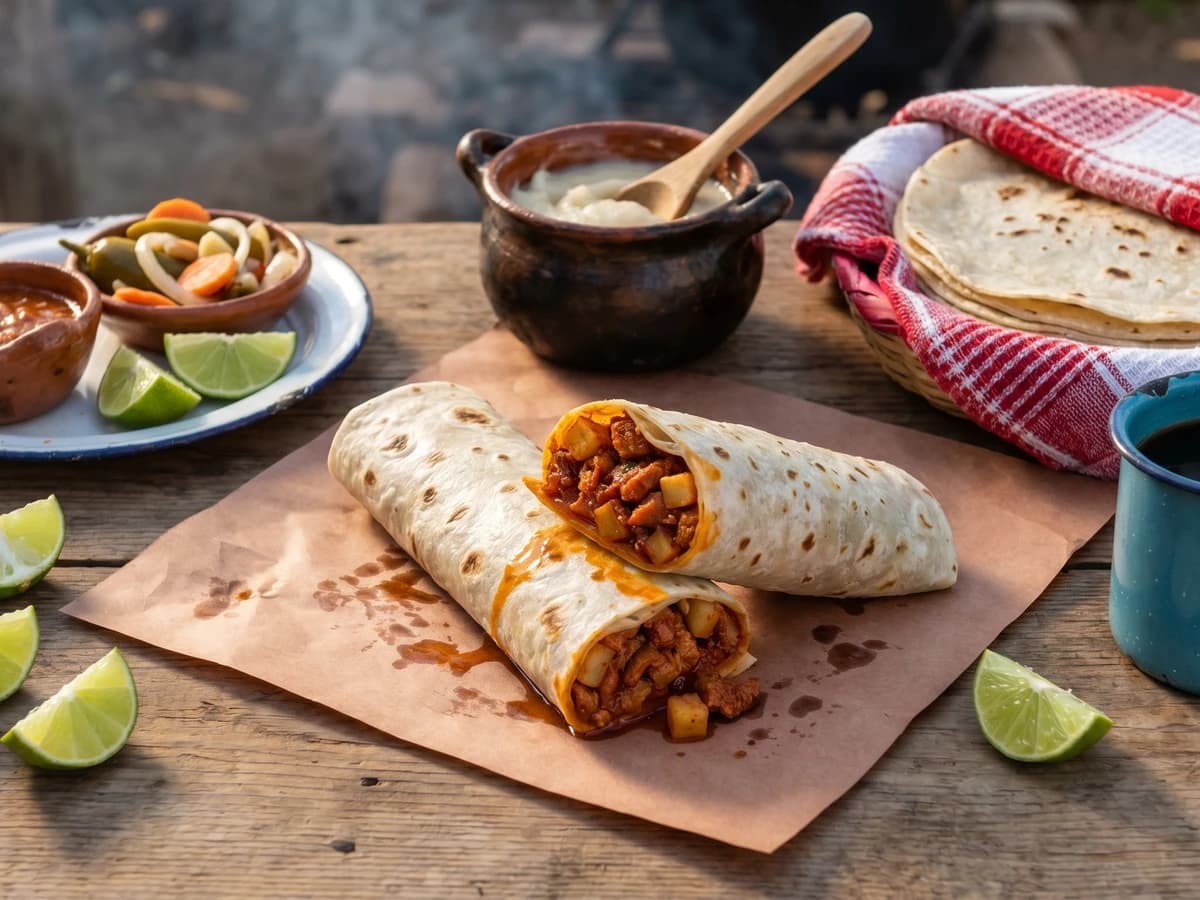
Sonora's working morning burrito: chicharrón de cáscara stewed in chile colorado with diced potato, rolled tight in a paper-thin tortilla sobaquera and eaten standing up at the carreta.
Chef Lupita
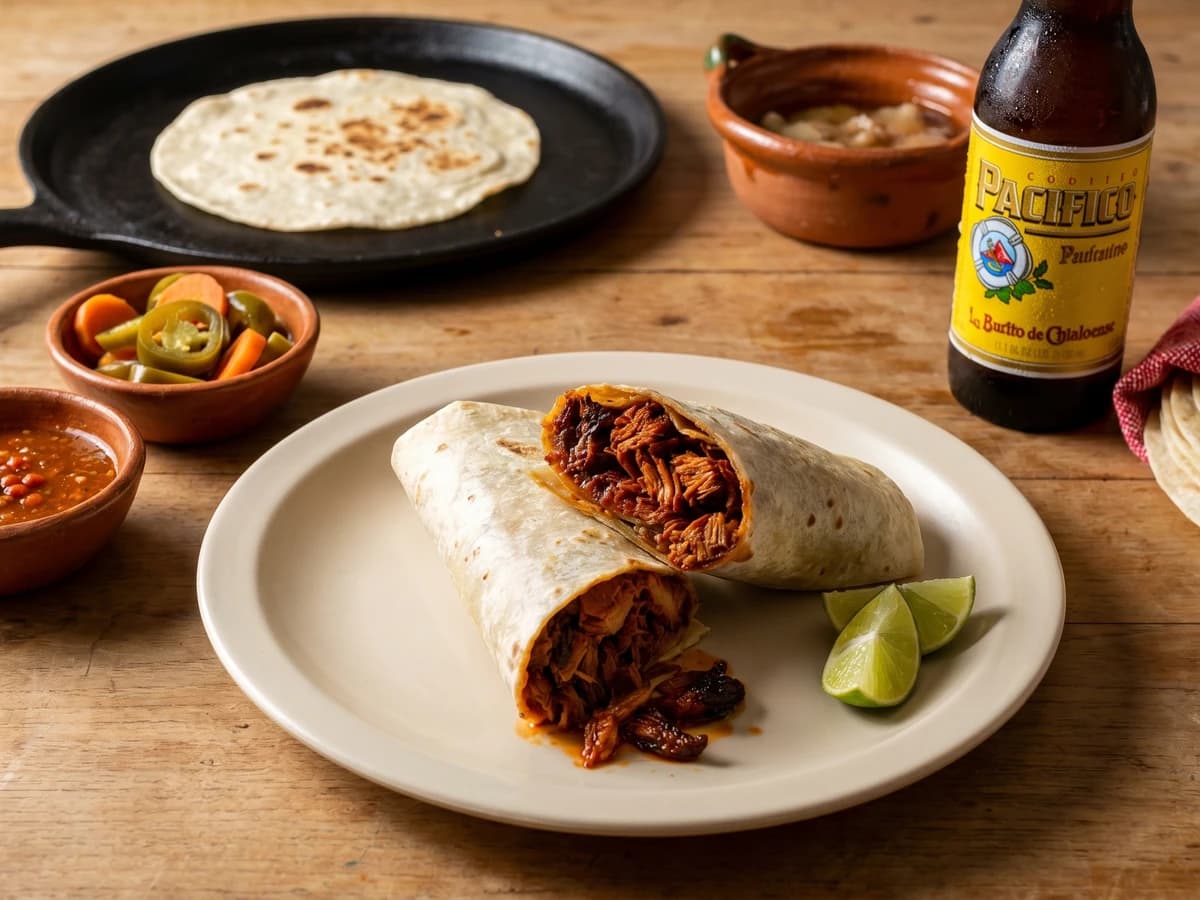
Mocorito's pork chilorio, shredded and confited in lard with chile ancho and pasilla, rolled into a thin handmade flour tortilla. The burrito Sinaloa sends out into the world.
Chef Lupita
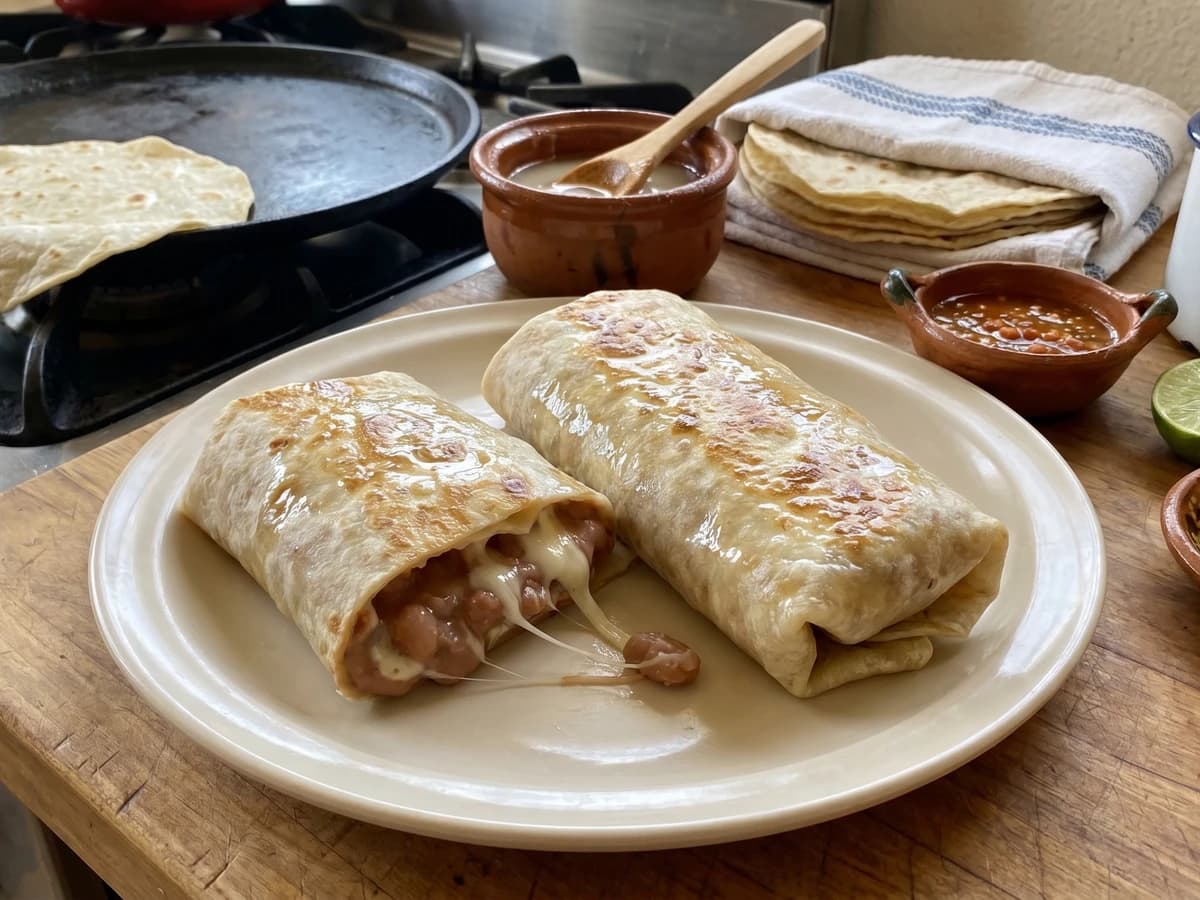
Sonora's morning burrito of mashed pinto frijoles puercos and melted queso asadero, wrapped in a paper-thin sobaquera and seared on the comal until the cheese pulls in long strings.