Chef Lupita
Birria Tacos with Consome
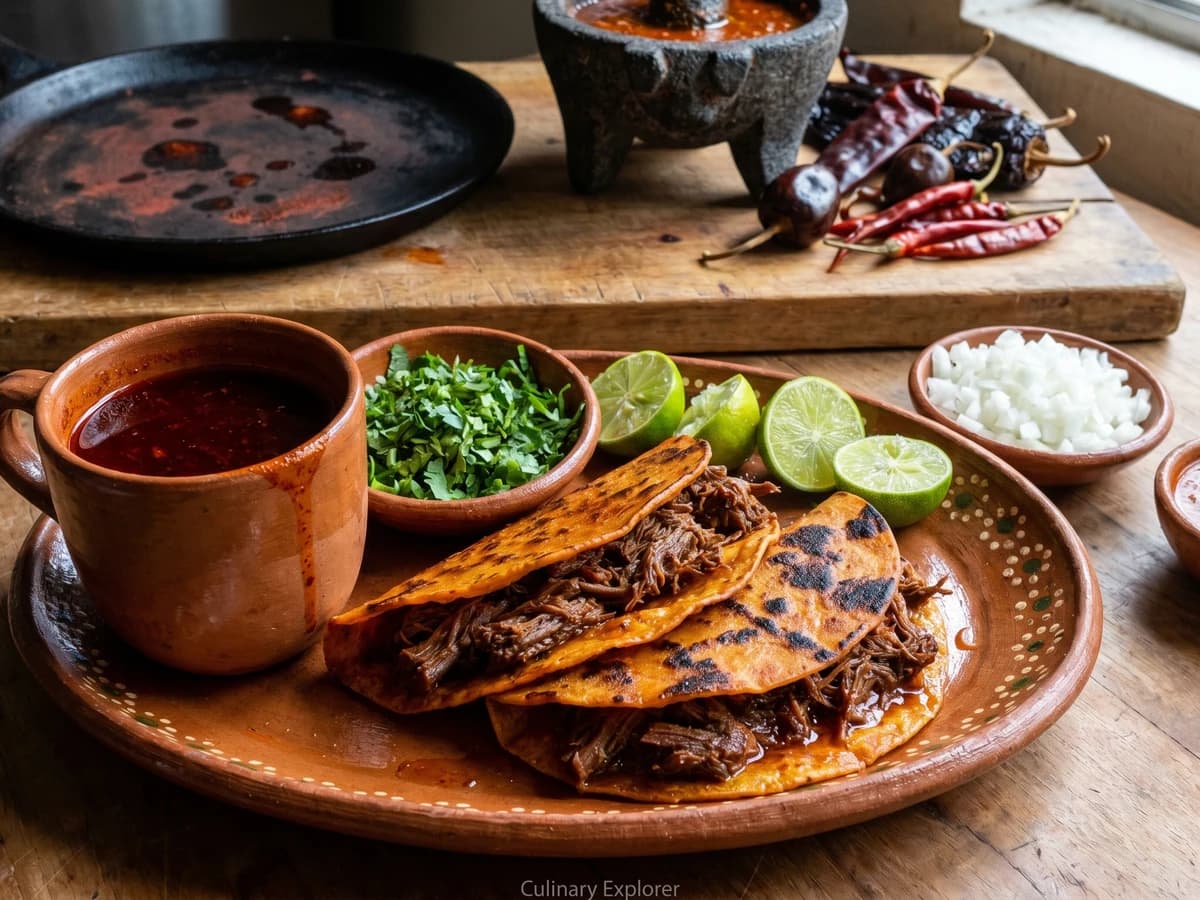
Jalisco's goat birria, born around Cocula and carried into Guadalajara's markets, slow-braised in ancho, guajillo, cascabel, and chile de arbol, then tucked into corn tortillas crisped in its own red fat.
A cooking platform built around craft, culture, and the stories behind what we eat.
Created by
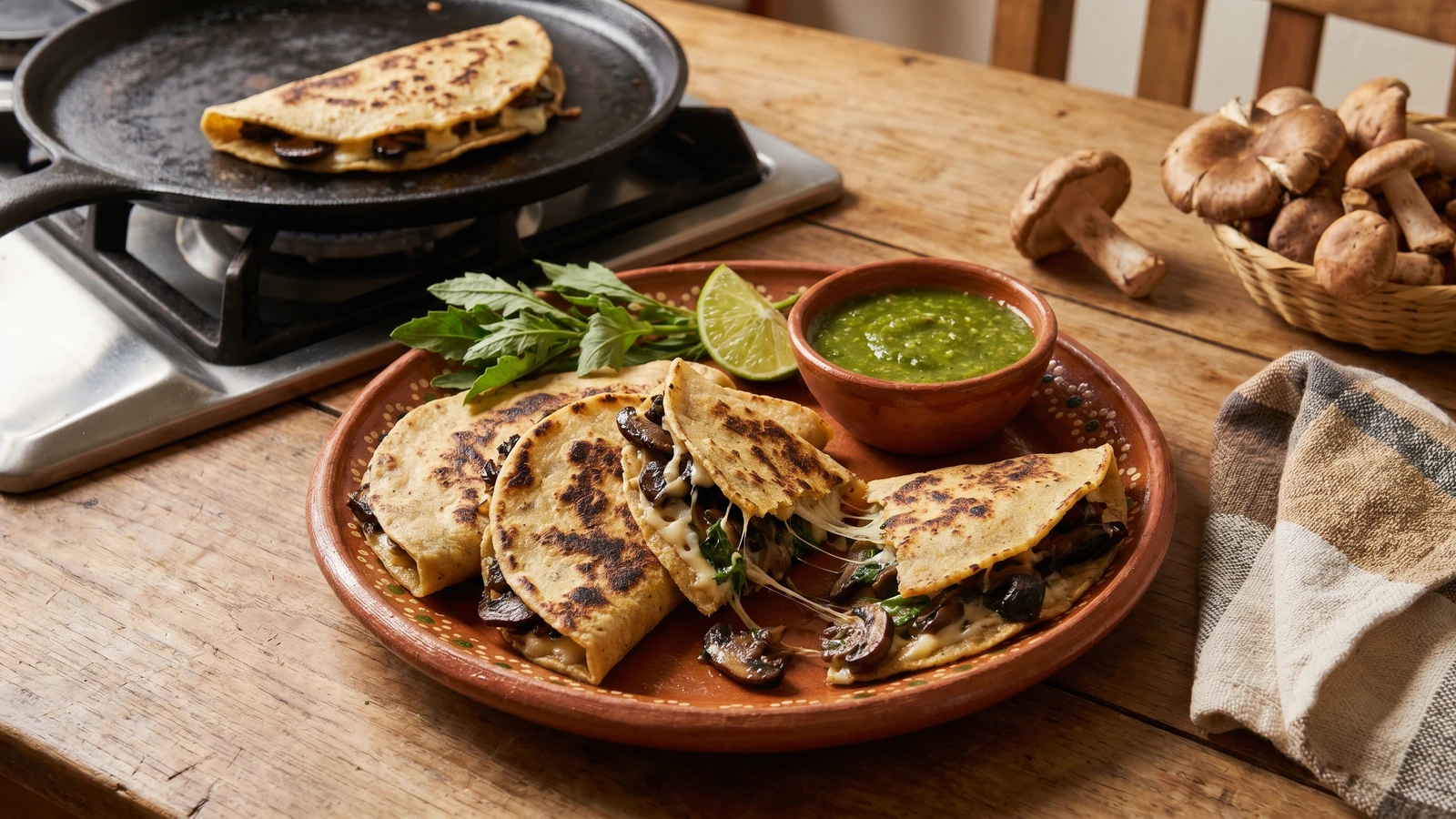
Central Mexico's rainy season quesadillas, hand-formed from fresh corn masa, filled with foraged wild mushrooms cooked in lard with epazote, folded with quesillo, and toasted on a comal until the edges crisp and the cheese pulls in long strings.
This is a dish from central Mexico, from the markets of Mexico City and the Estado de Mexico, from the months when the rains come and the mountains send their mushrooms down to the city. June through October, the stalls at La Merced and Mercado de San Juan and the tianguis across the Valle de Mexico fill with baskets of hongos silvestres: clavitos, patas de pajaro, escobetillas, cazahuates, duraznillos. Women who have been foraging the Sierra Norte and the forests around Amecameca and Rio Frio since before you were born carry them in huacales, sorted by type, still damp with mountain air. That is the season. If you are making this dish in February, you are making it with cultivated mushrooms and you should know the difference.
The quesadilla here is not a tortilla folded in half. In Mexico City, a quesadilla is a hand-formed masa pocket, pressed from fresh nixtamalized corn masa, filled, folded shut, and cooked on a comal or a plancha until the outside crisps. And yes, in Mexico City, a quesadilla does not necessarily have cheese. That argument has been running for decades and I am not settling it today. This version has quesillo because the mushrooms and the cheese and the epazote together are one of the great combinations in Mexican cooking and I will not apologize for it.
The filling is simple because the mushrooms do the work. Lard in the pan, garlic, white onion, a chile serrano or two for heat, the mushrooms, and a generous handful of fresh epazote thrown in at the end. Epazote is not optional. It is the herb that makes this filling taste like what it is supposed to taste like: earthy, slightly medicinal, irreplaceable. My mother used to say that any cook who leaves out the epazote is a cook who has never eaten this dish made right. She kept a pot of it growing on the balcony in Colonia Roma, and she put it in everything from beans to quesadillas to caldo de hongos. Saber cocinar es saber vivir.
Wild mushroom consumption in central Mexico predates the conquest by millennia, with the Nahua peoples of the Valle de Mexico classifying dozens of edible forest fungi by season, habitat, and preparation method. The Codex Florentino, compiled by Fray Bernardino de Sahagun in the 16th century, documents indigenous knowledge of specific mushroom varieties and their culinary uses, distinguishing carefully between edible and toxic species. The corn masa quesadilla as a street food format consolidated in Mexico City's markets during the 20th century, but the pairing of foraged mushrooms with epazote in corn-based preparations is far older, rooted in the Mesoamerican milpa system where corn, beans, squash, herbs, and wild-gathered foods formed an integrated diet. The Sierra Norte of Puebla and the forests of the Estado de Mexico remain the primary sourcing regions for Mexico City's wild mushroom trade, though climate change and deforestation have reduced the diversity and volume of the harvest in recent decades.
Quantity
1 pound (or 2 cups masa harina with 1 1/4 cups warm water)
if using masa harina, mix and knead until smooth and pliable
Quantity
1 pound
cleaned with a damp cloth, torn or sliced into bite-sized pieces
Quantity
2 tablespoons
Quantity
1/2 medium
finely diced
Quantity
3
finely minced
Quantity
2
finely chopped, seeds and all
Quantity
1/2 cup
roughly chopped
Quantity
1/2 teaspoon, plus more to taste
Quantity
8 ounces
pulled into thin strips
Quantity
6
husked and rinsed
Quantity
2
stemmed
Quantity
1/4 cup
Quantity
1/4 medium
Quantity
1/2 teaspoon
| Ingredient | Quantity |
|---|---|
| fresh corn masa for tortillasif using masa harina, mix and knead until smooth and pliable | 1 pound (or 2 cups masa harina with 1 1/4 cups warm water) |
| mixed wild mushroomscleaned with a damp cloth, torn or sliced into bite-sized pieces | 1 pound |
| pork lard (manteca de cerdo) | 2 tablespoons |
| white onionfinely diced | 1/2 medium |
| garlic clovesfinely minced | 3 |
| fresh chile serrano (for filling)finely chopped, seeds and all | 2 |
| fresh epazote leavesroughly chopped | 1/2 cup |
| kosher salt | 1/2 teaspoon, plus more to taste |
| quesillo (Oaxacan string cheese)pulled into thin strips | 8 ounces |
| tomatillos (for salsa)husked and rinsed | 6 |
| fresh chile serrano (for salsa)stemmed | 2 |
| fresh cilantro (for salsa) | 1/4 cup |
| white onion (for salsa) | 1/4 medium |
| kosher salt (for salsa) | 1/2 teaspoon |
Drop the husked tomatillos and the two stemmed chiles serrano into a blender with the cilantro, the quarter onion, the salt, and two tablespoons of water. Blend until smooth but not airy. Taste it. It should be tart and sharp with a clean green heat. Set it aside. This salsa is raw on purpose. Cooking it would soften the acidity and you need that brightness to cut through the richness of the lard and the cheese.
Do not wash your mushrooms under running water. Wild mushrooms are sponges and they will absorb every drop and then weep it back into the pan. Use a damp cloth or a soft brush to wipe off any dirt. If they are very dirty, a quick rinse and an immediate pat dry. Tear larger mushrooms into bite-sized pieces by hand. Smaller ones can stay whole. The irregular shapes catch the lard and the garlic in the pan better than a clean knife cut.
Heat the lard in a wide skillet over medium-high heat. When it shimmers, add the diced onion and cook until it turns translucent, about two minutes. Add the garlic and the chopped chile serrano. Stir for thirty seconds, until the garlic smells sharp but has not browned. Now add all the mushrooms at once. They will sizzle and then seem to crowd the pan. Do not stir constantly. Let them sit and make contact with the hot surface. That is where the color comes from. After three or four minutes, they will have released their liquid. Keep cooking until that liquid evaporates and the mushrooms start to brown at the edges, another five minutes or so.
When the mushrooms are browned and the pan is nearly dry, add the chopped epazote and stir it through. Cook for one minute, just until the leaves wilt and the smell hits you: green, pungent, slightly resinous, like nothing else in the herb world. Season with salt to taste. Pull the pan off the heat. The filling should be concentrated, not wet. Wet filling makes soggy quesadillas. Asi se hace y punto.
If you are using fresh masa from a tortilleria, knead it in a bowl for a minute until it is smooth and pliable. If it cracks at the edges when you press it, it is too dry. Add water a teaspoon at a time and knead until it holds together without sticking to your hands. If you are using masa harina, combine it with the warm water and knead for two to three minutes until the texture is like soft clay. Cover the masa with a damp towel while you work. It dries out fast.
Pinch off a ball of masa about the size of a golf ball, roughly 60 grams. Press it between your palms or use a tortilla press lined with plastic to flatten it into an oval about five inches long and a quarter inch thick. These are not tortillas. They are slightly thicker, slightly oval, because they need to hold the filling without breaking. Place a spoonful of mushroom filling on one half and lay a few strips of quesillo over the mushrooms. Fold the masa over and press the edges together with your fingers to seal. The seal matters. If it opens on the comal, you lose the cheese.
Heat a comal or a large cast iron skillet over medium heat. No oil on the surface. Place the quesadillas seam side down and cook for three to four minutes. You will hear a faint sizzle where the masa touches the hot iron. When the bottom is set and shows golden brown spots, flip carefully with a thin spatula. Cook the other side for another three to four minutes until it too is golden and firm. The masa should be lightly crisp on the outside and tender inside. The cheese should be melted and pulling in strings when you tear one open.
Serve the quesadillas the moment they come off the comal, two or three per plate, with the salsa verde cruda on the side and extra epazote leaves if you have them. They do not wait. The masa stiffens and the cheese solidifies. This is food eaten standing at a market stall or passed across the kitchen table within minutes of coming off the heat. Recetas probadas y garantizadas.
1 serving (about 220g)
Culinary guides, cultural storytelling, and the editorial depth that makes cooking meaningful.
Discover Culinary ExplorerChef Lupita
Jalisco's goat birria, born around Cocula and carried into Guadalajara's markets, slow-braised in ancho, guajillo, cascabel, and chile de arbol, then tucked into corn tortillas crisped in its own red fat.
Chef Lupita
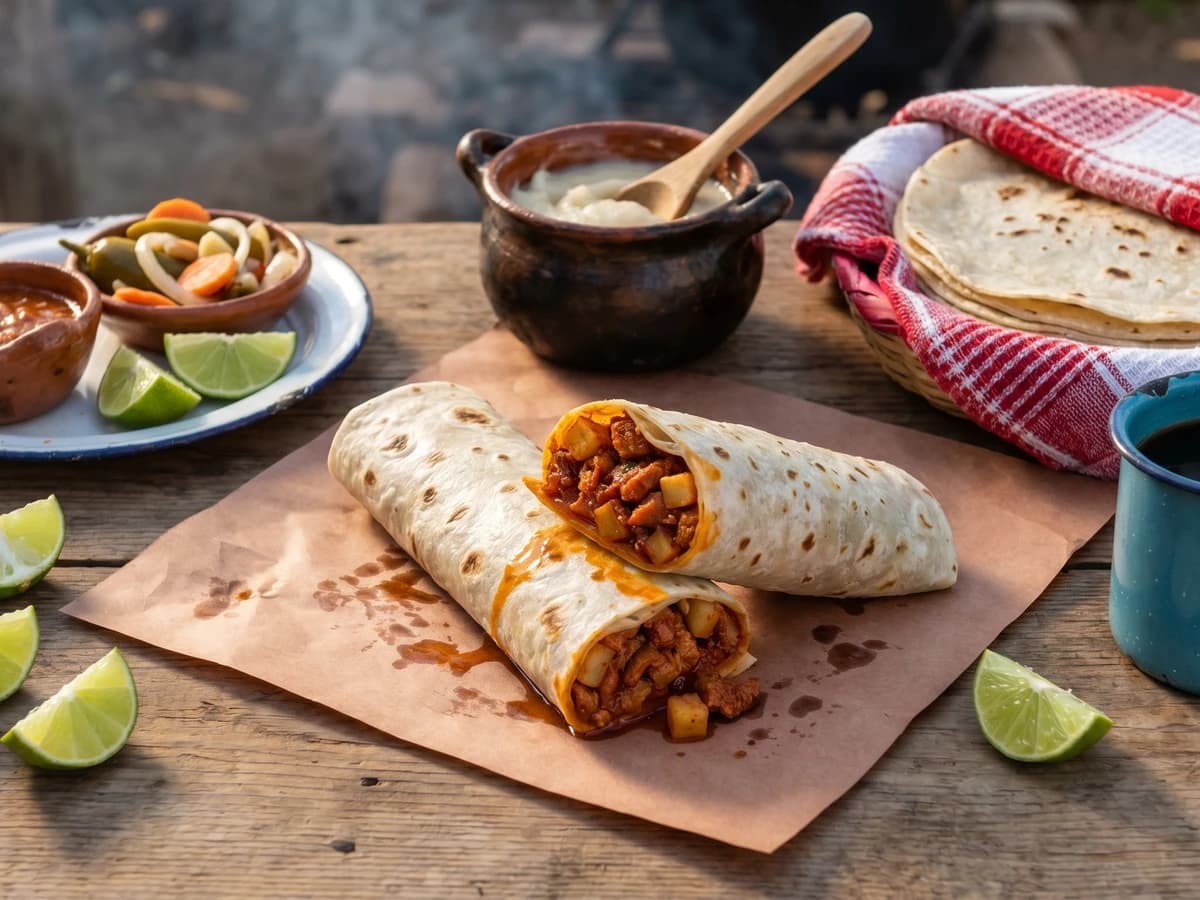
Sonora's working morning burrito: chicharrón de cáscara stewed in chile colorado with diced potato, rolled tight in a paper-thin tortilla sobaquera and eaten standing up at the carreta.
Chef Lupita
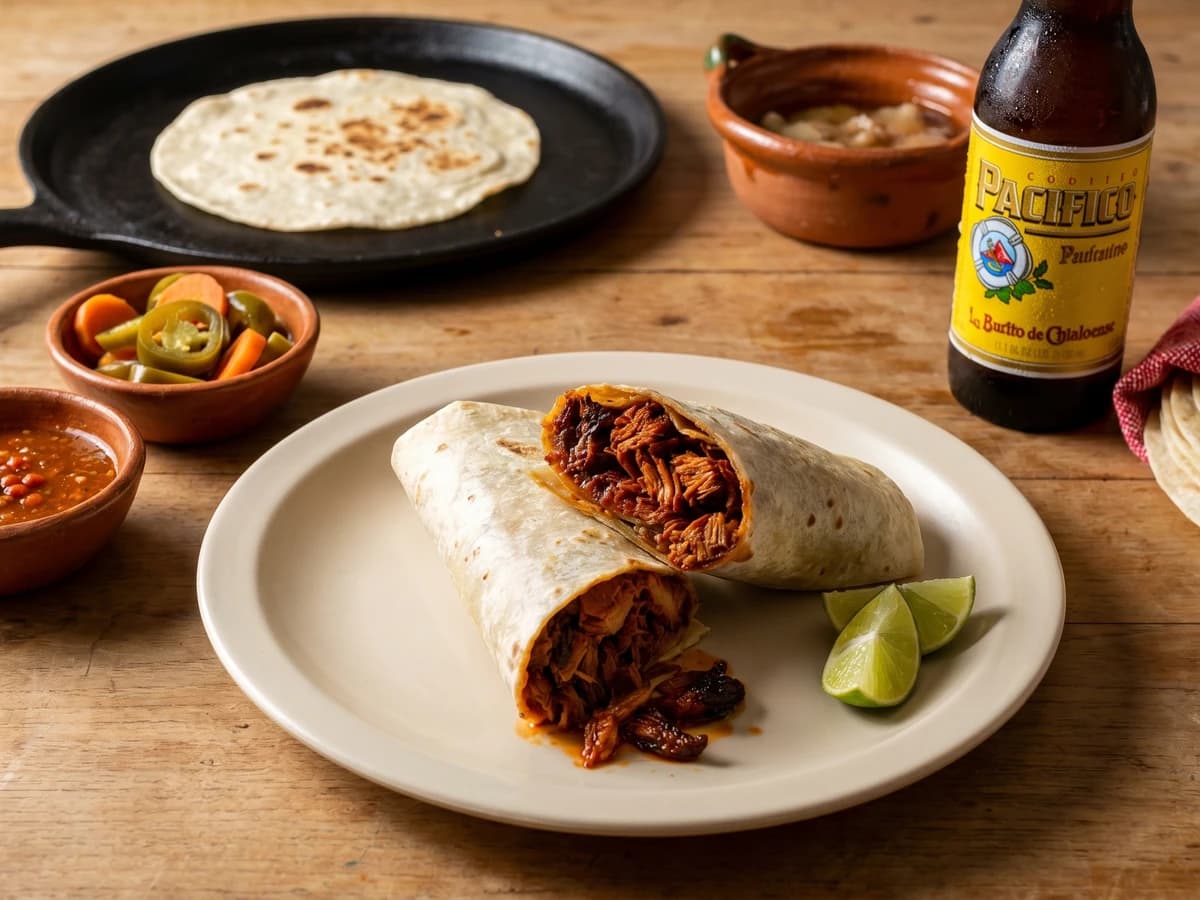
Mocorito's pork chilorio, shredded and confited in lard with chile ancho and pasilla, rolled into a thin handmade flour tortilla. The burrito Sinaloa sends out into the world.
Chef Lupita
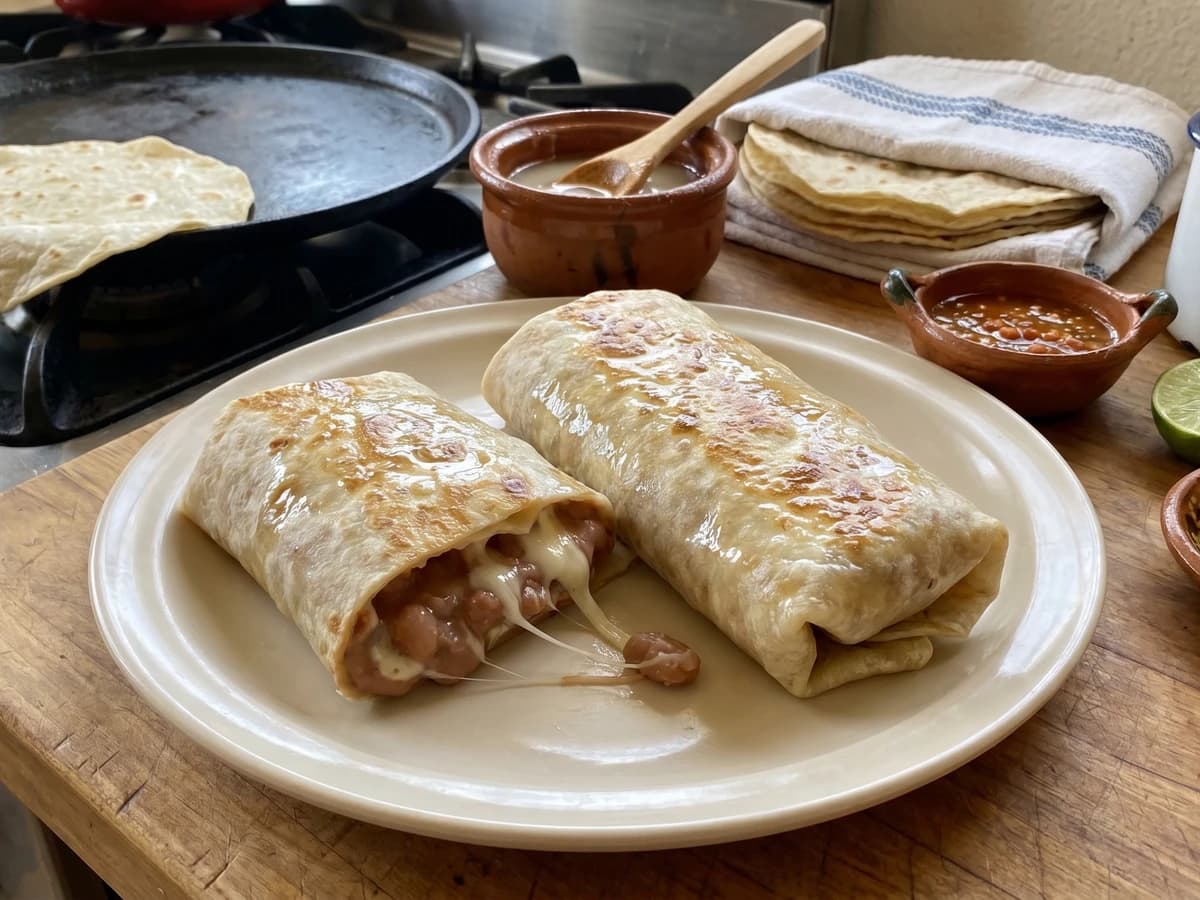
Sonora's morning burrito of mashed pinto frijoles puercos and melted queso asadero, wrapped in a paper-thin sobaquera and seared on the comal until the cheese pulls in long strings.