Chef Juliette
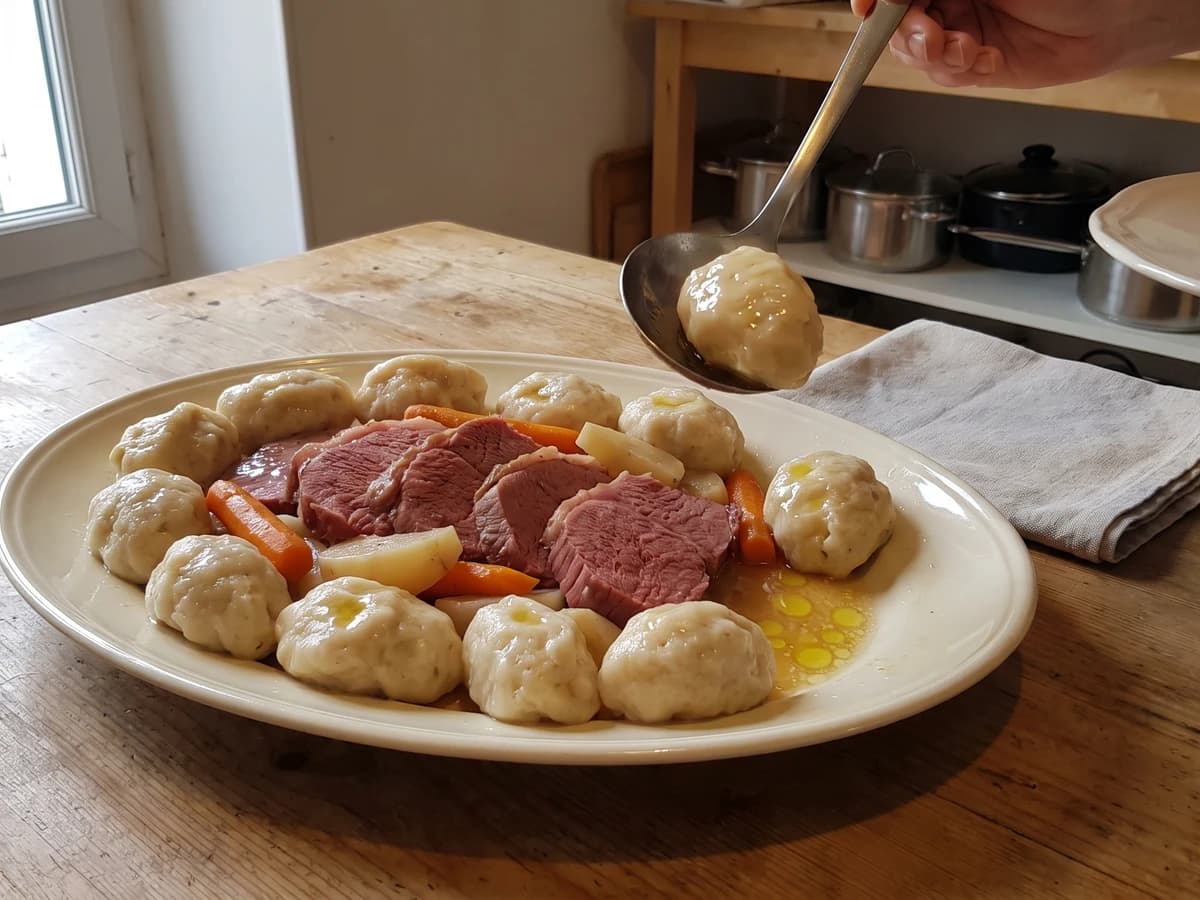
Suet Dumpling
Boulettes au suif, poached beside salt beef, turn equal weights of flour and finely chopped suet into tender, rich dumplings. Keep the beef liquor at a bare tremble and the old garnish works beautifully at home.
A cooking platform built around craft, culture, and the stories behind what we eat.
Created by
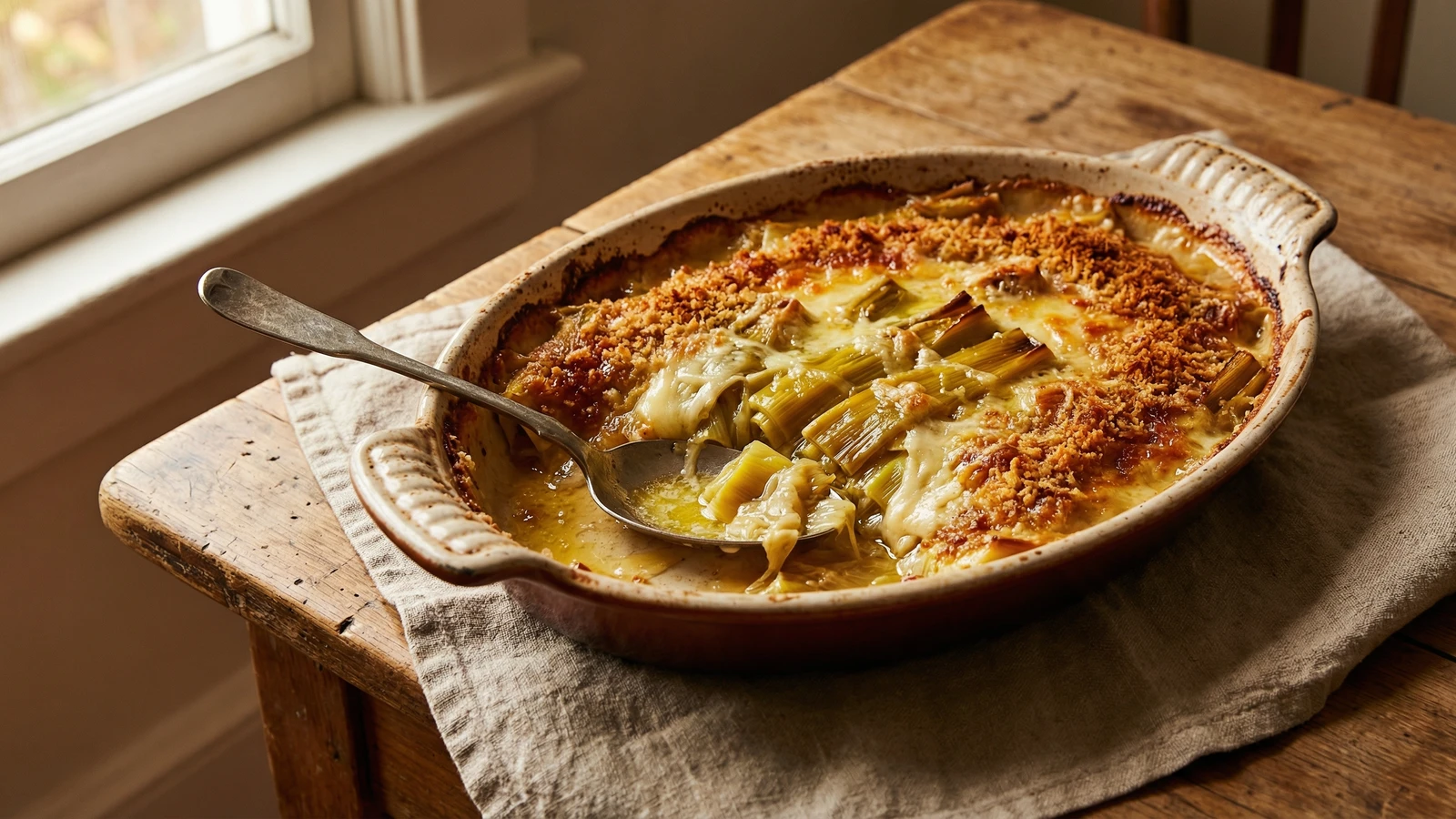
Piedmontese leeks braised until silken, then gratinéed with fontina and breadcrumbs until the top shatters and the interior yields. A side dish that could make you forget the main course.
The leek is an underappreciated vegetable, especially in America, where it seems to exist only for soup. In Piedmont, leeks are treated with the respect they deserve. Braised slowly in butter until they become silky and sweet, then blanketed with the local fontina and crisped under heat, they transform into something that makes people forget there is meat on the table.
This is not a complicated dish. It asks only that you give the leeks time to braise properly and that you use real fontina, not the rubbery Danish imitation that bears no resemblance to the genuine article from Valle d'Aosta. The cheese should be semi-soft, slightly pungent, with a straw-colored interior. If your fontina bounces when you drop it, you have the wrong cheese.
What you keep out matters here. No cream. No béchamel. The leeks provide their own moisture; the fontina melts into rivers that pool around them. The breadcrumb crust exists only to shatter against your fork and provide contrast. Simple does not mean easy, but this dish rewards precision with flavor that no elaborate preparation could match.
Gratins entered Piedmontese cooking through French influence, the Savoy dynasty having ruled both regions for centuries. But where French gratins rely on cream and flour, Piedmontese versions trust their remarkable fontina to do the work. The marriage of alpine cheese and sweet braised leeks became a fixture of home cooking in Turin and the surrounding valleys.
Quantity
2 pounds (about 6 medium)
Quantity
4 tablespoons
Quantity
1/2 cup
Quantity
to taste
Quantity
to taste
freshly ground
Quantity
6 ounces
rind removed, cut into thin slices
Quantity
1/3 cup
freshly grated
Quantity
1/2 cup
Quantity
2 tablespoons
cut into small pieces
| Ingredient | Quantity |
|---|---|
| leeks | 2 pounds (about 6 medium) |
| unsalted butter | 4 tablespoons |
| chicken or vegetable broth | 1/2 cup |
| fine sea salt | to taste |
| black pepperfreshly ground | to taste |
| Italian fontina cheeserind removed, cut into thin slices | 6 ounces |
| Parmigiano-Reggianofreshly grated | 1/3 cup |
| coarse fresh breadcrumbs | 1/2 cup |
| unsalted butter for toppingcut into small pieces | 2 tablespoons |
Trim the root ends and the dark green tops from the leeks, leaving the white and pale green parts. Cut each leek in half lengthwise. Submerge in a large basin of cold water, separating the layers gently to release the sand trapped within. Leeks grow in sandy soil and harbor grit between every layer. Lift them out, drain, and repeat with fresh water until no sand remains at the bottom of the basin. Pat completely dry.
Melt 4 tablespoons butter in a wide skillet or sauté pan that can hold the leeks in a single layer. Arrange the leeks cut-side down in the pan. Cook over medium heat until the bottoms turn golden, about 5 minutes. Turn them cut-side up, add the broth, and season with salt and pepper. Cover and reduce heat to low. Braise until the leeks are completely tender when pierced with a knife, 25 to 30 minutes. The knife should meet no resistance whatsoever.
Heat the oven to 400 degrees. Butter a gratin dish or shallow baking dish that holds the leeks comfortably in a single layer. Transfer the braised leeks to the dish, arranging them cut-side up. Pour any remaining pan juices over them.
Distribute the fontina slices evenly over the leeks, tucking pieces into the crevices between the layers. Sprinkle the Parmigiano-Reggiano over everything. The fontina will melt into the leeks; the Parmigiano will brown.
Scatter the breadcrumbs over the cheese in an even layer. Dot with the small pieces of butter. The butter will melt into the crumbs and help them turn golden and crisp.
Bake until the gratin is bubbling vigorously around the edges and the breadcrumb topping is deep golden brown, 18 to 22 minutes. If the top browns before the cheese bubbles, cover loosely with foil for the remaining time. Let rest 5 minutes before serving. This brief rest allows the cheese to set slightly, making the dish easier to portion.
1 serving (about 130g)
Culinary guides, cultural storytelling, and the editorial depth that makes cooking meaningful.
Discover Culinary ExplorerChef Juliette
Boulettes au suif, poached beside salt beef, turn equal weights of flour and finely chopped suet into tender, rich dumplings. Keep the beef liquor at a bare tremble and the old garnish works beautifully at home.

Chef Juliette
Bread, flour, frangipane, and rice become four cool, supple panades for binding forcemeats, each changing body and flavor while preserving tenderness. The finest Mousselines need none, and knowing that distinction is the lesson.

Chef Juliette
Panade au pain is bread, milk, salt, heat, and attention: stir until the paste releases cleanly, butter it against a skin, and you have the quiet binder behind tender French farces.

Chef Juliette
Panade de farine teaches the drying stroke behind pâte à choux: flour meets boiling buttered water, then stays over the fire until the paste gathers, smooths, and quits the pan cleanly.