
Chef Lupita
Acúmara Tatemada al Comal
Michoacán's Lake Pátzcuaro acúmara, a whole kurucha from the lago tatemada on a comal de leña and served with chile perón atápakua, corn tortillas, and P'urhépecha discipline.
A cooking platform built around craft, culture, and the stories behind what we eat.
Created by
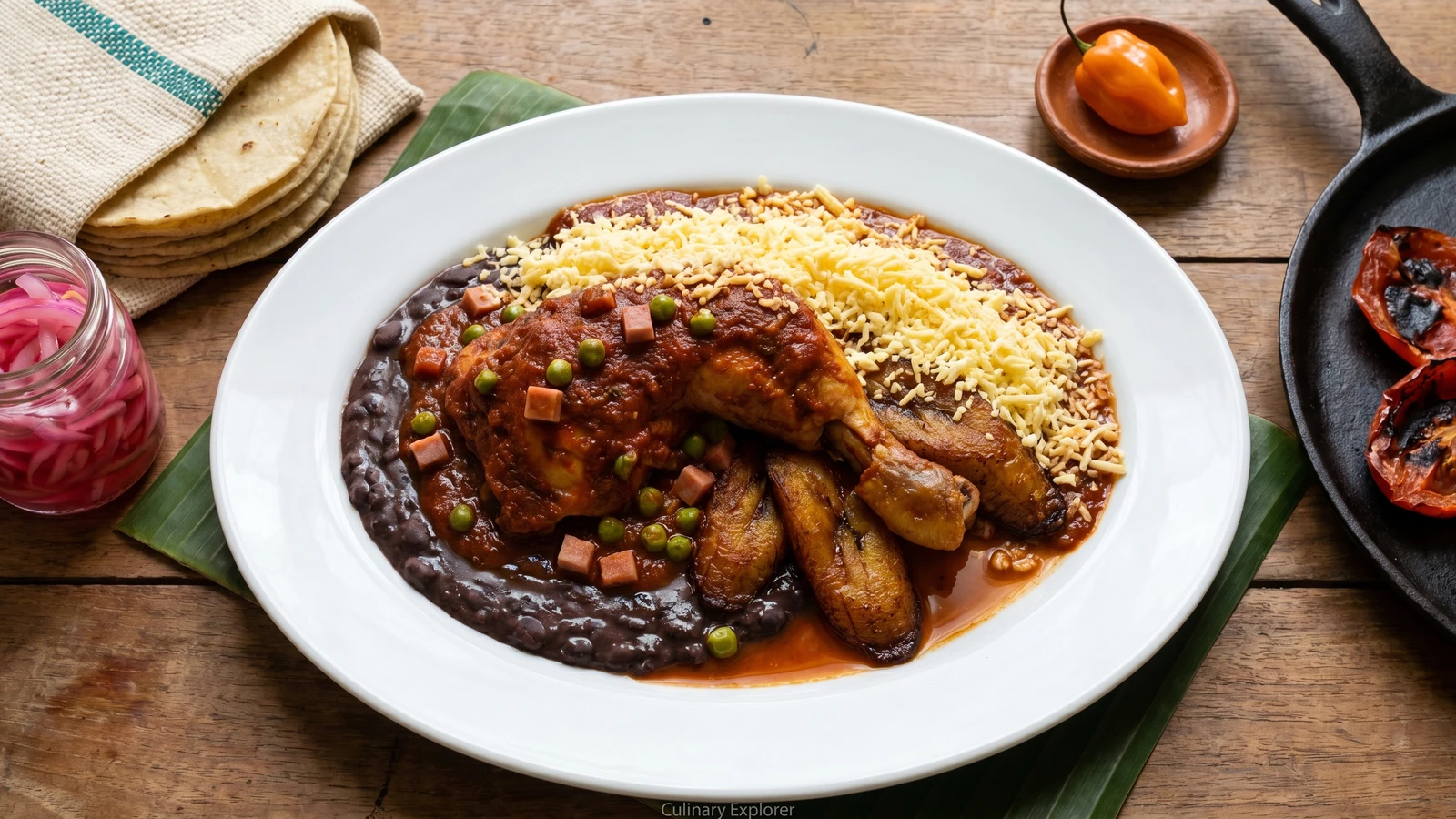
From Motul, Yucatán. Pan-seared chicken in a comal-charred tomato sauce, layered with refried black beans, ham, peas, fried plantain, and a final shower of queso de bola. The savory cousin of huevos motuleños.
This is a Yucatecan dish. Specifically from Motul, the small city about 40 kilometers east of Mérida that gave the world huevos motuleños and, less famously but no less seriously, pollo motuleño. If you have eaten the eggs at a fonda in Mérida, you already know the architecture of this plate. Refried black beans on the bottom. A protein in the middle. Tomato sauce, ham, peas, fried plantain. Queso de bola grated across the top. Same blueprint, different center. The eggs get the press. The chicken is what families actually cook on a Tuesday night.
The sauce is not Italian tomato sauce and it is not a Mexican salsa roja from the highlands. It is a Yucatecan tomato sauce, which means the tomatoes are charred whole on a comal until the skins blister, blended with charred onion and garlic, and finished with a whole habanero floating in the pan to perfume the sauce without burning anyone. Pinch the habanero and you have changed the dish. Leave it whole and you have a sauce that smells like Yucatán. Cada estado, su propia cocina, and this one belongs to the peninsula.
The queso de bola is the detail that makes a yucateco point at the plate and say sí, eso es. It is Dutch Edam, the red-waxed wheel, and it arrived through the Caribbean trade routes that connected Mérida to Havana and Havana to Europe in the 1800s. Yucatán took it, grated it over its eggs and its chicken and its queso relleno, and made it part of the regional vocabulary. If you replace it with cheddar or Monterey Jack, you have made a different dish in a different country.
My notebook has three versions of pollo motuleño collected from señoras between Motul and Tizimín. They disagree about whether the chicken is fried first or only braised, whether the peas go in the sauce or on top, whether the plantain is fried in lard or oil. They agree on the habanero, on the queso de bola, and on the plate built in layers. Saber cocinar es saber vivir, and saber comer pollo motuleño is knowing Yucatán a little better than you did this morning.
Motul, founded as a Maya settlement and later established as a Spanish town in the 16th century, gave its name to the dish in the early 20th century. The most circulated origin story credits Don Jorge Siqueff, a cook of Lebanese descent operating in Motul in the 1920s, with assembling the layered eggs-and-tomato plate that became huevos motuleños; the chicken version followed naturally in home kitchens that wanted a heartier meal from the same architecture. The presence of Dutch Edam (queso de bola) in Yucatecan cuisine traces to 19th-century trade between Mérida's port of Sisal, Havana, and European shipping routes, a reminder that the peninsula's culinary history is Caribbean and transatlantic before it is mainland Mexican. Yucatán remained relatively isolated from central Mexico until the railroad arrived in the 20th century, which is why its cuisine carries Maya, Spanish, Lebanese, and Caribbean fingerprints that the rest of the country does not.
Quantity
4 thighs and 4 drumsticks (about 3 pounds)
Quantity
2 tablespoons, plus more as needed
Quantity
1 teaspoon, plus more to taste
Quantity
1/2 teaspoon
Quantity
1 1/2 pounds
Quantity
1/2 medium, plus 1/4 onion for the beans
Quantity
3, plus 2 more for the beans
Quantity
1
stemmed, left whole, not chopped
Quantity
1 sprig
Quantity
1/2 cup
Quantity
1 teaspoon
Quantity
2 cups
Quantity
4 ounces
sliced thin and cut into small dice
Quantity
1 cup
Quantity
2
peeled and sliced on the bias 1/2-inch thick
Quantity
4 ounces
finely grated
Quantity
for serving
Quantity
for serving
warmed
Quantity
for serving
| Ingredient | Quantity |
|---|---|
| bone-in, skin-on chicken thighs and drumsticks | 4 thighs and 4 drumsticks (about 3 pounds) |
| manteca de cerdo (pork lard) | 2 tablespoons, plus more as needed |
| kosher salt | 1 teaspoon, plus more to taste |
| freshly cracked black pepper | 1/2 teaspoon |
| ripe Roma tomatoes | 1 1/2 pounds |
| white onion | 1/2 medium, plus 1/4 onion for the beans |
| garlic cloves | 3, plus 2 more for the beans |
| fresh chile habanerostemmed, left whole, not chopped | 1 |
| fresh epazote | 1 sprig |
| chicken broth | 1/2 cup |
| dried Mexican oregano (preferably oregano yucateco) | 1 teaspoon |
| cooked black beans with their cooking liquid | 2 cups |
| good ham (jamón de pierna)sliced thin and cut into small dice | 4 ounces |
| fresh or frozen green peas (chícharos) | 1 cup |
| very ripe black plantains (plátano macho maduro)peeled and sliced on the bias 1/2-inch thick | 2 |
| queso de bola (Dutch Edam)finely grated | 4 ounces |
| pickled red onions (cebollas en escabeche) (optional) | for serving |
| hand-pressed corn tortillas (optional)warmed | for serving |
| lime wedges (optional) | for serving |
Set a cast iron comal or heavy skillet over medium-high heat with no oil. Place the whole tomatoes, the 1/2 onion in a wedge, and the 3 unpeeled garlic cloves directly on the dry surface. Char them, turning every few minutes, until the tomato skins blister black in patches and the onion edges go dark, about 10 to 12 minutes. The garlic is ready when the skin is brown and the flesh inside has softened. This is how the salsa de tomate gets the smoky base that defines a Yucatecan tomato sauce. Skip the comal and you are making something else.
Peel the charred garlic. Drop the charred tomatoes, onion, and garlic into a blender with the chicken broth and the oregano yucateco. Blend until smooth but not foamy. The sauce should be the color of a brick wall in afternoon light, not red. That dark color is the char doing its job.
Pat the chicken pieces very dry with paper towels. Wet chicken steams. Dry chicken browns. Season generously with salt and pepper on all sides. Melt 2 tablespoons of manteca in a wide cazuela or deep skillet over medium-high heat. When the lard shimmers, lay the chicken in skin-side down. Do not crowd the pan. Work in two batches if you need to. Sear undisturbed for 6 to 8 minutes until the skin is deep golden and releases easily from the pan. Flip and sear the other side for 4 more minutes. Transfer to a plate.
Pour off all but 2 tablespoons of fat from the pan. Keep the browned bits stuck to the bottom. Lower the heat to medium. Pour in the blended tomato sauce. It will sputter. Stir to lift the fond. Drop in the whole habanero and the sprig of epazote. The habanero stays whole. Do not pierce it. You want its perfume in the sauce, not its full heat. La manteca y el habanero son el sabor.
Return the chicken to the pan, skin-side up, nestling the pieces into the sauce. The sauce should come about halfway up the chicken. If it does not, add a splash more broth. Cover partially. Simmer gently for 25 to 30 minutes until the chicken is cooked through and the sauce has thickened to coat a spoon. Turn the chicken once at the halfway mark so it cooks evenly. The skin stays mostly above the sauce so it does not turn rubbery.
In the last 8 minutes of braising, scatter the peas into the sauce around the chicken. They will cook in the tomato sauce and pick up its flavor. Two minutes before serving, scatter the diced ham over the top so it warms through without drying out. Pull out the spent epazote stem. Fish out the habanero and set it on a small plate at the table for the diner who knows what to do with it.
While the chicken finishes, melt a generous tablespoon of manteca in a separate skillet over medium heat. The plantain slices should be soft and black-skinned when you peel them. Anything yellow is not ripe enough. Fry the slices in a single layer for about 2 minutes per side until the edges turn deep caramel and the centers go tender. Drain on a plate. The sweetness of fried plátano macho against the smoky tomato sauce is the whole point of this dish.
In a small skillet, melt a teaspoon of manteca over medium heat. Add 2 finely chopped garlic cloves and the 1/4 white onion finely diced. Cook until the onion is translucent, about 3 minutes. Pour in the black beans with their cooking liquid. Mash them roughly with a wooden spoon or a bean masher. You want a loose, spreadable consistency, not a dry paste. Season with salt. These are frijoles refritos negros, the Yucatecan way, not the pinto bean version from the north.
Spread a generous spoonful of refried black beans across the bottom of each plate. Lay one or two pieces of chicken on top. Spoon the tomato sauce with peas and ham over the chicken. Tuck three or four slices of fried plantain alongside. Shower the top with grated queso de bola. The Edam is not optional and it is not a substitute. The Yucatán pulled queso de bola into its cuisine through trade with the Dutch through Cuba in the 19th century and the cuisine kept it. Así se hace y punto. Serve with warm tortillas, pickled red onions, and lime.
1 serving (about 700g)
Culinary guides, cultural storytelling, and the editorial depth that makes cooking meaningful.
Discover Culinary ExplorerChef Lupita
Michoacán's Lake Pátzcuaro acúmara, a whole kurucha from the lago tatemada on a comal de leña and served with chile perón atápakua, corn tortillas, and P'urhépecha discipline.

Chef Lupita
Puebla's weekday adobo of pork shoulder braised in a thick guajillo and ancho sauce sharpened with vinegar, cumin, and clove. The deep red of a market spice stall, the dish a poblana cooks without thinking.

Chef Lupita
Loreto's pit-roasted clams, planted hinge-up in beach sand and tatemadas under a fast fire of dried romerillo brush, the resinous Baja desert shrub that gives this dish its smoke.

Chef Lupita
Oaxaca's eighth mole, the silky, almond-and-cinnamon almendrado, served over poached chicken. Mild, sweet, restrained, and a quiet rebuttal to anyone who thinks Mexican food has to be hot to be Mexican.