Chef Juliette
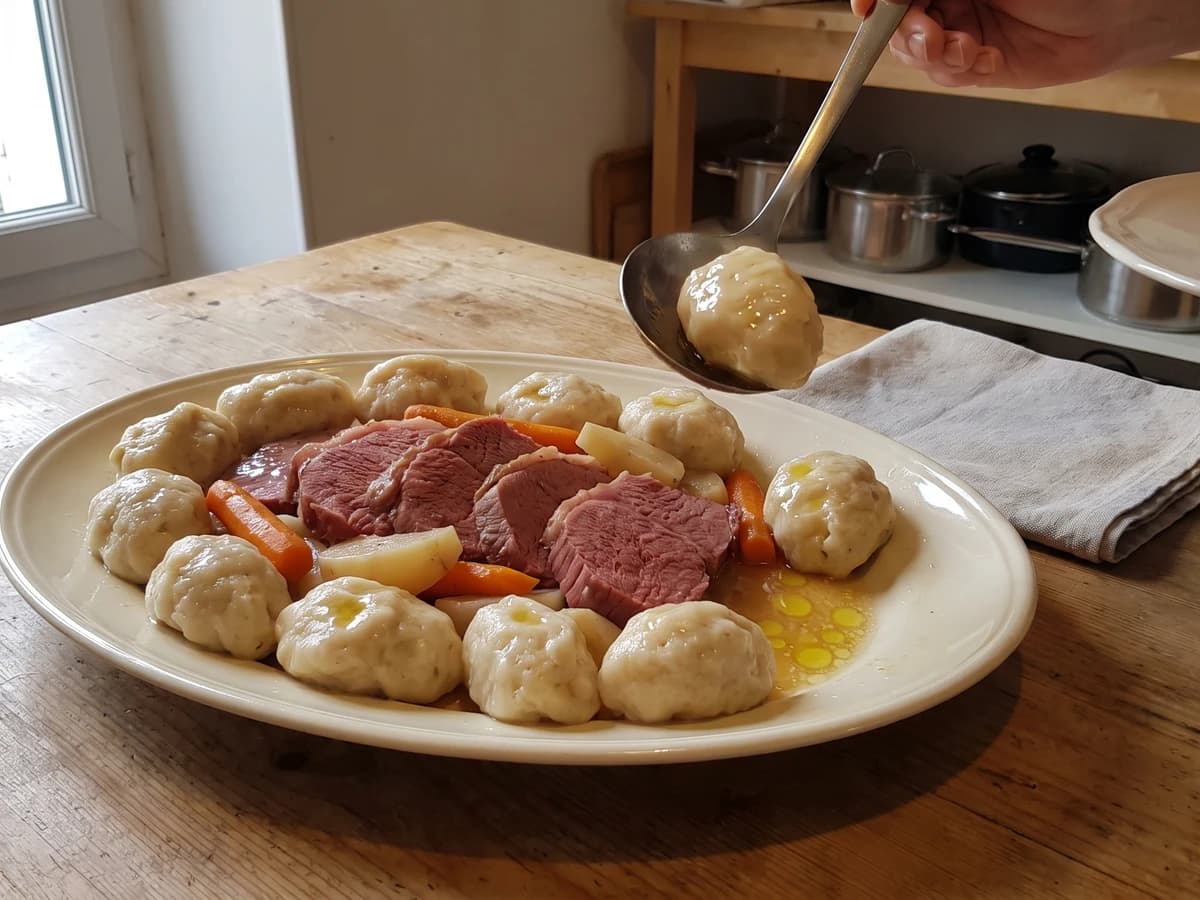
Suet Dumpling
Boulettes au suif, poached beside salt beef, turn equal weights of flour and finely chopped suet into tender, rich dumplings. Keep the beef liquor at a bare tremble and the old garnish works beautifully at home.
A cooking platform built around craft, culture, and the stories behind what we eat.

Created by
The soft, flowing polenta of northern Italy, stirred patiently until the cornmeal surrenders its starch and becomes something almost silken. This is not a side dish. It is a foundation.
Polenta is patience made edible. There is no technique to master beyond the willingness to stand at the stove and stir. The cornmeal resists at first, threatening lumps, spitting hot droplets at your wrist. Then it submits. The starches release. What was gritty becomes smooth, what was separate becomes whole.
Americans want instant polenta. They want five minutes and dinner on the table. What they get is wallpaper paste with the flavor of cardboard. True polenta requires forty minutes of stirring, sometimes longer. The arm tires. The wooden spoon grows heavy. This is correct. You are earning something.
Polenta morbida, the soft version, should flow from the spoon in a lazy ribbon. It is not the firm polenta you slice and grill. That comes later, when leftovers cool and set. This is polenta at its moment of perfection, served immediately, pooling on the plate beneath braised rabbit or osso buco or simply a puddle of butter and good cheese. In the Veneto, in Friuli, in the cold mountains of the north, this has sustained families through centuries of hard winters.
Before Columbus brought corn from the Americas, northern Italians made similar porridges from millet, buckwheat, and spelt. Corn arrived in Venice in the late 16th century and spread through the Veneto, where the climate proved ideal. By the 18th century, polenta had become the daily bread of northern peasants, eaten morning, noon, and night, sometimes causing pellagra in those who ate nothing else.
Quantity
6 cups
Quantity
2 teaspoons
Quantity
1 1/2 cups
Quantity
4 tablespoons
cold, cut into pieces
Quantity
3/4 cup
freshly grated
Quantity
to taste
freshly ground
| Ingredient | Quantity |
|---|---|
| water | 6 cups |
| kosher salt | 2 teaspoons |
| coarse yellow cornmeal | 1 1/2 cups |
| unsalted buttercold, cut into pieces | 4 tablespoons |
| Parmigiano-Reggianofreshly grated | 3/4 cup |
| black pepperfreshly ground | to taste |
In a heavy-bottomed pot, bring the water and salt to a rolling boil over high heat. The pot should be larger than you think necessary. Polenta bubbles and spatters as it thickens, and you do not want burns.
Reduce heat to medium. Pick up the cornmeal in one hand and let it fall in a thin, steady stream into the boiling water while stirring constantly with a wooden spoon in your other hand. This takes practice. The stream should be slow enough that the water never stops moving. If you dump the cornmeal in all at once, you will have lumps. There is no remedy for lumps except starting over.
Once all the cornmeal is incorporated, reduce heat to low. Now begins the work. Stir the polenta in a slow, steady rhythm, scraping the bottom and sides of the pot. The polenta will begin to thicken within minutes. It will bubble heavily, throwing small hot projectiles. Wear long sleeves if you value your forearms. Stir for 40 to 50 minutes.
Remove the pot from heat. Add the cold butter and stir vigorously until it melts completely into the polenta. Add the Parmigiano-Reggiano and stir again. The polenta should become glossy and flow like thick cream. Taste and adjust salt. Add pepper generously.
Polenta waits for no one. It begins setting the moment it leaves the heat. Ladle it onto warm plates or into shallow bowls, spreading it into a pool. Top with whatever braised meat or stew you have prepared, letting the juices run into the polenta. Or serve it plain with more cheese and butter. Eat immediately. There is no reheating polenta morbida. Once it sets, it becomes something else entirely.
1 serving (about 165g)
Culinary guides, cultural storytelling, and the editorial depth that makes cooking meaningful.
Discover Culinary ExplorerChef Juliette
Boulettes au suif, poached beside salt beef, turn equal weights of flour and finely chopped suet into tender, rich dumplings. Keep the beef liquor at a bare tremble and the old garnish works beautifully at home.

Chef Juliette
Bread, flour, frangipane, and rice become four cool, supple panades for binding forcemeats, each changing body and flavor while preserving tenderness. The finest Mousselines need none, and knowing that distinction is the lesson.

Chef Juliette
Panade au pain is bread, milk, salt, heat, and attention: stir until the paste releases cleanly, butter it against a skin, and you have the quiet binder behind tender French farces.

Chef Juliette
Panade de farine teaches the drying stroke behind pâte à choux: flour meets boiling buttered water, then stays over the fire until the paste gathers, smooths, and quits the pan cleanly.