
Chef Graziella
Cannellini con Salvia
Tuscan white beans warmed gently with fried sage leaves and a whisper of garlic. This is the contorno that proves restraint is a virtue, not a limitation.
A cooking platform built around craft, culture, and the stories behind what we eat.

Created by
Cold polenta, sliced and fried in butter and olive oil until it shatters at the edges and yields at the center. The thrift of the north, the genius of simplicity.
Polenta fritta exists because Italian home cooks waste nothing. You cook polenta for dinner, stirring it for an hour because that is what polenta demands. You make more than you need. The next day, you slice it, fry it, and discover that the leftovers surpass the original.
This is the cooking of Veneto, of Friuli, of Lombardia, where polenta was the bread of the poor for centuries. They ate it soft and steaming one day, then fried in whatever fat they had the next. The contrast of textures, crisp and crackling outside, soft and giving within, is the entire point. There is no sauce. There is no garnish. There is only the polenta, transformed by heat and fat.
Do not attempt this with instant polenta. Those granules lack the starch structure to set properly. They will crumble in the pan and mock your effort. Use proper coarse-ground polenta, cook it fully, chill it completely. Then, and only then, will it reward you.
Polenta sustained the peasant populations of northern Italy for centuries after maize arrived from the Americas in the 1500s. Fried polenta emerged as the practical solution for day-old leftovers, transforming cold, solid cornmeal into something crisp and satisfying. Every contadina knew this technique; it required no recipe because it required no instruction beyond common sense.
Quantity
2 pounds
from about 1 cup dry polenta, cooked and chilled
Quantity
1/2 cup, or as needed
Quantity
4 tablespoons
Quantity
to taste
Quantity
to taste
freshly ground
| Ingredient | Quantity |
|---|---|
| cold firm polentafrom about 1 cup dry polenta, cooked and chilled | 2 pounds |
| extra virgin olive oil | 1/2 cup, or as needed |
| unsalted butter | 4 tablespoons |
| kosher salt | to taste |
| black pepperfreshly ground | to taste |
The polenta must be completely cold and firm. If you have made it fresh, pour it into a loaf pan or spread it onto a sheet pan to a thickness of about three-quarters of an inch. Refrigerate for at least four hours, preferably overnight. The polenta should hold its shape when sliced. If it crumbles, it was not cooked long enough or not chilled long enough.
Turn the cold polenta out onto a cutting board. Using a sharp knife, cut it into slices about half an inch thick. You may cut these into rectangles, triangles, or rounds as you prefer. The shape matters less than the thickness. Too thin and they become crackers. Too thick and the center will not warm through before the exterior burns.
In a large heavy skillet, heat the olive oil and butter together over medium-high heat. The butter will foam and then subside. When the foam subsides and you see the first wisps of smoke, the fat is ready. Do not let it go further. Burned butter tastes of regret.
Place the polenta slices in the hot fat in a single layer. Do not crowd them. They need space to develop a crust. Fry without moving until the underside is deeply golden and releases easily from the pan, 4 to 5 minutes. If the slices stick, they are not ready to turn. Wait.
Turn the slices carefully with a thin spatula. Fry the second side until equally golden and crisp, another 4 to 5 minutes. The exterior should be crackling and bronze. The interior should remain creamy and soft. Press the center gently with your finger. It should yield slightly, indicating warmth throughout.
Transfer the fried polenta to a plate lined with paper towels. Blot briefly but do not leave them there to get soggy. Move them to a warm serving plate immediately. Season with salt and pepper while still hot. The heat opens the surface to receive the seasoning. Cold polenta rejects salt. Serve at once.
1 serving (about 160g)
Culinary guides, cultural storytelling, and the editorial depth that makes cooking meaningful.
Discover Culinary ExplorerChef Graziella
Tuscan white beans warmed gently with fried sage leaves and a whisper of garlic. This is the contorno that proves restraint is a virtue, not a limitation.

Chef Graziella
Chickpeas cooked with restraint: garlic infused and removed, rosemary perfuming the oil, nothing more. A contorno that proves legumes need only respect, not complication.
Chef Graziella
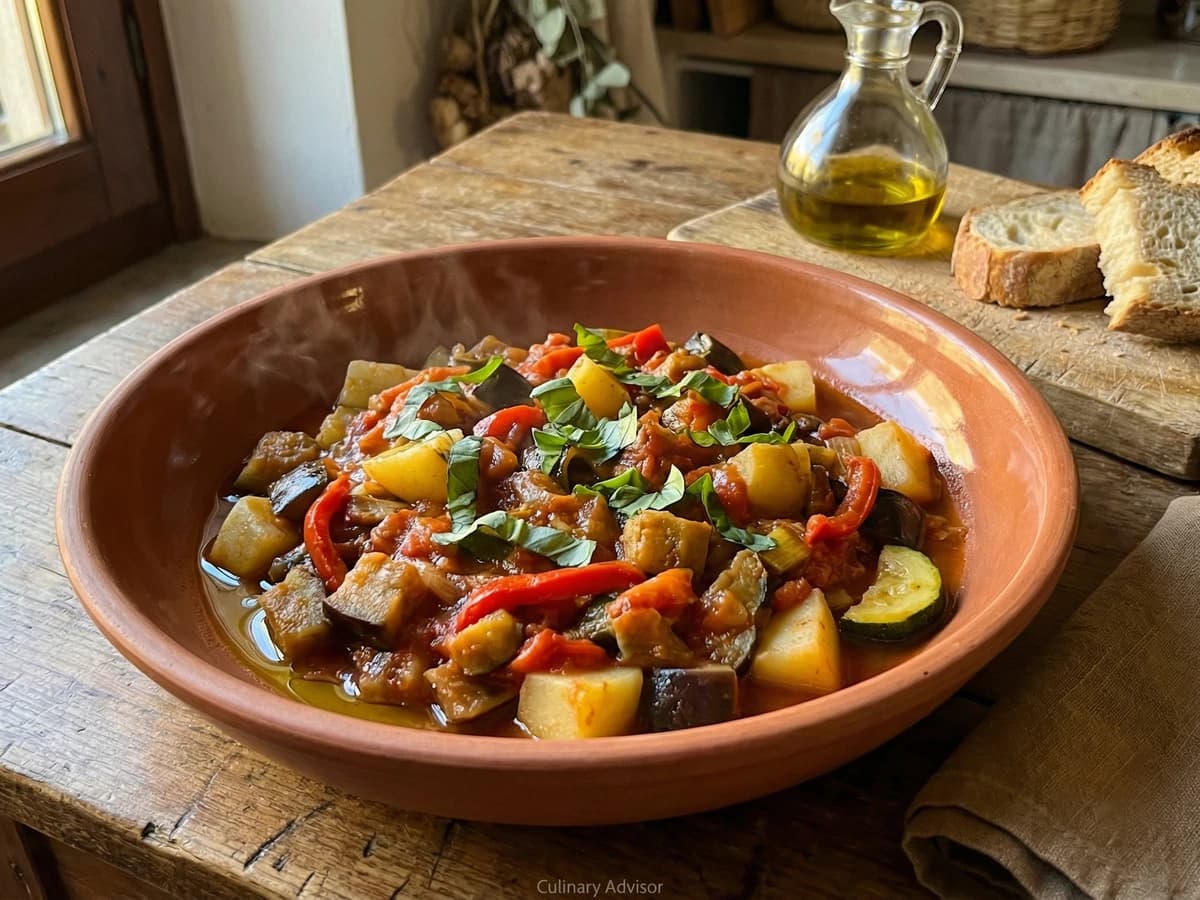
The vegetable stew of Southern Italy, where summer's abundance cooks slowly until eggplant, peppers, zucchini, and tomatoes become one soft, melded thing. This is the honest food of Campania and Calabria.

Chef Graziella
Green beans cooked the Italian way, tender and flavorful, with garlic that whispers and tomato that barely speaks. A contorno that proves the side dish can be the quiet star of the meal.