
Chef Graziella
Cannellini con Salvia
Tuscan white beans warmed gently with fried sage leaves and a whisper of garlic. This is the contorno that proves restraint is a virtue, not a limitation.
A cooking platform built around craft, culture, and the stories behind what we eat.
Created by
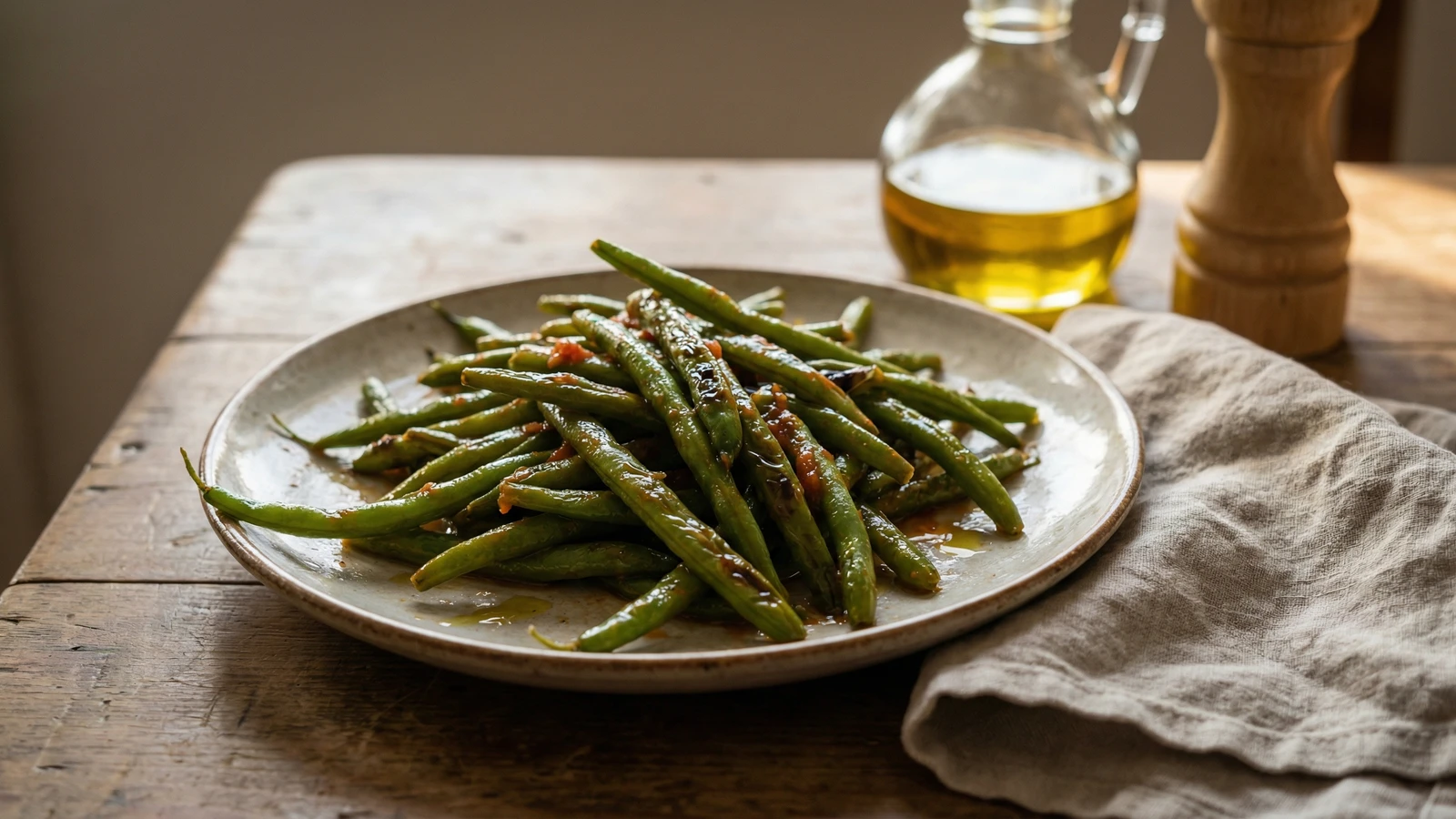
Green beans cooked the Italian way, tender and flavorful, with garlic that whispers and tomato that barely speaks. A contorno that proves the side dish can be the quiet star of the meal.
Americans have ruined green beans in two opposite directions. They either boil them to gray mush or barely cook them at all, leaving them raw and squeaky. Italians understand what Americans do not: a properly cooked green bean should be tender, yielding to the tooth, with none of that unpleasant crunch that passes for health in this country.
The garlic here must be handled with respect. You slice it thin, let it warm gently in the oil until fragrant, and remove it before it browns. What remains is perfume, not assault. The tomato is even more restrained: a few spoonfuls of passata or crushed tomatoes, just enough to stain the beans and add a whisper of sweetness. This is not green beans in tomato sauce. The tomato exists to support, not dominate.
I have watched students overcomplicate this dish with herbs, cheese, onions, lemon zest. They cannot accept that four ingredients are sufficient. What you keep out is as significant as what you put in.
Fagiolini in padella appears on tables throughout Italy, from Piedmont to Sicily, with small regional variations. The green bean arrived from the Americas in the 16th century and was adopted quickly into Italian cucina povera, the cooking of the poor, because it grew abundantly and required nothing more than oil and salt to become delicious.
Quantity
1 pound
ends trimmed
Quantity
3 tablespoons
Quantity
2
sliced thin
Quantity
3 tablespoons
Quantity
to taste
Quantity
to taste
freshly ground
| Ingredient | Quantity |
|---|---|
| green beansends trimmed | 1 pound |
| extra virgin olive oil | 3 tablespoons |
| garlic clovessliced thin | 2 |
| tomato passata or crushed tomatoes | 3 tablespoons |
| kosher salt | to taste |
| black pepperfreshly ground | to taste |
Trim only the stem ends of the green beans. The small tail at the other end is perfectly edible and removing it wastes time. If the beans are large, cut them in half on the diagonal. If they are slender and young, leave them whole. Rinse and shake dry.
In a large skillet, warm the olive oil over medium-low heat. Add the sliced garlic and let it cook gently, swirling the pan occasionally, until the garlic is pale gold and fragrant, about 2 minutes. The garlic must not brown. If it begins to color too quickly, remove the pan from heat. When the oil is perfumed, remove and discard the garlic slices.
Increase heat to medium-high. Add the green beans to the garlic-perfumed oil and season with salt. Toss to coat. Cook, stirring frequently, until the beans begin to blister in spots and lose their raw appearance, about 5 minutes. The beans should sizzle steadily.
Add the tomato passata and stir to coat the beans. Add two tablespoons of water. Reduce heat to medium-low and cover the pan. Cook until the beans are completely tender but not falling apart, about 10 to 12 minutes. Check halfway through and add another splash of water if the pan looks dry.
Remove the lid, increase heat if any liquid remains, and cook until the beans are glazed and the pan is nearly dry. Taste and adjust salt. Finish with freshly ground black pepper. Serve warm or at room temperature. Like most Italian vegetable dishes, this does not need to be piping hot.
1 serving (about 125g)
Culinary guides, cultural storytelling, and the editorial depth that makes cooking meaningful.
Discover Culinary ExplorerChef Graziella
Tuscan white beans warmed gently with fried sage leaves and a whisper of garlic. This is the contorno that proves restraint is a virtue, not a limitation.

Chef Graziella
Chickpeas cooked with restraint: garlic infused and removed, rosemary perfuming the oil, nothing more. A contorno that proves legumes need only respect, not complication.
Chef Graziella
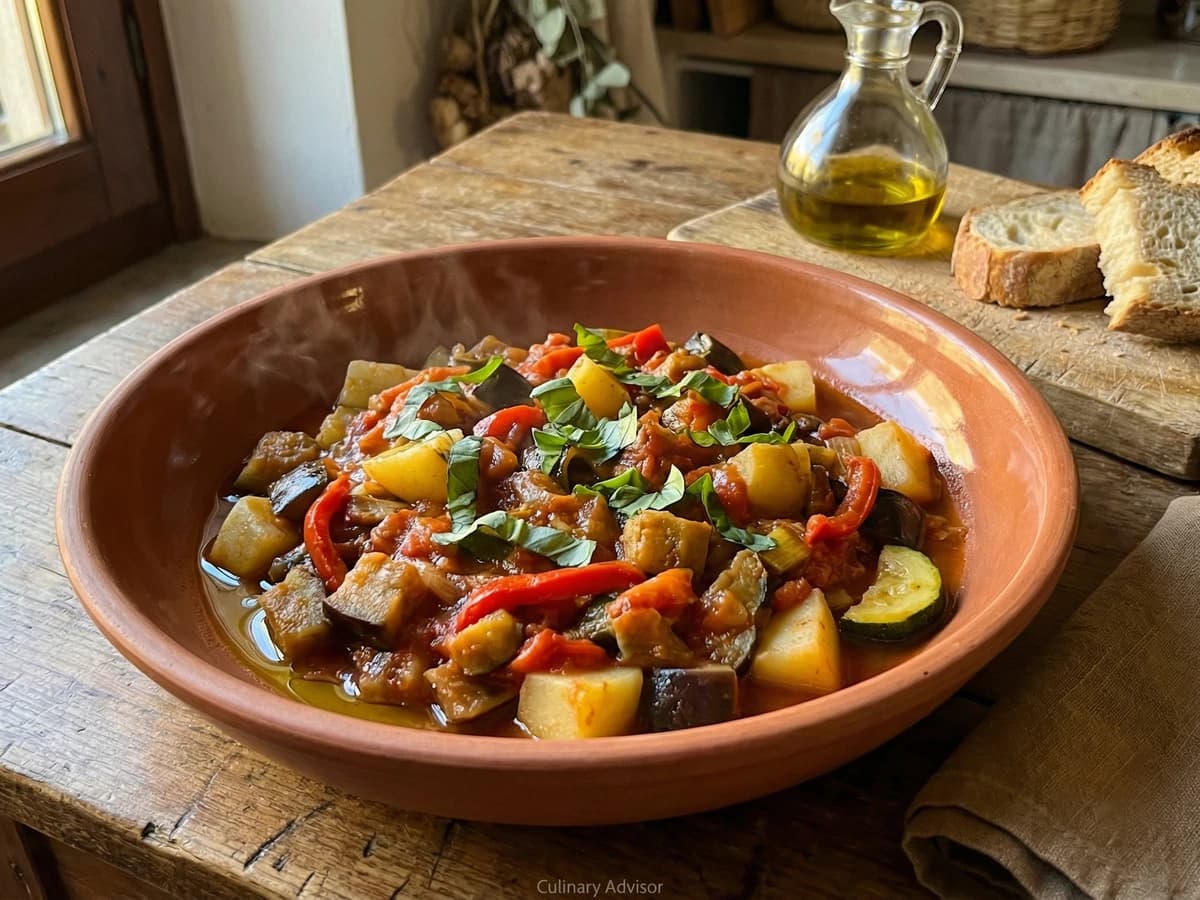
The vegetable stew of Southern Italy, where summer's abundance cooks slowly until eggplant, peppers, zucchini, and tomatoes become one soft, melded thing. This is the honest food of Campania and Calabria.

Chef Graziella
Fennel transformed by nothing more than proper blanching, good cheese, honest breadcrumbs, and butter. What you leave out matters as much as what you put in.