
Chef Graziella
Cannellini con Salvia
Tuscan white beans warmed gently with fried sage leaves and a whisper of garlic. This is the contorno that proves restraint is a virtue, not a limitation.
A cooking platform built around craft, culture, and the stories behind what we eat.
Created by
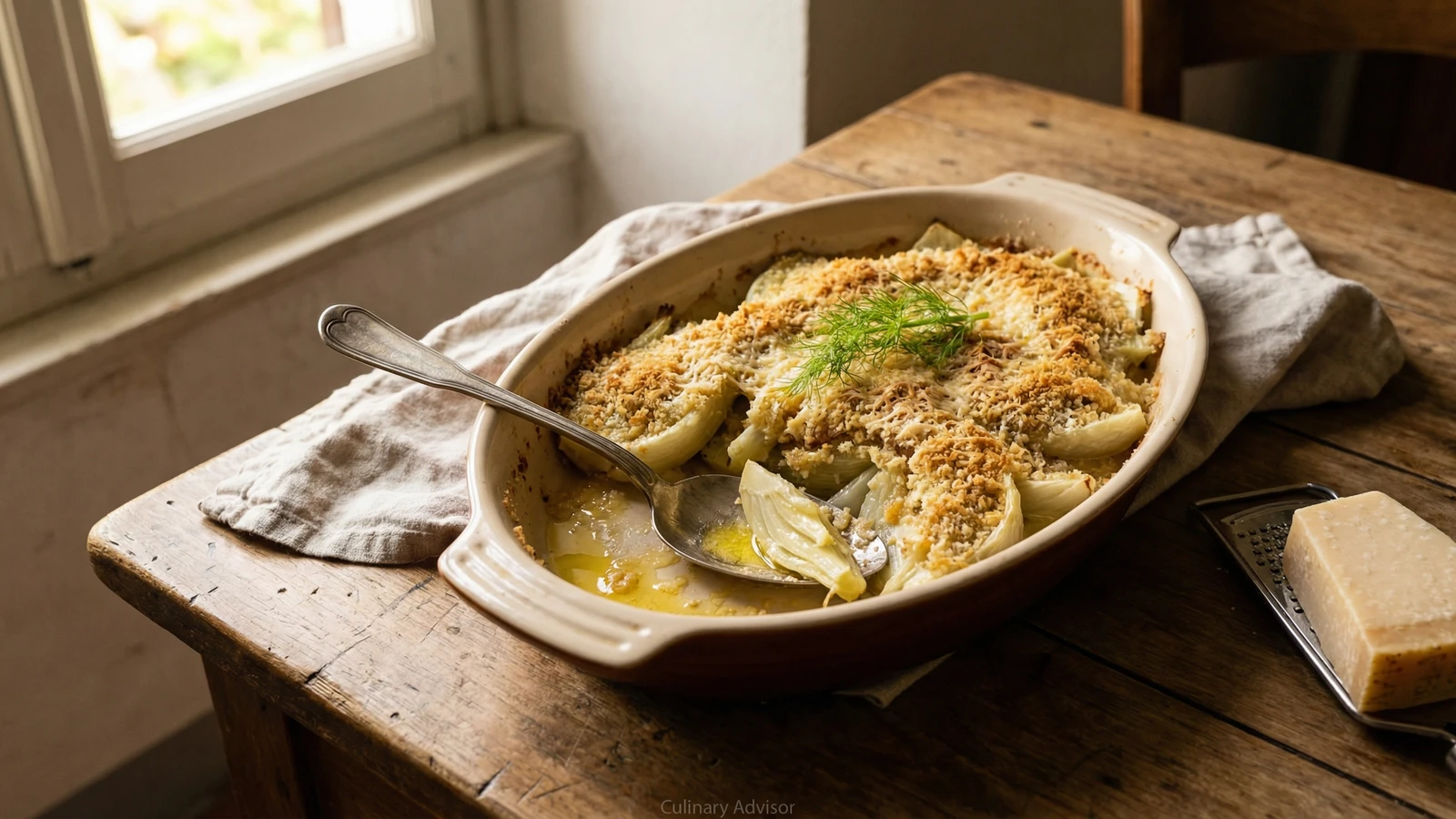
Fennel transformed by nothing more than proper blanching, good cheese, honest breadcrumbs, and butter. What you leave out matters as much as what you put in.
Fennel confuses Americans. They see the bulb with its strange fronds and do not know what to do with it. Italians, particularly in the north, have understood fennel for centuries. Raw, it is crisp and refreshing, with a gentle anise flavor that cleanses the palate. Cooked, it becomes something else entirely: sweet, tender, almost buttery in texture.
This gratin requires no cream, no elaborate sauce, no distraction. You blanch the fennel until it surrenders its resistance, then you bless it with Parmigiano-Reggiano and breadcrumbs moistened with butter. The oven does the rest. The top becomes golden and crackling while the fennel beneath remains soft and yielding.
I have watched students try to complicate this dish. They want to add garlic, or herbs, or cream. They do not trust that four ingredients can produce something worth eating. But this is the Italian way. You begin with something good, you treat it simply, and you let it speak for itself. The fennel is the star. Everything else exists to frame it.
Fennel has grown wild along the Mediterranean since antiquity, prized by Romans who believed it improved eyesight and courage. The tradition of gratinati in Northern Italy developed as home cooks discovered that vegetables blanched and baked under a crust of cheese and breadcrumbs gained complexity without losing their essential character. This technique spread through Emilia-Romagna and the Veneto, where it remains a fixture of Sunday tables.
Quantity
4 medium (about 3 pounds total)
Quantity
for blanching and seasoning
Quantity
4 tablespoons, plus more for the dish
Quantity
1 cup
freshly grated
Quantity
3/4 cup
from day-old Italian bread
Quantity
to taste
freshly ground
| Ingredient | Quantity |
|---|---|
| fennel bulbs | 4 medium (about 3 pounds total) |
| kosher salt | for blanching and seasoning |
| unsalted butter | 4 tablespoons, plus more for the dish |
| Parmigiano-Reggianofreshly grated | 1 cup |
| fresh breadcrumbsfrom day-old Italian bread | 3/4 cup |
| black pepperfreshly ground | to taste |
Remove the stalks and feathery fronds from the fennel bulbs. Reserve a few fronds if you wish, but they are not essential. Trim a thin slice from the base of each bulb, but leave the core intact. The core holds the wedges together during cooking. Cut each bulb lengthwise into wedges about three-quarters of an inch thick. You should get four to six wedges per bulb.
Bring a large pot of water to a boil. Salt it generously. It should taste like the sea. Add the fennel wedges and cook until tender when pierced with a knife, 8 to 12 minutes depending on thickness. The fennel should yield easily but not fall apart. Drain thoroughly and let the wedges rest in a single layer on a clean kitchen towel. Excess water is the enemy of a proper gratin.
Melt the butter in a small saucepan over low heat. In a bowl, combine the breadcrumbs and half the Parmigiano-Reggiano. Pour the melted butter over this mixture and toss with a fork until the crumbs are evenly moistened. They should clump slightly when pressed.
Heat your oven to 400 degrees Fahrenheit. Butter a baking dish generously. Arrange the fennel wedges in a single layer, overlapping slightly if necessary. Season with salt and pepper. Scatter the remaining Parmigiano-Reggiano directly over the fennel, then distribute the buttered breadcrumb mixture evenly on top.
Bake in the upper third of the oven until the topping is deeply golden and the edges of the fennel begin to caramelize, 20 to 25 minutes. If the top browns too quickly, move the dish to a lower rack. If it remains pale after 25 minutes, finish under the broiler for one to two minutes, watching constantly.
Let the gratin rest for five minutes before serving. This allows the cheese to set slightly and prevents it from sliding off when you serve. The fennel should be soft and sweet, the topping crisp and savory. Serve directly from the baking dish.
1 serving (about 210g)
Culinary guides, cultural storytelling, and the editorial depth that makes cooking meaningful.
Discover Culinary ExplorerChef Graziella
Tuscan white beans warmed gently with fried sage leaves and a whisper of garlic. This is the contorno that proves restraint is a virtue, not a limitation.

Chef Graziella
Chickpeas cooked with restraint: garlic infused and removed, rosemary perfuming the oil, nothing more. A contorno that proves legumes need only respect, not complication.
Chef Graziella
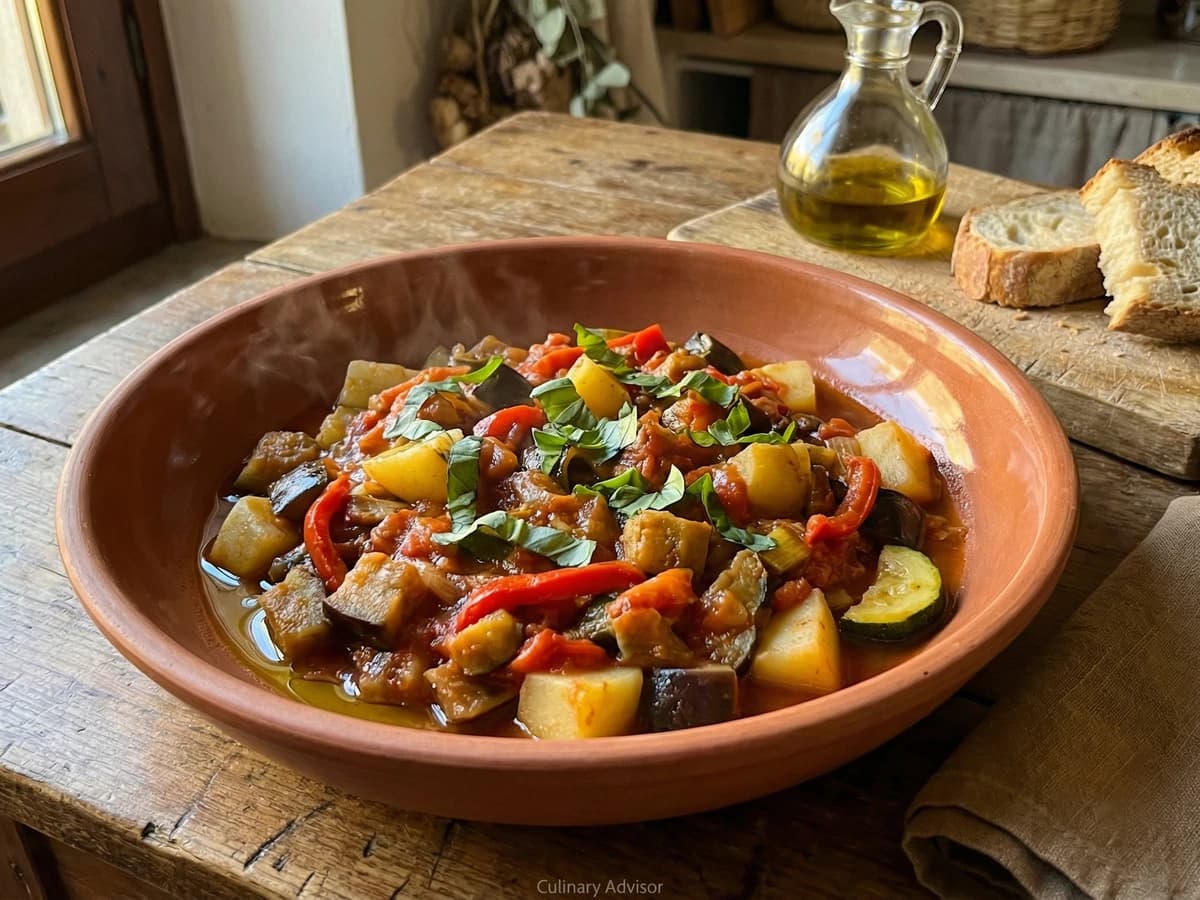
The vegetable stew of Southern Italy, where summer's abundance cooks slowly until eggplant, peppers, zucchini, and tomatoes become one soft, melded thing. This is the honest food of Campania and Calabria.

Chef Graziella
Green beans cooked the Italian way, tender and flavorful, with garlic that whispers and tomato that barely speaks. A contorno that proves the side dish can be the quiet star of the meal.