
Chef Lupita
Arroz a la Oaxaqueña
Oaxaca's red rice, stained with tomato and fried in lard, steamed with carrots, ejotes, black beans, and epazote. The side that anchors a Oaxacan family meal and earns its place beside the main.
A cooking platform built around craft, culture, and the stories behind what we eat.
Created by
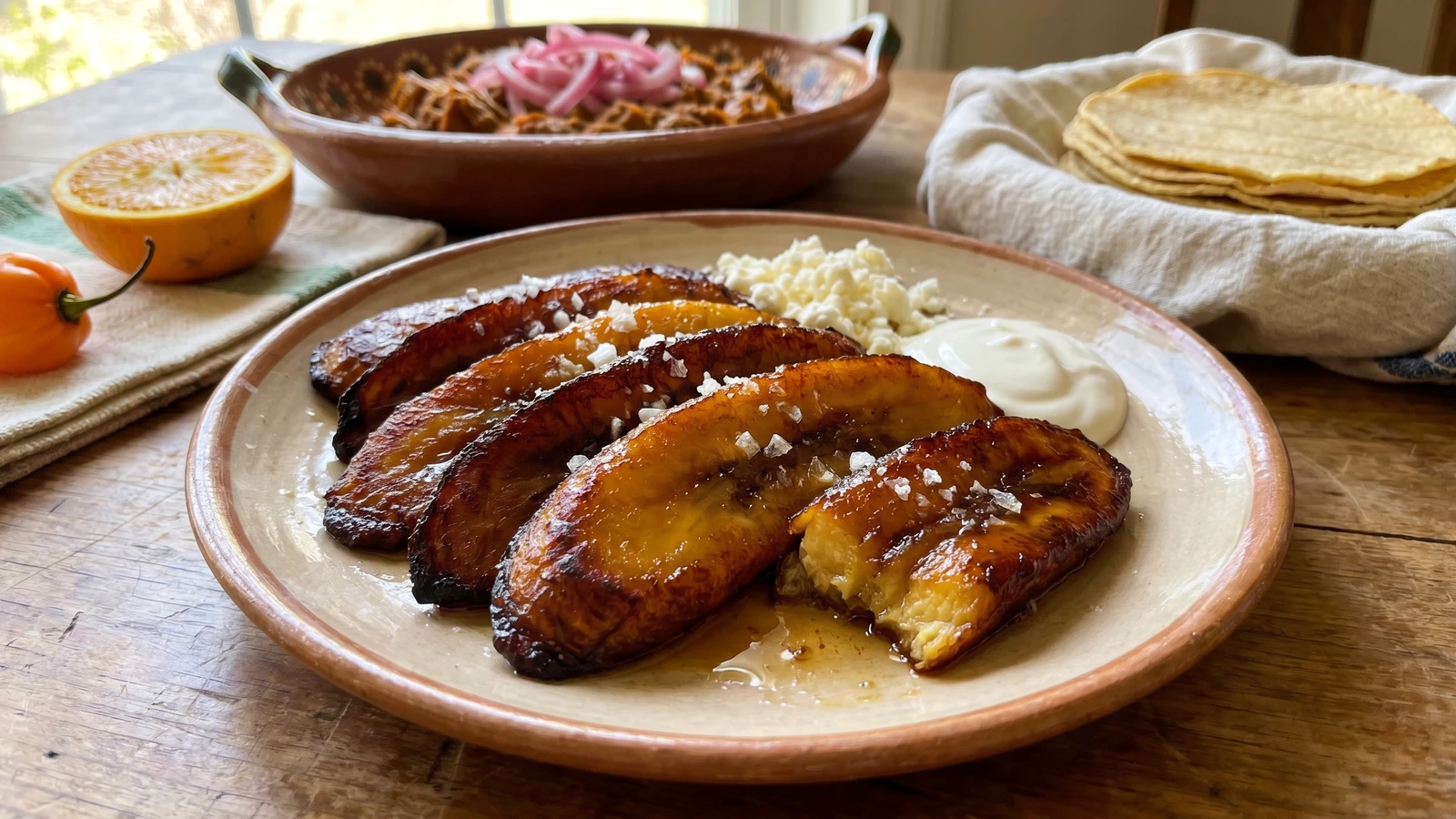
Yucatán's sweet counterpoint: ripe black plátano macho sliced on the bias and pan-fried in pork lard until the edges caramelize into mahogany and the centers turn custardy. The plate is not complete without it.
This is Yucatán. The peninsula has its own grammar of food, achiote, sour orange, habanero, recado negro, and plátano macho frito is the sweet note that balances all of it. You do not eat cochinita pibil without plátanos fritos on the plate. You do not eat frijoles colados without them either. The sweetness is not decoration. It is the architectural counterweight to the acid of the naranja agria and the heat of the chile habanero.
The plátano has to be black. I cannot say this enough. Yellow plátano is starch. Black plátano is sugar. In Mérida the women at the Mercado Lucas de Gálvez sell them by the kilo and they will refuse to give you a yellow one for frying. They will tell you to come back in three days. Listen to them. Si no conoces el mercado, no conoces la cocina.
Lard is the fat. Not oil, not butter. The pigs of Yucatán have fed this cuisine for centuries and the manteca is what carries the sweet fruit into the rest of the meal. When the slice hits the pan, the fruit sugars meet the pork fat and produce a perfume you cannot get any other way. La manteca es el sabor.
My mother did not cook Yucatecan food. She was from Jalisco and the peninsula was its own country to her. I learned this dish in Mérida from a woman named Doña Elvia who fed me a plate of cochinita at a comedor near Santiago and waved off my question about the plátanos with a single sentence: 'Sin plátano, no hay plato.' Without plátano, there is no plate. I have never forgotten it. Cada estado, su propia cocina.
The plátano macho is not native to Mexico. It arrived with Spanish and Portuguese ships from West Africa in the 16th century, carried along the same Atlantic routes that brought enslaved Africans to the Caribbean and the Gulf coast, and it took root in the tropical lowlands of Veracruz, Tabasco, and the Yucatán peninsula. Yucatecan cuisine, isolated from central Mexico by geography and shaped by Maya, Spanish, Caribbean, and Lebanese influences, integrated the fried plátano into its plate architecture by the 18th century, where it functions as a sweet counterweight to the cuisine's signature acid (sour orange) and heat (habanero). The pairing of fried plátano with black beans and rice, common across the Yucatán, mirrors similar combinations across Afro-Caribbean cooking, evidence of the peninsula's deeper culinary ties to the Caribbean basin than to highland Mexico.
Quantity
3 large
very ripe, skins blackened and soft to the touch
Quantity
3 tablespoons
Quantity
a pinch
Quantity
for serving
Quantity
for serving
crumbled
| Ingredient | Quantity |
|---|---|
| plátanos machosvery ripe, skins blackened and soft to the touch | 3 large |
| pork lard (manteca de cerdo) | 3 tablespoons |
| sea salt | a pinch |
| crema fresca (optional) | for serving |
| queso fresco or queso de bola from Yucatán (optional)crumbled | for serving |
The plátano macho must be ripe. Black skin. Soft when you press the side. Yellow plátano is not ready and starchy plátano is not the dish. If the fruit at your store is still yellow, buy it and wait three or four days on the counter until the skin turns black. No me vengas con atajos. Underripe plátano gives you a starchy fry. Ripe plátano gives you caramel.
Cut off both ends. Score the skin lengthwise with the tip of a knife and peel it back in strips. The flesh underneath should be deep yellow, almost orange, and sticky. Slice on a slight bias, about half an inch thick. Bias slicing gives you more surface area in the pan, which means more caramelization at the edges.
Melt the lard in a heavy skillet or cast iron pan over medium heat. La manteca es el sabor. Vegetable oil will fry the plátano, but it will not give you the perfume of pork fat meeting caramelized fruit. That smell is what tells you this is a Yucatecan plate and not a generic side dish. The lard is ready when a corner of a slice dropped in sizzles immediately without burning.
Lay the slices in the pan in a single layer. Do not crowd them. If the pan is full, work in two batches. Fry for three to four minutes on the first side without moving them. You are waiting for the underside to turn deep gold, almost mahogany at the edges. The sugar in the fruit is doing the work now. Move the slices too soon and they will not caramelize. Move them too late and they burn. Watch them.
Flip each slice with a spatula. The cooked side should be glossy, dark amber, with crisp edges. Fry the second side another two to three minutes until matched in color. The center of each slice will be soft, almost custardy. That is the texture you want. Sweet, sticky, with a thin crackling edge from the lard.
Lift the slices onto a warm plate. Sprinkle with the smallest pinch of sea salt while the lard is still wet on the surface. The salt is not seasoning. It is the bridge that connects the sweet plátano to the savory plate next to it: the cochinita, the frijoles colados, the rice. Serve right away, while the edges still crack and the centers still pull. Así se hace y punto.
1 serving (about 110g)
Culinary guides, cultural storytelling, and the editorial depth that makes cooking meaningful.
Discover Culinary ExplorerChef Lupita
Oaxaca's red rice, stained with tomato and fried in lard, steamed with carrots, ejotes, black beans, and epazote. The side that anchors a Oaxacan family meal and earns its place beside the main.

Chef Lupita
Sinaloa's home-cook white rice topped with cold cubes of cream cheese that soften into the warm grain, finished with crema and a sprinkle of chiltepin at the table. The trick that makes a side dish feel like a small luxury.

Chef Lupita
Sonora's white rice, toasted in butter and steamed with sweet corn and tender peas. The clean, quiet partner to a plate of carne asada, not the red rice of central Mexico.

Chef Lupita
Yucatán's white rice with sweet corn kernels, toasted in lard with garlic and onion. The quiet base that holds up against the peninsula's bold achiote-stained stews.