
Chef Lupita
Arroz a la Oaxaqueña
Oaxaca's red rice, stained with tomato and fried in lard, steamed with carrots, ejotes, black beans, and epazote. The side that anchors a Oaxacan family meal and earns its place beside the main.
A cooking platform built around craft, culture, and the stories behind what we eat.
Created by
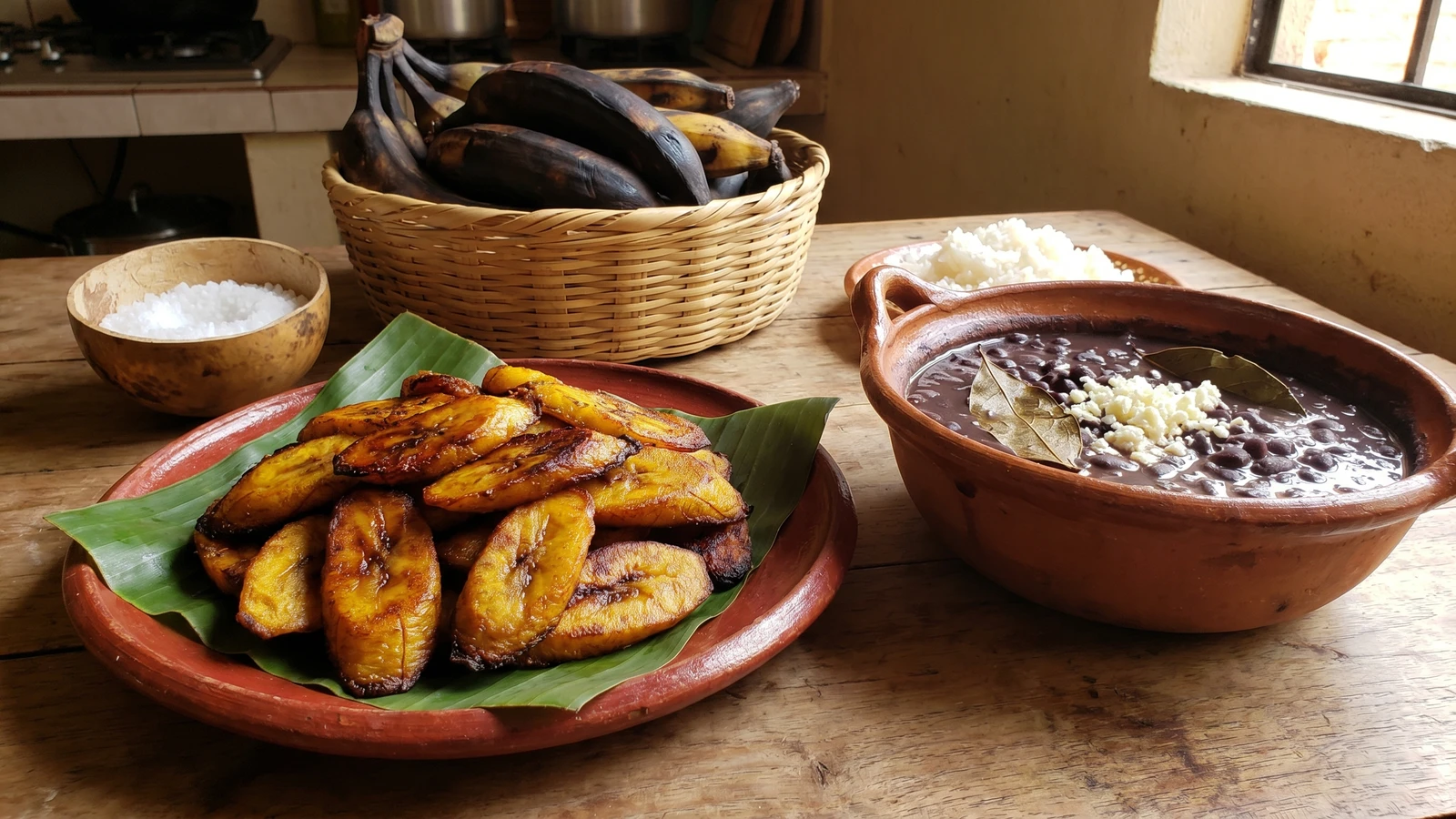
Guerrero's Costa Chica side of ripe plátano macho, cut thick and fried in manteca de cerdo until the edges caramelize and the centers turn soft, sweet, and almost custardy.
Guerrero, Costa Chica. This dish lives along the coastal road from Marquelia to Cuajinicuilapa, in Afro-Mexicano kitchens where plátano macho, yuca, malanga, frijol negro, and rice sit on the table without anyone needing to explain why. The geography explains it. Hot coast, wet soil, plantains hanging heavy, pork fat saved from the week's cooking. Cada estado, su propia cocina.
The plantain must be ripe. Not yellow with one polite spot. Maduro means the peel is mostly black and the fruit gives slightly under your thumb. That is when the starch has become sugar. Slice it thick, fry it in manteca de cerdo, and leave it alone long enough for the edges to darken. Move it too much and it breaks. Use vegetable oil and you get sweetness without depth. La manteca es el sabor.
I learned this version from a señora near Ometepec who served it beside frijoles negros cooked with hoja de aguacate and a pot of plain arroz blanco. No salsa on top. No powdered cinnamon. No decoration. The sweet plantain is there to balance the beans, the salt, and the fat. Saber cocinar es saber vivir.
Plátano macho arrived in Mexico through colonial trade routes tied to Africa, the Caribbean, and the Spanish empire, and it became deeply rooted in Gulf and Pacific coastal cooking where the climate could support it. In Guerrero's Costa Chica, Afro-Mexicano communities preserved a table built around diasporic starches such as plantain, yuca, and malanga alongside Indigenous corn and beans. Fried ripe plantain is shared across coastal Mexico, but the Guerrero register keeps it direct: thick slices, pork lard, salt, and a place beside black beans or rice.
Quantity
3
peels mostly black, cut on a bias into 1/2-inch thick slices
Quantity
1/2 cup, plus more if needed
Quantity
1/2 teaspoon, or to taste
| Ingredient | Quantity |
|---|---|
| very ripe plátanos machospeels mostly black, cut on a bias into 1/2-inch thick slices | 3 |
| pork lard (manteca de cerdo) | 1/2 cup, plus more if needed |
| fine sea salt | 1/2 teaspoon, or to taste |
Use plátanos machos with peels that are mostly black and a little soft under your thumb. Yellow plantains with green tips are not ready for this dish. They will fry firm and starchy instead of soft and sweet. Wait one more day if you have to. The market decides the calendar.
Cut off both ends of each plantain. Make a shallow slit down the peel and pull it away with your fingers. Slice the fruit on a bias into 1/2-inch thick pieces. Do not slice them thin. Thin pieces burn before the centers soften, and then you have chips. This is not that dish.
Melt the manteca de cerdo in a wide cast iron skillet or clay cazuela over medium heat. The fat should cover the bottom generously and shimmer when ready. Drop in one small end piece of plantain. If it bubbles steadily around the edges, the fat is ready. If it browns hard in seconds, lower the heat.
Lay the plantain slices in one layer, leaving space between them. Fry for 3 to 4 minutes on the first side, until the bottom turns deep gold with near-black caramel at the edges. Turn once with a thin spatula and fry the second side for 2 to 3 minutes. Do not keep poking them. Ripe plantain is delicate, and a nervous cook makes a broken pan.
Transfer the fried plantains to a clay plate or a rack set over a tray. Salt them while the fat still glistens on the surface. The salt wakes up the sweetness. Serve warm beside frijoles negros with hoja de aguacate, arroz blanco, eggs, or pork. Así se hace y punto.
1 serving (about 140g)
Culinary guides, cultural storytelling, and the editorial depth that makes cooking meaningful.
Discover Culinary ExplorerChef Lupita
Oaxaca's red rice, stained with tomato and fried in lard, steamed with carrots, ejotes, black beans, and epazote. The side that anchors a Oaxacan family meal and earns its place beside the main.

Chef Lupita
Sinaloa's home-cook white rice topped with cold cubes of cream cheese that soften into the warm grain, finished with crema and a sprinkle of chiltepin at the table. The trick that makes a side dish feel like a small luxury.

Chef Lupita
Sonora's white rice, toasted in butter and steamed with sweet corn and tender peas. The clean, quiet partner to a plate of carne asada, not the red rice of central Mexico.

Chef Lupita
Yucatán's white rice with sweet corn kernels, toasted in lard with garlic and onion. The quiet base that holds up against the peninsula's bold achiote-stained stews.