
Chef Juliana
Abobrinha Refogada
You think you'll turn zucchini into mush. Fine. Anota aí: high heat, wide pan, salt at the end, and suddenly this little green side starts solving dinner.
A cooking platform built around craft, culture, and the stories behind what we eat.
Created by
You don't need a special hand for this. You need thick unsweetened açaí, the right farinha, and the patience to add it slowly until the spoon drags.
You may look at a bowl of açaí mixed with farinha and think, quietly, isso não é pra mim. Too northern, too specific, too easy to ruin. Anota aí: easy to ruin is not the same as hard to learn. This is a bowl, a spoon, and attention. Cozinhar não é dom, é um aprendizado.
If your açaí life has only been the sweet frozen bowl with banana, don't feel guilty. A gente starts where a gente starts. But in the north, especially around Pará and the rivers that feed daily life there, açaí is comida de verdade at lunch, thick, dark, unsweetened, eaten with fish, shrimp, rice, beans, and something green. Two lineages, side by side. One is a cold sweet bowl that traveled south. This one belongs to the meal.
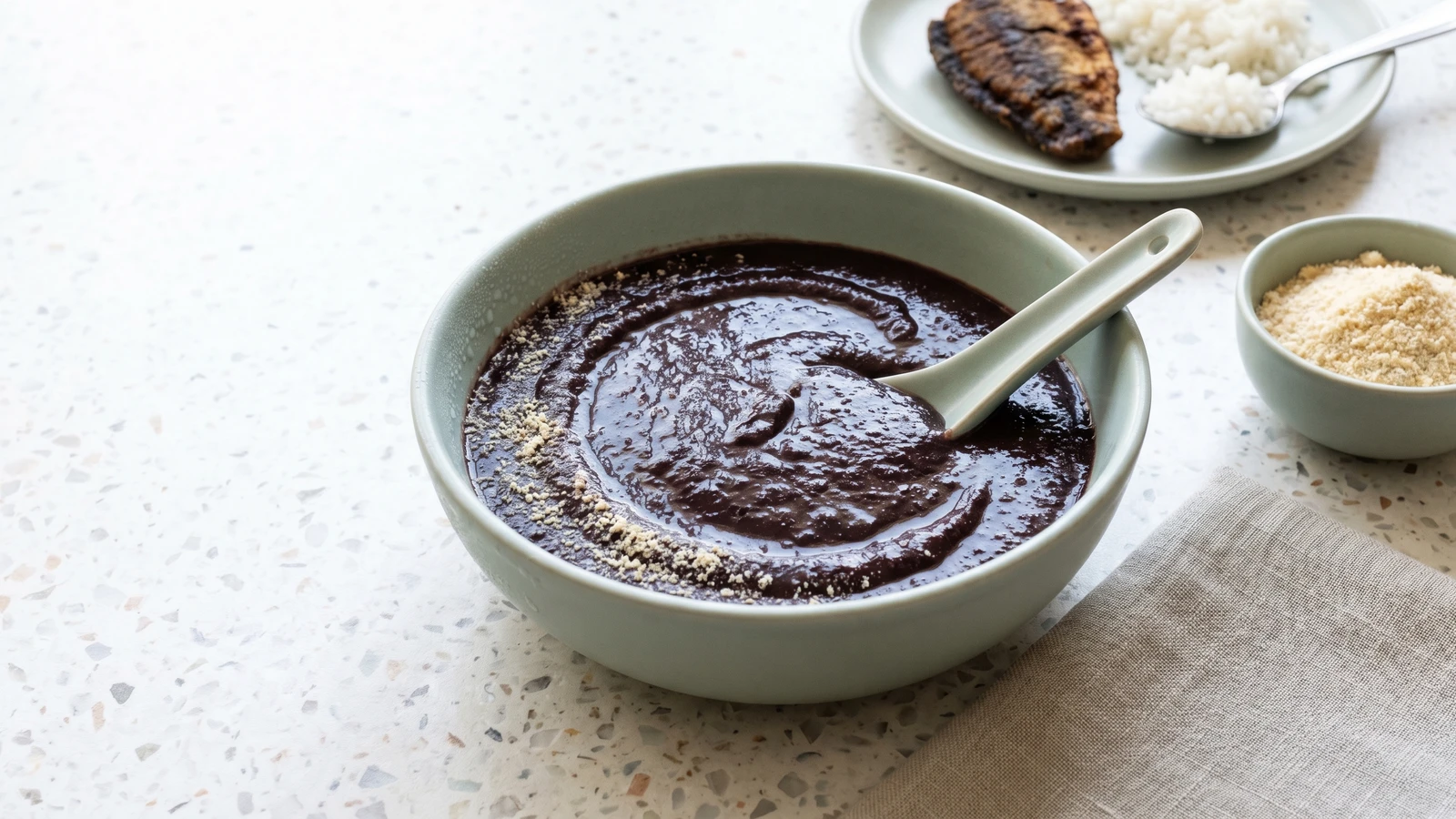
The method is plain: choose açaí grosso, not thin purple water, and stir farinha de mandioca into it a little at a time. The flour drinks the fruit and swells. Add too much at once and you get dry lumps, the kind of thing that makes a person blame herself and order something else. Add slowly, wait, stir, and the paste pulls together glossy and spoonable.
This is not a powdered shortcut pretending to be food. It's fruit and mandioca, two Brazilian foundations, doing their work. Put it beside fried fish, arroz soltinho, feijão, and couve or jambu, and dinner is solved without drama.
Açaí comes from Amazonian palms long used by Indigenous and ribeirinho communities, especially in Pará, where the fruit is commonly eaten thick and unsweetened as part of the main meal. The sweet açaí bowl with banana and granola became famous later in southern Brazil, especially from the late twentieth century onward, and should not be confused with northern table açaí. Pirão de açaí follows the older meal logic: cassava flour thickens the fruit into a sustaining paste served with fish, shrimp, rice, and beans.
Quantity
2 cups
thawed and chilled
Quantity
1/2 cup, plus 2 tablespoons more if needed
Quantity
1/4 teaspoon, plus more to taste
Quantity
1 tablespoon
only if needed to loosen
Quantity
for serving
| Ingredient | Quantity |
|---|---|
| thick unsweetened açaí pulpthawed and chilled | 2 cups |
| farinha de mandioca d'água | 1/2 cup, plus 2 tablespoons more if needed |
| salt | 1/4 teaspoon, plus more to taste |
| cold water (optional)only if needed to loosen | 1 tablespoon |
| fried fish, rice, beans, and sautéed greens (optional) | for serving |
Choose unsweetened açaí pulp marked grosso if you can find it. Médio works, but you'll need a little more farinha. Fino is too watery for a proper pirão and will make you chase the texture with flour until the fruit tastes tired. The ingredient list should be short: açaí and water, not syrup, guaraná, powdered mix, or perfume pretending to be food.
Use farinha de mandioca d'água if you have it, the slightly coarse toasted cassava flour common in Amazonian cooking. It swells into the açaí and keeps a little texture. Farinha seca works in a pinch, but it can turn sandy faster, so add it more slowly. Don't use tapioca pearls, sagu, or the starch sold for tapioca crepes. They are different mandioca products, and they won't behave like farinha here.
Pour the chilled açaí into a medium bowl and stir in the salt. Taste it now. It should be dark, earthy, and lightly savory, not sweet. Seasoning before the farinha matters because once the paste thickens, salt spreads less evenly and you start stirring too hard, which makes the texture heavy.
Sprinkle in 2 tablespoons of farinha and stir with a spoon until the grains disappear into the açaí. Wait 30 seconds, then add 2 tablespoons more. Keep going this way until the mixture thickens and the spoon leaves a slow track through the bowl. The pause matters because farinha keeps drinking liquid after you stir it in. Dump it all at once and you'll get dry clumps with purple edges and floury centers. Nobody needs that nonsense on a Tuesday.
Stop when the pirão is glossy, thick, and spoonable, about the texture of a soft paste, not dough. Lift the spoon: it should fall back slowly, not pour like juice and not sit like cement. If it's loose, add 1 tablespoon farinha, wait, and stir again. If it's too stiff, loosen it with 1 tablespoon cold water or a spoonful more açaí. Tiny corrections. That's how recipes que funcionam are built.
Serve right away in small bowls beside fried fish, arroz soltinho, feijão, and something green, couve if that's what you have, jambu if your market gives you the good day. The pirão is rich and grounding, so the plate needs contrast: crisp fish, loose rice, creamy beans, fresh greens. That's the pê-efe doing its quiet arithmetic.
1 serving (about 150g)
Culinary guides, cultural storytelling, and the editorial depth that makes cooking meaningful.
Discover Culinary ExplorerChef Juliana
You think you'll turn zucchini into mush. Fine. Anota aí: high heat, wide pan, salt at the end, and suddenly this little green side starts solving dinner.

Chef Juliana
You think this is sacred enough to be impossible. It isn't. Acaçá is patience, stirring, and ponto, taught plainly, with respect for the terreiros that carry it.

Chef Juliana
You think cornmeal will turn into lumps and shame. It won't. Cold water first, patient stirring, and a real garlic base give you angu that solves dinner.

Chef Juliana
Everyone swears they can't make good rice. They're wrong. Refogue onion and garlic, use two parts water to one rice, then close the lid and leave the poor thing alone.